Quick Navigation
- The Core Differences: It's All in the Details
- Why Are Sodalite and Lapis Lazuli So Often Confused?
- How to Tell Them Apart: A Practical Guide
- Digging Deeper: Origins, Geology, and History
- Metaphysical Properties: Beliefs and Uses
- Market Value, Imitations, and What You're Really Buying
- Your Questions Answered: Sodalite vs. Lapis Lazuli FAQ
If you've ever found yourself staring at a beautiful blue stone in a shop or online, wondering if it's sodalite or lapis lazuli, you're definitely not alone. I've been there too, squinting under bad lighting, trying to spot those tiny golden flecks. The short, no-nonsense answer to the question "Are sodalite and lapis lazuli the same?" is a resounding NO. They are two completely different minerals. But that's just the beginning of the story.
Why does this confusion keep happening? Well, to the untrained eye, they can look pretty similar—both offer that captivating deep blue that draws people in. But once you know what to look for, the differences become as clear as day. Mistaking one for the other isn't just a minor mix-up; it can lead to paying a premium for the wrong stone or misunderstanding its properties if you're into crystal healing. This guide is here to cut through the noise. We're going to get into the gritty details: what they're made of, how they look, where they come from, what they're worth, and even what people believe they can do. By the end, you'll be able to spot the difference from across the room.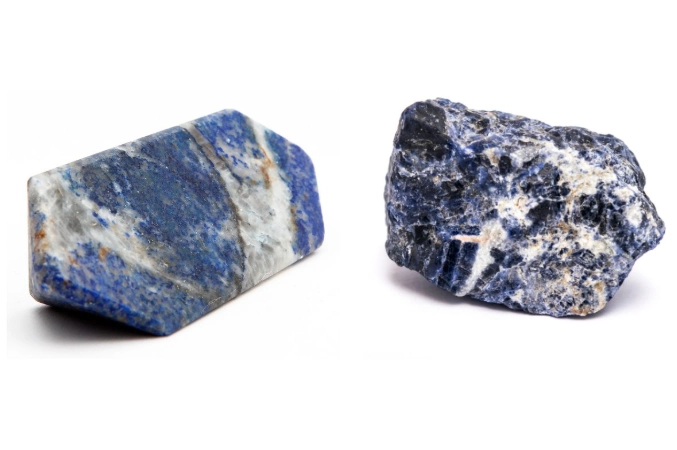
The Core Differences: It's All in the Details
Let's break this down without getting too textbook-y. The confusion makes sense at a glance, but the reality is they share almost nothing in common beneath the surface. I remember buying what I thought was a cheap lapis tumble years ago, only to realize later it was sodalite. I wasn't mad—it was still pretty—but I felt a bit silly. The seller hadn't lied; I just didn't know enough.
Here’s the most straightforward comparison table I can put together. Bookmark this.
| Feature | Lapis Lazuli | Sodalite |
|---|---|---|
| What is it? | A metamorphic rock, not a single mineral. It's a mix primarily of lazurite, with calcite, pyrite, and others. | A single mineral belonging to the feldspathoid group. |
| Signature Color | Deep, vivid ultramarine blue. The gold standard (literally and figuratively). | Royal blue, navy blue, often with a violet or grayish undertone. |
| Key Visual Clue | Brassy, gold-colored pyrite flecks ("fool's gold") almost always present. The presence of pyrite is a major giveaway. | White calcite veins or patches are very common. It typically contains NO pyrite. |
| Chemical Composition | Variable. Its main blue component is lazurite: (Na,Ca)8(AlSiO4)6(S,SO4,Cl)2. The sulfur gives the color. | Na8(Al6Si6O24)Cl2. The chlorine is part of its structure. |
| Hardness (Mohs Scale) | 5 - 5.5 (Softer, more prone to scratching). Handle carved pieces with care. | 5.5 - 6 (Slightly harder, but still needs protection from harder materials). |
| Primary Source (Famous) | The Sar-e-Sang mines in Afghanistan have produced the finest quality for centuries. Other sources: Chile, Russia. | Bancroft, Ontario, Canada is a major source. Also found in Brazil, Namibia, and the US. |
| Transparency & Luster | Opaque with a dull to waxy luster. Polished pieces can be vitreous. | Usually opaque, but can be slightly translucent on thin edges. Greasy to vitreous luster. |
| Market Value | Generally much higher, especially for fine, uniformly deep blue Afghan material with sparse, even pyrite. | Generally more affordable. High-quality, intense blue material is still valued. |
See? They're different animals. Thinking are sodalite and lapis lazuli the same is like asking if granite and marble are the same because they're both countertop stones. The function might be similar, but the essence is not.
Why Are Sodalite and Lapis Lazuli So Often Confused?
Okay, so if they're so different, why is this such a common question? It boils down to a few simple factors that trip people up, especially beginners.
1. The Blue, Obviously
Both occupy that deep, rich blue spectrum that's relatively rare in the mineral world. In poor lighting, or in a small, polished bead, that initial hit of blue is what you notice first. Your brain categorizes it as "blue stone," and the deeper analysis sometimes stops there.
2. The Veining and Patterns
This is a big one. Lapis has white calcite veins. Sodalite has white calcite veins. It's an easy point of overlap. The untrained eye sees a blue stone with white streaks and thinks, "Ah, lapis!" But the critical missing piece is the pyrite. If you see white veins but no sparkly gold bits, you should immediately suspect sodalite.
3. The "New Age" and Metaphysical Market
Let's be real. In some crystal shops or online marketplaces, mislabeling happens. Sometimes it's an honest mistake by a seller who isn't a gemologist. Sometimes, less scrupulously, sodalite might be intentionally called "blue lapis" or something fuzzy to capitalize on lapis lazuli's fame and higher price point. This muddying of the waters directly leads people to search "are sodalite and lapis lazuli the same."
I once saw a necklace labeled "Lapis Lazuli" at a street market that was so obviously sodalite it was almost funny. The blue was wrong, there was zero pyrite, and the price was too good to be true. That experience really cemented the differences for me.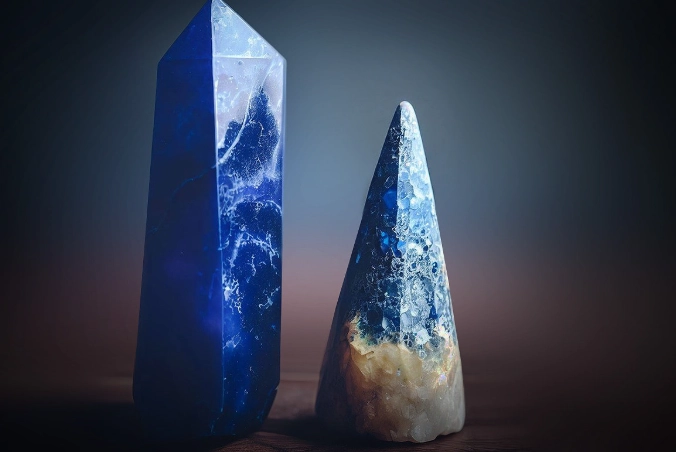
How to Tell Them Apart: A Practical Guide
Enough theory. Let's get practical. Here’s what you actually do when you have a stone in your hand (or on your screen) and you need to make the call.
- Look for Gold (Pyrite): Tilt the stone under good light. Do you see little metallic, brassy-yellow specks? If YES, it's almost certainly lapis lazuli. This is the #1 identifier. No gold? Lean heavily towards sodalite.
- Analyze the Blue Hue: Is it a bright, almost electric ultramarine? Or a deeper, more navy or violet-blue? The former suggests lapis; the latter suggests sodalite.
- Examine the White Veins: Are the white patterns stark, cloudy, or web-like? Both can have them, but in sodalite, they are often more prominent and contrast sharply with the blue.
- Consider the Price and Context: A large, deep blue carved item for a low price is a red flag for being sodalite sold as lapis. Genuine, high-quality lapis commands a premium.
- The Scratch Test (Use Caution!): Both are soft. On an inconspicuous spot, if you can scratch it slightly with a steel knife (Mohs ~5.5), it's consistent with both. This test isn't great for differentiation but can help rule out harder blue imitations like dyed howlite.
Honestly, after a while, you develop a gut feeling. The look of lapis—that specific blue with its embedded gold—becomes unmistakable. Sodalite has a more uniform, deep, and sometimes slightly "sleepier" blue appearance to me.
Digging Deeper: Origins, Geology, and History
This is where it gets fascinating. Their stories are as different as their chemistry.
Lapis Lazuli: The Stone of Kings
Lapis has a legendary status. Mined for over 6,000 years in the remote mountains of Afghanistan, it was traded along the Silk Road to Egypt, Mesopotamia, and beyond. The Egyptians used it for scarabs and eye inlays in Tutankhamun's funeral mask. Renaissance artists ground it into the priceless pigment ultramarine, reserved for the most important figures like the Virgin Mary's robes. Its name comes from Latin (lapis = stone) and Persian (lazhward = blue). This isn't just a rock; it's a piece of human history. The finest material still comes from Afghanistan, though Chile and Russia produce commercial grades. The Mindat page for Lazurite, the main component, is a great technical resource for the serious enthusiast.
Sodalite: The Modern Discovery
Sodalite's story is more modern. While known to mineralogists earlier, it wasn't until 1891 that large, gem-quality deposits were found near Bancroft, Ontario. It was promoted by the Canadian geologist Princess Louise (Queen Victoria's daughter), who had it used as a decorative stone in Buckingham Palace. This sparked its popularity. It's often called "Princess Blue" in Canada. Unlike lapis, it's found in nepheline syenite rocks. You can explore its properties on the Mindat page for Sodalite. It's also the primary blue mineral in the rare and beautiful rock "litchfieldite."
So, while lapis whispers of ancient pharaohs, sodalite hums a more contemporary, Canadian tune. Both cool, but distinct.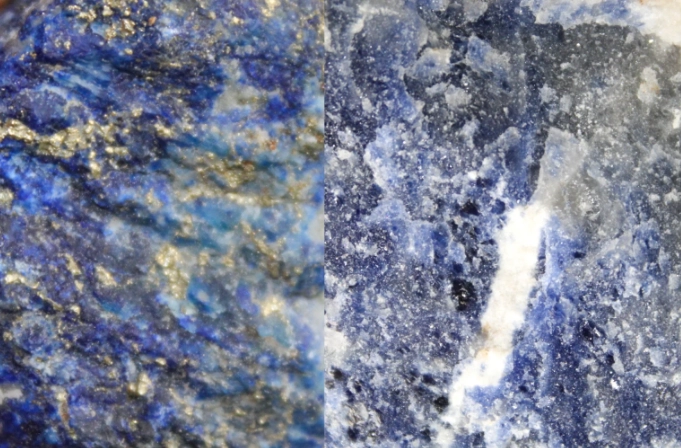
Metaphysical Properties: Beliefs and Uses
In the world of crystal healing and metaphysics, they are assigned very different roles. I'll present this neutrally—you can decide what resonates with you.
Lapis Lazuli is often called the "Stone of Truth." It's associated with:
- Self-awareness and honesty (with oneself and others).
- Intellectual ability, wisdom, and clarity of thought.
- Communication and expression, especially in public speaking.
- Its historical link to royalty and divinity gives it an aura of power and vision.
Sodalite, on the other hand, is dubbed the "Poet's Stone" or the "Stone of Logic." Its key associations are:
- Calming the mind and reducing anxiety (that deeper blue is seen as more soothing).
- Enhancing rational thought, objectivity, and problem-solving.
- Boosting communication in a more structured, logical way than lapis.
- Stimulating the throat chakra for clear expression, but from a place of calm.
If you're into this stuff, you can see why conflating them would be a problem. You might be seeking lapis's fiery truth but end up with sodalite's calming energy. Not a bad thing, but not what you intended. This is another crucial reason to get the identification right.
Market Value, Imitations, and What You're Really Buying
This is the practical stuff that hits your wallet.
Lapis Lazuli is expensive. High-end, uniform, intense blue Afghan material with aesthetically distributed pyrite can command prices similar to semi-precious gems. Carvings, cabochons, and beads of good quality reflect this. Lower-quality material with lots of white calcite (sometimes called "denim lapis") is cheaper.
Sodalite is generally affordable. You can get large tumblestones, spheres, and beads for a fraction of the cost of comparable lapis. This affordability is part of its appeal.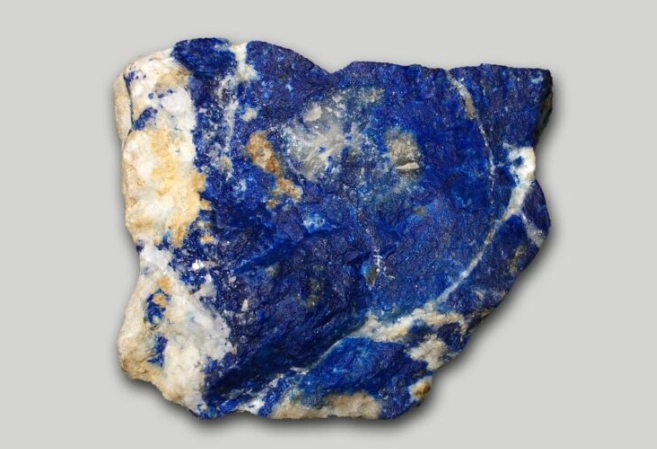
There's also "Swiss lapis" or "German lapis," which are just dyed jasper. And synthetic or reconstructed lapis exists too. The Gemological Institute of America (GIA) Lapis Lazuli Guide is an excellent, authoritative reference for understanding these treatments and imitations.
My rule of thumb: buy from reputable dealers who use the correct names. If a deal seems too good to be true for lapis, it probably is, and you're likely looking at sodalite or dyed howlite.
Your Questions Answered: Sodalite vs. Lapis Lazuli FAQ
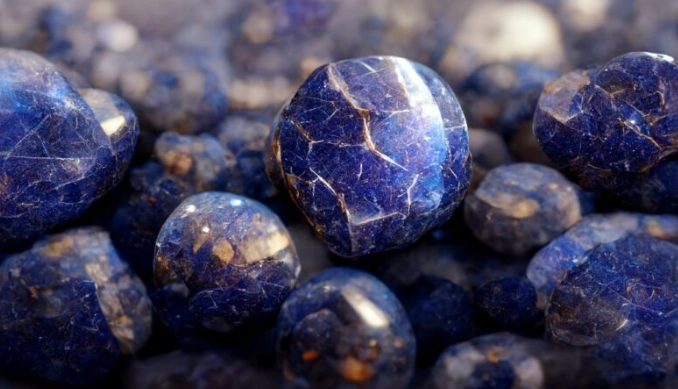
Next time you see that beautiful blue stone, you'll know exactly what you're looking at. And honestly, that knowledge feels pretty good. It turns a moment of confusion into one of confident appreciation. Both stones are gorgeous in their own right—they just deserve to be called by their rightful names.
Related Articles
Why is Tiger's Eye So Powerful? Unlocking Its Mystical & Scientific Secrets
Ruby Stone Month: The Complete Guide to July's Birthstone
What is the Manifestation of Malachite? A Deep Guide to Its Forms & Uses
Kunzite Meaning: Healing Properties, Uses & How to Spot Fakes