Quick Navigation
- What Exactly Is Kyanite? Let's Start With the Basics
- The Deeper Meaning of Kyanite Crystal: More Than Just a Pretty Stone
- Top Practical Uses for Kyanite Crystal in Your Daily Life
- Kyanite vs. Other Blue Stones: A Quick Comparison
- How to Choose and Care for Your Kyanite Crystal
- Answering Your Questions About Kyanite Crystal Meaning and Uses
- A Few Cautions and Final Thoughts
So you've heard about kyanite, maybe seen its stunning blue blades in a shop or online, and you're wondering what the fuss is all about. I get it. The crystal world is full of hype, and sometimes it's hard to separate the genuine insights from the, well, let's just say overly enthusiastic marketing. I was skeptical too, until I actually started working with a piece years ago.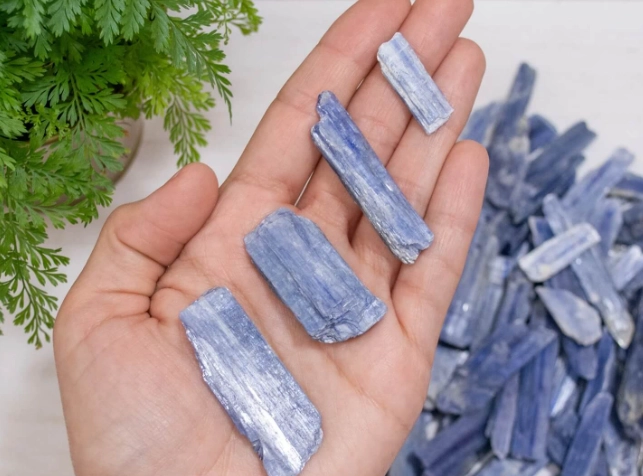
Let's cut through the noise. This isn't about mystical promises or vague spiritual jargon. We're going to talk about the real, practical kyanite crystal meaning and uses that people actually experience. What does this stone do? How can you use it in your daily life or spiritual practice? And importantly, how do you know you're getting the real deal and not a piece of colored glass?
What Exactly Is Kyanite? Let's Start With the Basics
Before we dive into meanings and uses, let's ground ourselves in what kyanite actually is. Scientifically speaking, kyanite is a silicate mineral, usually found in aluminum-rich metamorphic rocks. Its name comes from the Greek word 'kyanos', meaning dark blue, which is its most famous color, but it's not the only one. You can find it in green, black, orange, and even colorless forms.
What makes kyanite stand out physically is its unique property of having variable hardness. If you try to scratch it along the length of the crystal, it's relatively soft (around 4.5 on the Mohs scale). Try scratching it across the width, and it's much harder (around 6.5 to 7). Geologists use this as a key identifier. For us crystal lovers, it's a neat party trick and a reminder of its balancing nature—it literally has different strengths in different directions.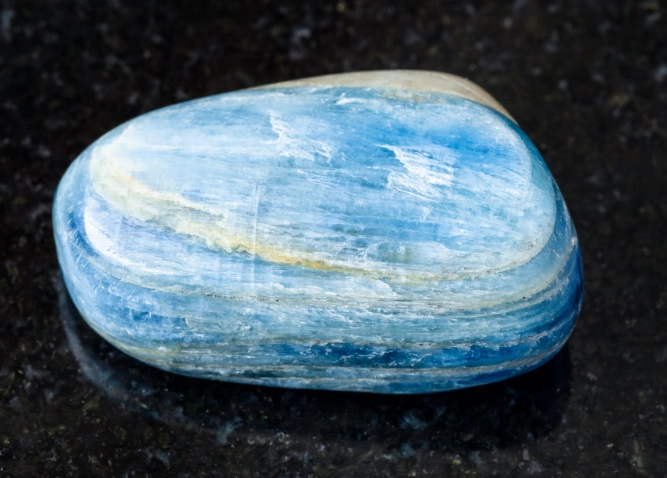
The most common source of gem-quality blue kyanite is Nepal, but it's also mined in Brazil, Kenya, Switzerland, and the United States (particularly in North Carolina and Georgia). The deep blue Nepalese kyanite is often what you see in jewelry and healing wands.
So, it's a real mineral with fascinating physical properties. Good start.
The Deeper Meaning of Kyanite Crystal: More Than Just a Pretty Stone
Okay, onto the meaning. If I had to sum up the core kyanite crystal meaning in one word, it would be alignment. People who work with crystals often describe kyanite as a master aligner. It's not so much about pumping you full of energy, but about straightening out what's already there.
Think of it like tuning a radio. If your mind, body, and spirit are slightly off-frequency, you get static, confusion, and mixed signals. Kyanite's energy is said to act like a fine-tuning dial, bringing all those aspects into a clear, coherent channel. This is why its meaning is so deeply tied to communication, truth, and harmony.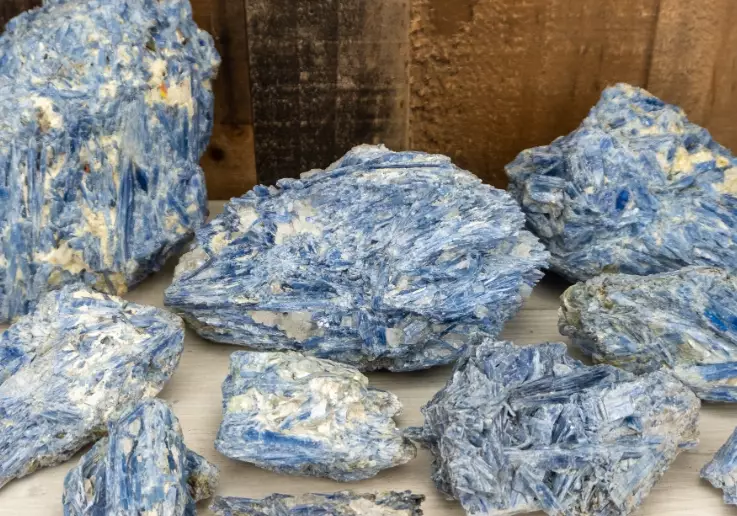
Spiritual and Emotional Meanings
Spiritually, kyanite is often called a bridge builder. It's believed to help connect your everyday consciousness with higher states of awareness or intuition. It doesn't induce a wild, psychedelic journey—its effect is more about creating a stable, clear pathway. This is one reason it's highly recommended for meditation.
Emotionally, the meaning revolves around calm and truthful expression. It's associated with dissolving anger, frustration, and fear, replacing them with a sense of peace and the ability to speak your truth with compassion. If you struggle with confrontations or have a hard time articulating complex feelings, kyanite is often suggested as a supportive ally.
Let's break down the key symbolic meanings attributed to kyanite across different traditions and modern crystal practices:
- Truth and Integrity: It's known as a stone of truth, encouraging honesty with oneself and others.
- Communication: It's linked to the throat chakra, aiding clear, calm, and effective communication.
- Psychic Protection: Unlike many crystals said to absorb negative energy, kyanite is believed to simply not absorb it at all. It creates a kind of neutral, protective barrier, which many find less draining than stones that need frequent cleansing.
- Dream Work: Placing it under a pillow or on a nightstand is a common practice for those seeking clearer dreams or insights from the dream state.
- Past Life Exploration: Its connection to alignment extends to timelines for some, making it a tool for exploring past life memories in a grounded way.
Top Practical Uses for Kyanite Crystal in Your Daily Life
Now for the good part—how do you actually use this thing? The kyanite crystal uses are surprisingly varied, moving from the meditation cushion right into your office or home. Here’s a breakdown of the most effective ways people incorporate it.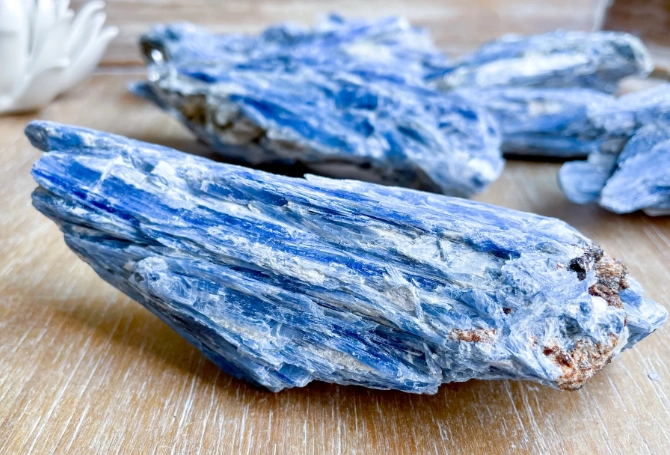
1. For Meditation and Spiritual Practice
This is arguably the most powerful application. Hold a piece of kyanite in your hand or place it on your body (common spots are the forehead for the third eye or the throat) during meditation. The goal isn't to force a vision, but to settle into a state of deep, quiet clarity. Many report it helps silence the "monkey mind" chatter faster than meditating without it.
I like to use a small, polished wand for this. The pointed end seems to help focus the energy. Don't expect a lightning bolt. The effect is subtle but profound—like the difference between looking at a muddy pond and a still, clear lake.
2. For Chakra Balancing and Energy Work
Kyanite is famous for aligning all the chakras without needing any cleansing itself. It's like a self-cleaning oven of the crystal world. A simple technique is to lie down and place a piece of blue kyanite on each chakra point, starting from the root and moving up to the crown. Just leave them there for 10-20 minutes while you breathe deeply.
Different colors of kyanite are also associated with specific chakras:
- Blue Kyanite: Throat Chakra (communication) and Third Eye Chakra (intuition).
- Green Kyanite: Heart Chakra (love, compassion).
- Black Kyanite: Root Chakra (grounding, security).
3. For Enhancing Communication
Struggling with a difficult conversation? Need to give a presentation or have an important talk with a partner? Wear kyanite as a pendant near your throat chakra or keep a tumbled stone in your pocket. The idea is to promote not just clear speech, but calm and truthful speech. It's about removing the emotional static that can make communication break down.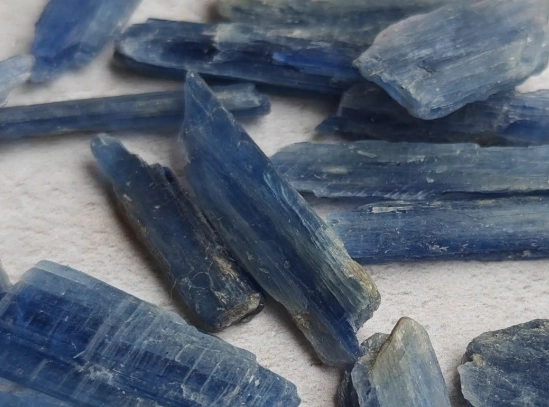
I know a teacher who keeps a small piece on her desk. She swears it helps her explain complex topics more patiently.
4. For Problem-Solving and Mental Clarity
Place a piece of kyanite on your desk or workspace when you need to tackle a complex project, study, or sort through a messy problem. Its energy is said to cut through confusion and help you see the core elements of a situation. It's less about giving you the answer and more about clearing the mental debris so you can find the answer yourself.
5. For Sleep and Dream Work
As mentioned, placing kyanite under your pillow or on a nightstand is a classic use. It's not typically a sedative stone, but rather one that promotes a peaceful, protected mental state conducive to restful sleep and vivid, memorable dreams. If you have a tendency for anxious or chaotic thoughts at bedtime, this might be worth a try.
Kyanite vs. Other Blue Stones: A Quick Comparison
People often ask how kyanite differs from, say, lapis lazuli or sodalite. They're all blue communication stones, right? Well, sort of. Each has a different "flavor." Understanding this can help you choose the right tool for your need.
| Crystal | Primary Energy | Best For | A Key Difference |
|---|---|---|---|
| Kyanite | Aligning, Calming, Clarifying | Creating mental/emotional clarity, truthful speech, meditation. | Self-cleansing; doesn't absorb negativity. |
| Lapis Lazuli | Empowering, Wisdom-seeking | Accessing inner truth, intellectual power, spiritual insight. | More "active" and stimulating than kyanite; often needs cleansing. |
| Sodalite | Rationalizing, Logic | Calming panic, rational thought, group harmony. | Works more on logical mind and social anxiety. |
| Blue Lace Agate | Gentle Soothing | Gentle communication, soothing anxiety, soft speaking. | Much softer, gentler energy than the directness of kyanite. |
| Aquamarine | Calming Courage | Courage to speak, soothing fear, calming overreactions. | Focuses on calming emotions to allow for courage. |
See the nuance? Kyanite's signature is that sharp, clear, alignment-focused energy. It's less about adding courage (aquamarine) or stimulating wisdom (lapis) and more about creating order from chaos.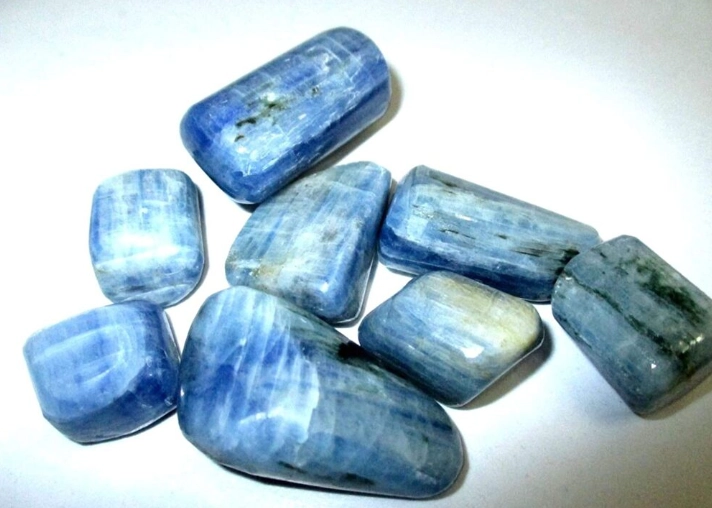
How to Choose and Care for Your Kyanite Crystal
Not all kyanite is created equal, and frankly, the market has some fakes or mislabeled stones. Here’s what to look for.
Identifying Real Kyanite
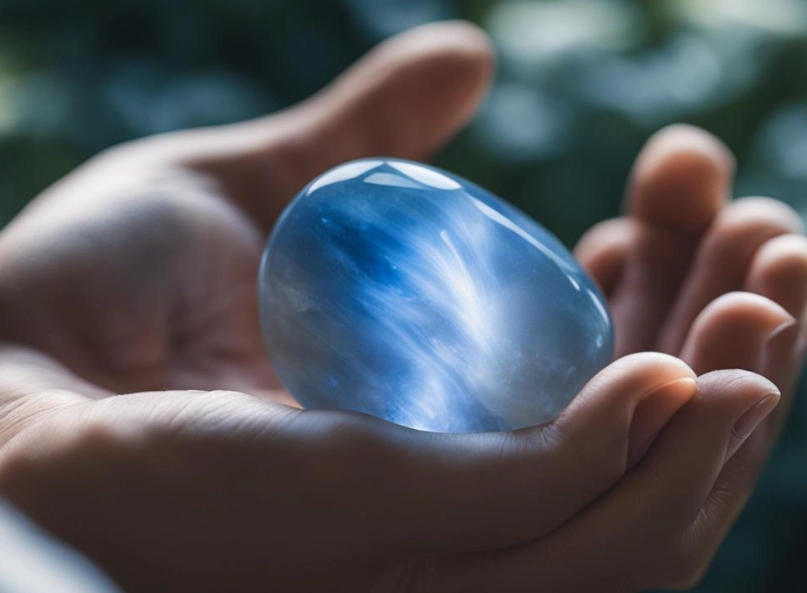
Genuine blue kyanite often has a bladed, striated structure. The color can be uneven, with lighter and darker bands of blue. It has a vitreous to pearly luster. The variable hardness is a dead giveaway for experts, but you can also look for its characteristic shape. Be wary of stones that are a perfect, uniform, neon blue—they might be dyed howlite or something else.
For serious geological identification, resources like Mindat.org, the mineralogical database, provide detailed scientific data and photos for comparison. It's an authority in the field.
Cleansing and Charging (The Easy Part!)
Here's the best news about kyanite crystal uses and care: most people believe it does not require cleansing. Its energy is said to be stable and self-cleansing. It doesn't pick up negative vibes from you or your environment. This is a huge plus for beginners or anyone who finds cleansing rituals tedious.
That said, if you want to cleanse it (maybe after someone else handles it, or just as a ritual reset), you can use any method. It's safe under running water (unlike many crystals that dissolve or crack). You can smudge it with sage, leave it in moonlight or sunlight—it's very durable. Sunlight won't fade its color like it might with amethyst.
Programming Your Kyanite
"Programming" a crystal means setting an intention for it. With kyanite, the process is simple because of its aligning nature. Hold it quietly, take a few deep breaths, and clearly state your purpose. For example, "I ask that you help bring clarity and calm to my mind during my work today." Be specific. Then, just carry it with you or place it in the relevant space.
Answering Your Questions About Kyanite Crystal Meaning and Uses
I get a lot of questions from friends and readers. Here are the most common ones, answered straight.
A Few Cautions and Final Thoughts
Let's be real. Kyanite isn't a magic wand. It won't solve your problems for you. The kyanite crystal meaning is all about providing a clear, aligned space for you to do the work. It's a tool, not a crutch.
Also, the blades can be sharp! Raw kyanite clusters can have knife-like edges. Be careful handling them, and keep them away from kids and pets. Tumbled stones or polished points are safer for everyday carry.
Finally, the biggest advice I can give: let your own experience be your guide. All this talk about kyanite crystal meaning and uses is just a map. The territory is your own life. Get a piece. Hold it. Meditate with it. Put it on your desk. See what, if anything, you notice. Does it bring a sense of calm? Does it help you think straighter? That personal data point is worth more than any article (even this one).
The journey with any crystal is personal. Kyanite, with its reputation for clarity and truth, is a wonderful companion for that journey. It asks little (no fussy cleansing) and offers a quality that is priceless in our noisy world: a chance for clear, aligned, and honest space—both within and around you.
Start simple. See where it takes you.
Related Articles

From 5G to satellite communication, Qualcomm shines at MWC 2023.
Sunstone Guide: Properties, Uses, and How to Choose the Best One
Moonstone Benefits for Women: Emotional Balance & Feminine Energy Guide
Lapis Lazuli Properties: Healing, Spiritual & Physical Guide