Quick Navigation
- Where Does This Mystical Reputation Come From? A Quick Dip into History
- Breaking Down the Colors: Your Personal Opal Spectrum
- How to Choose *Your* Opal: It's a Relationship, Not a Transaction
- Okay, I Have My Opal. Now What? Practical Spiritual Uses
- Diving Deeper: Opal Types and Their Spiritual Nuances
- Your Questions, Answered (The Stuff You Actually Search For)
- A Few Personal Caveats & Final Thoughts
Let's be honest, when most people think of opal, they see a stunning ring in a jewelry store window, all fiery reds and electric blues dancing under the lights. It's captivating. But if you've landed here, you're probably sensing there's more to it. You're asking a deeper question: what is the spiritual meaning of opal beyond its physical beauty? You might have heard whispers—some good, some strangely ominous—about its power, and you want the real story, not just the sales pitch or the folklore snippets.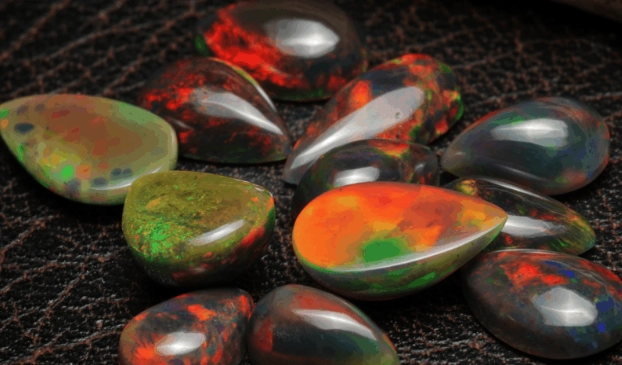
I was in your shoes once. I bought my first opal pendant purely for its looks, but then kept feeling this odd, gentle pull when I wore it. It wasn't like my other crystals. It felt... alive. Chatting with other collectors and diving into historical texts (not just modern crystal books, which can sometimes repeat the same vague things) opened up a whole world. The spiritual meaning of opal is incredibly rich, nuanced, and frankly, a bit misunderstood. It's a stone of profound transformation, but it's not always a gentle ride. It's about showing you your true colors, literally and metaphorically.
Where Does This Mystical Reputation Come From? A Quick Dip into History
To really get the spiritual meaning of opal, you have to look back. Ancient Romans prized it above all other gems, considering it a symbol of hope and purity. They believed it contained the beauty of all other stones. The Romans even had a specific name for it—"opalus"—which some scholars link to the Sanskrit "upala," meaning "precious stone." That's a pretty universal start.
Fast forward to medieval Europe, and things get interesting. Opal was believed to grant great luck and invisibility (a favorite among thieves, apparently), because it held the virtues of every gemstone whose color shone within it. This idea of it being an "amplifier" or a container of many energies is a thread that runs straight into its modern spiritual interpretation.
Then, in the 19th century, its reputation took a weird hit. Sir Walter Scott's novel *Anne of Geierstein* featured an opal that lost its fire when touched by holy water, followed by the lady wearing it dying. Pure fiction. But combined with the fact that opals are more delicate and can crack if dried out or knocked (unlike a diamond), a superstition about them being "unlucky" was born. Honestly, I think this says more about the fragility of human belief than the stone itself. Most modern crystal practitioners roll their eyes at this myth, but it persists, which is why we'll tackle it head-on later.
For a solid, scientific grounding in what opal actually *is*—a hydrated silica gel that forms in unique ways—the Gemological Institute of America (GIA) opal page is an invaluable resource. Knowing its physical creation helps appreciate its spiritual metaphor: water (emotion) and light (spirit) frozen in stone.
Breaking Down the Colors: Your Personal Opal Spectrum
This is where the spiritual meaning of opal gets personal. Unlike a single-color stone, an opal's play-of-color means its energy can lean in different directions. Asking "what is the spiritual meaning of opal" is like asking the meaning of a rainbow—it depends on which color is speaking to you most strongly.
Here’s a breakdown of the dominant colors and what they're spiritually associated with. Remember, most opals have multiple colors, so it's a blend.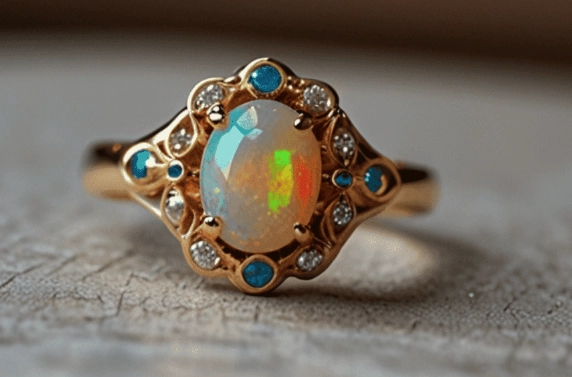
| Dominant Color | Energy & Spiritual Focus | Associated Chakra | Good For... |
|---|---|---|---|
| Red & Orange | Passion, vitality, courage, sexual energy, overcoming inertia. The "fire" in fire opal is literal in its spiritual push. | Root & Sacral | Boosting motivation, igniting creative projects, reclaiming personal power. |
| Yellow & Gold | Intellect, confidence, joy, attracting abundance and success. It's like sunshine captured in stone. | Solar Plexus | Making decisions, building self-esteem, manifesting goals (career, wealth). |
| Green | Heart healing, compassion, growth, connection to nature. A very balancing and renewing opal energy. | Heart | Healing from heartbreak, fostering forgiveness, encouraging personal growth. |
| Blue | Calm, communication, intuition, truth, and spiritual peace. The most "throat" and "third eye" of the colors. | Throat & Third Eye | Speaking your truth, enhancing psychic impressions, reducing anxiety. |
| Purple & Violet | Spiritual awakening, wisdom, connection to the higher self, mysticism. The "crown chakra" superstar. | Crown | Meditation, deepening spiritual practice, accessing inspiration. |
| White & Milky | Purification, amplification of intentions, spiritual clarity, and connecting to lunar/feminine energy. | Crown & Higher Chakras | Cleansing other stones, setting clear intentions, dream work. |
| Black (Dark Body Tone) | Intensity, grounding high-vibration energy, shadow work, profound transformation. It amplifies everything, making the colors pop and the inner work deep. | Root & All Chakras | Major life transitions, confronting deep-seated fears, powerful manifestation. |
My personal favorite is an Ethiopian welo opal with flashes of blue and green. I find it doesn't send my thoughts racing like a fiery red one sometimes can. Instead, it feels like it cools down my mental chatter and lets my intuition bubble up. That's just me, though. You might need the red kickstart!
How to Choose *Your* Opal: It's a Relationship, Not a Transaction
You don't just buy an opal. You kind of... meet it. Because the spiritual meaning of opal is so tied to its unique appearance, choosing one is intuitive. Here’s a more human approach, beyond just the technical specs.
- Look with soft eyes. Don't just analyze. Hold it, move it in the light. Which color flash makes you catch your breath or feel a little ping in your chest? That's your clue. The stone is highlighting an energy you might need.
- Consider your current life chapter. In a period of big, scary change? A black or dark opal might be a powerful ally. Feeling creatively blocked? Look for reds and oranges. Seeking inner peace and better communication? Blues are calling.
- Feel the texture and weight. Some opals (like Ethiopian hydrophane) feel lighter and can absorb water. Others (Australian) are more solid. There's no right or wrong, but notice what you're drawn to. Do you want a stone that feels more "alive" and reactive, or more stable and eternal?
- Ignore the "luck" hype. A seller pushing it as a "lucky charm" might not be tuned into its deeper spiritual meaning of opal. The real work is internal.
Let's Settle This: Is Opal Actually Bad Luck?
This is probably the biggest question lurking behind searches for the spiritual meaning of opal. Here's the straight talk: No, opal is not inherently bad luck. The superstition is a literary and historical fluke, as mentioned. However—and this is important—because opal is an amplifier, it can intensify whatever energy is already swirling around you. If you're in a negative headspace, full of fear and anxiety, wearing an opal might make you more acutely aware of those feelings. It doesn't create the bad luck; it holds up a mirror. This is why some people, unconsciously, might blame the stone. The spiritual advice? Don't use opal as a casual accessory. Work with it intentionally when you're ready for self-reflection and positive change. It's a stone for the spiritually active, not the passive.
Okay, I Have My Opal. Now What? Practical Spiritual Uses
Understanding the spiritual meaning of opal is one thing. Applying it is another. Here are concrete ways to work with its energy.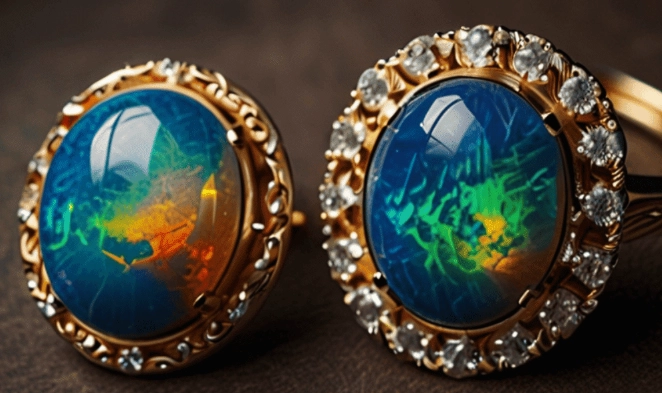
Meditation & Journeying
Hold your opal in your receiving hand (usually left) or place it on your forehead (third eye) during meditation. Don't force anything. Just watch the colors play behind your eyelids. It's fantastic for visual people. I've had some of my most vivid, symbolic imagery pop up during opal meditations. It feels less like "quieting the mind" and more like "tuning into a more colorful channel" of it.
Dream Work
Place an opal (especially a milky or blue one) under your pillow or on your bedside table. Keep a journal handy. Opal is linked to the subconscious and can lead to more vivid, memorable, or even lucid dreams that offer guidance. Just a warning—the dreams can be emotionally intense! It's not always peaceful.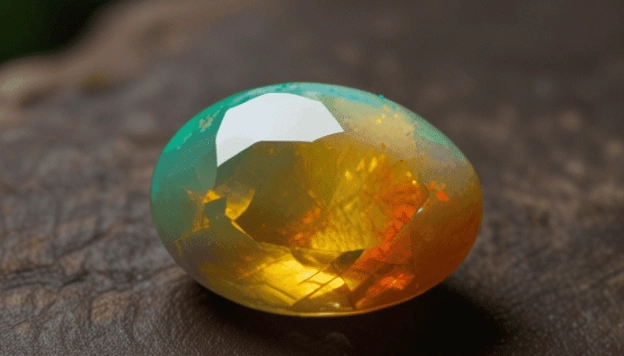
Energy Cleansing & Charging
Opals are sensitive. They don't like harsh cleansing methods like salt water (can damage them) or intense sunlight (can dry and crack them). Stick to:
- Smudging: Passing through the smoke of sage or palo santo.
- Sound: Using a singing bowl or tuning fork near them.
- Gentle moonlight: A few hours under the full moon is perfect, echoing its watery, reflective nature.
- Other stones: Placing it on a cluster of clear quartz or selenite overnight.
To charge it with intention, hold it and simply state what you wish to amplify—creativity, love, clarity. Your focus is the key.
Diving Deeper: Opal Types and Their Spiritual Nuances
"Opal" is an umbrella. The major types have their own spiritual flavor notes, informed by their origin and structure. The Australian Opal Association has fantastic geological and mining background that adds context to these spiritual profiles.
- Australian (Lightning Ridge, Coober Pedy) Black & White Opal: The classics. Mined from ancient, dry earth, these are seen as more "stable" in energy. Black opal is the master of depth and shadow work. White opal is purer, gentler amplification. They're often associated with ancient earth wisdom.
- Ethiopian Welo Opal: A relative newcomer, often with stunning water-like clarity and bright play-of-color. It's a hydrophane, meaning it can absorb water and change appearance. Spiritually, this makes it feel incredibly adaptable, fluid, and connected to emotional flow. It's brilliant for working with water element energies and embracing change, but it requires more careful handling (keep it away from lotions, water).
- Fire Opal (Mexico): Often transparent with a warm orange, red, or yellow body color, sometimes with play-of-color. This is pure sacral chakra fuel. Its spiritual meaning is intensely linked to life force, passion, courage, and breaking through creative blocks. It's less about introspection and more about outward expression and vitality.
- Boulder Opal (Australia): Where the opal forms in ironstone veins. You literally wear a piece of the matrix rock. This creates a powerful grounding effect. The spiritual meaning here combines opal's transformational energy with the strong, stabilizing vibration of the host rock. It's for transformation while staying rooted—perfect for big life changes where you need to keep your feet on the ground.
Your Questions, Answered (The Stuff You Actually Search For)
Can opal help with anxiety?
It depends. Blue opals can be very calming for throat and third eye anxiety (overthinking, communication fears). However, a highly stimulating multicolor or black opal might make general anxiety worse by amplifying the feeling. Choose your color wisely and start with short periods of wear.
Is opal a birthstone? What does that mean spiritually?
Yes, for October. As a birthstone, its spiritual meaning for an October-born person is about embracing their innate complexity, creativity, and capacity for personal transformation. It's like a lifelong companion for their soul's journey of revealing its true colors.
How does opal compare to other popular spiritual stones?
- Vs. Quartz: Clear quartz is a universal amplifier and programmer. Opal is an amplifier too, but it's specifically tuned to inner light, emotion, and authenticity. Quartz is like a blank hard drive; opal is like a pre-loaded software for self-discovery.
- Vs. Moonstone: Both are feminine, intuitive, and connected to water. Moonstone is gentler, more about cyclical flow and receiving. Opal is more dynamic, unpredictable, and focused on active revelation and expression.
- Vs. Labradorite: Both show flashy colors (labradorescence vs. play-of-color). Labradorite is seen as a stronger protective stone, a shield for the aura. Opal is less about protection and more about exposure—exposing your inner self to yourself.
How can I tell if my opal is "working" or real?
First, ensure it's natural. Synthetic or imitation opals (like "opalite" glass) don't carry the same geological energy. Buying from reputable dealers or checking resources like Mindat's mineral database for authenticity clues helps. As for "working," don't expect lightning bolts. Signs are subtle: more vivid dreams, sudden insights, a heightened awareness of your emotions, or a burst of creative ideas. Sometimes, it works by gently stirring things up that need to be addressed, which might initially feel uncomfortable.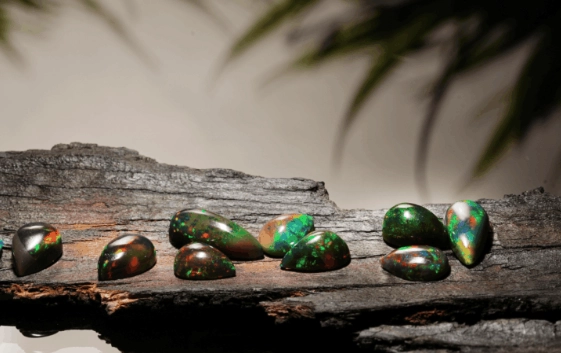
A Few Personal Caveats & Final Thoughts
I love opals, but I'm not a zealot about them. They're high-maintenance, both physically and energetically. You can't just toss one in a purse with your keys and expect it to be fine. And energetically, they demand a level of self-honesty I don't always feel up for. There have been weeks where I've kept mine in its box because I just wasn't ready for the introspection it encourages. That's okay. Respecting that is part of the relationship.
So, what is the spiritual meaning of opal? It's a journey. It's a stone that says, "You are not one thing. You are a universe of shifting colors and potentials. Let's look at them together, even the ones in the dark corners." It's for the brave, the creative, the emotionally honest, and those tired of wearing a single, solid-color mask to the world.
If you're drawn to it, trust that pull. Start with a small stone. Observe. Feel. Let the play-of-color in your hand remind you of the play-of-light within your own spirit. That reminder, that awakening to your own multifaceted beauty, is perhaps the deepest spiritual meaning of opal of all.
Related Articles
Who Should Not Wear Lapis? A Complete Guide to Lapis Lazuli Safety
Mookaite Meaning: Healing Properties, Uses & Identification Guide
Natural Blue Crystals: Ultimate Guide to Types, Meanings & Uses