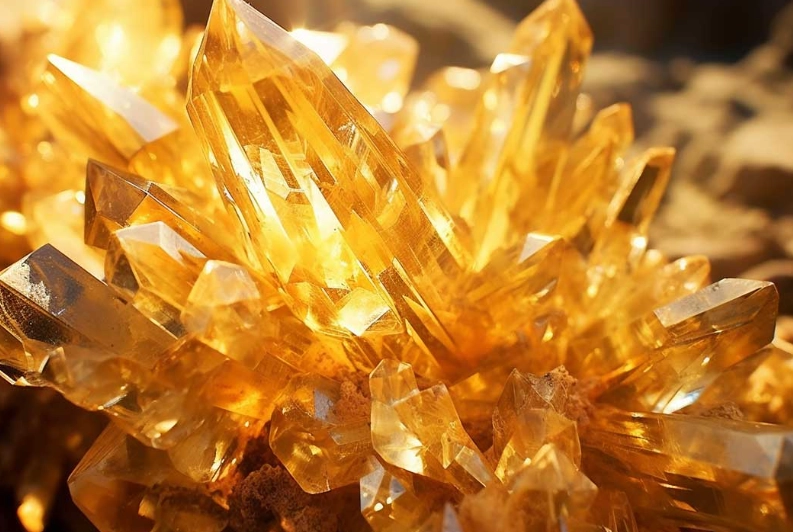
Let's talk about pyrope garnet. If you're picturing a generic dark red gem, you're only half right. Pyrope has a secret. Its color isn't just red; it's a specific, saturated, fiery crimson that can look almost like a ruby under certain lights, but often with a warmer, more burgundy undertone. I remember the first time I held a fine-quality Czech pyrope. It wasn't in a fancy jewelry store, but in a miner's rough hand at a small market near the old sources. The depth of color in that uncut piece was astonishing—like a drop of wine that held a spark inside. That's the magic this guide will unpack: what pyrope garnet really is, how to spot the good stuff, what it's worth, and how to live with it, whether you're a collector, a jewelry lover, or just curious.
What's Inside: Your Pyrope Garnet Roadmap
What Makes Pyrope Garnet Special?
Pyrope is part of the garnet family, but it's the magnesium-aluminum silicate member. That chemistry is key. It's what gives it that signature rich red, often without the brownish or orangey hints you see in almandine (the more common red garnet). The name comes from Greek, "pyropos," meaning "fiery-eyed," which is spot-on.
Historically, it had a huge moment. In the 19th century, deposits in what's now the Czech Republic (Bohemia) supplied garnets for incredible Victorian jewelry. Museums like the National Gallery of Art have pieces showcasing this. The stones were often cut into rose cuts and set densely, creating a sea of red sparkle. That Bohemian pyrope is still a benchmark for color.
How to Spot Real Pyrope Garnet
You don't need a lab to make a good guess. Here’s what to look for, based on handling hundreds of these stones.
The Visual Checklist
Color: Look for a strong, vivid red. Not maroon, not pinkish. Think pomegranate seed or red wine. It should look clean and intense even in lower light. If it looks brown or dull grey indoors, it might be lower quality or a different garnet type.
Clarity: Pyrope is typically Type II gemstone. That means you expect some inclusions. Tiny needle-like crystals (rutile) or other mineral grains are common. A completely flawless, deep red stone is a major red flag—it's probably glass or a synthetic. Inclusions can be a sign of authenticity.
Luster & Cut: It has a bright, vitreous (glassy) luster. Well-cut facets should be sharp and reflective. Antique cuts might be less precise but have charm. Modern cuts should be symmetrical.
Simple Tests You Can Do
The Scratch Test (Carefully!): Garnet ranks 7-7.5 on the Mohs scale. It can scratch glass. Try the underside of a glass bottle discreetly. If it leaves a clear mark, that's a good sign (though some other gems can too).
Weight: It feels heavier than glass or plastic of the same size. Get used to the heft of a real stone.
The Hot Seller Test: Be wary of sellers who overuse mystical jargon without providing basic facts (origin, treatment, gem family). A reputable seller will talk about the stone's properties first, not just its "vibrations."
| Feature | Real Pyrope Garnet | Common Imposters (Glass, Synthetic) |
|---|---|---|
| Color Consistency | Rich, even color, may have slight depth variations. | Too perfect, can look "painted on," or have swirls. |
| Inclusions | Usually present (needles, crystals, feathers). | Often completely clean, or has gas bubbles (round, not crystalline). |
| Temperature | Feels cool to the touch and stays cool longer. | Warms up to skin temperature quickly. |
| Price | Wide range, but very cheap for large, clean, deep red stones is suspicious. | Unnaturally low for the stated quality. |
Understanding Pyrope Garnet's Market Value
Pyrope isn't like diamond or ruby with strict per-carat charts. Value is nuanced.
For standard commercial quality (often pyrope-almandine blend), you might see strands of small beads for $20-$50. A decent 1-carat faceted stone in a simple setting could be $75-$200.
Fine quality, especially with that coveted pure pyrope color from known sources (like historic Czech material), jumps significantly. A top-color 2-carat stone with good cut and minor inclusions can reach $500-$1500 or more. Rarity drives price.
What drives the price up?
- Color: That pure, fiery red without brown modifiers.
- Origin: Stones with documented Bohemian (Czech) origin command a premium.
- Cut: Precision cutting that maximizes brilliance adds cost and value.
- Carat Weight: Clean stones above 3 carats become much rarer.
- Treatment: Untreated stones are standard and expected. Heat treatment is uncommon for pyrope. If it's disclosed, it should affect price.
I once saw a client overpay for a "rare African pyrope" that was just a nice almandine. The lesson? Know the color you're buying, not just the name on the tag.
Using and Caring for Your Pyrope Garnet
This is where theory meets practice. Pyrope is durable enough for regular wear, but it's not indestructible.
Jewelry Design & Daily Wear
It's perfect for rings, but consider a bezel or protective setting for daily wear. Its hardness means it resists scratches from dust, but a hard knock on a granite countertop can chip it. For pendants and earrings, it's virtually worry-free. The deep red complements both yellow and white metals beautifully.
The Care Routine
Cleaning: Warm water, mild dish soap, and a soft toothbrush. Ultrasonic cleaners are usually safe for untreated stones, but I avoid them for any gem with fractures. Steam cleaners are a no-go—sudden temperature change can cause stress.
Storage: Keep it separate. A fabric pouch or a compartment in a jewelry box prevents it from scratching softer stones (like opal) or getting scratched by harder ones (like sapphire).
When to take it off: Gardening, gym, dishes, swimming pools (chlorine is harsh). It's a habit that extends the life of any jewelry.
Energy & Metaphysical Perspectives (A Balanced View)
Many are drawn to pyrope for reasons beyond beauty. In crystal healing traditions, it's often linked to root chakra energy, associated with vitality, passion, and grounded strength. Some historical texts, like those referenced by the Gemological Institute of America in their historical archives, note garnets were long considered talismans for protection.
Here's my take after years in the trade: The value you get from a stone is deeply personal. If wearing a pyrope ring makes you feel more confident or connected during a stressful workday, that's a real effect. However, view claims of curing ailments or radically transforming your life with skepticism. No gemstone is a substitute for professional medical or psychological advice.
The stone's real "energy" might be in its history—the Earth's processes that created it, the hands that mined and cut it. Focusing on that tangible story can be more meaningful than abstract concepts.
Expert Q&A: Your Pyrope Questions Answered
Can I wear my pyrope garnet ring every day?
How do I "cleanse" or "charge" my pyrope garnet, and is it necessary?
What's the biggest mistake people make when buying pyrope garnet online?
Is pyrope garnet a good investment gemstone?
I've heard some red garnets are magnetic. Is pyrope one of them?
Related Articles
Celestite Crystal: Ultimate Guide to Meaning, Uses & Buying Tips
Mookite Stone Guide: Pros, Cons, Costs & Comparisons for Your Home
White Sapphire Disadvantages: The Truth About Durability, Sparkle & Value
Moonstone Properties: A Complete Guide to Buying, Owning & Valuation
Tiger Eye Stone: What Is It Good For and How to Use It