Quick Navigation
- What Exactly Is Lapis Lazuli? It's Not What You Think
- The Nuts and Bolts: Physical and Chemical Properties
- A Journey Through Time: Historical and Cultural Uses
- Beyond the Physical: Metaphysical Properties and Modern Energetic Uses
- Navigating the Modern Market: Buying, Authenticity, and Value
- Your Questions, Answered: Lapis Lazuli FAQ
- Putting It All Together: A Stone for Our Time
You've probably seen that deep, celestial blue stone speckled with gold. It shows up in museum pieces, high-end jewelry, and even in pictures of ancient Egyptian artifacts. That's lapis lazuli. But what's the big deal? Why has this specific rock captivated humans from pharaohs to painters for over 6,000 years? I remember the first time I held a piece of raw lapis. It felt heavier than I expected, and the blue was so intense it almost didn't look real. It wasn't just a pretty rock; it felt like holding a piece of the night sky. This guide is my deep dive into everything about lapis lazuli properties and uses. We'll strip away the myths, look at the hard science, explore the incredible history, and get real about how you can use it today. Whether you're a crystal enthusiast, a history buff, a jewelry lover, or just curious, let's figure out what makes this stone so special.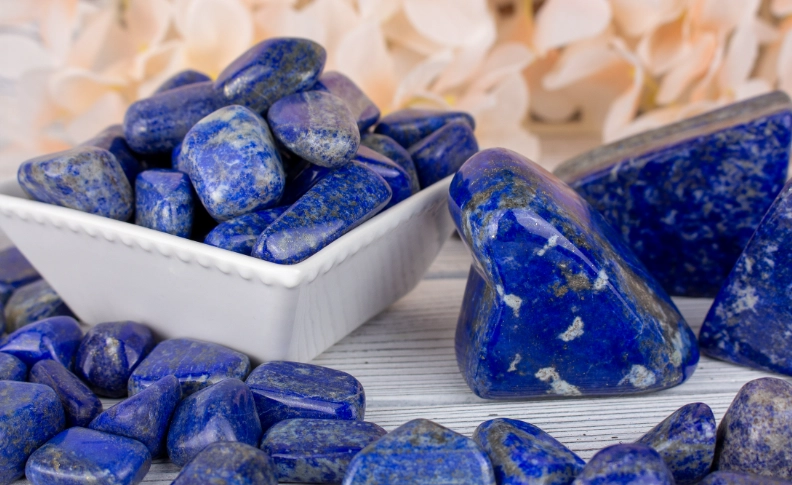
What Exactly Is Lapis Lazuli? It's Not What You Think
First things first, let's clear up a common misconception. Lapis lazuli isn't a single mineral like quartz or diamond. That's key to understanding its properties and uses. It's actually a metamorphic rock. Think of it as a natural masterpiece composed of several minerals baked together under intense heat and pressure deep within the earth. The main players are:
- Lazurite: This is the star of the show. It's the complex silicate mineral that gives lapis its iconic, vivid blue color (ultramarine). Without lazurite, you don't have lapis. The more lazurite, the richer and more uniform the blue.
- Calcite: This shows up as white streaks or patches. A little calcite can create beautiful, marble-like veins. Too much, and the blue looks washed out and cloudy. It's the main reason for lower-grade stones.
- Pyrite: The "fool's gold." These are the brilliant, brassy-yellow flecks that look like scattered gold dust or stars. This is a good thing in lapis! It's a sign of authenticity and adds to its celestial appearance. No pyrite often means you're looking at a fake or a very low-quality piece.
- Sodalite, Hauyne, and others: Other minerals can be present in smaller amounts, influencing the exact shade and texture.
So, when you're evaluating lapis lazuli properties and uses, you're really evaluating the balance of these components. The most prized lapis has a deep, uniform, violet-blue color with minimal white calcite and a delicate, even sprinkling of pyrite. That combination is rarer than you'd think.
The name itself is a clue to its heritage. "Lapis" is Latin for "stone." "Lazuli" comes from the Persian "lāzhward," meaning blue. It literally translates to "blue stone." Simple, yet perfectly descriptive.
The Nuts and Bolts: Physical and Chemical Properties
If we're talking practical lapis lazuli properties and uses, we need to get technical for a second. This info matters, especially if you're buying jewelry or planning to work with the stone.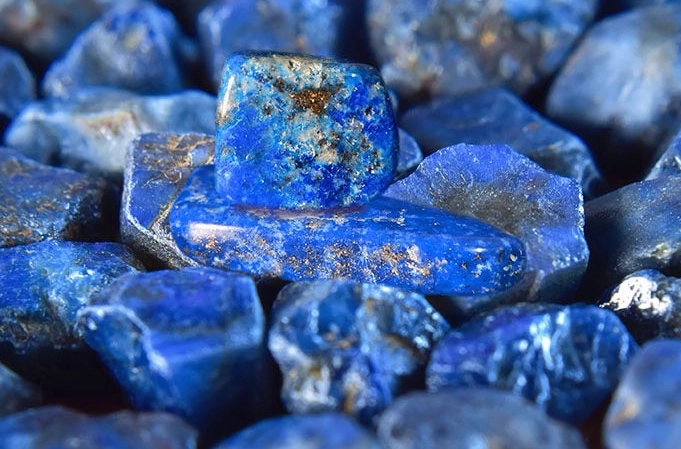
| Property | Details | Why It Matters for Use |
|---|---|---|
| Chemical Composition | A rock primarily of (Na,Ca)8(AlSiO4)6(S,SO4,Cl)2 (Lazurite), plus Calcite (CaCO3) and Pyrite (FeS2). | Explains the color (sulfur in lazurite), the white streaks (calcite), and the gold spots (pyrite). |
| Color | Deep blue, violet-blue, azure. Can have white calcite veins and brassy-yellow pyrite inclusions. | The primary value factor. Uniform, intense blue is most valuable. The color is why it was used as a pigment. |
| Hardness (Mohs Scale) | 5 to 5.5. This is relatively soft for a gemstone. | Critical for jewelry! It can be scratched easily by common dust (quartz is 7). Requires protective settings and careful wear. |
| Luster | Dull to greasy when raw; takes a beautiful polish to a vitreous (glassy) to waxy shine. | Polished lapis is stunning for beads, cabochons, and carvings. The polish enhances the depth of color. |
| Transparency | Opaque. Light does not pass through it. | Always cut en cabochon (smooth, domed) or into beads, not faceted. Valued for its solid, royal color mass. |
| Fracture | Uneven, granular. Can be brittle. | Requires skill to cut and carve. Can chip if struck. Not suitable for rings exposed to daily knocks. |
| Specific Gravity | 2.7 to 2.9 (Average to slightly heavy for its size). | It has a nice, substantial heft in the hand, which adds to the perception of quality. |
See that hardness? 5.5. Let me put that in perspective. A steel knife blade is about 5.5. Your fingernail is 2.5. So lapis is harder than your nail, but softer than a lot of things in your environment. This single property dictates so much about lapis lazuli uses in jewelry. It's why you'll often see it in pendants, earrings, or brooches more than in everyday rings or bracelets that get bashed around. A lapis ring needs a bezel setting to protect the edges, not a prong setting that leaves it exposed.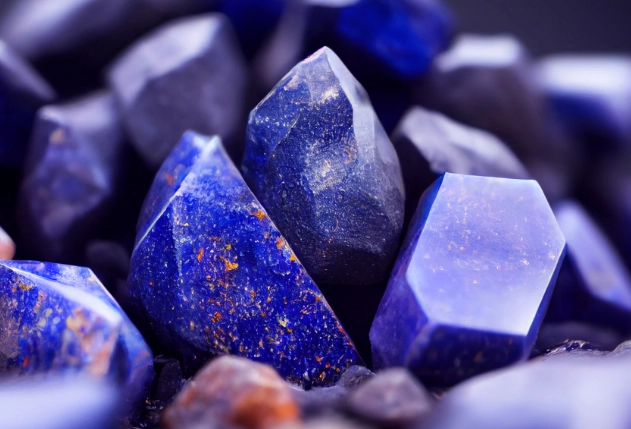
A Quick Reality Check on Durability
I love lapis, but I have to be honest about its drawbacks. It's porous and sensitive. Acids? A big no-no. Even lemon juice, vinegar, or perfume can damage the surface and dull the polish. Heat and prolonged sunlight can fade the color over time. And because of the calcite, it's vulnerable to water. A quick rinse is okay, but don't soak it. Forget about ultrasonic or steam cleaners—they will ruin it. Caring for lapis means treating it like the ancient, slightly delicate treasure it is. Wipe it with a soft, dry cloth. That's it.
A Journey Through Time: Historical and Cultural Uses
To really grasp lapis lazuli properties and uses, you have to travel back in time. Its history is its resume. This wasn't just a decorative stone; it was a substance of power, art, and divinity.
The best historical lapis came from a single, remote source for millennia: the Sar-e-Sang mines in the Kokcha River valley of modern-day Afghanistan. Getting it to Egypt or Mesopotamia was an epic journey along the Silk Road, which made it more valuable than gold in some eras. The Smithsonian Institution has fantastic examples of ancient lapis artifacts that show just how far it traveled.
So, what did they do with it?
- The Ultimate Status Symbol: In ancient Egypt, lapis was associated with the night sky and the heavens. It was sacred to deities like Isis and Ma'at. Pharaohs and high priests used it in jewelry, burial masks (think Tutankhamun's iconic gold mask with lapis and other stones), and amulets for protection in the afterlife. Scarabs, eye of Horus amulets—you name it, they carved it from lapis.
- Ground-Up Heaven: Ultramarine Pigment: This is one of the most profound lapis lazuli uses in human history. From the 6th century onward, artists in Asia, and later in Renaissance Europe, painstakingly ground high-quality lapis into a powder to create the pigment "ultramarine" (meaning "beyond the sea," referencing its distant origin). The process was labor-intensive and expensive. The resulting blue was unlike any other—it didn't fade, and it had a incredible depth and luminosity. It was reserved for the most important figures in a painting, like the Virgin Mary's robes. Looking at a Renaissance masterpiece, that radiant blue you see is literally crushed lapis lazuli. The National Gallery, London discusses this in detail regarding their collection.
- Seals, Inlays, and Ornamentation: Across Sumer, Assyria, Greece, and Rome, lapis was used for cylinder seals, intricate inlays in furniture and weapons, and carved into small figurines. The Romans even believed it was a powerful aphrodisiac.
- Medieval Medicine and Alchemy: In the Middle Ages, it was ground and ingested (not recommended today!) as a treatment for melancholy and to ward off evil spirits. Alchemists saw it as a stone that could connect the physical and spiritual worlds.
This historical context isn't just trivia. It's the foundation for the stone's modern mystique. When you wear lapis, you're connecting to a material thread that runs through the heart of human civilization.
Beyond the Physical: Metaphysical Properties and Modern Energetic Uses
Alright, here's where we step into territory that isn't about hard science but about personal and cultural belief. The metaphysical lapis lazuli properties and uses are a huge reason people seek it out today. Whether you're a firm believer or just curious, understanding this aspect is part of the full picture.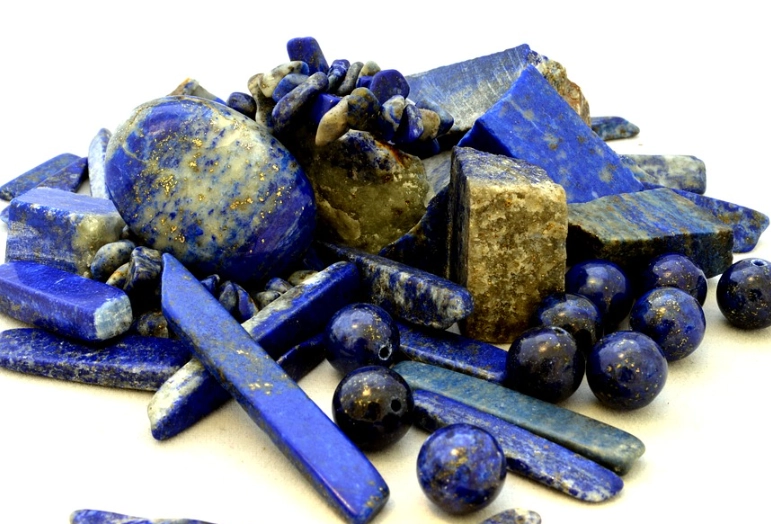
Lapis is often called the "Stone of Truth" or the "Stone of Awareness." Across various spiritual traditions, its core themes are consistent:
Core Energetic Associations
- Truth and Self-Awareness: It's said to encourage honesty—with others and, more importantly, with yourself. It's linked to piercing through illusion, denial, and self-imposed limitations. Have you been telling yourself a story that isn't true? Lapis is thought to bring that to light.
- Communication and Expression: Connected to the throat chakra (the energy center linked to communication), lapis is believed to empower you to speak your truth clearly, calmly, and with authority. It's a favorite for public speakers, writers, and anyone who needs to have a difficult conversation.
- Wisdom and Intellectual Ability: Historically the stone of scholars and philosophers, it's believed to stimulate the desire for knowledge, enhance intellectual analysis, and improve memory. Some students keep a piece on their desk while studying.
- Inner Peace and Emotional Release: The deep blue is associated with calm and serenity. It's thought to help process feelings of anger, resentment, or anxiety, replacing them with a sense of peace and emotional clarity.
Now, how do people actually use it with these ideas in mind? It's not magic; it's more about intention and focus.
Practical Ways to Use Lapis Lazuli Today
- As Jewelry: The most direct method. Wearing it as a necklace or pendant keeps it near your throat chakra. A bracelet or ring serves as a constant tactile reminder of your intention (truth, clarity). Just remember the durability concerns we talked about.
- Meditation Aid: Holding a tumbled stone or placing it nearby during meditation. Focus on its cool weight and color. Ask for clarity on a specific issue or simply use it to quiet a busy mind.
- On Your Desk or Workspace: Placing a small sphere or carving on your desk is believed to promote clear thinking, focus, and honest communication in your work.
- As a Touchstone: Keep a small, polished piece in your pocket. When you feel anxious or unsure, reach for it. The physical act can ground you and bring your focus back to your core intention.
- In Your Environment: Larger, decorative pieces act as beautiful reminders of the qualities you want to cultivate in your home—wisdom, peace, truthful communication.
My personal take? I keep a small, raw chunk on my writing desk. I can't prove it "does" anything scientifically, but I like it. It's a visual cue. When I'm stuck or my writing feels muddled, I'll pick it up, feel its texture, and it helps me pause and refocus on trying to be clear and honest in what I'm saying. That's a real use, even if it's psychological.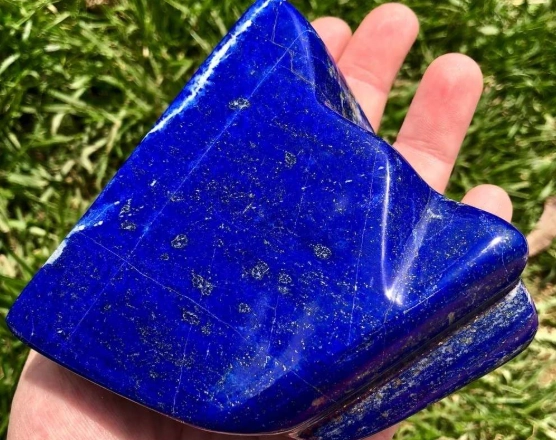
Navigating the Modern Market: Buying, Authenticity, and Value
This is where many guides on lapis lazuli properties and uses fall short. They don't tell you how to actually get a good piece without getting ripped off. The market is flooded with imitations and treated stones. Let's get practical.
How to Spot the Real Deal (and Avoid the Fakes):
- Look for the Gold (Pyrite): Genuine lapis almost always has tiny, irregular flecks of pyrite. They are brassy-yellow, not perfectly round, and embedded within the stone. If the "gold" spots look painted on top, are too uniform, or are missing entirely on a deep blue stone, be suspicious.
- Beware of a Too-Perfect, Cheap Blue: A very uniform, intense blue with no calcite or pyrite at a low price is almost certainly dyed howlite or magnesite. Howlite is a white stone that dyes easily and often mimics lapis poorly. Real, high-quality lapis with that color is expensive.
- The Calcite Test: White calcite veins are natural. However, if you see a stark, web-like pattern of white that looks like it's on the surface, it might be a dyed stone where the dye didn't penetrate the cracks.
- The Scratch Test (Carefully): Remember the hardness of 5.5? You can carefully try to scratch an inconspicuous spot with a steel knife (hardness 5.5). Real lapis should be scratched by it. If the stone scratches the knife, it's something harder, like dyed jasper or sodalite.
- The Dye Test (At Your Peril): Acetone or nail polish remover on a cotton swab rubbed on an inconspicuous area can sometimes reveal dye. If blue comes off, it's fake. Warning: This can also damage real lapis, so use it only as a last resort on a piece you're willing to risk.
Understanding Treatments:
- Waxing/Oiling: Very common. A light wax or oil coating is often applied to polished lapis to enhance the color and luster, filling tiny surface pores. This is generally accepted in the trade but should be disclosed. It can wear off over time, making the stone look duller.
- Dyeing: Unacceptable for quality lapis. Low-quality, pale, or calcite-heavy lapis is sometimes dyed to look like premium material. This is deceptive.
- Reconstitution: Lapis powder mixed with resin and pressed into blocks. It's sold as "reconstituted lapis" and is much cheaper. It's not fake, but it's not natural solid stone. It should be clearly labeled as such.
What Determines Value?
- Color: Deep, uniform, violet-blue ("Afghan Blue") is top-tier. Lighter blue or heavy white veining lowers value.
- Pyrite Presence: A fine, even dusting of pyrite is desirable. Large, blotchy patches of pyrite are less attractive. No pyrite can be a red flag.
- Calcite Content: Minimal to no visible white calcite. The less, the better.
- Polish and Craftsmanship: A high, even polish on a well-shaped cabochon or bead adds value.
- Origin: Afghan lapis (especially from the old Sar-e-Sang mines) commands a premium. Chilean and Russian lapis exists but often has more calcite and a different, sometimes greener-blue hue.
My advice? Buy from reputable dealers who provide clear information about treatments and origin. If a price seems too good to be true for a perfect, deep blue stone, it almost certainly is. A smaller, genuine piece is always better than a large, fake one. The Gemological Institute of America (GIA) website is an excellent, non-commercial resource for gemstone buying guides and education.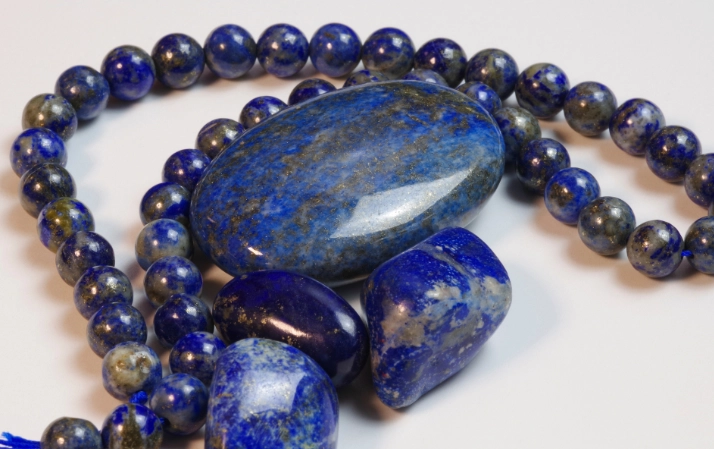
Your Questions, Answered: Lapis Lazuli FAQ
Putting It All Together: A Stone for Our Time
We've covered a lot of ground—from the atomic structure of lazurite to the palaces of pharaohs to the meditation cushions of today. Understanding lapis lazuli properties and uses isn't just about memorizing facts; it's about appreciating a substance that bridges the gap between the earth and human aspiration.
Its physical properties make it both beautiful and challenging to use. Its historical uses reveal our ancestors' quest for the divine and the sublime. Its modern metaphysical uses speak to our ongoing need for truth, clarity, and inner peace in a noisy world.
Whether you're drawn to it for its stunning color, its profound history, or its symbolic meaning, lapis lazuli offers something tangible. It's a piece of the planet that reminds us to look deeper, speak truer, and connect to a legacy of human wonder that stretches back to the dawn of civilization.
So, the next time you see that deep blue stone with the golden sparks, you'll see more than just a rock. You'll see a chapter of human history, a masterpiece of geology, and perhaps, a tool for your own journey.
Related Articles
Crystal Sodalite Benefits: Healing, Protection & Practical Uses
Aventurine Crystal: Meaning, Benefits, and How to Use It
The Ultimate Sapphire Guide: Buying, Authenticity & Care Tips
Metaphysical Properties of Labradorite: A Guide to Spiritual Power
Unlock the Power of Green Crystals: Your Guide to Healing, Harmony, and Growth