You see crystals everywhere—in jewelry stores, wellness shops, even on your friend's desk. But when someone asks "what are the 7 types of crystals?", most people just list seven random stones. That misses the point entirely. The real "7 types" refer to the seven crystal systems, the fundamental architectural blueprints that govern how every single mineral on Earth forms. Understanding this isn't just academic; it's the key to predicting a crystal's energy, how it should be cleansed, and what it's truly capable of. Let's cut through the fluff and get to the core of what makes each type unique.
What's Inside?
- The Science Behind the 7 Crystal Systems
- 1. The Cubic (Isometric) System: Stability & Grounding
- 2. The Tetragonal System: Focus & Intention
- 3. The Hexagonal System: Harmony & Communication
- 4. The Trigonal System: Energy & Activation
- 5. The Orthorhombic System: Strength & Manifestation
- 6. The Monoclinic System: Intuition & Flexibility
- 7. The Triclinic System: Uniqueness & Integration
- How to Choose & Use Your Crystals Based on Type
- Your Crystal Questions, Answered
The Science Behind the 7 Crystal Systems
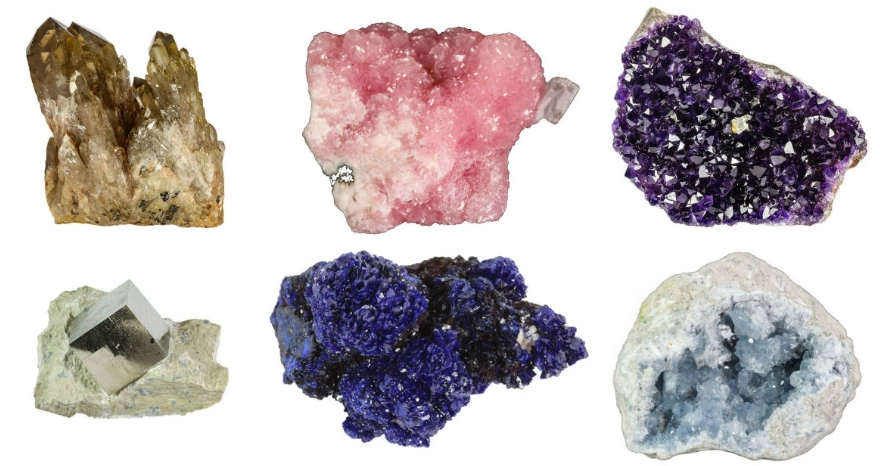
Here's the thing most crystal blogs won't tell you: the "healing properties" people talk about aren't pulled from thin air. They're often intuitively linked to the crystal's physical structure. A dense, cubic crystal like Pyrite feels grounding because its atoms are packed in a perfect, stable grid. A long, pointed Tetragonal crystal like Zircon naturally directs energy, making it great for focus. The science of crystallography and the practice of crystal healing are having a conversation, not a fight.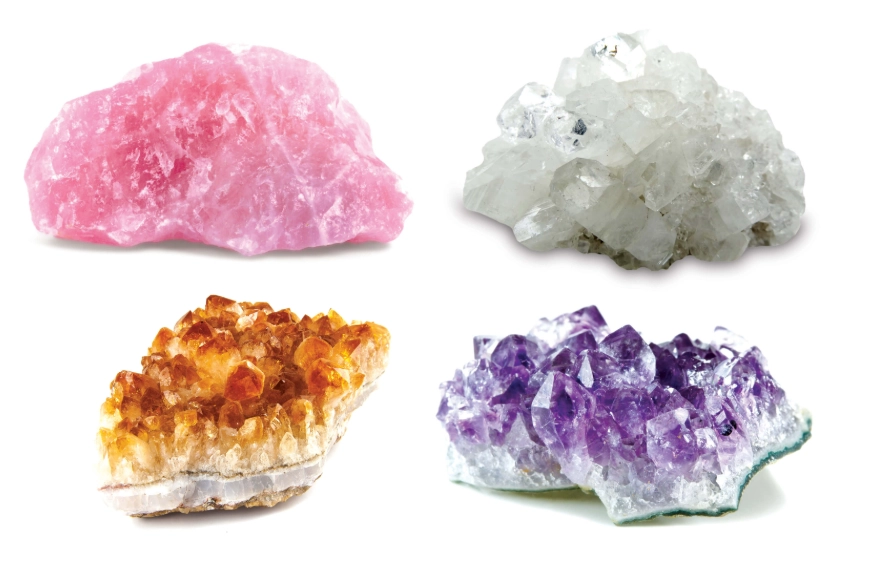
1. The Cubic (Isometric) System: Stability & Grounding
Think of a perfect cube or an octahedron (like two pyramids stuck together). All sides are equal, all angles are 90 degrees. This is the architecture of stability.
| Common Examples | Key Energy Attributes | Best Used For | Cleansing Tip |
|---|---|---|---|
| Pyrite (Fool's Gold), Fluorite (often cubic), Garnet, Diamond, Halite (Salt) | Grounding, protection, abundance, logical thinking, structure. Energy is balanced and evenly distributed. | Placing in the corner of a room for stability, carrying during stressful work projects, wealth grids. | Burying in earth or salt is highly effective, mirroring their earthy structure. |
I keep a piece of raw Pyrite on my desk. When my thoughts are scattered, holding its heavy, cubic mass literally pulls me back down. It's not magical thinking; the sheer density of the thing is a physical anchor.
2. The Tetragonal System: Focus & Intention
Picture a prism that's square in cross-section but longer in one direction, like a box of spaghetti. It has a primary, elongated axis. Energy flows along this main channel.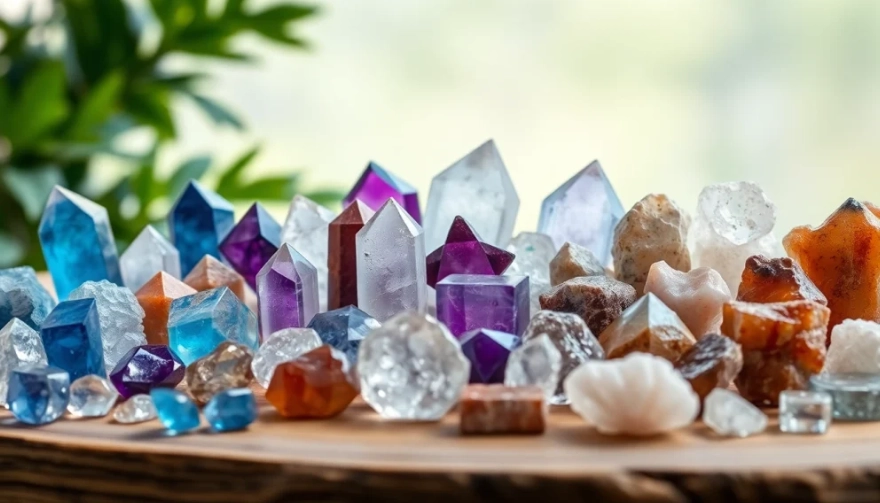
Zircon and Apophyllite (often in tetragonal crystals) are classic examples. Their structure is all about direction. If Cubic crystals are a stable home, Tetragonal crystals are an arrow. They're phenomenal for meditation when you have a specific goal—breaking a habit, focusing on an exam, sending healing intentions. Point the long end towards your body or towards the direction you want the energy to flow.
Many people confuse clear Quartz points (which are hexagonal) with Tetragonal crystals. The key difference is in the cross-section: Tetragonal is square, Hexagonal is six-sided.
3. The Hexagonal System: Harmony & Communication
This system gives us six-sided prisms. It's one of the most common and beloved systems in the crystal world.
| Common Examples | Key Energy Attributes | Best Used For |
|---|---|---|
| Clear Quartz, Amethyst, Citrine, Emerald (Beryl), Aquamarine (Beryl) | Amplification, clarity, spiritual connection, harmony, balance. Acts as a conduit and programmer. | Amplifying other crystals' energies, meditation, clearing mental fog, placing in communication hubs (like the living room). |
Clear Quartz is the "master healer" because its hexagonal structure is a superb energy transmitter and amplifier. It doesn't have a strong energy of its own; it takes on and magnifies whatever you (or nearby crystals) project onto it. That's why it's so versatile.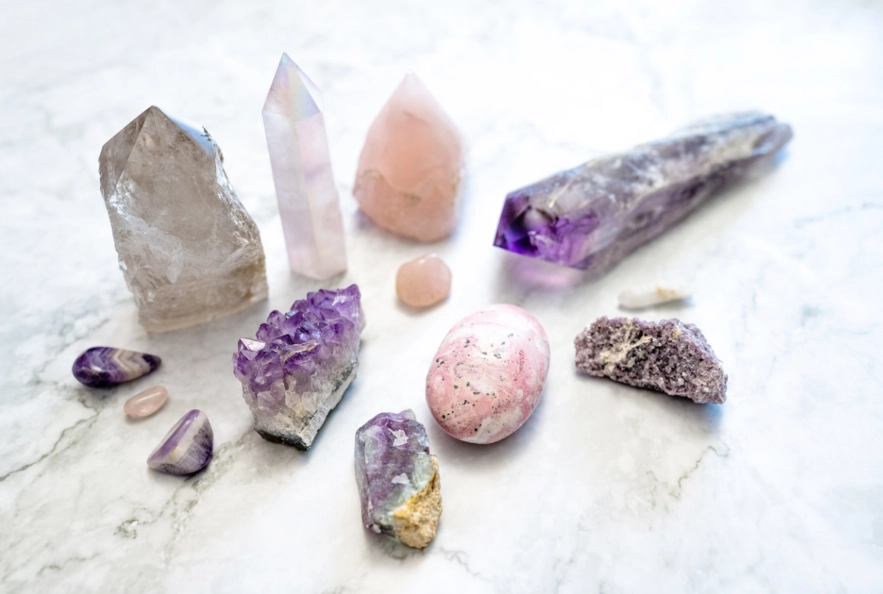
4. The Trigonal System: Energy & Activation
This is a subset of the Hexagonal system but with a three-fold symmetry. Think triangles and rhombohedrons. The energy here is dynamic and activating.
Tourmaline (in its black Schorl form or colorful varieties), Calcite, and Quartz (when you look at its termination, the faces are often trigonal) belong here. Tourmaline is famous for its piezoelectric property—it generates an electric charge under pressure. Metaphysically, this translates to powerful protective and energy-clearing abilities. Black Tourmaline is like a spiritual lightning rod for negativity.
Calcite, often forming in rhombohedral shapes, is a mental cleanser. It helps break old thought patterns. I find Trigonal system crystals are best for jump-starting a stagnant situation or creating a strong shield before entering a challenging environment.
5. The Orthorhombic System: Strength & Manifestation
Imagine a brick. Three axes of different lengths, all at right angles. This is the system of tangible results and strength.
Topaz, Peridot, Danburite, and Celestite (often) form in this system. Their energy is about bringing things into alignment to produce a result. Topaz is known for manifesting strength and success. Peridot is said to attract prosperity. Their structure isn't as balanced as a cube, nor as directed as a tetragonal prism—it's a practical, workmanlike shape that gets things done.
If you're working on a long-term project that requires consistent effort, an Orthorhombic crystal on your workspace can be a great ally. It's the energy of the steady builder.
6. The Monoclinic System: Intuition & Flexibility
Here, things get a little tilted. Two axes are at right angles, the third is oblique. The classic shape is a prism with a slanted roof. This asymmetry relates to intuition and adaptability.
Selenite, Lepidolite, Jade, and Azurite are Monoclinic. Selenite's soft, fibrous, often blade-like form channels high-frequency energy for clearing spaces and connecting to intuition. Lepidolite, rich in lithium, is a natural for calming anxiety—it helps you bend without breaking under stress, mirroring its asymmetrical structure.
These crystals are less about rigid rules and more about gentle flow. They're perfect for emotional work, dream recall, and situations requiring flexibility.
7. The Triclinic System: Uniqueness & Integration
The most asymmetrical system. All three axes are of unequal length and none are at right angles. These crystals are often less flashy but deeply complex.
Labradorite, Turquoise, Rhodonite, and Kyanite (often) are Triclinic. Their energy is about integrating disparate parts. Labradorite, with its hidden flash of color (labradorescence), is the stone of magic and revealing one's true self. Rhodonite, with its pink and black patterns, integrates love (pink) with grounding (black manganese oxides) for emotional healing.
These crystals teach that beauty and power lie in asymmetry and complexity. They're for deep, integrative healing and embracing your unique path.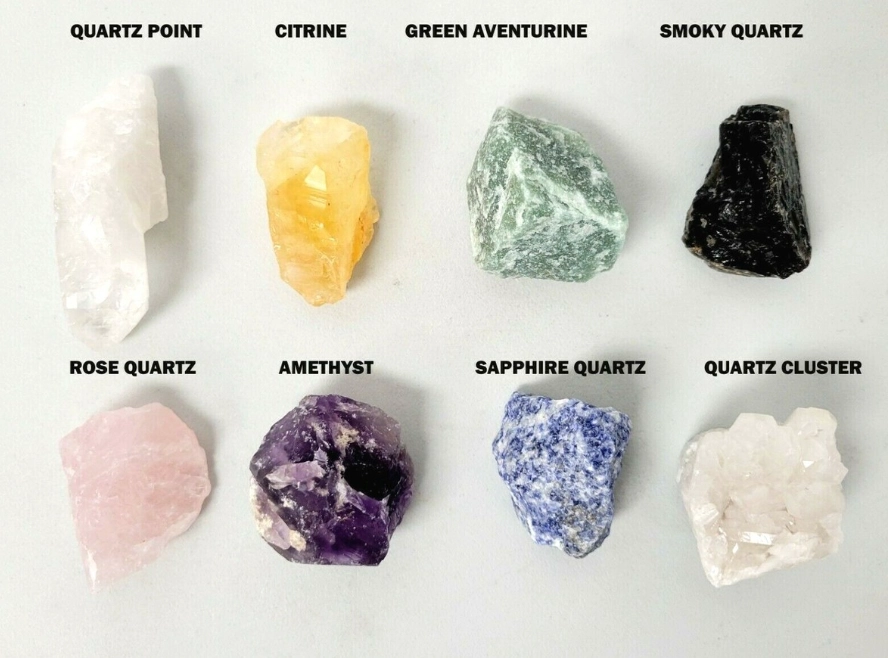
How to Choose & Use Your Crystals Based on Type
Now, the practical part. You don't need a degree in mineralogy to use this.
By Feel: Hold a Cubic crystal (like Pyrite). Feel its solid, heavy, "contained" energy. Now hold a pointed Hexagonal crystal (like Clear Quartz). Feel the directional, flowing energy. Your body can sense the difference.
By Need:
- Need stability and grounding? Go Cubic (Pyrite, Garnet).
- Need to focus energy on one goal? Go Tetragonal/Hexagonal point (Zircon, Quartz point).
- Need to clear and protect? Go Trigonal (Black Tourmaline).
- Feeling anxious and inflexible? Go Monoclinic (Lepidolite, Selenite).
- Working on deep, complex personal integration? Go Triclinic (Labradorite).
Placement: Use Cubic crystals at the foundation of a crystal grid or in room corners. Place pointed crystals (Tetragonal, Hexagonal) pointing in the direction you want energy to move. Lay Monoclinic blades (Selenite) over other crystals to cleanse them or beside your bed for intuitive dreams.
Your Crystal Questions, Answered
Related Articles
The Ultimate Guide to Clear Quartz Healing Properties & How to Use It