You've seen it. That deep green stone speckled with drops of red, like a forest floor after a rain of rust. It looks ancient, powerful, maybe a little intimidating. That's bloodstone. For centuries, it's been carried by warriors, healers, and alchemists. Today, it's popular in crystal healing circles for its supposed grounding and energizing properties. But most of what you read online is a surface-level rehash. After years of collecting and working with stones, I've seen the same myths repeated and the same practical questions go unanswered.
Let's cut through the noise. This isn't just a list of vague "properties." This is a practical manual for anyone who's bought a piece of bloodstone, held it, and thought, "Okay, now what?"
What's Inside This Guide
- What Exactly Is Bloodstone? (Beyond the Hype)
- Healing Properties: The Good, The Misunderstood, and The Overhyped
- How to Actually Use Bloodstone: 4 Practical Methods That Work
- The No-Nonsense Guide to Buying Authentic Bloodstone
- Keeping It Powerful: Simple Care and Cleaning
- Your Bloodstone Questions, Answered
What Exactly Is Bloodstone? (Beyond the Hype)
First, the boring (but essential) science. Bloodstone is a variety of chalcedony, which is itself a form of microcrystalline quartz. The deep green color comes from chlorite or amphibole inclusions. The famous red spots? That's iron oxide, specifically hematite. Geologically, it's often called heliotrope.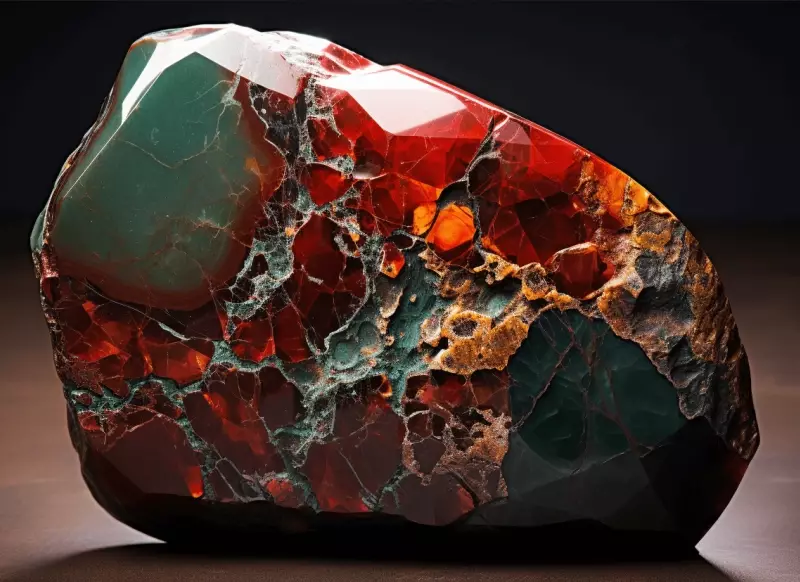
It's not rare, but high-quality pieces with vivid green and bright, distinct red flecks are more sought after. Major sources include India, Brazil, Australia, and the United States.
Now, the history. This is where it gets interesting. Ancient Roman soldiers believed it could slow bleeding and carried it as an amulet. Medieval Christians linked the red spots to the blood of Christ, carving scenes of crucifixion into it, dubbing it "the martyr's stone." Alchemists used it in their experiments. This long history isn't just trivia; it builds the narrative energy people feel when they hold it. You're holding a piece of human belief.
Healing Properties: The Good, The Misunderstood, and The Overhyped
Let's talk about what people say bloodstone does. The common list is everywhere: courage, strength, purification, detoxification, grounding. It's often linked to the root and heart chakras.
Here’s my take, after a decade: Bloodstone is less about calming you and more about focusing you. It's not a tranquilizer. It's a motivator.
Think of a time you were overwhelmed—a huge to-do list, a difficult conversation looming. Your energy scatters. Anxiety buzzes. Bloodstone’s purported energy feels like it gathers that scattered buzz and channels it downward, into your legs and the earth, turning panic into purposeful action. It’s the crystal equivalent of taking a deep breath and saying, "Okay, let's tackle this first thing."
Where People Get It Wrong
The biggest misconception is treating it as a primary "love" or "peace" stone. It can support heart energy, but as a stabilizer, not a gentle opener like rose quartz. Its version of "love" is more about loyalty and enduring tough times together.
Also, the detoxification link is often taken too literally. No credible source, like the Gemological Institute of America (GIA), attributes physical detox to crystals. Metaphorically, it might help you "detox" procrastination or negative thought patterns that hold you back from action.
How to Actually Use Bloodstone: 4 Practical Methods That Work
Owning a crystal is pointless if it just sits on a shelf. Here are ways to integrate it into your life that feel real, not ritualistic.
1. The Decision-Making Companion
Got a tough choice? One that requires guts? Hold a tumbled bloodstone in your dominant hand. Don't just sit there waiting for a sign. Use the time to mentally list the pros and cons. The stone's role is to keep your energy grounded and focused on practical outcomes, not fearful "what-ifs." I keep one on my desk for days filled with administrative drudgery—it helps me push through.
2. For a Boost During Physical Activity
This ties back to its warrior history. Slip a small tumbled stone in your pocket before a workout, a long hike, or even a demanding day of chores. It’s not going to increase your VO2 max, but it might help you find that second wind when you want to quit. The association with endurance is powerful.
3. In Your Environment
Place a larger specimen or sphere in your home office or workspace. Its energy is said to counteract lethargy and promote a steady, productive flow. Avoid the bedroom if you're sensitive—its energizing vibe might be too stimulating for sleep for some people.
4. Simple Elixir (External Use Only)
Place a cleansed, tumbled bloodstone in a glass jar of water. Leave it in moonlight or sunlight for a few hours. Remove the stone. Use this water to water your plants (they love it) or as a face mist/spray. Never ingest crystal elixirs internally. This method captures the symbolic essence of vitality and growth.
The No-Nonsense Guide to Buying Authentic Bloodstone
The market is flooded with fakes and mislabeled stones. Here’s how to shop smart.
- Look at the Pattern: It should be a green base with red flecks. The red should look like it's inside the stone, not painted on. Beware of pieces where the red is too uniform or forms large, solid patches.
- Feel the Weight and Temperature: As a form of quartz, it should feel denser than plastic and cool to the touch initially.
- Check the Source: Reputable sellers will list the origin (e.g., India). Be wary of sellers only using stock photos.
- Price Point: Raw or tumbled bloodstone is generally affordable. A palm-sized tumbled stone should typically cost between $5 and $20 USD. Exceptionally vibrant pieces or large carvings cost more. If it's dirt cheap, question it.

My personal rule? I'd rather have one small, genuine, high-quality piece than a handful of dubious ones. The connection is stronger.
Keeping It Powerful: Simple Care and Cleaning
You don't need elaborate rituals. Bloodstone is relatively hard (6.5-7 on the Mohs scale) and durable.
- Cleansing: Rinse it under lukewarm running water for a minute. Visualize stagnant energy washing away. Pat it dry. You can also leave it on a bed of hematite tumbled stones overnight.
- Recharging: Bury it in dry earth (a plant pot works) for 24 hours. Its earthy nature resonates with this. Moonlight is also fine, but sunlight can fade some minerals over a very long period—not a major concern for occasional charging.
- What to Avoid: Harsh chemicals, extreme temperature changes, and ultrasonic cleaners (the vibrations can sometimes exploit natural fractures).

Your Bloodstone Questions, Answered
Ultimately, the value of bloodstone, or any crystal, is what you project onto it and how it reminds you to show up. It’s a tangible touchstone for courage, a physical reminder to take that next step, even when it's hard. Find a piece that speaks to you, use it with intention, and see if it makes a difference in your focus and fortitude. That's the real test.
Related Articles
Selenite Crystal: Meaning, Uses & How to Get the Most From It
Blue Lapis Healing Properties: Unlocking Emotional Balance & Spiritual Insight
Ruby Gemstone Meaning and Benefits: A Complete Guide
Indigo Gabbro Meaning Explained: Mystical, Healing & Geological Facts
The Ultimate Guide to Orange Sapphire Raw Gems: Value, Buying & Care