The most direct answer is "Blue Chalcedony" itself is the other name. Let me explain that seeming contradiction. In the gem and crystal world, "chalcedony" is the broad family name for a type of microcrystalline quartz. When it's blue, we call it blue chalcedony. So, if someone asks for "another name," they might be hearing trade names like "Blue Lace Agate" (a specific banded type) or locale-based names like "Mohave Blue" or "Holly Blue." But technically, they're all blue chalcedony. The confusion starts because sellers and collectors love specific labels. I've seen people pay double for a stone called "Holy Blue" that's mineralogically identical to a cheaper piece of light blue chalcedony from another mine. It's a naming game as much as a geological one.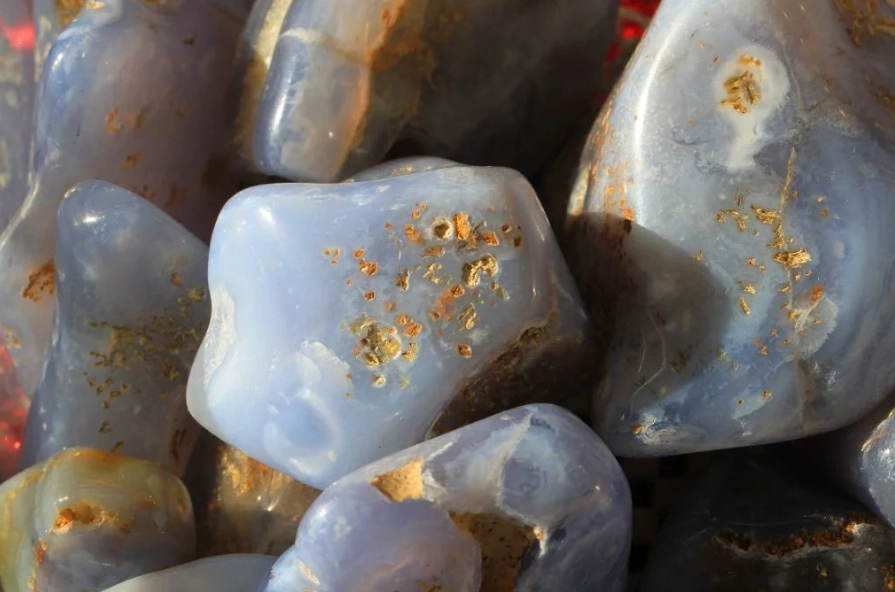
What You'll Discover in This Guide
What Exactly is Blue Chalcedony?
Chalcedony is a catch-all term for quartz that's made of super tiny crystals you can't see with the naked eye. Think of it like sandstone versus a solid quartz crystal. Blue chalcedony gets its color mainly from traces of minerals like copper or from the way light scatters within its microscopic structure. It's not a flashy, sparkly gem. Its beauty is in its soft, waxy luster and tranquil, often uneven, blue hues—ranging from pale sky blue to a deeper grayish-blue.
It forms in all sorts of environments, often in volcanic rock cavities or as sedimentary deposits. Major sources include Namibia, Turkey, and the United States (like Arizona and California). The location often dictates the nickname, which brings us to the core of the name game.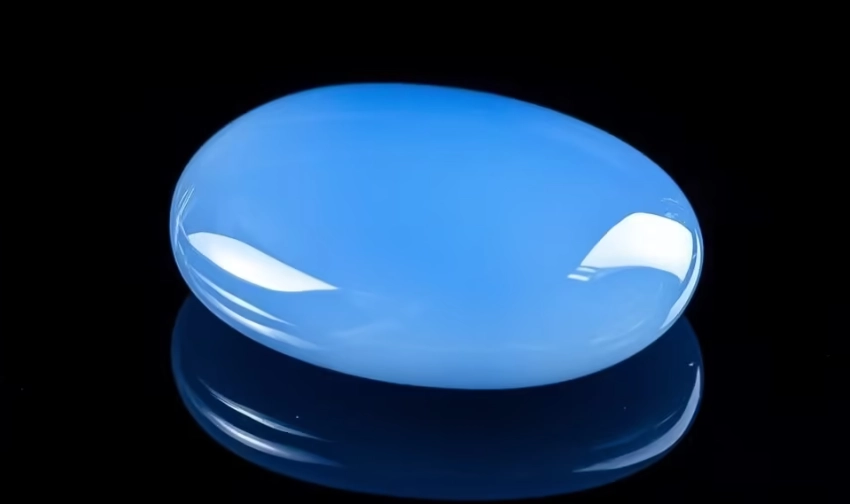
A quick note on durability: With a Mohs hardness of 6.5 to 7, blue chalcedony is decent for jewelry but can scratch if you're rough with it. Don't wear it while gardening or lifting weights. I learned that the hard way with a scratched cabochon ring.
The Other Name(s) for Blue Chalcedony
Here’s where it gets interesting. "Blue Chalcedony" is the correct mineralogical name. But in the market, you'll rarely see just that. Sellers use more descriptive or glamorous names to indicate style, quality, or origin.
Why the Confusion Exists?
The gem trade thrives on variety. Calling everything just "blue chalcedony" doesn't help a buyer distinguish a milky, pale stone from one with fine white bands. So, we get varietal names. This isn't unique to chalcedony—think of how many names there are for quartz (amethyst, citrine, etc.).
The table below breaks down the most common "other names" you'll encounter, which are essentially subtypes or marketing terms for blue chalcedony.
| Common Market Name | What It Really Means | Typical Look & Key Feature |
|---|---|---|
| Blue Lace Agate | A banded variety of chalcedony with delicate, parallel blue and white stripes. | Light blue with fine white bands. Prized for its lace-like pattern. |
| Mohave Blue (or Mojave Blue) | Blue chalcedony specifically from the Mojave Desert region in the USA. | Often a pure, light to medium sky blue without strong banding. |
| Holly Blue / Holy Blue | A trade name for high-quality, intensely blue material, often from specific deposits. | A richer, more saturated blue color. Can be more expensive. |
| Ellensburg Blue | A highly sought-after variety from near Ellensburg, Washington, USA. | Unique grayish-blue to bright blue color. Has a dedicated collector following. |
So, when you ask for another name, any of these could be the answer. If a healer talks about "Blue Lace Agate," they're referring to a specific kind of blue chalcedony known for its gentle energy. A geologist or serious collector might say "Mohave Blue" to specify the origin and expected quality. For most intents and purposes, they are interchangeable in terms of fundamental properties, but the specific names help you know what you're getting visually and sometimes in perceived metaphysical value.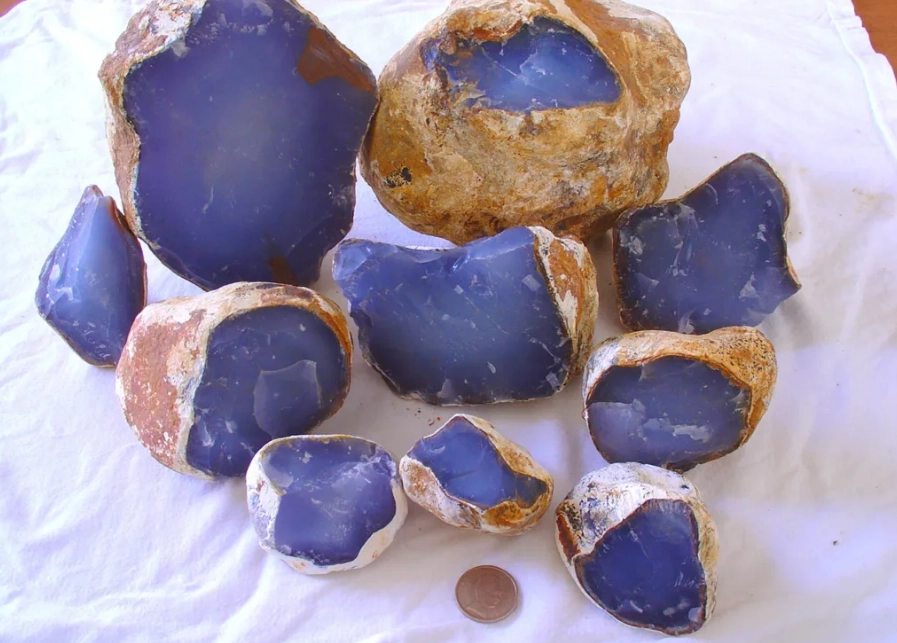
Why It's More Than a Pretty Stone: Healing & Uses
This is why most people search for it. Blue chalcedony isn't just a decorative rock. In crystal healing and metaphysical practices, it's a heavyweight for emotional well-being. Its energy is almost universally described as calming, soothing, and communicative.
I keep a palm stone on my desk. When work calls get tense, I find myself rubbing it almost unconsciously. It's not magic, but the tactile focus and the stone's association with calm do help shift my mindset. That's the practical side of crystal work—it's a tool for intention.
Primary Healing Properties & How to Use Them
- Stress & Anxiety Relief: Its core reputation. Place a piece on your solar plexus during meditation, or carry a tumbled stone in your pocket for stressful commutes or meetings.
- Communication: Called the "Speaker's Stone," it's believed to help with gentle, truthful expression. Hold it before a difficult conversation or wear it as a pendant.
- Emotional Balance: It's said to absorb negative emotional energy, like anger or irritability, replacing it with feelings of benevolence. Try placing a cluster in a room where family tensions tend to rise.
For home decor, its soft blue color makes it perfect for bathrooms (think soap dishes) or bedrooms, promoting a serene atmosphere. In jewelry, it's commonly cut into smooth cabochons for rings, pendants, and beads. A simple wire-wrapped pendant can cost between $20-$80, while finer jewelry with silver settings ranges from $50 to several hundred dollars, depending on the stone quality and metal.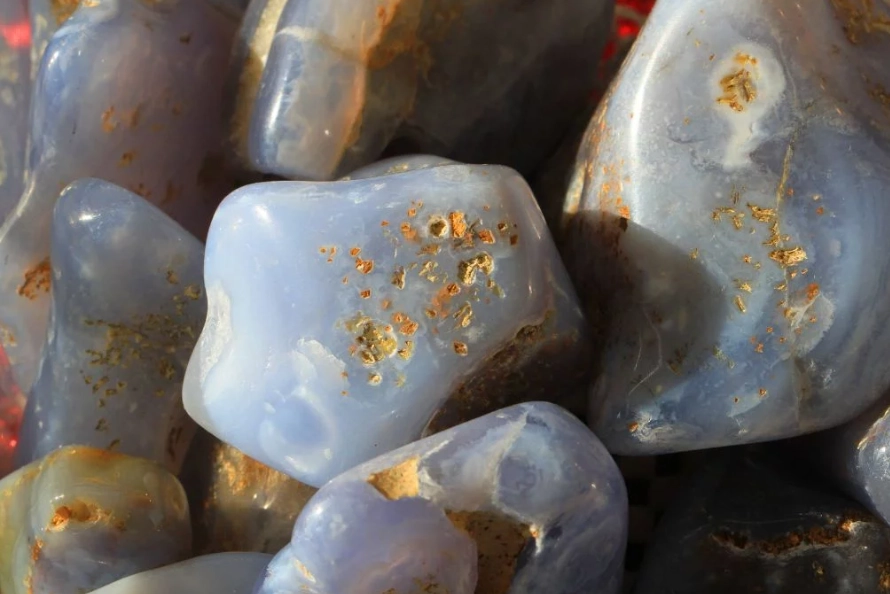
How to Spot Real vs. Fake Blue Chalcedony
The market is flooded with dyed howlite or magnesite masquerading as blue chalcedony, and even glass imitations. Here’s how not to get fooled, based on too many disappointments at flea markets.
Look at the color. Natural blue chalcedony usually has a soft, uneven color distribution. It might be bluer in some spots and whiter in others. If the color is screamingly bright, perfectly uniform, and deep into any cracks (especially in beads), it's almost certainly dyed. Dyed stones often have a concentrated color along fractures.
Feel the temperature. Real stone feels cool to the touch and takes a moment to warm up. Glass or plastic will feel closer to room temperature immediately.
Check for bubbles. Under a loupe (a small magnifier), glass imitations may contain tiny air bubbles. Genuine chalcedony has a more uniform, slightly granular texture under magnification.
Trust reputable sellers. Buy from established gem or crystal shops, either local or online with good reviews. Descriptions should say "natural" and mention the source if it's a named variety like Mohave Blue. If the price seems too good to be true for a large, vividly blue piece, it probably is.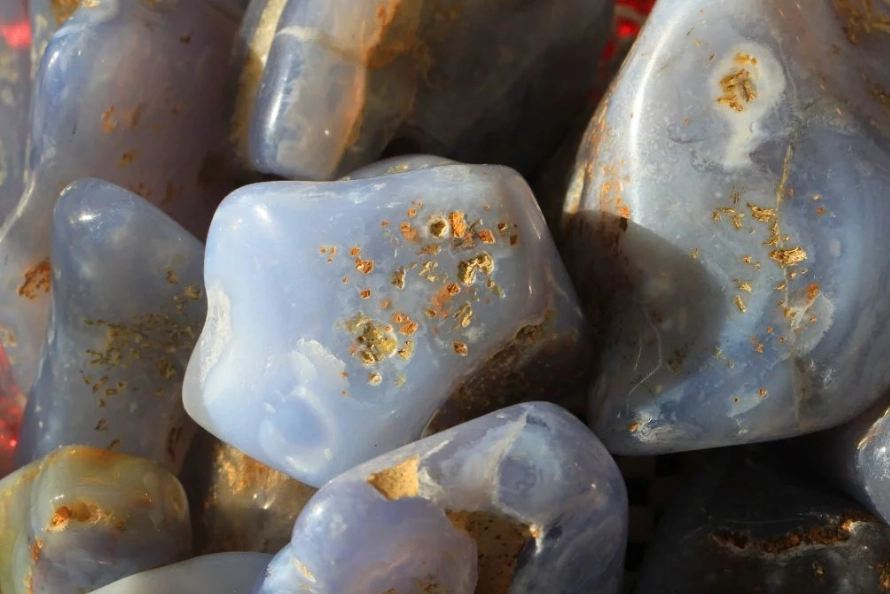
Your Blue Chalcedony Questions Answered
 What's the biggest mistake people make when buying blue chalcedony online?
Related Articles

Larimar: The Caribbean Gem's Unique Origins, Healing Power & Value
Blue Crystals Raw: A Complete Guide to Types, Uses, and Buying Tips
Lapis Lazuli Healing Properties Explained: A Complete Guide to Spiritual & Physical Benefits
Mookaite Meaning: Healing Properties, Uses & Identification Guide
Pink Quartz Gift Meaning: Love, Healing & Symbolism Explained