Quick Navigation
- So, What Exactly Is Ocean Jasper?
- What Does Ocean Jasper Look and Feel Like? The Nitty-Gritty Details
- Beyond Pretty: Meaning and Metaphysical Properties
- The Buyer's Guide: How to Spot Real vs. Fake Ocean Jasper
- Your Questions, Answered (The FAQ Section)
- Wrapping It Up: The Final Word on Ocean Jasper
Let's talk about Ocean Jasper. You've probably seen pictures of it online—those stunning stones with perfect little circles, swirling patterns, and colors that remind you of a tropical seabed. It's one of those crystals that makes you stop scrolling. But what is it really? Where does it come from, and why does everyone seem to be talking about it lately?
I remember the first time I held a piece. It was at a small gem show, tucked away in a vendor's case. It felt heavier than I expected, cool to the touch, and the patterns were even more intricate up close. The vendor called it "Ocean Jasper" and said it was from Madagascar. I was hooked. But since then, I've learned there's a lot of confusion, hype, and even misinformation floating around about this stone. Some sellers promise the moon with its "healing properties," while others can't even tell you if it's real or dyed.
So, I figured it was time to sit down and really dig into it. This isn't just a quick list of properties. We're going to look at the geology, the history, how to spot a fake, how to care for your stones, and what you can realistically expect from it. Whether you're a collector, someone into crystal healing, or just think it's pretty, there should be something here for you.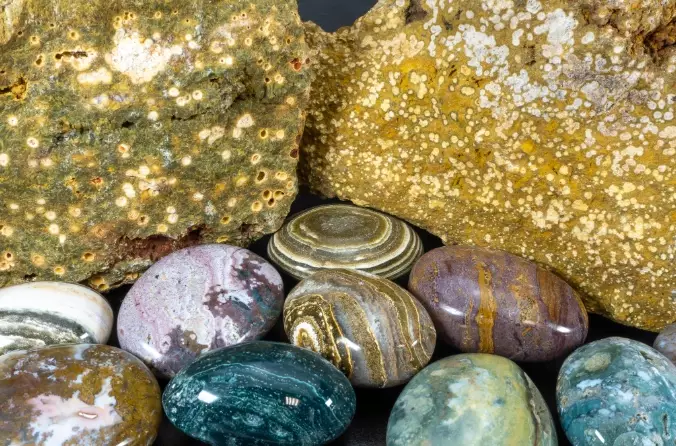
Quick Fact: Despite the name, Ocean Jasper isn't technically a "jasper" in the strict geological sense. True jaspers are opaque, microcrystalline quartz. Ocean Jasper is often a chalcedony (another form of quartz) that can be semi-translucent, and its defining feature is those orbicular (circular) patterns. But the name stuck because of its appearance.
So, What Exactly Is Ocean Jasper?
At its core, Ocean Jasper is a variety of silicate mineral, a type of quartz to be more specific. It's a chalcedony. The magic—the part that makes it an ocean jasper and not just any old stone—is in its formation and patterns.
It's what geologists call an "orbicular" rock. That's a fancy word for a rock that contains these small, often perfectly round, structures or "orbs." These orbs are usually made from a radial growth of quartz or feldspar crystals. Think of it like a pearl forming in an oyster, but happening countless times within a flowing mass of silica-rich gel, way underground, under intense heat and pressure.
The colors? They come from trace minerals and impurities that got mixed in during that formation process. The greens often come from chlorite or actinolite. The pinks and reds can be from iron oxides or hematite. The whites and creams are purer chalcedony. Each vein, each pocket where this material formed, is a little unique, which is why no two pieces are ever identical.
The One and Only Source (And Why It Matters)
Here's a crucial point that gets messed up all the time. Genuine Ocean Jasper comes from one place on Earth: the Ambolobozo Peninsula in the Analalava district of northwestern Madagascar.
It was discovered commercially only in the late 1990s. The story goes that a French geologist was exploring the remote coastline—accessible only by boat during low tide—and found these incredible patterned stones. Mining was a nightmare. The primary deposit was a coastal vein that would disappear under the Indian Ocean at high tide. Workers had to haul out material during brief low-tide windows.
Because of this single, difficult-to-reach source, true Ocean Jasper from the original deposit is technically finite. The main coastal vein was reportedly mined out in the 2000s. Later, inland veins were discovered in the same region, which is where most material on the market today comes from. But if a seller is vague about the origin or says it's from Brazil or India, you're likely not looking at the real deal. You might be looking at another orbicular jasper or rhyolite, which can be beautiful, but it's not Ocean Jasper.
This scarcity is a big part of its allure and price. When the original material hits the market, it commands a premium. The inland material is more common but can still be stunning.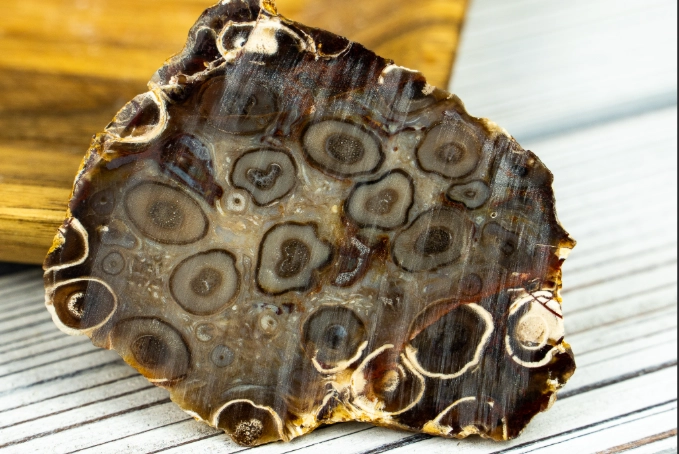
What Does Ocean Jasper Look and Feel Like? The Nitty-Gritty Details
Descriptions like "looks like the ocean" are poetic but not super helpful if you're trying to identify a piece. Let's get concrete.
The number one signature is the orbs or circles. They can be tiny dots or large, defined rings. Sometimes they're solid, sometimes they look like donuts with a different colored center (geologists call these "bull's-eye" orbs). The background can be any mix of green, white, cream, pink, red, brown, or yellow, often in swirling, banded, or cloudy patterns.
Texture-wise, it's a polish-lover's dream. It takes a brilliant, glassy polish. A well-cut cabochon of high-quality ocean jasper feels incredibly smooth and looks wet, even when it's dry. Lower quality pieces might be more granular or porous.
Here’s a breakdown of the common visual themes you’ll find, almost like different "patterns" within the Ocean Jasper family:
| Pattern Name | Description | What to Look For |
|---|---|---|
| Classic Orbicular | The textbook look. A background (often green or white) covered in distinct, separate circles of various colors. | Clear, defined orbs that aren't touching each other too much. Highly sought after. |
| Swirling/Marbled | Less distinct orbs, more flowing bands and swirls of color that blend into each other. | A painterly, watercolor effect. Can look like aerial shots of coastline. |
| "Egg" Pattern | Large, oval-shaped formations that look like nested eggs or elongated orbs. | Often in pinks and creams. Has a very organic, bubbly feel. |
| Bull's-Eye | Orbs with a clearly defined ring and a different colored center. | Concentric circles within each orb. Shows incredible formation detail. |
| Dreamy" or Translucent | Material that is less opaque, allowing some light to pass through, especially around the edges. | Holds a glow when backlit. Often in softer pastel colors. Quite rare and valuable. |
I personally lean towards the pieces with smaller, denser orbs on a deep green background. They just feel more... energetic to me. But the marbled pink and white ones have a calming vibe. It's all about what speaks to you.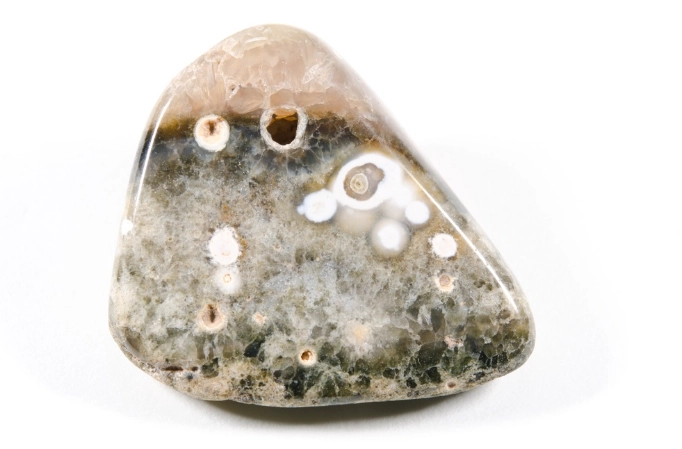
Beyond Pretty: Meaning and Metaphysical Properties
Alright, let's address the elephant in the room. The crystal healing community has gone wild for Ocean Jasper. I'm not here to tell you what to believe—I think intention and mindfulness are powerful tools, regardless of the mechanism. But I will tell you what the commonly cited properties are, so you can make up your own mind.
Generally, Ocean Jasper is called a "stone of patience and joy." The orbicular patterns are said to represent cycles, helping you see the bigger picture in life's ups and downs. It's heavily associated with the heart and solar plexus chakras.
Here’s a summary of the most frequently mentioned associations:
- Emotional Well-being: Said to alleviate stress, soothe anxiety, and promote a more positive, joyful outlook. It's like an emotional detox stone for some people.
- Social Ease: Often called a "social stone," believed to help with communication, ease social anxiety, and foster a sense of belonging in groups. Good for teamwork.
- Patience & Perspective: The circular patterns symbolize cycles, encouraging patience during difficult periods and helping you see challenges as temporary phases.
- Physical Detox: In metaphysical circles, it's sometimes linked to supporting the body's elimination systems (like the liver and kidneys) and boosting overall vitality. (Remember, this is not a medical claim. Always consult a doctor for health issues.)
Do I think holding a piece of Ocean Jasper will magically cure your problems? No. But do I think holding a beautiful, natural object that took millions of years to form can help you pause, breathe, and set a positive intention? Absolutely. That's the practical magic of it.
I keep a small tumble stone on my desk. When I'm feeling overwhelmed or stuck on a project, I'll pick it up, feel its weight, trace the circles with my thumb. It's a tactile reminder to step back. That's its real value to me.
The Buyer's Guide: How to Spot Real vs. Fake Ocean Jasper
This is the most important part of this guide. The market is flooded with fakes, imitations, and heavily treated stones. Let's arm you with knowledge.
The Big Red Flags:
- Unnaturally Bright or Uniform Colors: Real Ocean Jasper has earthy, natural tones. If you see neon green, electric blue, or hot pink that looks like it was sprayed on, it's almost certainly dyed. The colors should blend and flow, not look like paint.
- Perfect, Stamped-Looking Orbs: Nature is random. If every single orb is the same perfect size, color, and spacing, as if it came from a printer, be suspicious. Real orbs vary in size, shape, and clarity.
- Wrong Texture: Real material is hard (Mohs 6.5-7) and takes a high polish. If it looks waxy, dull, or feels plasticky, it's not right.
- Price That's Too Good to Be True: High-quality, specimen-grade Ocean Jasper isn't cheap. If a large, stunning palm stone is being sold for $10, the math doesn't work.
- Wrong Name: Sellers might call something "Green Ocean Jasper" when it's actually a different green orbicular jasper from Indonesia or Mexico. Always check the origin if possible.
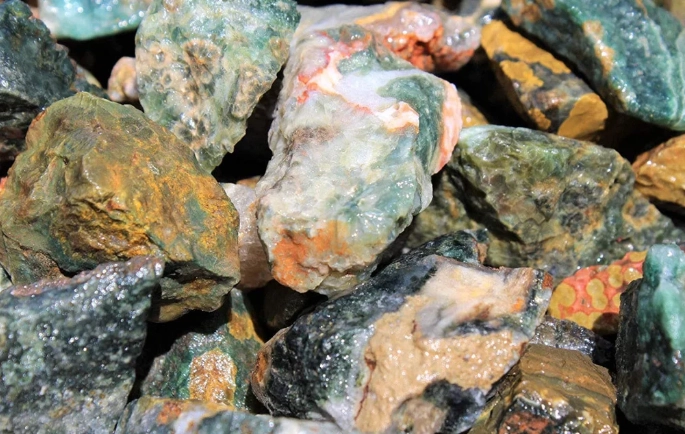
Pro Identification Tip: Get a jeweler's loupe (10x magnification) or use your phone's macro camera. Look closely at the orbs. In real Ocean Jasper, you can often see the fibrous, radial structure of the crystals growing outward from the center of the orb. In a fake or a dyed agate, the pattern will be superficial or the dye will be concentrated in cracks.
Common imposters include:
- Dyed Agate or Chalcedony: Plain gray agate dyed to have circular patterns.
- Other Orbicular Jaspers/Rhyolites: Like "Morgan Hill Poppy Jasper" from the USA or "Kambamba Jasper" (which is actually a stromatolitic limestone). Beautiful stones, but not from Madagascar.
- Resin or Glass Composites: The lowest-end fakes.
Ask questions. A reputable seller will know the origin.
Caring for Your Ocean Jasper Collection
You've invested in a real piece. Now, keep it looking great.
Do:
- Clean it with mild soap, lukewarm water, and a soft cloth. Dry thoroughly.
- Store it separately in a soft pouch or lined box to prevent scratches from harder stones.
- Recharge it in moonlight or by placing it on a bed of quartz crystals if that's part of your practice.
Don't:
- Use ultrasonic or steam cleaners. The vibrations and heat can potentially damage it, especially if there are internal fractures.
- Expose it to harsh chemicals (bleach, ammonia, acids), perfumes, or hairspray.
- Leave it in direct sunlight for prolonged periods. While generally colorfast, some very light-colored pieces could potentially fade over years of sun exposure.
It's a durable stone for jewelry, but bezel settings are safer than prong settings for cabochons, as they protect the edges from chipping.
Your Questions, Answered (The FAQ Section)
I get DMs and emails about this stuff all the time. Here are the real questions people are searching for.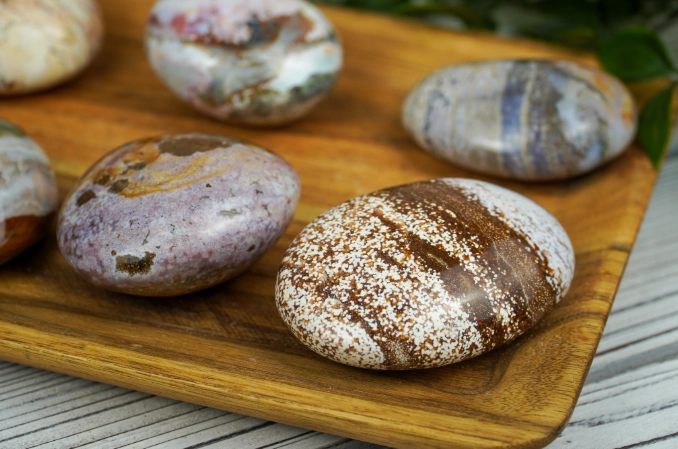
Is Ocean Jasper rare?
Yes and no. Material from the original, depleted coastal vein is rare and collectible. Material from the inland Madagascar veins is more available commercially, but high-quality pieces with great color and pattern are always in demand and command higher prices. It's not as common as, say, amethyst.
What chakra is Ocean Jasper good for?
Primarily the Heart Chakra (green colors) for emotional healing and love, and the Solar Plexus Chakra (yellow/gold colors) for personal power and joy. Many people feel it works on both simultaneously.
Can Ocean Jasper go in water?
Brief immersion in clean water for cleaning is fine. It has a good hardness and isn't water-soluble. However, don't make a habit of leaving it submerged for long periods (like in an aquarium or fountain), as water can eventually seep into micro-fractures and dull the polish or cause issues if there's matrix material. Metaphysically, some believe running water can cleanse its energy.
How can I tell if my Ocean Jasper is real?
Review the "Buyer's Guide" section above. Check the colors, pattern randomness, texture, and ask the seller for the country of origin (Madagascar). When in doubt, compare it to verified specimens from reputable sources like museum collections or trusted dealers. The Mindat.org page for Ocean Jasper is an excellent, scientifically-grounded resource for seeing authentic examples and reading about its mineralogy.
What is the difference between Ocean Jasper and regular jasper?
Most "regular" jaspers (like Red Jasper, Picture Jasper) are completely opaque and have more sedimentary, banded, or dendritic patterns. Ocean Jasper is distinguished by its orbicular patterns and can often be semi-translucent around the edges. Geologically, many jaspers form from sedimentary processes, while Ocean Jasper is igneous, forming from volcanic activity.
Wrapping It Up: The Final Word on Ocean Jasper
Look, at the end of the day, Ocean Jasper is a fascinating gift from nature. It's a geological snapshot of a very specific and beautiful process. Whether you're drawn to it for its looks, its purported energies, or simply as a unique collectible, understanding what you're buying is key.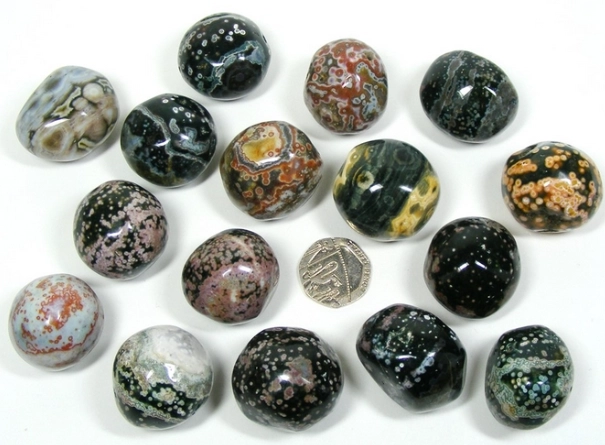
The market can be tricky. There's hype, there are fakes, and prices can be all over the place. My advice? Start small. Buy a few genuine tumbles from a trusted source (look for sellers who provide locality information). Get a feel for the real thing—its weight, its coolness, its patterns under a magnifier. The Gemological Institute of America (GIA) has a public lexicon that can help with general quartz/chalcedony identification, and the International Colored Gemstone Association (ICA) offers great consumer advice on buying gemstones.
Then, if you love it, you can confidently look for larger pieces or jewelry. Don't get swept up in the most extravagant claims. The true value of any stone, including Ocean Jasper, is in the meaning and joy you assign to it.
For me, its lasting appeal is that it's a literal touchstone to patience. Those orbs didn't form in a day. They're a reminder that beautiful things—in nature and in our own lives—often take time, pressure, and a bit of chaotic mixing to come together perfectly.
Related Articles
Unlock the Power of Green Jasper: Benefits, Uses & Healing Guide

Chip giants rush to Southeast Asia.
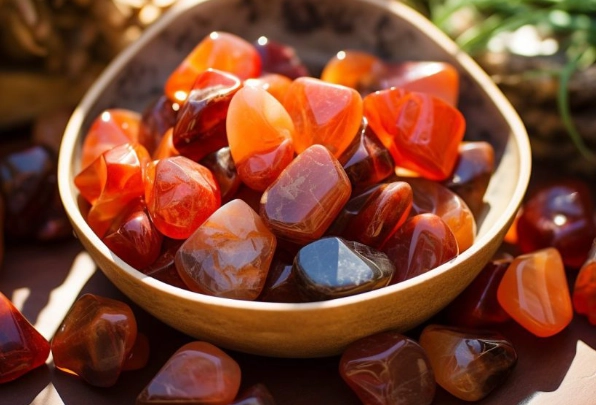
Carnelian Properties: Meaning, Benefits, and How to Use
A Collector's Guide to Jasper Varieties: Colors, Meanings & Uses
Bloodstone Crystal Guide: Healing Properties, Uses, and Buying Tips