Quick Navigation
- First, What Even Is Lapis Lazuli?
- The Historical Weight: From Pharaohs to Renaissance Masters
- The Spiritual and Metaphysical Lapis Lazuli Meaning
- How to Use Lapis Lazuli: Making the Meaning Personal
- The Not-So-Glamorous Side: Spotting Fakes and Understanding Value
- Your Questions, Answered (The Stuff People Really Want to Know)
- Pulling It All Together: What's the Final Verdict on Lapis Lazuli Meaning?
Let's be real. You've probably seen that deep, celestial blue stone dotted with flecks of gold. It's in jewelry stores, on social media feeds about crystals, and maybe even in a museum. But when you search for "lapis lazuli meaning," you often get a few vague lines about wisdom and truth. That's it? It feels... shallow. There's so much more to this rock than that.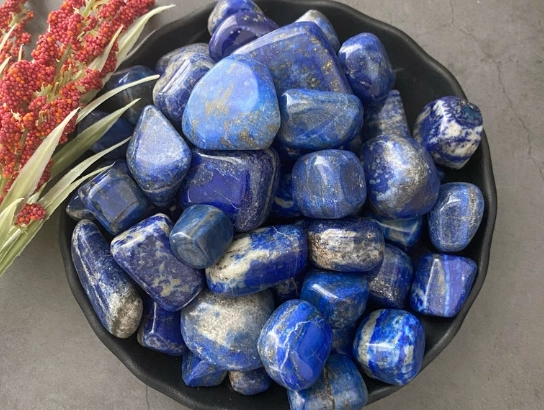
I remember first holding a piece. It wasn't in a fancy shop, but at a mineral show. The vendor, an older guy with dusty hands, didn't just tell me its name. He said, "You're holding ancient sky and stars." That stuck with me. It wasn't just a product; it was a story. And that's what most articles miss—the layers of the story. So, let's dig into what the lapis lazuli meaning truly is, beyond the buzzwords.
First, What Even Is Lapis Lazuli?
Before we jump into symbolism, let's get our facts straight. Lapis lazuli isn't a single mineral like quartz. It's a rock. A metamorphic rock, to be precise. Think of it as a natural masterpiece painted by the Earth. The stunning blue comes from lazurite, which is the star of the show. Those iconic gold-like sparkles? That's pyrite, fool's gold. And often, you'll see white veins or patches of calcite or other minerals.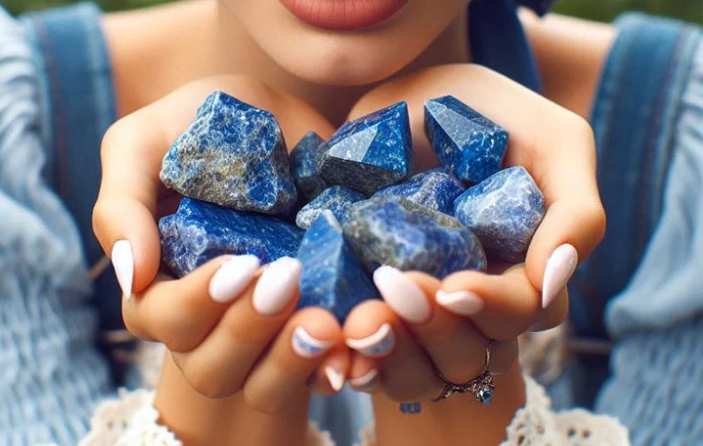
The best, most historically revered lapis comes from one place: the mountains of Afghanistan. The Sar-i Sang mines in the Badakhshan province have been operating for over 6,000 years. That's mind-blowing. This isn't just a gem; it's a piece of human history. Modern sources include Chile and Russia, but Afghan lapis often sets the standard for that perfect, deep cornflower blue.
So, the very first layer of the lapis lazuli meaning is tied to its rarity and origin. It was literally a stone hauled from remote mountains, making it precious long before it reached a king or a painter.
The Historical Weight: From Pharaohs to Renaissance Masters
This is where the lapis lazuli meaning starts to get heavy—in a good way. Ancient civilizations weren't just using it because it was pretty. They saw something divine in that blue.
Ancient Egypt and Mesopotamia
The Egyptians associated it with the night sky. They ground it into ultramarine powder, a pigment so expensive it was often reserved for depicting the robes of gods and goddesses. For them, the lapis lazuli meaning was directly connected to the heavens, royalty, and the divine. Tutankhamun's burial mask famously inlaid with lapis in the stripes of the headdress? That was a statement of eternal, celestial power.
Over in Mesopotamia, it was just as prized. The Standard of Ur, a stunning artifact in the British Museum, uses lapis lazuli extensively. I saw it once, and the blue, even after millennia, is vibrant. It depicted scenes of peace and war, suggesting it was a stone of both statecraft and prestige.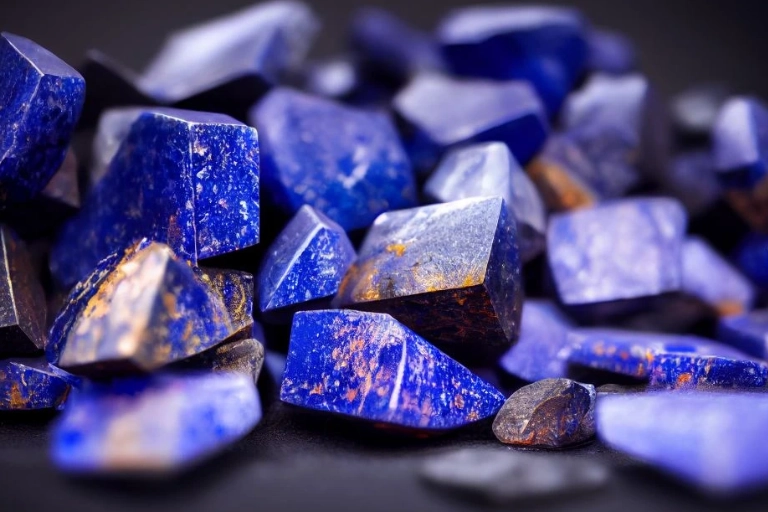
The Medieval and Renaissance Pigment
Fast forward to medieval Europe. Ultramarine, made from lapis, became the most expensive paint color you could buy. More expensive than gold. Artists would use it sparingly, only for the most important subjects—the Virgin Mary's cloak being the classic example. The National Gallery in London explains how its cost dictated iconography. So, the lapis lazuli meaning here evolved into one of utmost reverence, purity, and holy light. It wasn't just a color; it was a spiritual investment on canvas.
This historical thread gives us concrete meanings: divinity, truth, power, and sacred art. It's not a modern invention; it's archaeology.
The Spiritual and Metaphysical Lapis Lazuli Meaning
Okay, this is the part that floods Instagram. The "crystal healing" angle. I'll be honest, I'm skeptical of over-the-top claims. But dismissing it entirely would be ignoring a huge part of why people search for this stone's meaning today. So let's look at it through a lens of tradition and psychology, not magic.
Across many cultures, lapis is known as the stone of wisdom and truth. Why? It might stem from that historical use—adorned by priests and kings who were supposed to be wise and just. Wearing it was maybe a reminder of that duty.
Common Themes in Modern Interpretations:
- Third Eye Chakra Stimulant: The deep blue is linked to the brow chakra, the seat of intuition and insight. The idea is that it helps clear mental fog and encourages self-awareness and honest self-reflection. Not a bad intention to set, even if you don't believe in energy fields.
- Truth-Telling: This is a big one. It's said to encourage honesty, both in speaking your truth and in seeing the truth of situations. Some say it can reveal inner truths you've been avoiding.
- Communication: Linked to the throat chakra as well (thanks to its gold flecks sometimes being associated with solar energy), it's thought to aid in clear, confident, and authentic communication.
How to Use Lapis Lazuli: Making the Meaning Personal
So you're drawn to the lapis lazuli meaning. What now? How do you actually incorporate it? It's not about just buying a tumbled stone and throwing it in a drawer.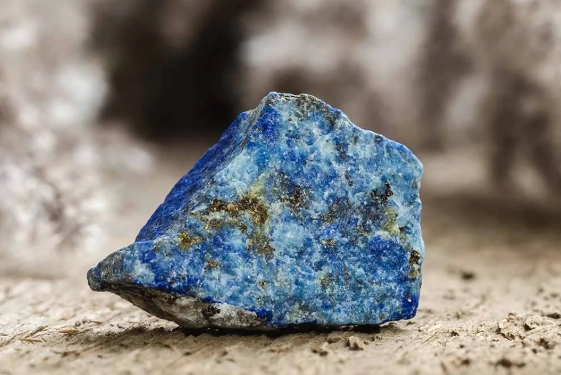
Ways to Engage with Lapis Lazuli:
- As Jewelry: Wearing it as a pendant or ring keeps its symbolism close. A ring can be a reminder to speak your truth. A pendant over the heart or throat aligns with those chakra associations. Just know it's a relatively soft stone (5-6 on the Mohs scale), so avoid harsh knocks, chemicals, and ultrasonic cleaners.
- In Meditation: Hold a piece in your hand or place it on your forehead during meditation. Focus on questions of inner truth or seeking insight. The historical weight of the stone can help anchor your practice in something tangible.
- As a Decorative Object: A raw piece or sphere on your desk can serve as a beautiful reminder of wisdom and clarity during work or study.
- In Creative Work: If you're an artist or writer blocked on a project, having lapis nearby might symbolically connect you to that lineage of masters who used it to create sacred art. It's about inspiration, not a magic fix.
The key is intention. Decide what aspect of the lapis lazuli meaning resonates with you—is it seeking wisdom? Encouraging honest communication? Connecting to history?—and let your use reflect that.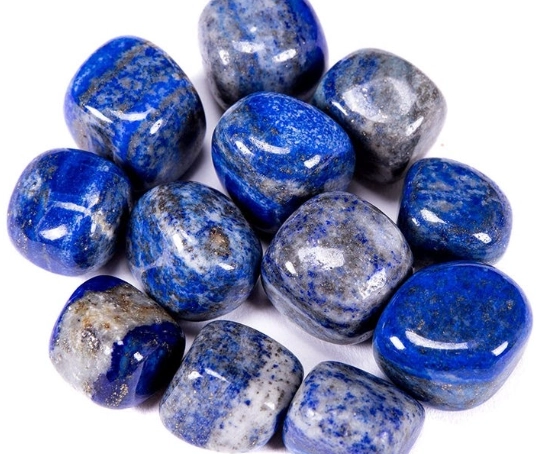
The Not-So-Glamorous Side: Spotting Fakes and Understanding Value
This is a critical, often overlooked part of the conversation. The market is flooded with imitations. If you buy a fake piece of dyed howlite or plastic, you're not connecting with any real meaning, just a cheap trick. It feels disappointing.
Understanding the lapis lazuli meaning includes knowing how to recognize the real deal. Here’s a quick guide:
| Feature | Genuine Lapis Lazuli | Common Fakes (Dyed Howlite, Jasper, or Plastic) |
|---|---|---|
| Color | Uneven, deep blue with variations. Often has white calcite veins and brassy gold pyrite flecks. | Too uniform, often a flat, dark "inky" blue. Pyrite flecks, if present, look painted on or are perfectly uniform. |
| Pyrite Flecks | Randomly distributed, have a metallic, three-dimensional shine. They are part of the stone. | Flecks are superficial, may rub off, or look two-dimensional. Sometimes absent entirely. |
| Price | Higher quality, especially with rich color and good pyrite distribution, commands a higher price. It's not dirt cheap. | Suspiciously low price for a large, "perfect" piece. |
| The Scratch Test (Careful!) | Relatively soft. A steel needle might scratch it, but the scratch will be white (calcite) or show the same blue underneath. | Dyed stones may reveal a white or different colored interior when scratched in an inconspicuous area. |
Also, be aware of "synthetic" or "reconstructed" lapis. It's man-made from powdered materials and resin. It can look very convincing but lacks the geological history and natural composition. For spiritual or collectible purposes, most people seek the natural stone. The Gemological Institute of America (GIA) website is an excellent resource for authoritative identification information.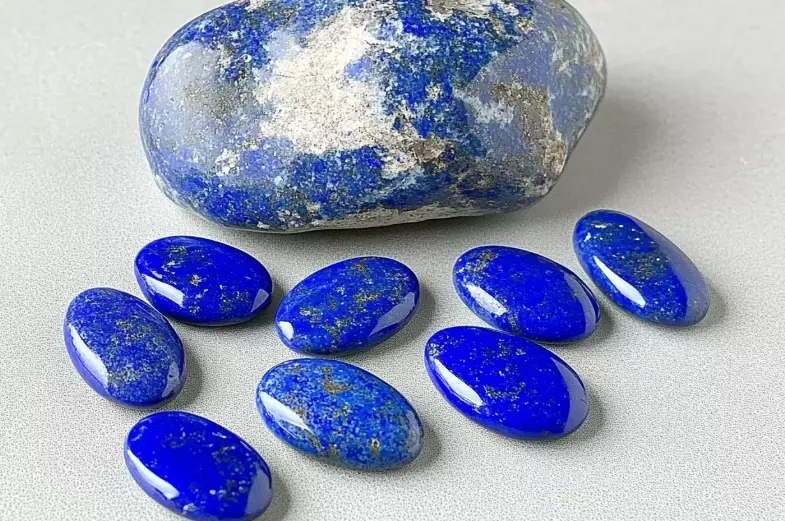
Your Questions, Answered (The Stuff People Really Want to Know)
Let's tackle some specific searches that pop up around "lapis lazuli meaning." These are the practical gaps.
- Smudging: Passing it through the smoke of sage or palo santo.
- Sound: Using a singing bowl or tuning fork near it.
- Moonlight: Placing it on a windowsill during a full moon (but not in direct sunlight).
- Other Crystals: Placing it on or near a cluster of clear quartz or selenite.
The "charging" intention is often simply setting a clear purpose for the stone while you hold it.
Pulling It All Together: What's the Final Verdict on Lapis Lazuli Meaning?
It's a lot, right? We've gone from geology to art history to spirituality to shopping tips. That's because the true lapis lazuli meaning is multidimensional.
At its core, lapis lazuli is a symbol. A symbol of the human quest for the divine (the blue of heaven), for truth (the clarity of thought), and for enduring beauty (its use in art across ages). Its meaning is a blend of:
- Historical Significance: A stone of pharaohs, gods, and master artists.
- Visual Symbolism: The night sky (blue) and stars (pyrite) captured in stone.
- Personal Intention: What you need it to be—a reminder, a focus, a connection.
Finding a piece that speaks to you, that feels real in your hand with its imperfect veins and random sparkles—that's where the personal meaning begins. Just make sure it's real. Because connecting with a piece of plastic doesn't carry the same weight, does it?
Related Articles
Moss Agate Stone: Meaning, Benefits & How to Use It
Opal Spiritual Meaning: Colors, Healing Properties & Myths Explained
Unlock the Power of Green Jasper: Benefits, Uses & Healing Guide
Moss Agate: Meaning, Uses, and How to Spot Real vs. Fake
Sodalite Crystal: Ultimate Guide to Its Healing & Practical Uses