Your Quick Guide to Blue Stones
Let's be honest. If you're here, you've probably seen a deep blue stone somewhere – maybe in a shop, on someone's necklace, or in a photo online – and wondered, "Wait, is that sodalite or lapis lazuli?" I've been there. I once bought a bead bracelet thinking it was lapis, only to have a more knowledgeable friend gently point out it was sodalite. That moment of confusion sparked a deep dive for me, and now I want to save you the same hassle.
This isn't just about two pretty blue rocks. The sodalite vs lapis lazuli debate touches on value, history, metaphysics, and plain old aesthetics. They're often confused, sometimes even mis-sold (intentionally or not), and understanding the difference is crucial whether you're a crystal healer, a jewelry lover, or a curious collector.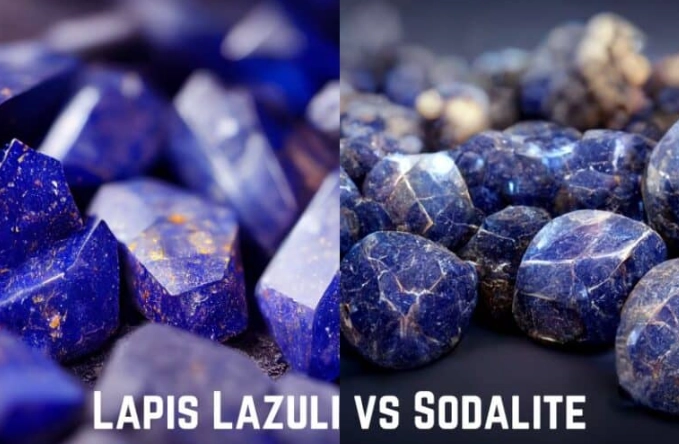
The Core Confusion: Both are primarily blue, both can have white calcite veining, and both are popular in spiritual and jewelry circles. That's where the similarities start to fade, and the important differences kick in.
The Basic Breakdown: What Are We Even Talking About?
Before we pit them against each other, let's give each stone its own quick introduction. Think of this as the "meet and greet" before the detailed comparison.
Sodalite: The Royal Blue Communicator
Sodalite is a rich royal blue mineral, often with white streaks or patches of calcite. It's a member of the feldspathoid mineral group. Discovered in Greenland in 1811, it only became widely used as an ornamental stone after large deposits were found in Ontario, Canada, in the late 19th century. It's actually the mineral that gives the famous "Prince of Wales" blue hue to some of the royal china. Beyond its looks, it's famously known as the "stone of logic" or the "poet's stone," believed to enhance communication, rational thought, and calm.
It's more common than lapis, which is one reason it's often used as a more affordable alternative.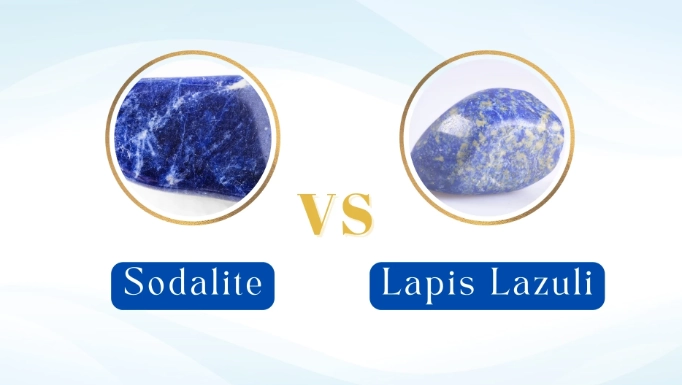
Lapis Lazuli: The Ancient Stone of Kings
Lapis lazuli isn't a single mineral; it's a rock. That's a key detail. It's a metamorphic rock composed primarily of three minerals: lazurite (which gives it that iconic ultramarine blue), calcite (the white streaks), and pyrite (the golden "fool's gold" flecks). Its history is epic. Mined for over 6,000 years in the Sar-e-Sang deposits of Afghanistan, it adorned the funeral mask of Tutankhamun, was ground into priceless ultramarine pigment for Renaissance masterpieces, and has been a symbol of royalty, honor, and the heavens across countless cultures.
Holding a piece of good quality lapis always feels different to me. There's a weight to it, not just physically, but historically. You're holding something Cleopatra might have worn as eyeshadow. That connection is hard to beat, though it does come at a price.
So, we have a royal blue mineral versus an ancient, gold-flecked rock. The sodalite vs lapis lazuli comparison starts to take shape right from their fundamental nature.
Side-by-Side: The Ultimate Comparison Table
This table is your cheat sheet. I find it's the easiest way to see the stark differences between sodalite and lapis lazuli at a glance.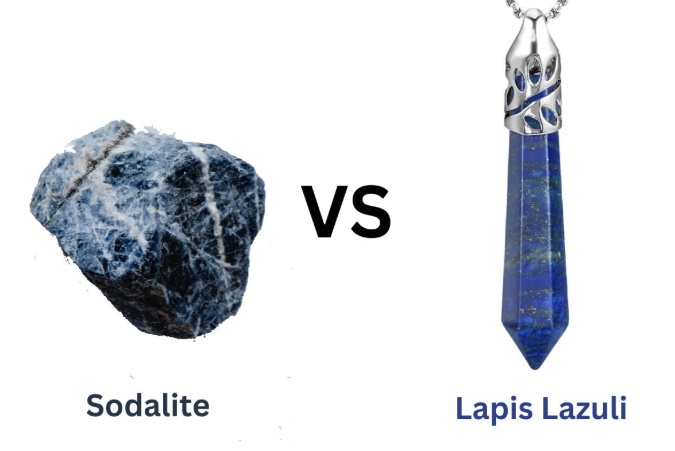
| Feature | Sodalite | Lapis Lazuli |
|---|---|---|
| Primary Composition | A single mineral (Sodalite, a feldspathoid). | A rock composed of Lazurite, Calcite, and Pyrite. |
| Classic Blue Color | Royal blue, navy blue. Can have a slightly greyish or violet undertone. | Deep, intense ultramarine blue. The "bluest blue." |
| The Tell-Tale Sign: Inclusions | White streaks or patches of Calcite. No pyrite. | White Calcite veins AND brassy-yellow flecks of Pyrite (Fool's Gold). |
| Hardness (Mohs Scale) | 5.5 - 6. Softer, more prone to scratching. | 5 - 5.5 (varies due to mix). Generally a bit softer/more delicate. |
| Transparency | Usually opaque, but can be slightly translucent on thin edges. | Opaque. |
| Value & Price Point | Generally affordable. Common in beads, carvings, and decor. | Significantly more valuable, especially for high-quality, intense blue pieces with sparse calcite. Fine material is expensive. |
| Key Historical Source | Canada, Brazil, Namibia, Greenland. | Afghanistan (for millennia). Other sources: Chile, Russia. |
| Metaphysical Focus* | Logic, communication, inner peace, rational thought. | Truth, wisdom, self-awareness, revelation, connection to the divine. |
See that? The pyrite is the biggest giveaway. No gold flecks? It's almost certainly not lapis lazuli.
Digging Deeper: The Crucial Differences Explained
1. Color and Appearance: It's Not Just "Blue"
This is where most people get tripped up. At first glance, both are blue. But look closer.
Sodalite tends toward a royal blue. It can sometimes look a bit like a deep denim or have subtle violet or grey undertones. Its white calcite is often in larger, cloud-like patches or thick veins. The color can be uneven.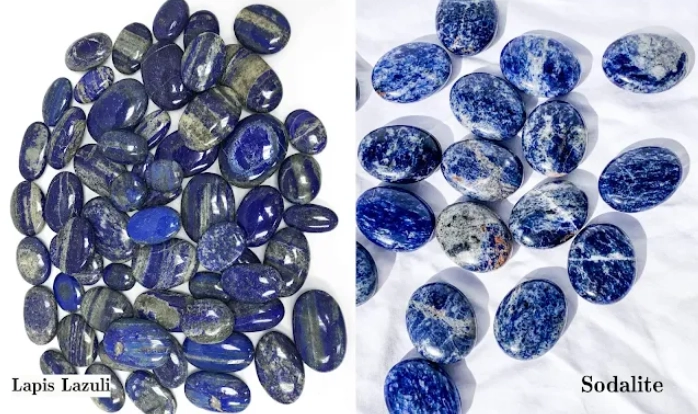
A quick test I use in shops: If the blue is deep but has a slightly dusty, greyish, or warm (almost purplish) feel to it, and the white is prominent and patchy, I lean towards sodalite.
Lapis Lazuli boasts that famous ultramarine blue – a pure, vivid, slightly violetish blue that has been prized for centuries. The white calcite is usually in thinner, more defined veins. And then there's the pyrite. Those tiny, shimmering, brassy-yellow specks are lapis's signature. High-quality lapis has a dense, uniform blue with minimal white calcite and evenly distributed pyrite flecks.
Why does this matter for the sodalite vs lapis lazuli choice? If you're drawn to the gold-and-blue contrast, only lapis delivers. If you prefer a more uniform, deep blue, sodalite might be your pick.
2. Composition and Durability: Mineral vs. Rock
This technical difference has practical consequences. As a single mineral, sodalite is more consistent in its hardness (5.5-6 on the Mohs scale). Lapis, being a rock, has a variable hardness (5-5.5) because it's a mix of softer calcite and harder lazurite and pyrite.
What does this mean for you?
- Jewelry Care: Both are on the softer side for daily-wear rings. They can scratch easily. They're better suited for pendants, earrings, or beads that see less abrasion. Lapis can be particularly sensitive to harsh chemicals, heat, and prolonged sunlight, which can dull its color.
- Carving & Use: Sodalite's consistency makes it a bit more predictable for carvers. Lapis's value and composition make fine carving a high-skill art.
A Word of Caution: Be wary of dyed howlite or magnesite being sold as either stone. Howlite is naturally white with grey veining and is often dyed blue to mimic both. A tell-tale sign of a dye job is concentrated color in the cracks or an unnaturally uniform, bright blue. If it's cheap and "perfect," be suspicious.
3. Value, Price, and the "Affordable Alternative" Question
This is a major point in the sodalite vs lapis lazuli decision. Lapis lazuli is, and always has been, a premium material. Fine Afghan lapis with intense color and sparse pyrite can command very high prices per carat. It's an investment stone.
Sodalite is vastly more affordable. This is why it's often presented as an "alternative" to lapis. But is that fair?
I don't think so. Calling sodalite just an "alternative" does it a disservice. It's its own beautiful stone with its own properties and charm. If you love the deep blue look but have a tight budget, sodalite is a fantastic choice. But if you specifically want the historical weight, the unique pyrite-in-blue aesthetic, and the metaphysical associations of lapis, only the real thing will do. There's no substitute for that.
I've seen lower-quality, very calcite-heavy lapis sold for less, but it often looks more white than blue. At that point, you have to ask yourself if you're buying the name or the appearance.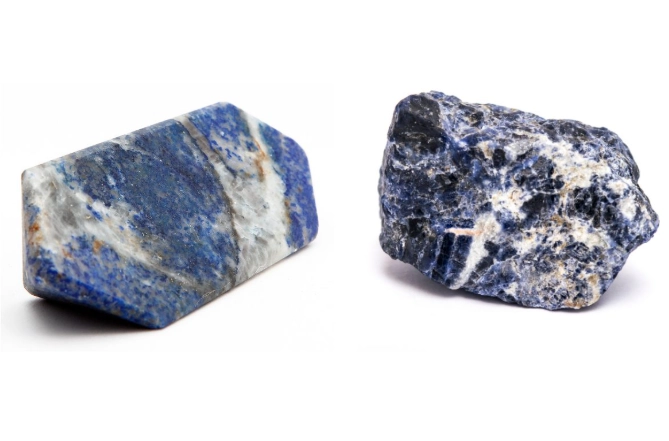
Metaphysical and Healing Properties: A Personal Take
Alright, let's talk about the energy stuff. This is a huge reason people search for sodalite vs lapis lazuli. They want to know which one is "right" for their spiritual work. I'll share the traditional associations and my own experiences.
Sodalite is the thinker's stone. It's linked to the throat and third eye chakras. People use it for:
- Calming a chaotic mind.
- Enhancing honest, clear communication (great for difficult conversations).
- Boosting logic and rationality when emotions run high.
- Fostering a sense of inner peace and belonging in groups.
I keep a sodalite palm stone on my desk. When I'm writing and hit a mental block, or when I need to structure an email carefully, I'll hold it. It feels... organizing. Like it helps line my thoughts up in a neat queue.
Lapis Lazuli is the seeker's stone. Connected to the third eye and throat chakras as well, but with a more cosmic vibe. It's associated with:
- Unveiling inner truth and self-awareness.
- Stimulating wisdom, intellectual ability, and good judgment.
- Deepening spiritual connection and meditation.
- Encouraging self-expression from a place of authenticity.
My personal ritual? I use lapis when I'm journaling or trying to work through a big life decision. It feels less about organizing known thoughts (like sodalite) and more about uncovering thoughts and truths I didn't know were there. It's a deeper, more profound dig.
So, sodalite vs lapis lazuli for spirituality? Sodalite for everyday mental clarity and communication. Lapis for deep spiritual excavation and connecting to higher wisdom. That's my two cents.
Common Questions (And Straight Answers)
Let's tackle the specific things people are secretly googling.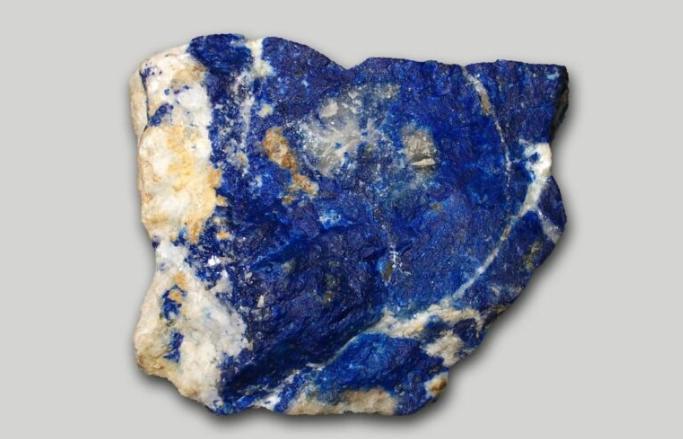
Which one is more expensive, sodalite or lapis lazuli?
Lapis lazuli, by a long shot. High-quality lapis is a luxury gemstone. Sodalite is an affordable semi-precious stone. You can get a nice sodalite tumbler for a few dollars; a comparable quality lapis tumbler would cost many times more.
Can sodalite have gold flecks like lapis?
No. This is the golden rule (pun intended). If you see brassy-yellow metallic flecks, it's pyrite, and that means the stone contains lazurite. Therefore, it is lapis lazuli (or a related rock like lazurite). Sodalite never contains natural pyrite. Sometimes mica or other minerals might create a slight shimmer, but it won't look like distinct, cubic, gold flecks.
I want a blue stone for jewelry. Which is better, sodalite or lapis?
It depends.
Choose Sodalite if: You're on a budget, you want a larger piece, or you'll be wearing it in situations where it might get knocked around (like a bracelet). Its slightly higher hardness makes it marginally more durable for daily wear, but still, be careful.
Choose Lapis Lazuli if: You value historical significance and unique beauty, you're okay with higher cost and more careful maintenance, and you specifically want the gold-flecked look. For a special pendant or statement ring, lapis has unparalleled presence.
How can I be sure I'm not buying fake lapis or sodalite?
Look for the pyrite test first. No pyrite, not lapis (unless it's a very rare, pure lazurite specimen). Beware of anything that looks too perfectly and brightly blue – think of the color of a blueberry or a pen. Natural stones have variation. Check for dye in cracks. Buy from reputable sellers who label their stones accurately. And if a price for "lapis" seems too good to be true, it almost certainly is. It's probably sodalite or dyed howlite.
Is one rarer than the other?
Yes. Gem-quality lapis lazuli, especially from the classic Afghan source, is much rarer than sodalite. Sodalite deposits are found in many places around the world in workable quantities. The scarcity is a big driver of lapis's value.
Final Thoughts: Making Your Choice
So, after all this, where does the sodalite vs lapis lazuli debate leave us?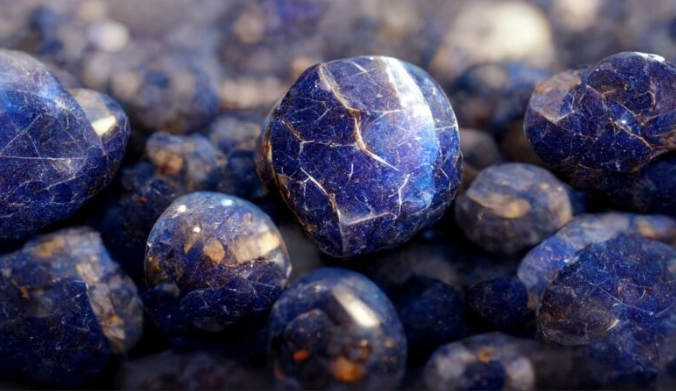
Think of it less as a competition and more as understanding two distinct options on a blue-stone spectrum.
You are drawn to Sodalite if:
- You love a deep, royal blue without a hefty price tag.
- You want a stone for mental clarity, calm, and better communication.
- You're buying beads, decor, or everyday jewelry where cost is a factor.
- You prefer a more uniform appearance without metallic flecks.
You should seek out true Lapis Lazuli if:
- The iconic ultramarine blue with gold pyrite specks is your non-negotiable desire.
- You value historical gemstones and are making an investment in a special piece.
- Your spiritual work focuses on deep truth, wisdom, and self-discovery.
- You understand and accept the care requirements and higher cost for the authentic experience.
My own collection has both. I have a string of sodalite beads I wear when I need to feel centered and articulate. And I have a small, polished piece of Afghan lapis that I keep on my altar—not for daily handling, but for those moments when I need to connect with something ancient and profound.
Neither is "better." They're different. The real win is no longer being confused when you see them. You can now look at a blue stone, spot the presence or absence of those golden flecks, and know exactly what you're dealing with. You can make an informed choice between sodalite vs lapis lazuli based on what truly matters to your eye, your wallet, and your intention. And that's the whole point, isn't it?
Related Articles

The three giants of MCU, three choices
Quartz Crystal Guide: Healing Properties, Types, and Practical Uses
Dalmatian Jasper: Meanings, Healing Uses & How to Spot Fakes
Blue Chalcedony Benefits: A Complete Guide to Healing & Uses

Wolf Moon Meaning: Spiritual Significance & How to Harness Its Energy