Quick Guide to Kyanite
- Where on Earth Does Kyanite Come From?
- The Many Faces of Kyanite: Not Just Blue
- Kyanite in the Real World: Practical and Industrial Uses
- The Metaphysical and Healing Side of Kyanite
- How to Spot Real Kyanite and Avoid Fakes
- Caring for Your Kyanite
- Answering Your Burning Questions About Kyanite
- Final Thoughts: Why Kyanite Stands Out
Okay, let's talk about kyanite. You've probably seen it—those stunning, shard-like blue crystals in mineral shops or maybe set in a piece of jewelry. It catches the light in a way that makes you stop and look. But if you think it's just another blue rock, you're in for a surprise. I remember the first time I held a piece of raw kyanite from Nepal. It felt cool, almost slippery, and had this intense, directional energy. I also remember being utterly confused about how it could be so hard in one direction and so easy to cleave in another. That weird property is just the start of the story.
This mineral is a bit of a geological oddball and a metaphysical heavyweight, all wrapped into one. It's not just for crystal healers or rock hounds, either. Its unique characteristics make it quietly essential in some pretty hardcore industrial applications. So, whether you're trying to figure out if that blue stone you bought is real, wondering what people mean when they talk about its "energy," or are just plain curious about cool minerals, you're in the right place. We're going to get into the weeds on this one.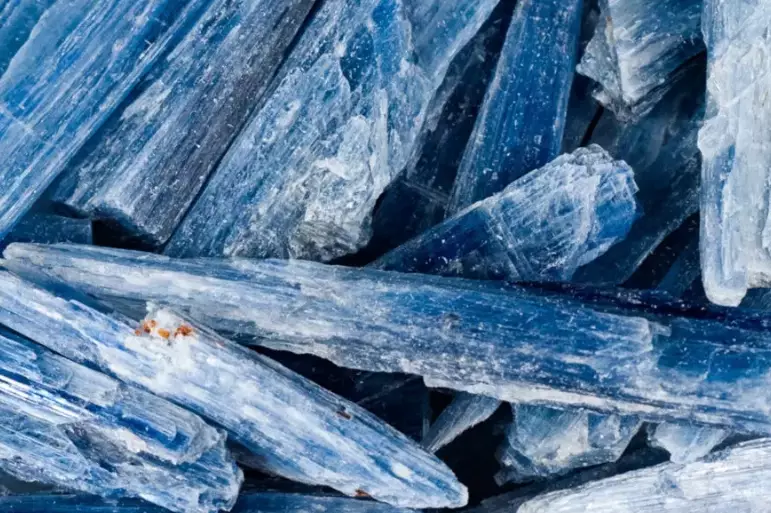
The Core Identity: What Exactly Is Kyanite?
At its most basic, kyanite is a silicate mineral, with a formula of Al₂SiO₅. That puts it in a neat little trio with two other minerals, andalusite and sillimanite—all sharing the same chemical recipe but formed under different pressure and temperature conditions. It's a classic example of how geology loves to cook the same ingredients different ways to get different results. The name "kyanite" comes from the Greek word 'kyanos,' meaning dark blue, which is its most famous color, but as we'll see, it's not its only trick.
Where on Earth Does Kyanite Come From?
You don't just find kyanite lying around everywhere. It needs specific geological conditions—namely, the regional metamorphism of clay-rich rocks under high pressure. Think of the immense forces where continental plates collide. That kind of environment.
Major sources are scattered across the globe. Nepal and India produce some of the most spectacular gem-quality crystals—deep blues that are almost translucent. Brazil is another huge player, offering a wider range of colors. The United States has historically been a significant source, particularly in states like Georgia and Virginia, where it's mined more for industrial use than for gems. Other notable locations include Kenya, Switzerland, Austria, and Serbia.
I've seen dealers get really specific about origin. A Nepalese kyanite often has a different "feel" and price tag than a Brazilian one, with collectors sometimes preferring one over the other. It's a personal thing.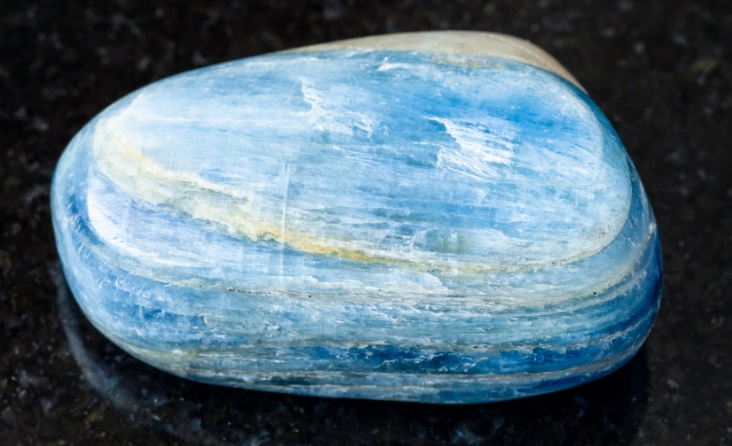
The Many Faces of Kyanite: Not Just Blue
This is where it gets fun. While that signature cornflower to sapphire blue is the poster child, kyanite shows up in other outfits.
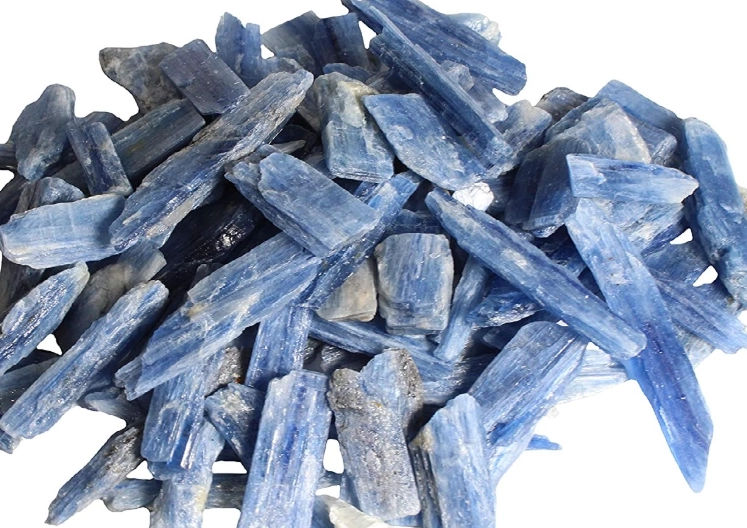
- Blue Kyanite: The classic. Color comes from traces of iron. Can range from pale, almost watery blue to a rich, deep royal blue. The darker, more saturated blues are generally more valued.
- Green Kyanite: Less common, gets its color from chromium impurities. It has a softer, sometimes olive-green hue. It's quite sought after in metaphysical circles.
- Black Kyanite: This isn't a different color per se, but rather blades of kyanite with abundant inclusions (often graphite or iron oxides) that make it appear black. It forms in fascinating, radiating clusters that look almost like petrified black feathers.
- Orange Kyanite: A real rarity. I've only handled it once, and the color was subtle, a peachy-orange. It's caused by manganese inclusions and is highly prized by collectors.
That's right. Its hardness is anisotropic. This isn't just a trivia fact; it's a fundamental identifying feature and a headache for cutters. You have to orient a kyanite gemstone very carefully when faceting, or it will splinter. This property is directly tied to its crystal structure—the atoms are bonded more strongly in one direction than the others. The U.S. Geological Survey has detailed mineralogical summaries that explain this anisotropic behavior in a more technical manner for those who are curious about the crystallography.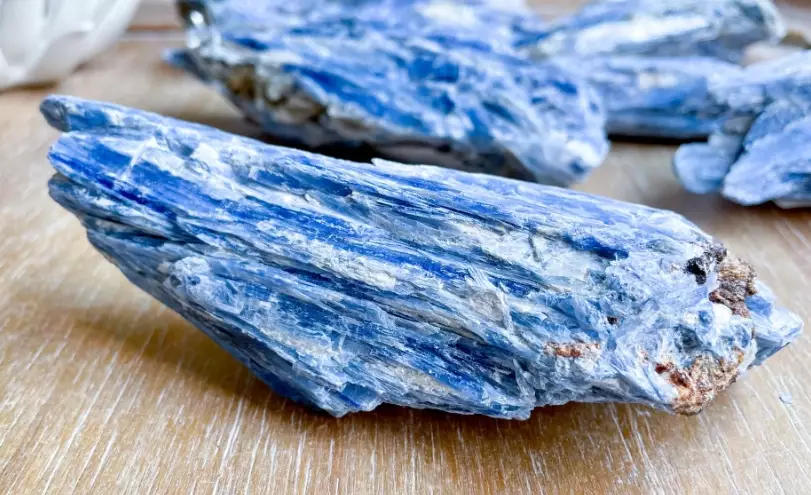
Kyanite in the Real World: Practical and Industrial Uses
This is the part most blog posts glance over, but it's crucial. Kyanite isn't just sitting on shelves looking pretty. It's working hard.
When heated to high temperatures, kyanite converts to mullite, a highly refractory (heat-resistant) material. This makes it incredibly valuable in manufacturing things that need to withstand extreme heat.
Where That Heat Resistance Pays Off:
- Refractory Bricks and Mortars: Lining for kilns, furnaces, and boilers in the steel and glass industries. Your car's engine block was probably cast using molds made with kyanite-based refractories.
- Brake Pads and Clutch Facings: The heat-resistant properties make it a useful component in automotive friction products. It helps the pads handle the intense heat generated during braking.
- Investment Casting: In the precision casting of metal parts for aerospace and dentistry, kyanite is used in the ceramic molds.
- Ceramics and Abrasives: It's used in some high-performance ceramics and as part of grinding wheels.
The industrial-grade material is often crushed and processed into granular forms. It's less about the crystal beauty and more about the chemical stability. According to the Industrial Minerals Association of North America, kyanite's consistent expansion upon heating (it actually expands linearly when fired) is a key property that makes it predictable and reliable for engineers.
So, that beautiful blue crystal and the gritty powder in a factory refractory mix are essentially the same stuff, just serving different masters.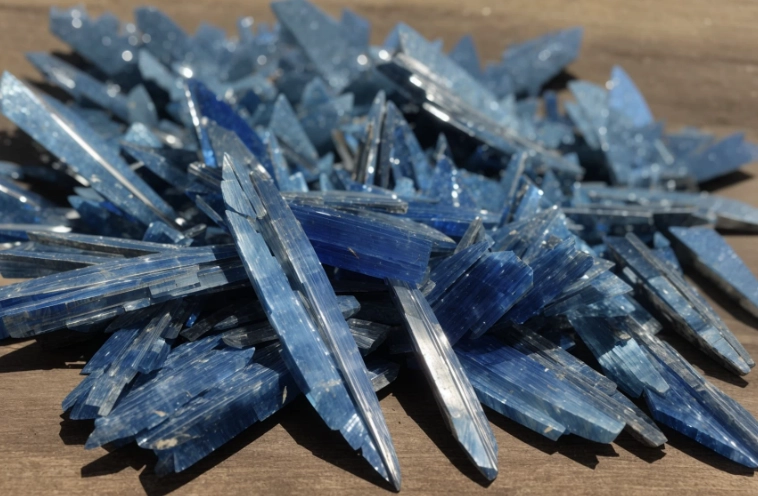
The Metaphysical and Healing Side of Kyanite
Alright, let's shift gears. This is a huge reason people search for information on kyanite. The metaphysical market is massive, and kyanite is a star player. I'll be honest: I approach this with a mix of fascination and skepticism. I don't believe crystals magically cure diseases, but I do think the ritual of using them and the focus they provide can have real psychological benefits. And people's experiences with kyanite are particularly strong.
Common attributes assigned to kyanite include:
- Alignment and Balance: It's often called a "stone of alignment," said to harmonize all the chakras without needing cleansing itself. This is a big selling point—the idea that it doesn't absorb negative energy, so it never needs to be cleared like other stones.
- Communication: Linked to the throat chakra (especially the blue variety), it's believed to aid in honest, clear, and compassionate communication. Think of it as a tool for difficult conversations.
- Meditation and Psychic Abilities: Many meditators use it to quiet the mind and access deeper states. It's also associated with enhancing intuition and dream recall.
- Black Kyanite's Niche: In crystal healing, black kyanite is often touted as a powerful protector and grounder, said to create a shield against negativity and also to help in cutting psychic cords or ties to draining situations.
Is there science behind this? Not in the way we traditionally think. But the placebo effect and the power of intention are well-documented phenomena. If using a kyanite crystal helps someone feel calmer or more focused, that's a real outcome, regardless of the mechanism.
How to Spot Real Kyanite and Avoid Fakes
This is a practical must-know. The crystal market is flooded with fakes, from dyed howlite to outright glass. Kyanite has some tell-tale signs that are hard to replicate perfectly.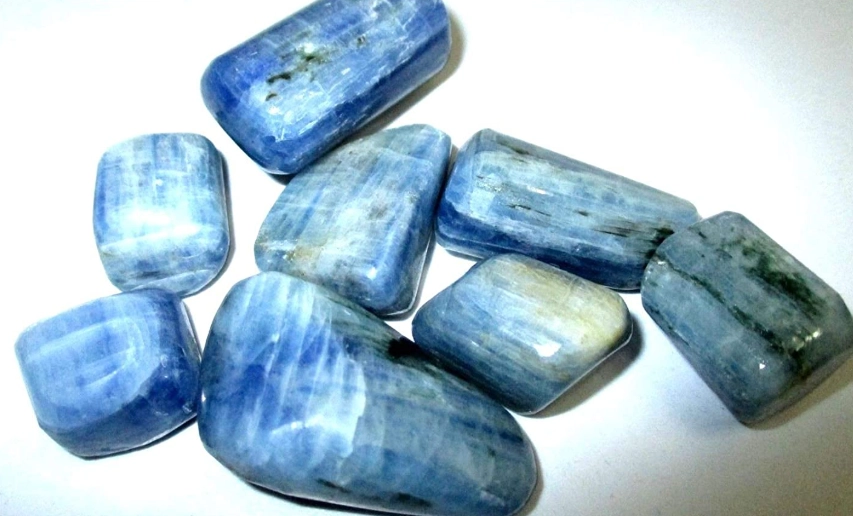
| Characteristic | Real Kyanite | Common Fakes/Imitations |
|---|---|---|
| Color & Pattern | Color is often uneven, with lighter and darker bands running along the length of the crystal blade. It's rarely a uniform, solid blue. | Dyed stones (like howlite or magnesite) have color concentrated in cracks. Glass imitations can be too perfectly uniform or have bubbles. |
| Crystal Habit | Forms in long, flat, bladed crystals. It has a distinct, splintery look and cleaves easily along one plane. | Molded glass or resin fakes won't have the natural cleavage planes or the sharp, linear crystal faces. |
| Hardness (The Key Test) | Anisotropic Hardness: Try to scratch along the crystal's long axis with a steel knife (Mohs ~5.5). It should resist. Try to scratch across the blade. It should scratch much more easily. This is the #1 identifier. | Glass will have the same hardness in all directions. Softer dyed stones will scratch easily in all directions. |
| Transparency | Can be transparent to translucent. Gem-quality pieces are more see-through, but industrial or lower-grade pieces are opaque. | — |
| Feel | Often has a slightly greasy or slippery feel to the touch. | Glass feels smooth and hard; resin feels warm and light. |
A Quick Buyer's Warning:
Be very wary of online listings for "rare" colors like bright pink or purple kyanite. These are almost certainly dyed or mislabeled stones (possibly sugilite or lepidolite). Genuine orange kyanite exists but is exceptionally rare and expensive. If the price seems too good to be true for a "rare" color, it almost always is.
The best advice? Buy from reputable dealers who provide locality information. And don't be afraid to ask, "How do I know this is real kyanite?" A good seller will be happy to explain the anisotropic hardness to you.
Caring for Your Kyanite
Given its cleavage and variable hardness, kyanite needs a bit of gentle handling.
- Cleaning: Use mild soap, lukewarm water, and a soft brush. Avoid ultrasonic cleaners and steamers entirely. The vibrations and sudden temperature changes can cause it to fracture along its cleavage planes.
- Storage: Wrap it in a soft cloth or keep it in a fabric-lined box. Don't throw it loose in a bag with harder stones like quartz or sapphire, as they will scratch and chip it.
- Wearing: Kyanite jewelry (especially rings or bracelets) is best for occasional wear, not daily bashing. Pendants and earrings are safer choices. A jeweler I know refuses to set kyanite in rings for daily wear—he's seen too many come back chipped.
Answering Your Burning Questions About Kyanite
Is kyanite the same as sapphire?
No, they are completely different minerals. Sapphire is a variety of corundum (aluminum oxide). Kyanite is aluminum silicate. They can be similar in blue color, but sapphire is much, much harder (Mohs 9), lacks kyanite's cleavage, and is generally more expensive. Kyanite is sometimes mistakenly called "sapphirite," but that's an outdated and misleading name.
What's the difference between kyanite and blue quartz?
Blue quartz is quartz (silicon dioxide) that gets its blue color from included minerals like dumortierite. It doesn't form in blades like kyanite, has no anisotropic hardness (it's a steady Mohs 7 in all directions), and lacks kyanite's characteristic cleavage.
Can kyanite go in water?
Brief immersion in lukewarm water for cleaning is generally fine for most specimens. However, extended soaking isn't recommended, especially for stones that might have internal fractures. The real danger with water isn't dissolution but thermal shock if the water is too hot or cold, or damage if you're too rough while cleaning.
How is kyanite pronounced?
It's typically pronounced KYE-uh-nite (with a long "i" sound). You might also hear KY-ann-ite. Both are accepted.
What chakra is kyanite associated with?
Primarily the throat chakra (for communication), but it's also strongly linked to the third eye chakra (for intuition and insight). A key belief is that it aligns all the chakras, making it a popular all-in-one tool in energy work.
Final Thoughts: Why Kyanite Stands Out
Kyanite fascinates because it bridges worlds. It's a geologist's textbook example of polymorphism and anisotropic properties. It's an industrial engineer's reliable refractory ingredient. It's a collector's prized blue blade. And it's a seeker's tool for focus and calm.
That's a lot of weight for one mineral to carry. Its unique physical signature—that directional hardness—is a perfect metaphor. It has a clear direction, a grain, a way it wants to be. Understanding kyanite means respecting that structure, whether you're using it to line a furnace, facet a gem, or simply to hold during a moment of quiet reflection. It's not the easiest stone to work with or wear, but maybe that's the point. The best things often require a bit more care and understanding.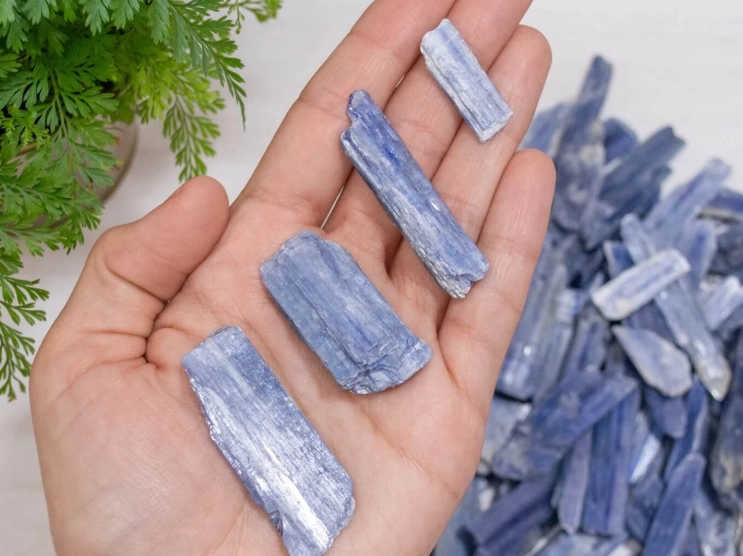
If you want to dive even deeper into the pure mineralogy, the Mindat.org page for Kyanite is an incredible, community-driven resource with locality photos and technical data. For a more official geological perspective, the U.S. Geological Survey publications often detail the mining and economic geology of industrial minerals like kyanite.
So next time you see that flash of blue, you'll know there's a whole lot more to the story.
Related Articles

Larimar: The Complete Guide to the Caribbean Gemstone

SiC and GaN, the battle has just begun.
What Does Wearing a Ruby Symbolize? Meaning, History & Beliefs
Selenite Crystal Uses: Healing, Energy Cleansing & More
Spessartite Garnet Guide: Meaning, Properties & How to Buy