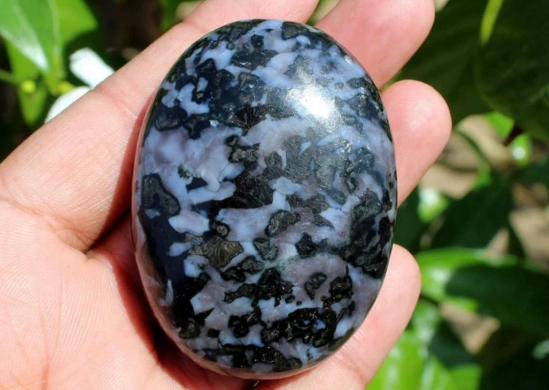
Let's cut through the noise. You've probably seen nuummite online, tagged as the "world's oldest gemstone" or a "powerful spiritual tool," often with a hefty price tag attached. I remember the first piece I held, a rough cabochon that looked like a chunk of dark granite. Then I tilted it under the light, and a flash of gold and electric blue shot across its surface. That's the moment you get it. But there's a lot more to this stone than a pretty flash and mystical claims. Most of what's written about it is either overly romantic or just plain wrong. Here’s what ten years of handling and researching this material has taught me.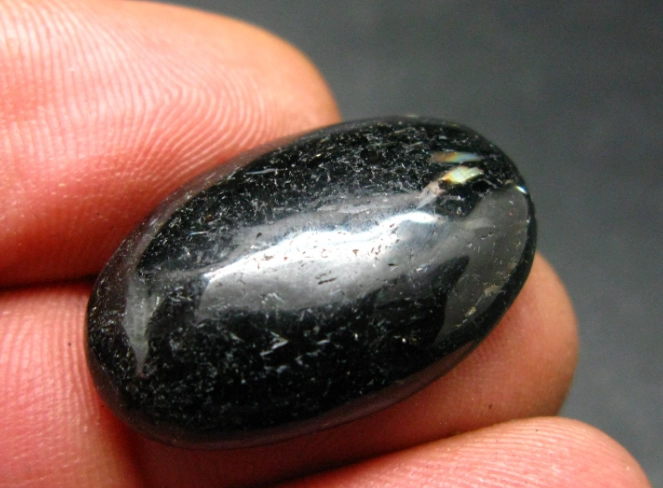
Your Quick Guide to Nuummite
What Exactly Is Nuummite? (The Geology Bit)
Forget "oldest gemstone"—that's a marketing line. Nuummite is an extremely rare metamorphic rock, found only in a small area near Nuuk, Greenland. That's where it gets its name. It's composed mainly of two amphibole minerals: gedrite and anthophyllite. The magic—the flash of color called "labradorescence" or "schiller"—happens because these minerals form in intergrown, microscopic layers that diffract light.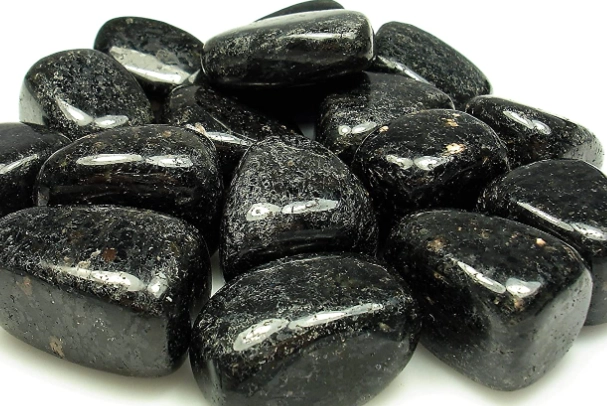
Here’s the nuance everyone misses: the base color isn't just black. It's a deep, complex blend of dark greens, browns, and grays. The flash isn't always gold or blue, either. I've seen pieces with coppery red, violet, and even green flashes. The intensity varies wildly. A high-quality piece will have a bright, broad flash visible from multiple angles. A low-grade piece might show a faint, pinprick sparkle only when you catch it just right.
Nuummite vs. Labradorite: The Confusion Cleared Up
This is the biggest point of confusion for buyers. Both stones flash. Both are called "black rainbow" stones. But they're worlds apart.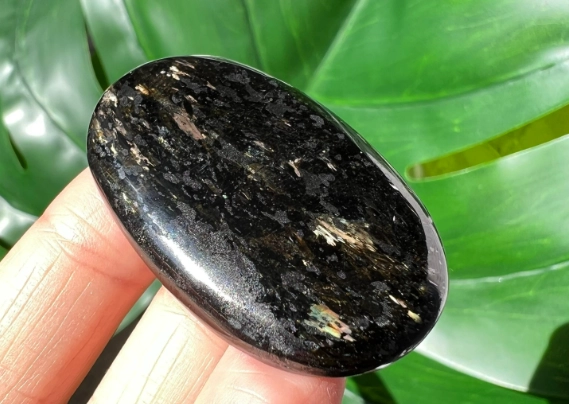
People often overpay for what they think is nuummite, only to get a piece of treated or specific-type labradorite. The reverse happens too—someone dismisses a genuine nuummite as "just labradorite."
| Feature | Nuummite | Labradorite |
|---|---|---|
| Composition | Metamorphic rock (gedrite/anthophyllite) | Feldspar mineral |
| Primary Flash Colors | Gold, bronze, electric blue, copper | Blue, green, yellow, orange, sometimes red/purple |
| Base Color & Feel | Deep charcoal, green-black, brown-black. Often has a rough, granular texture visible. | Dark gray to black base, often with a smoother, more homogenous look. |
| Hardness (Mohs) | 5.5 - 6 | 6 - 6.5 |
| Key Identifier | Flash tends to be more "streaky" or "fibrous," following the grain of the rock. | Flash is often in broader, cleaner patches or full-face "flames." |
| Rarity & Source | Extremely rare. Only from Greenland. | Common. Mined in Canada, Madagascar, Finland, etc. |
If a seller can't tell you the country of origin, be suspicious. Real nuummite dealers are proud to state it's from Greenland.
The Real-World Value: What Should You Pay?
Let's talk numbers, because the range is insane. I've seen tiny, poorly flashed tumble stones for $10 and palm-sized, museum-quality display pieces priced over $5,000.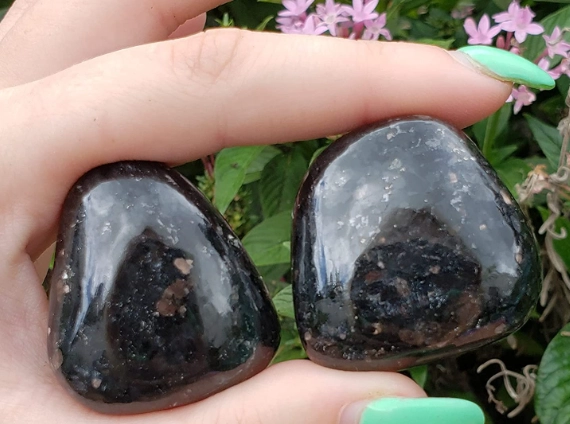
For a standard, well-flashed cabochon suitable for a ring or pendant (say, 10x12mm oval), expect to pay between $80 and $300. The price escalates quickly with size and flash quality. A 30mm+ cab with a full, vibrant flash can easily hit four figures.
What drives the cost?
- Flash Coverage & Intensity: A stone that flashes across 80% of its face is worth 10x more than one that flashes on 20%.
- Color of Flash: The electric blue-gold combo is most sought-after. Pure golden or coppery flashes are also valuable.
- Cutting Quality: Nuummite is brittle. A skilled cutter who orients the stone to maximize the flash without it fracturing adds significant value.
- Natural State: Rough specimens with good flash are rare and prized by collectors.
My advice? Don't buy your first piece as a major investment. Get a small, affordable cabochon. Hold it. Play with it in the light. See if the magic resonates with you before spending hundreds.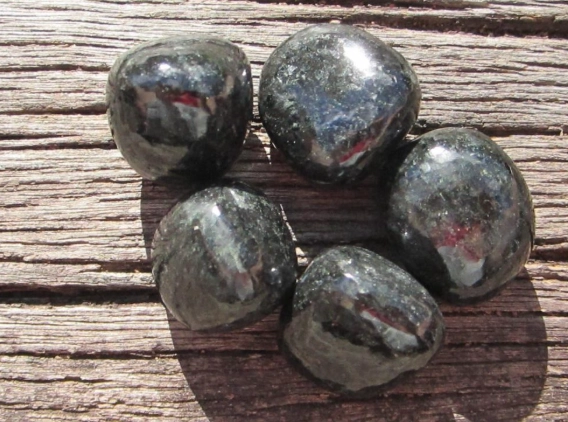
How to Use Nuummite in Jewelry & Practice
Given its hardness (5.5-6), nuummite is softer than quartz or sapphire. This matters for daily wear.
Jewelry Considerations
Rings are risky. Even with a protective setting, a sharp knock against a granite countertop can chip or scratch it. It's far better suited for pendants, earrings, or brooches—items less prone to impact.
I always recommend a bezel setting over a prong setting. The bezel fully encircles the stone's edge, protecting its most vulnerable part.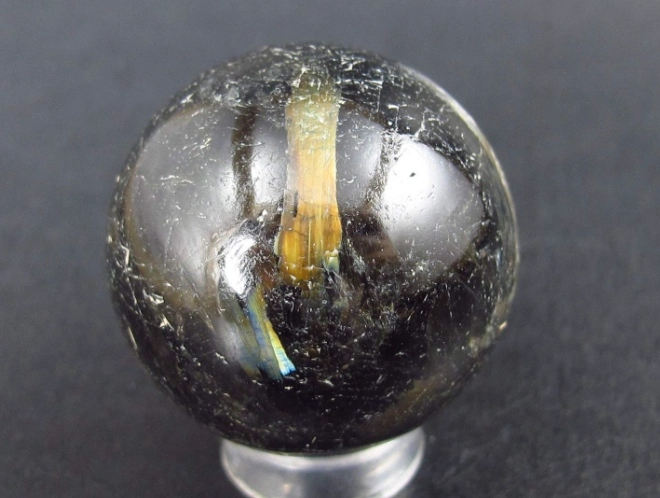
In Metaphysical Practice
p>Here's where I offer a non-consensus view. Nuummite is overwhelmingly marketed as a "transformation stone" for accessing past lives or deep shadow work. That's intense. For many people, especially empaths or those already dealing with anxiety, diving straight into that energy can be overwhelming.I've found its more practical, grounding use is as an energy filter. Think of it less as a shovel digging into your subconscious and more like a firewall for emotional or psychic "noise." Wearing it during crowded events or stressful workdays can create a subtle, grounding buffer. It doesn't necessarily solve the problem, but it can stop you from absorbing everyone else's chaos.
Start with short periods. Meditate with it for 10 minutes, don't start with an hour-long deep dive. See how you feel.
Common Fakes and How to Avoid Them
The market isn't flooded with fakes, but misrepresentation is common.
1. Treated or Enhanced Labradorite: This is #1. Some types of labradorite (especially from Madagascar) have a very dark base and strong blue flash. They are sometimes sold as "Black Labradorite" or, deceptively, as nuummite. Check the source and the price. If it's cheap and the seller says "Madagascar," it's labradorite.
2. Glass or Synthetic Composites: Rare, but they exist. The flash in glass will look too perfect, too uniform, and often have bubbles or swirls not found in the natural stone.
3. Misleading Photography: Sellers use intense, direct lighting and photo editing to make a weak flash look spectacular. Always ask for a video where they slowly rotate the stone under normal, diffused light. A reputable seller will provide this.
Your best defense: Buy from specialized, reputable gem and mineral dealers who provide geological information, not just from general crystal shops or mass-market platforms.
Your Nuummite Questions Answered
Nuummite isn't a casual purchase. It's a specialist's stone. Its value lies in its profound geological story, its breathtaking visual effect, and the very personal journey it can represent. Don't buy it because an influencer said it's powerful. Buy it because, after all this, you look at that flash of ancient light in the dark stone and feel a genuine pull. That's the only reason that matters.
Related Articles
Black Obsidian Spiritual Meaning: A Complete Guide to Healing & Protection
Obsidian Crystal: Your Complete Guide to Meaning, Uses & Real vs. Fake

Larimar Stone Benefits: A Complete Guide to Healing Properties & Uses
Ocean Jasper Benefits: Healing Properties & How to Use It
Quartz Meaning Explained: Spiritual, Scientific & Practical