Quick Guide to Orange Sapphires
- What Exactly is an Orange Sapphire?
- Where Do These Orange Gems Come From?
- The Four C's: Decoding the Value of an Orange Sapphire
- The Big Question: Treated or Natural?
- How to Buy an Orange Sapphire Without Regret
- Caring for Your Piece of the Sun
- Orange Sapphire vs. The Others
- Your Orange Sapphire Questions, Answered
Let's be honest, sometimes the world of colored gems can feel overwhelming. You see a stunning orange sapphire in a shop window or online, and you're drawn in. That warm, sunset glow is something else. But then the questions start. What exactly am I looking at? Is it worth the price tag? How do I even begin to shop for one without getting it wrong?
I remember the first time I held a fine orange sapphire. It wasn't in some fancy auction house. It was at a small gem show, tucked away in a dealer's case. The color wasn't just orange; it was like liquid amber with a fiery heart. That's when I got hooked. But I also saw a lot of confusion around these stones. People lumping them with other colors, or not knowing what makes a good one.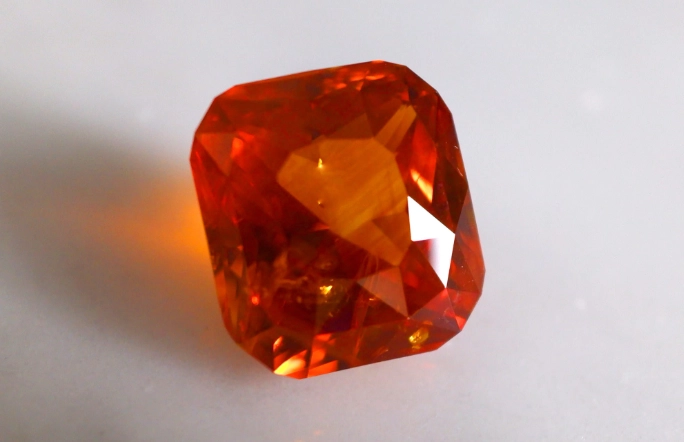
This guide is here to cut through that noise. Think of it as a long chat with someone who's been through the process—the good, the bad, and the surprisingly affordable. We're going to talk about what gives an orange sapphire its color (it's more fascinating than you think), how to figure out if you're getting a fair deal, and how to keep your gem looking brilliant for decades. No fluff, just the stuff you actually need to know.
What Exactly is an Orange Sapphire?
So, what exactly is an orange sapphire? At its core, it's a variety of the mineral corundum. That's the same family as rubies and blue sapphires. The only thing that separates a ruby from a sapphire is color. If it's red, it's a ruby. Every other color? That's a sapphire. So, our orange friend is a sapphire through and through.
The magic behind that orange color is all about chemistry. Tiny traces of elements get trapped in the crystal as it forms deep within the earth. For orange, it's usually a combination of iron and chromium. Iron gives you yellows and browns, chromium gives you reds (like in rubies). When they mix together in just the right way, you get that perfect orange hue. Sometimes, it's more of a yellow-orange, other times it leans towards a reddish-orange, almost like a pumpkin or a ripe papaya.
It's this blend that makes them feel so unique. They have the warmth of a yellow sapphire but with a deeper, more vibrant kick. Some people call them "sunset sapphires," and honestly, it's a fitting name.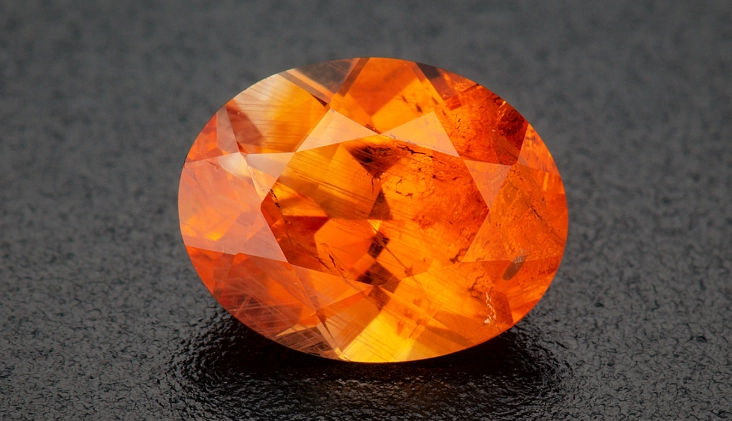
Quick Gemology Note: The Gemological Institute of America (GIA), a top authority in gem science, classifies sapphires by their primary and secondary colors. A pure orange sapphire is one where orange is the dominant color you see. If you see a stone labeled as an orange sapphire, but it looks more pinkish, you might actually be looking at a Padparadscha—a rare and expensive pinkish-orange variety. It's a common mix-up.
Where Do These Orange Gems Come From?
Origin stories matter with gems, almost like a wine's terroir. The earth in different places cooks up corundum with slightly different personalities.
Sri Lanka (Ceylon) is probably the most famous source for fancy color sapphires, including orange. The stones from here often have a brighter, more luminous quality. They can be a very pure, medium orange. Madagascar has become a huge player in the last couple of decades. The orange sapphires from Madagascar are fantastic—often with rich, saturated colors that can rival the best. I've seen some Madagascan stones with an almost neon vibrancy that's hard to forget.
Then there's Tanzania, specifically the Umba River Valley. These can have more of a brownish or earthy orange tone, sometimes with unique color zoning. You might also find orange sapphires from Montana (USA), which have a very distinctive, often metallic-looking hue, and from Australia, though these tend to be darker.
Here's the thing about origin: while it can influence color and sometimes value (Ceylon origin often carries a premium due to history), it shouldn't be your only deciding factor. A beautiful orange sapphire from Madagascar can be just as stunning as one from Sri Lanka. Judge the stone in front of you first.
The Four C's: Decoding the Value of an Orange Sapphire
This is where most people get lost. The classic diamond "Four C's" apply here too, but with colored gems, the rules shift. Color is king. Forget that for a second, and you might overpay for a mediocre stone.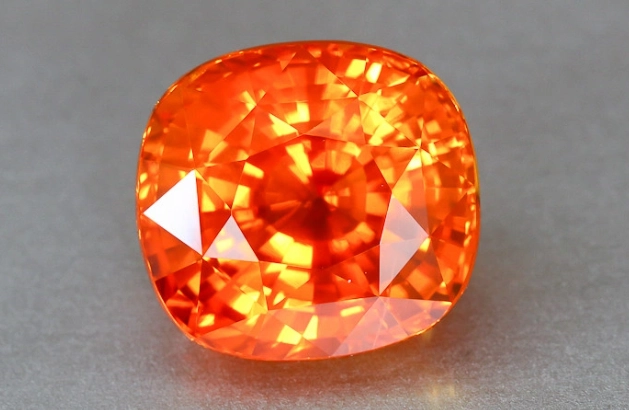
Color: The Heart of the Matter
With orange sapphire, you're evaluating three things: Hue, Tone, and Saturation.
- Hue: This is the basic color—orange. But is it a yellow-orange, a pure orange, or a reddish-orange? There's no "best" one; it's personal preference. Pure, vivid orange is generally the most sought-after and rarest.
- Tone: How light or dark is the color? A great orange sapphire usually sits in the medium to medium-dark range. Too light, and it can look washed out. Too dark, and the color can look muddy or brownish, losing its fiery appeal.
- Saturation: This is the intensity or purity of the color. High saturation means a strong, vibrant orange with no gray or brown masks dulling it. This is the single biggest driver of value. A small stone with incredible saturation can be worth more than a large, dull one.
I always tell people to look for a stone that makes you feel something. Does that orange glow seem to come from within? That's high saturation doing its job.
Clarity: What's Inside Counts (A Bit)
Sapphires are Type II gems, meaning they're expected to have some inclusions (internal characteristics). The goal is "eye-clean"—no inclusions visible to the naked eye when you look at the stone face-up.
Some inclusions can actually be good. Silk (fine needle-like inclusions) can cause a soft, velvety appearance that's desirable. But cracks reaching the surface? That's a durability problem. Black inclusions that block light? They make the stone look dead.
Don't panic if you see a tiny flaw under 10x magnification. If you can't see it without a loupe, it likely won't affect beauty or value much. Paying a huge premium for a "loupe-clean" orange sapphire is often unnecessary.
Cut: The Sculptor's Touch
A bad cut can ruin a perfect piece of rough. The cutter's job is to maximize color, brilliance, and shape while minimizing weight loss. For orange sapphires, you often see oval and cushion cuts because they hold color beautifully. Round brilliants are less common as they waste more rough.
Look for a stone with good symmetry and life. It shouldn't look too dark or have a "window"—a dead area in the center where light just falls through instead of reflecting back. A well-cut orange sapphire will have that glow evenly across the entire stone.
Carat Weight: Size vs. Quality
Here's the reality: fine orange sapphires over 2 carats become significantly rarer, and the price per carat jumps. You can find smaller stones (under 1 carat) with excellent color for a much more accessible price.
My advice? Prioritize color and cut over sheer size. A breathtaking 0.75-cat orange sapphire will always get more compliments than a bland 2-carat one. It's about the impact, not the millimeter.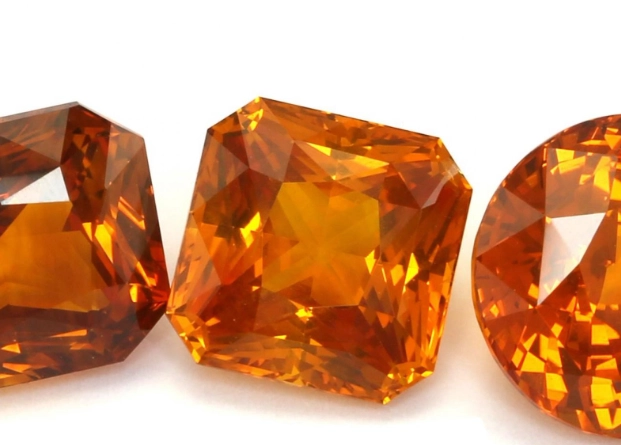
| Factor | What to Look For in Orange Sapphire | What to Avoid |
|---|---|---|
| Color | Vivid, saturated orange. Medium to medium-dark tone. Hue that appeals to you (pure, yellow-orange, reddish-orange). | Grayish or brownish overtones. Color that is too light (washed out) or too dark (muddy). |
| Clarity | Eye-clean to slightly included. Silk that adds softness is acceptable. | Large, black inclusions. Cracks (feathers) that reach the surface. Cloudiness that dulls the entire stone. |
| Cut | Symmetrical shape with even color distribution. Good brilliance and sparkle. No obvious windows or extinctions. | Shallow or overly deep cuts. Poor symmetry. Bulging girdle or off-center culet. |
| Carat | Choose the best color you can afford. Smaller, vivid stones often offer better value. | Sacrificing color saturation just to get a larger stone. |
The Big Question: Treated or Natural?
This is a major point of confusion and a key area where buyers can get misled. The vast majority of sapphires on the market undergo some form of treatment to improve their color or clarity. Heat treatment is the most common and widely accepted in the trade. It's a centuries-old practice that uses high heat to dissolve silk, improve color saturation, and make the blue or orange hue more uniform.
A heated orange sapphire is still a real sapphire. The treatment is stable and permanent. It's not considered "fake." However, it should always be disclosed by the seller, and it does affect value. An unheated orange sapphire with fantastic color is exceptionally rare and commands a significant premium.
Watch Out: Some treatments are less acceptable. Diffusion treatment (where elements are driven into the surface to create color) or fracture filling (where glass-like material is used to fill cracks) are problematic. These treatments can be less stable and require special care. They must be disclosed. Always ask for a gemological report from a reputable lab like GIA or AGL (American Gemological Laboratories) for any significant purchase. The report will state any treatments detected.
Some dealers might try to pass off heated stones as "natural" (meaning unheated). That's why a report is your best friend. For a daily-wear ring, a beautifully heated orange sapphire is a fantastic, more affordable choice. For a collector's piece, an unheated stone is the goal.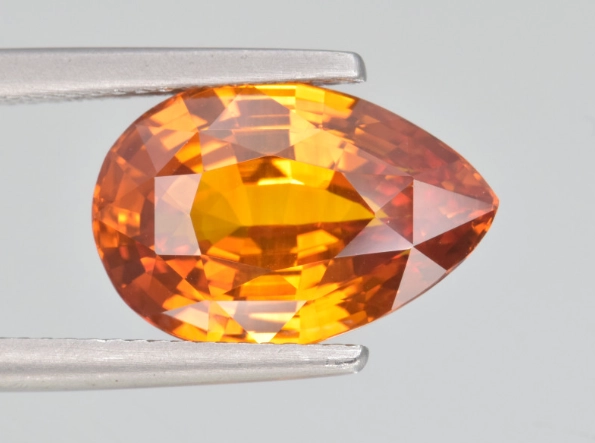
How to Buy an Orange Sapphire Without Regret
Okay, let's get practical. You're ready to shop. Where do you even start?
First, set a realistic budget. Orange sapphires can range from a few hundred dollars per carat for a pale, included, commercial-grade stone to several thousand per carat for a vivid, eye-clean, unheated gem. Knowing your limit helps narrow the field instantly.
Look at lots of stones. Not just online photos—videos are crucial. A gem can look one color in a studio light and totally different in daylight. Reputable online retailers (I won't name names, but look for those with strong return policies and video services) and specialized gem dealers are good starting points. The American Gem Trade Association (AGTA) has a member directory of ethical suppliers, which is a great resource.
Ask questions. A lot of them.
- Can you provide a video in natural daylight and indoor light?
- Is the stone heated or unheated? Do you have a lab report?
- What are the exact dimensions (not just carat weight)?
- What is the return policy?
A trustworthy seller will have answers and be transparent. If they're vague or pressure you, walk away.
Consider the setting. An orange sapphire pairs beautifully with both warm and cool metals. Yellow gold enhances the warmth. White gold or platinum makes the orange color pop in a more modern, contrasty way. Think about what you'll wear it with daily.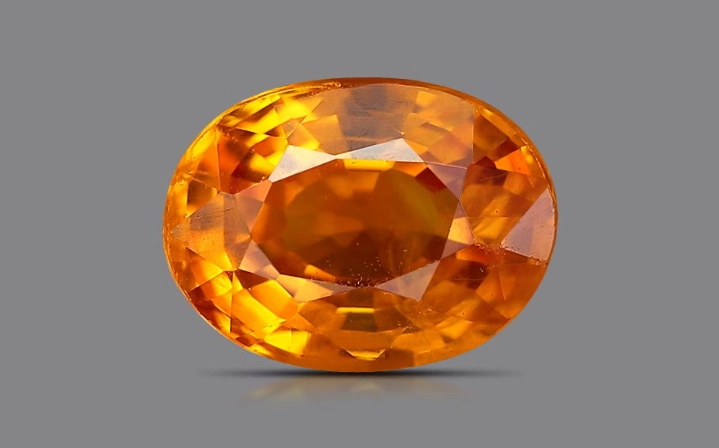
Caring for Your Piece of the Sun
You've got your orange sapphire. Now, how do you keep it looking amazing? Sapphires are tough—a 9 on the Mohs scale of hardness, second only to diamonds. That makes an orange sapphire an excellent choice for everyday wear in rings. But "tough" doesn't mean indestructible.
Daily cleaning is simple: warm water, a drop of mild dish soap, and a soft toothbrush. Gently scrub behind the stone where dirt collects. Rinse well and pat dry with a soft, lint-free cloth. Avoid harsh chemicals. Chlorine in pools and household cleaners can damage metals and, over time, might affect treatments or accumulate grime.
Ultrasonic cleaners are usually safe for heat-treated sapphires in secure settings, but I'm cautious. If the stone has fractures or questionable stability from other treatments, it can be risky. Steam cleaners are generally a no-go for any gem with inclusions or treatments. When in doubt, stick to the soapy water method.
Storage is key. Don't just toss your orange sapphire jewelry in a box with other pieces. They can scratch each other. Use a soft pouch or a compartmentalized jewelry box. A client once brought in a sapphire that had been cleaned with harsh chemicals for years, and the prongs were eroded and the stone was dull with residue. Basic care prevents that.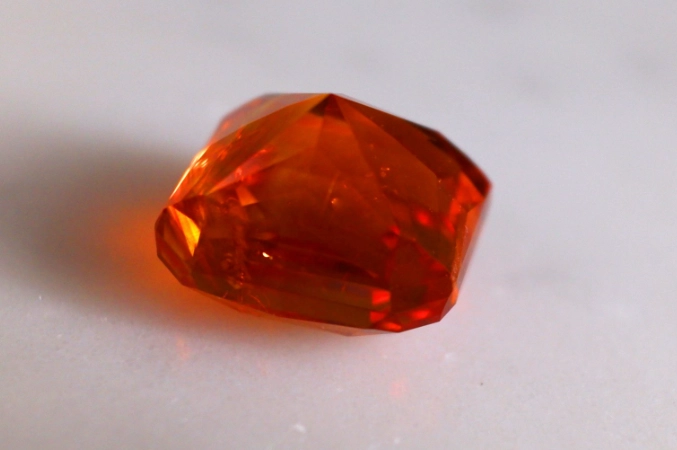
Orange Sapphire vs. The Others
How does it stack up against similar-looking gems?
Orange Sapphire vs. Padparadscha Sapphire: This is the big one. Padparadscha is a specific, rare sapphire with a delicate pinkish-orange or salmon color. It's not just any orange-pink mix; it has a very particular balance. True Padparadscha is often more expensive than a standard orange sapphire. If a dealer is calling a vividly orange stone "Padparadscha," be skeptical.
Orange Sapphire vs. Spessartite Garnet: Spessartite is a gorgeous orange garnet. It has a higher refractive index, meaning it can be even more fiery and brilliant than a sapphire. But it's softer (around 7-7.5 on Mohs scale) and less durable for a daily ring. It's also often less expensive per carat for a similar color intensity.
Orange Sapphire vs. Citrine: Citrine is quartz. It's much softer (7 on Mohs), far more abundant, and usually a pale yellow-orange. There's no comparison in durability or rarity. A fine orange sapphire is in a different league entirely.
The International Gem Society (IGS) has a great article on gemstone hardness and wearability that's worth a read if you're deciding between different orange gems for a ring.
Your Orange Sapphire Questions, Answered
I get asked these all the time. Let's clear them up.
Are orange sapphires rare?
Yes, but not impossibly so. Pure, vivid orange sapphires are significantly rarer than blue sapphires. They're more common than, say, a fine Padparadscha, but finding one with top-tier color and clarity takes some searching. The pale or brownish ones are more readily available.
Is an orange sapphire a good investment?
Buy jewelry first because you love it. As a financial investment, only the very finest quality, unheated stones from top sources have shown consistent appreciation. For most people, the "investment" is in the joy and longevity of a beautiful, durable gem you'll wear for a lifetime.
Can orange sapphires be used in engagement rings?
Absolutely! Their hardness (9) makes them one of the best non-diamond choices for a ring meant for daily wear. They symbolize uniqueness, warmth, and vitality. Just ensure it's set securely (a bezel or protective setting is great for active lifestyles) and insure it.
How can I tell if my orange sapphire is real?
At home, you can do a few basic checks. Look for inclusions with a loupe (most real sapphires have them). Check the hardness cautiously (a sapphire will scratch glass). But these aren't foolproof. The only way to be 100% sure is to get it evaluated by a graduate gemologist or have a lab report from GIA or similar.
Do orange sapphires fade in sunlight?
No. Unlike some gems (like amethyst or kunzite), the color in a sapphire is stable against light. Sunlight won't fade your orange sapphire. The color-causing elements are locked tightly into the crystal structure.
Wrapping this up, the journey to finding the right orange sapphire is part of the fun. It's about discovering a color that speaks to you, learning a bit about the earth's artistry, and ending up with a piece of jewelry that has real character.
Don't rush. Compare. Ask questions. And when you see that one stone that just seems to hold a little bit of captured sunlight, you'll know.
That's the one.
Related Articles
Sodalite and Lapis Lazuli: Ultimate Guide to Combined Use & Benefits
Selenite Spiritual Meaning: A Complete Guide to Its Energy & Uses

ABF, facing a big enemy?
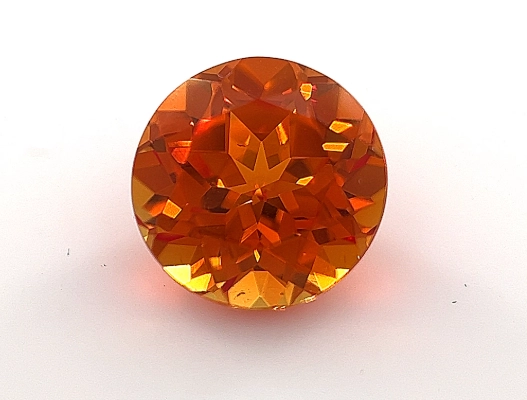
The Ultimate Guide to Orange Sapphire Raw Gems: Value, Buying & Care
Moss Agate Meaning Explained: Healing, Geology & How to Use It