Navigate This Onyx Guide
- What Exactly Is Onyx? Breaking Down the Basics
- The Nitty-Gritty: Physical and Chemical Properties of Onyx
- So, What Can You Actually *Do* With Onyx? (The Uses)
- The Other Side: Metaphysical Properties and Symbolism
- How to Buy Onyx: A No-Nonsense Guide
- Caring for Your Onyx
- Common Questions About Onyx Properties and Uses
- Final Thoughts
Let's be honest, when most people hear "onyx," they picture a sleek, polished black stone. Maybe in a man's ring or as a decorative bowl. But there's so much more to it. I remember the first time I held a piece of genuine black onyx. It wasn't just black; it was this deep, velvety void that seemed to suck in the light. Cool to the touch, surprisingly heavy for its size. It felt... substantial. Ancient, even. That's what got me hooked.
But is onyx just a pretty stone? Far from it. Understanding the full spectrum of onyx properties and uses is like unlocking a secret toolkit—for jewelers, designers, collectors, and even those interested in its more esoteric side. This guide is my attempt to dump everything I've learned, the good and the overhyped, into one place. We'll strip away the mystery and look at what onyx actually is, what it can do, and how you can use it without getting ripped off.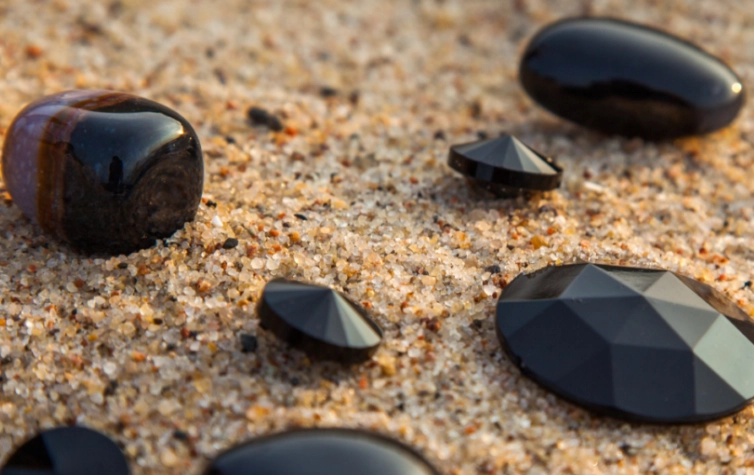
Quick Reality Check: The term "onyx" can be confusing. True geologist's onyx is a banded variety of chalcedony (a type of quartz), usually with parallel layers of black and white. But the solid black stone sold as "onyx" in most jewelry stores is often a different, uniformly colored chalcedony, sometimes called "black onyx." To add to the mix, there's also "Mexican onyx" or "onyx marble," which is a banded calcite stone used for carvings and decor. We'll tackle all of these, because when people search for onyx properties and uses, they're usually interested in the whole family of stones going by that name.
What Exactly Is Onyx? Breaking Down the Basics
Before we dive into uses, we need to know what we're dealing with. Onyx isn't a single, simple mineral. It's a bit of a family name. The core member is a silicate mineral, a variety of chalcedony, which itself is a microcrystalline form of quartz. That's a fancy way of saying its crystals are too small to see with the naked eye, giving it a smooth, waxy look when polished.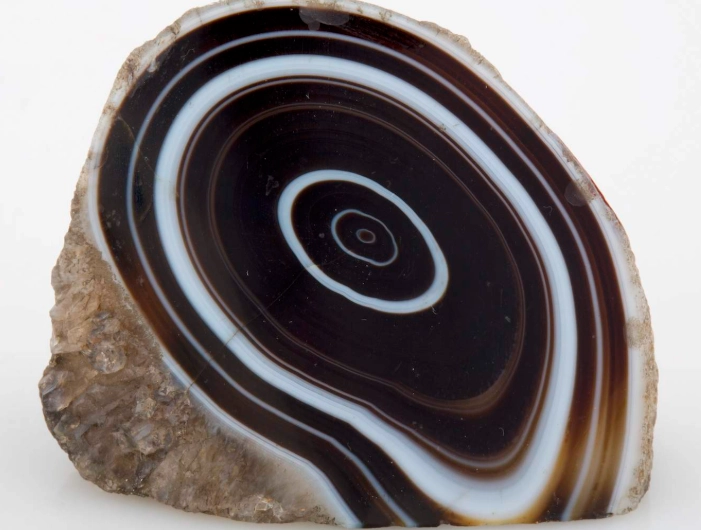
The classic, textbook definition from the Gemological Institute of America (GIA) describes onyx specifically as a banded gemstone with straight, parallel layers. These bands are usually black and white. That's the "pure" form. But commerce and language are messy. The demand for a solid, deep black stone led to the treatment of other agates or chalcedonies to create what we now universally call black onyx. It's so prevalent that it's accepted as its own category now.
Then you have the carbonate-based imposter—in a mineralogical sense—called calcite onyx or onyx marble. It's softer, often has more swirling, green, red, or honey-colored bands, and is stunningly translucent. It's been used for centuries in architecture and art. When someone talks about a beautiful onyx lamp base or tabletop, they're almost certainly talking about this calcite type.
So, which one is the "real" onyx? Depends if you're a geologist or a shopkeeper.
The Main Types of Onyx You'll Encounter
To make sense of the properties and uses of onyx, you have to know which type you're looking at. Here’s the breakdown:
- Banded Onyx (Classic Onyx): The original. Characterized by its flat, straight bands of alternating colors—most famously black and white, but also brown and white, or red and white. This is the stone of ancient cameos.
- Black Onyx: Usually a uniformly deep black chalcedony. This is often the result of dyeing grayish agate, but natural black specimens exist. It's the poster child for modern onyx jewelry.
- Green Onyx: This is almost always the translucent calcite-based material. It has gorgeous light-green to dark-emerald banding and is prized for decorative objects.
- Mexican Onyx (Onyx Marble): Again, this is calcite. It's found in massive deposits, often with vibrant bands of yellow, red, green, and brown. It's soft, carves easily, and is used for everything from bookends to wall tiles.
I have a small piece of banded onyx from Pakistan on my desk. The layers are so precise they look painted on. My green onyx sphere, on the other hand, feels completely different—softer, almost like cold wax, and it glows when you put a light behind it. Two different worlds, same name.
The Nitty-Gritty: Physical and Chemical Properties of Onyx
This is where we get technical, but I'll keep it painless. The properties dictate the uses. You can't use a soft stone for a high-traffic floor, right? Let's compare the two main families.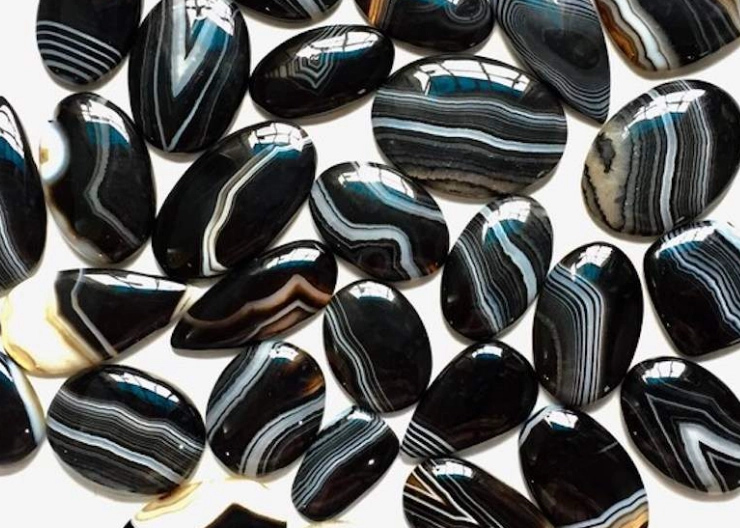
| Property | Chalcedony Onyx (Quartz Family) | Calcite Onyx ("Onyx Marble") |
|---|---|---|
| Chemical Composition | Silicon Dioxide (SiO₂) | Calcium Carbonate (CaCO₃) |
| Mohs Hardness | 6.5 - 7 (Quite durable) | 3 - 4 (Relatively soft) |
| Key Trait | Excellent hardness, takes a high polish, good for daily-wear jewelry. | Beautiful translucency and banding, but scratches easily. Stunning for decor. |
| Density/Feel | Heavier, feels solid and glassy. | Lighter, feels softer and waxier. |
| Reaction to Acid | None. It's inert. | Will fizz if exposed to mild acids (like vinegar or lemon juice). A big deal for care. |
| Transparency | Opaque to slightly translucent. | Translucent to semi-transparent. Glows with backlighting. |
See how that changes everything? The quartz-based onyx is tough. A hardness of 7 on the Mohs scale (where diamond is 10) means it's resistant to scratches from everyday dust (which is quartz particles). That's why it's perfect for rings and bracelets that get knocked around. The calcite version? At a hardness of 3, a copper coin can scratch it. You wouldn't want that on a kitchen countertop, but it's heavenly for a lampshade where you want light to glow through.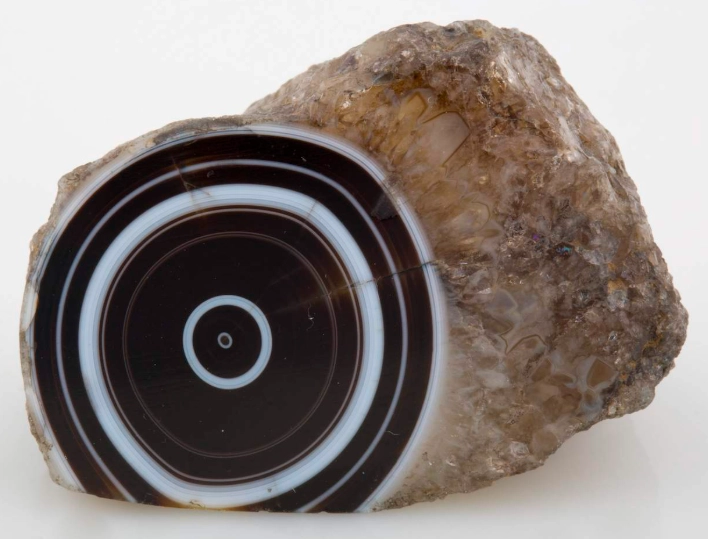
The acid thing is crucial. I learned this the hard way. I left a beautiful calcite onyx coaster under a glass of iced tea with lemon. A few hours later, there was a faint, dull spot where a drop had seeped under. The acid etched the surface. Quartz onyx wouldn't have batted an eye.
A Common Mistake: People often assume all onyx is super hard because it's a "gemstone." That assumption can lead to ruined table tops or chipped jewelry settings. Always, always check which type you're buying if you plan to use it for something functional.
Optical Properties: What Gives Onyx Its Look?
The beauty is in the details. The banding in classic onyx is caused by rhythmic crystallization, laying down different impurities (like iron oxides for the black bands) in successive layers. It's nature's recording of its own slow process.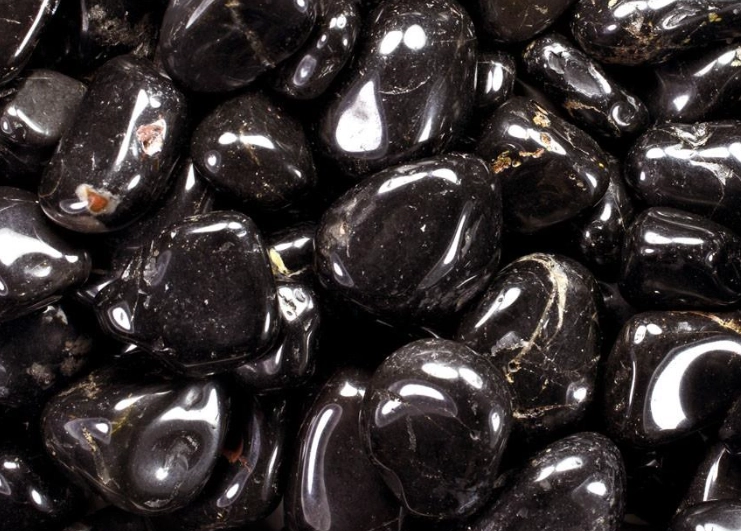
Black onyx gets its color from inclusions or, very commonly, from a dyeing process. The stone is porous, so it's soaked in a sugar solution and then treated with sulfuric acid, which carbonizes the sugar, leaving a permanent black color. Is this "fake"?
Not really. It's an ancient, accepted practice to enhance what's already there. Most black onyx on the market is treated this way. The key is that the treatment is stable and permanent. If someone sells it as "natural, untreated black onyx," the price should be significantly higher, and you should ask for verification.
The translucency of calcite onyx is its magic trick. Thin slabs can transmit light beautifully, creating an internal glow that makes it perfect for lamp bases, bar tops with underlighting, or decorative wall panels. No other common stone has quite that same warm, glowing effect.
So, What Can You Actually *Do* With Onyx? (The Uses)
This is the fun part. The uses of onyx span millennia, from ancient seals to modern skyscrapers. Let's break it down by category.
1. Jewelry and Adornment
This is the most personal use. Black onyx is a staple in men's jewelry—cufflinks, signet rings, tie pins. It's classic, elegant, and goes with everything. For women, it's often set in silver or white gold for a dramatic, high-contrast look.
- Rings and Bracelets: Primarily using the durable quartz onyx. Its hardness makes it suitable for daily wear. Bezel settings (where a metal rim surrounds the stone) are popular as they protect the edges.
- Cameos and Intaglios: This is the historic art form for banded onyx. Artisans carve the white layer to create a raised (cameo) or recessed (intaglio) image against the dark background. It's meticulous work, and true hand-carved pieces are expensive.
- Beads and Pendants: Onyx beads are everywhere. They're used in meditation malas, fashion necklaces, and beaded bracelets. The stone's density gives the jewelry a satisfying, substantial weight.
I have a simple black onyx pendant my grandmother gave me. It's not fancy, but it's survived decades of wear without a single scratch. That's the durability of quartz onyx in action. It just works.
2. Decorative Objects and Interior Design
This is where calcite onyx shines—literally. Its translucency and vibrant bands make it a designer favorite.
- Table Tops and Bar Fronts: When backlit with LED strips, an onyx slab becomes a stunning focal point. It's used in high-end hotels, restaurants, and luxury homes. The softness means it needs a protective sealant and careful use (coasters are mandatory!).
- Lamp Bases and Shades: Probably the most iconic use. An onyx lamp diffuses light into a warm, ambient glow. It's a mid-century modern classic.
- Vases, Bowls, and Bookends: Carved from solid blocks of banded calcite onyx, these are statement pieces. The natural bands create unique, organic patterns in every object.
- Wall Cladding and Mosaics: Thin tiles of onyx are used to create feature walls, fireplace surrounds, or bathroom accents. The effect is opulent and one-of-a-kind.
The downside? Cost and maintenance. A large, high-quality onyx slab is expensive. And because it's soft and reactive, it's not for a high-traffic family kitchen. It's a luxury material that demands a bit of babying.
3. Architectural and Historical Uses
Onyx has a royal pedigree. The ancient Romans and Egyptians used it for scarabs, vessels, and inlays. The Metropolitan Museum of Art has stunning examples of Roman onyx cameos. In more recent history, it was a darling of the Art Deco movement, used in lavish buildings for pillars and floor inlays.
Today, you see it in corporate lobbies and luxury retail spaces. It signals wealth and permanence. An interesting modern use is in precision engineering. Because some types of agate (close cousin to onyx) have exceptional dimensional stability, they've been used to make balance wheels in watches and precision laboratory equipment like mortars and pestles. That's a far cry from a necklace!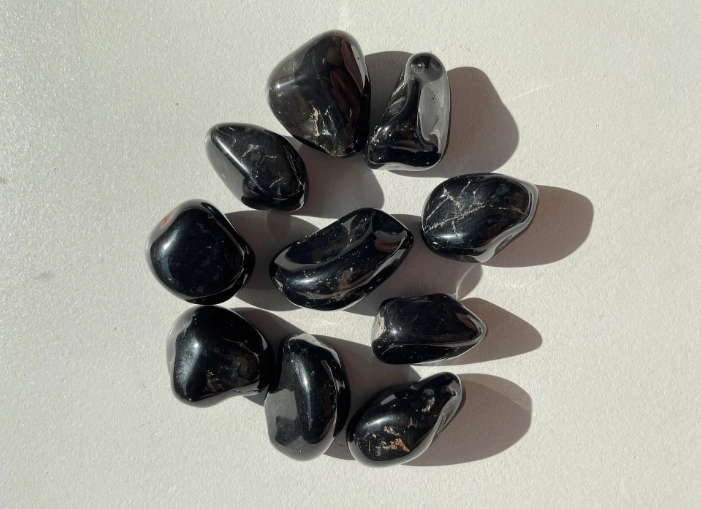
Designer's Tip: If you're considering onyx for a home project, use it as an accent, not the main workhorse. A backsplash behind glass shelves, a panel behind your bed, or a small console table. Let it be the star without having to do all the hard work.
The Other Side: Metaphysical Properties and Symbolism
Okay, let's talk about the elephant in the room. No discussion of onyx properties and uses is complete without mentioning its reputed metaphysical properties. I'll be straight with you—I'm a skeptic by nature. I like rocks for their physical beauty and history. But I also recognize that for thousands of years, across cultures, people have believed stones carry energy. And onyx has a heavy reputation.
Traditionally, black onyx is seen as a grounding and protective stone. It's said to absorb and transform negative energy, strengthen determination, and promote emotional stability. In many traditions, it's linked to the root chakra, helping one feel secure and connected to the earth.
Is there scientific proof? No. Not a shred. The U.S. Geological Survey won't have any data on "energy vibrations."
But here's the thing I can get behind: the placebo effect is powerful. If holding a smooth, cool stone helps someone focus their intentions, find calm, or feel a sense of ancient connection, who am I to say that's not a "use"? It's a psychological tool. Many people use onyx worry stones or meditation beads for this very reason. The act of focusing on the stone and its ascribed properties can create a real sense of centering.
My advice? Enjoy the lore, but don't mortgage your house for a "healing" onyx pyramid. Buy it because you like it.
How to Buy Onyx: A No-Nonsense Guide
Navigating the market can be tricky. Here’s what to look for, based on what you want to use it for.
For Jewelry (Quartz Onyx):
- Color: Black onyx should be a uniform, deep black. Avoid grayish tones or visible dye concentrations (sometimes seen as darker spots near cracks).
- Polish: It should have a brilliant, mirror-like polish with no dull patches.
- Setting: Check that the stone is secure. Bezel or partial-bezel settings are best for protecting the edges of a cabochon (polished, domed stone).
- Ask: Don't be afraid to ask if the stone is dyed. A reputable seller will be transparent. Dyed isn't bad; it's standard. But they should tell you.
For Decor (Calcite Onyx):
- Banding and Color: Look for vibrant, contrasting bands. The translucency is key—hold a thin piece up to light. It should glow evenly.
- Finish: It can be polished to a high gloss or given a honed (matte) finish. Polished shows off the color more; honed is better at hiding fine scratches.
- Sealing: If it's for a functional surface (like a table), ensure it has been professionally sealed with a penetrating stone sealer. Ask about resealing maintenance.
- Structural Integrity: Look for cracks or fissures, especially near edges. Calcite onyx can be brittle.
Caring for Your Onyx
Treatment depends entirely on the type.
Quartz Onyx (Jewelry): Pretty tough. Clean with warm, soapy water and a soft brush. Avoid ultrasonic cleaners if the stone has fractures (which could have been filled with dye). Store separately to avoid scratching softer gems.
Calcite Onyx (Decor): Handle with care. Wipe with a damp cloth only. Use coasters for drinks. Clean spills immediately, especially anything acidic (wine, juice, coffee, cleaning products). Use only pH-neutral stone cleaners. Re-seal surfaces annually if they get regular use.
Common Questions About Onyx Properties and Uses
Let's wrap up with some direct answers to the questions I get asked most.
Final Thoughts
Exploring the world of onyx properties and uses reveals a stone of incredible duality. It's both ancient and modern. It's both ruggedly durable (the quartz kind) and delicately beautiful (the calcite kind). It serves practical purposes in architecture and deeply personal ones in jewelry and spiritual practice.
The key takeaway is to know your onyx. Understand whether you're getting the hard, wear-forever quartz variety or the soft, glowing calcite variety. That knowledge will guide you to the right use, the right care, and the right purchase.
Whether you're drawn to its stark elegance, its historical weight, or its warm glow, onyx offers something unique. Just maybe keep it away from your lemonade.
Related Articles
The Complete Guide to Indigo Gabbro: Healing & Decor
Red Aventurine: Complete Guide to Healing Properties and Practical Uses
Which Zodiac Signs Should Avoid Citrine? (And Who Thrives!)
Green Moss Agate: The Ultimate Guide to Its Meaning, Properties & Value
Azurite Crystal Properties: A Complete Guide to Meaning, Uses & Benefits