You've probably seen bloodstone—that deep, forest-green stone speckled with vivid red spots that look like drops of blood. It’s dramatic. It’s ancient. And if you’re holding a piece, you might be wondering what it’s actually supposed to do. Is it just a cool-looking rock, or is there something more? After years of working with crystals, I can tell you bloodstone is one of the most misunderstood and underrated stones in the mineral kingdom. Most articles repeat the same vague lines about "courage" and "vitality." Let's cut past that. We’re going to look at the specific, tangible properties of bloodstone, how to use it in ways that actually make a difference, and how to avoid buying a cheap fake that does nothing.
What You'll Discover
What is Bloodstone? A Quick Physical Profile
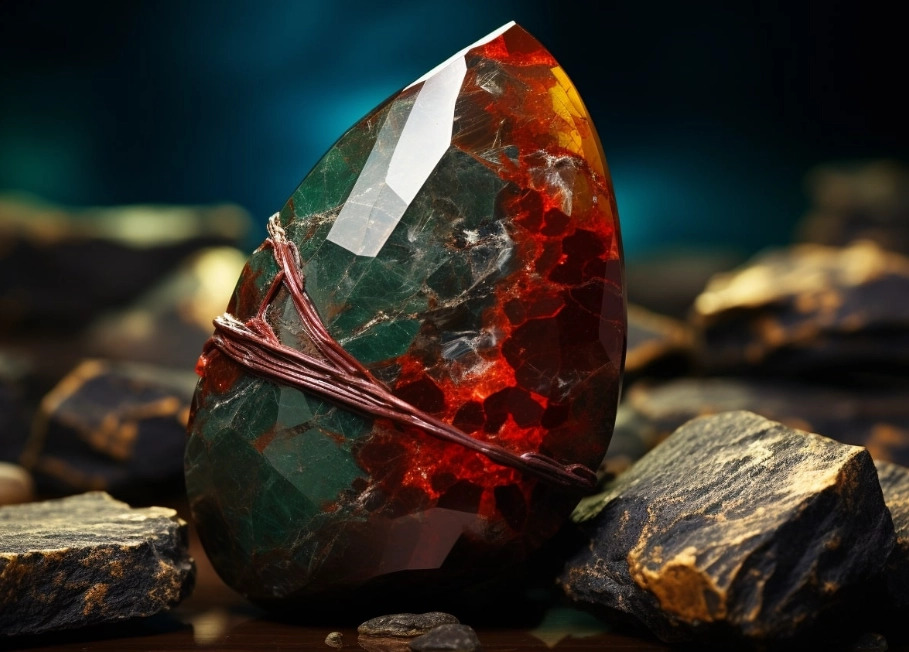
First, let's talk about what you're actually holding. Bloodstone is a variety of chalcedony, which is itself a type of quartz. The classic look is an opaque, dark green base (from chlorite or other minerals) with bright red to brownish-red spots of iron oxide, primarily hematite. It's also called heliotrope, which means "sun turner" in Greek, hinting at its old solar associations.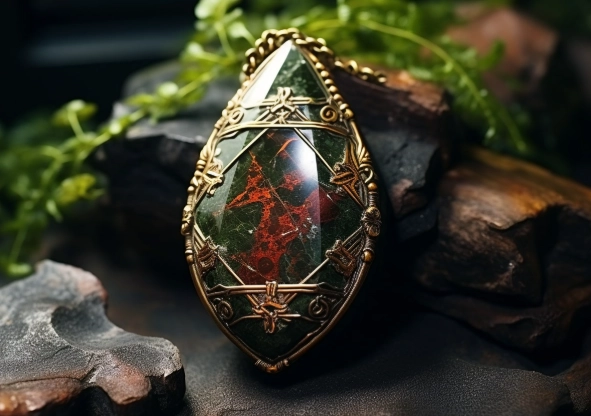
It has a hardness of 6.5 to 7 on the Mohs scale, so it's durable enough for daily-wear jewelry like rings and bracelets. Historically, it was carved into signet rings and amulets. Roman soldiers reportedly carried it as a talisman to stanch bleeding and bring victory—hence the name "bloodstone." That historical use isn't just folklore; it directly points to the core energy people have always felt from this stone: stopping leaks and strengthening foundations, whether physical, emotional, or financial.
A Common Misconception: Many newcomers think the red spots are the bloodstone. They’re not. The power is in the combination—the grounding, life-force green of the Earth (nurturing, growth) activated and empowered by the iron-rich red of Mars (action, vitality). A stone that's mostly red with a little green isn't true bloodstone; it's likely something else.
The Multifaceted Healing Properties of Bloodstone
Here’s where we go deeper than the generic lists. Bloodstone’s properties aren't a random assortment; they're a cohesive system focused on fortification and purification.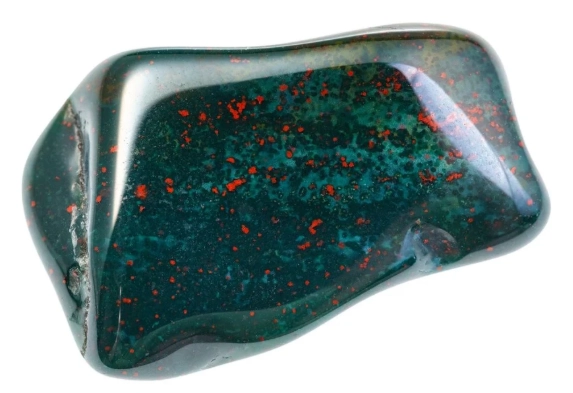
Physical Healing & Vitality
This is its oldest reputation. Think of it as a tonic for the circulatory and filtration systems. It’s traditionally linked to supporting blood health, helping to cleanse the blood of toxins, and improving circulation. I’ve known practitioners who recommend it during convalescence or times of low energy, not as a medical treatment, but as an energetic supplement to support the body's own healing processes.
It’s particularly associated with the organs of purification: the kidneys, liver, and spleen. If you feel "sluggish" or "toxic" after illness or poor diet, working with bloodstone can provide a subtle sense of energetic detox. A client once described it as "feeling like my internal filters just got cleaned."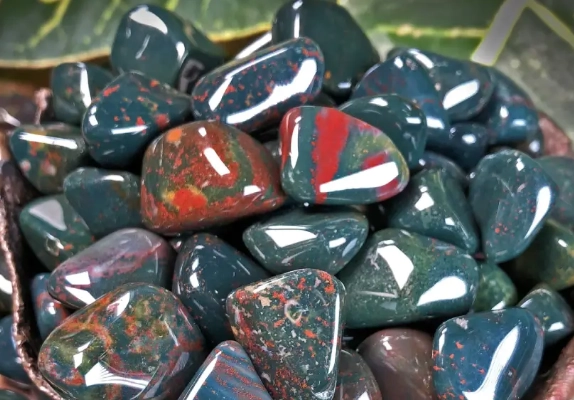
Emotional & Mental Fortitude
This is bloodstone's secret weapon. It’s not a fluffy, feel-good stone. It’s a stone for getting things done when you don't feel like it. It combats procrastination born of overwhelm or fear. The green base provides emotional stability and resilience, while the red sparks ignite motivation and decisive action.
It’s excellent for periods of high stress or when you’re facing criticism. It doesn’t necessarily make the stress go away; it fortifies your emotional "container" so you can handle it without leaking energy through anxiety or self-doubt. It turns the "fight" in "fight-or-flight" into focused, calm determination.
Spiritual Protection & Grounding
Bloodstone is a powerful, earthy protector. It doesn’t create a bubble; it creates a fortified root system. It grounds spiritual energy firmly into the physical body and the present moment, which is one of the best protections against psychic drains or environmental negativity. If you feel spacey, ungrounded, or easily influenced by others' moods, bloodstone acts as an anchor.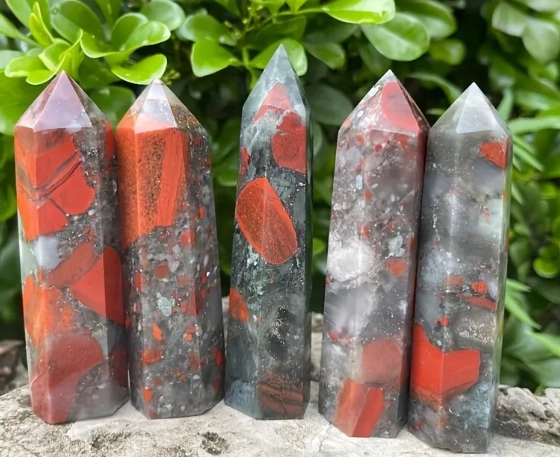
Many use it for creating a stable, protected space for meditation or spiritual work, ensuring any insights gained are integrated practically.
How to Use Bloodstone in Your Daily Life
Theory is fine, but application is everything. Here are concrete ways to work with bloodstone properties.
- Wear it as Jewelry: The most effective method for constant contact. A ring on your dominant hand helps channel its motivating energy into action. A pendant keeps its fortifying properties close to your heart and circulatory center. A bracelet is a great all-purpose option.
- Meditation Hold: Hold a tumbled stone in your receiving (non-dominant) hand during meditation. Focus on feeling its weight and coolness. Visualize its green energy stabilizing your emotions and the red sparks igniting a specific action you've been avoiding.
- Place it in Key Spaces:
- Home Office/Desk: To combat procrastination and maintain focus. Place it near your computer.
- Near the Front Door: As a protective, grounding stone that filters outside energy as it enters.
- In the Bedroom: Can support restful sleep by promoting a sense of safety and groundedness, though some find it too energizing—listen to your body.
- Create a Crystal Grid for Action: Place a central bloodstone surrounded by citrine (for motivation) and carnelian (for courage) on a grid mat or simple cloth. Activate it with the intention of moving forward on a stalled project.
- Elixir (External Use Only): Place a cleansed, non-toxic bloodstone in a glass jar of water, leave it in moonlight or sunlight for a few hours. Remove the stone. Use the energized water to anoint your wrists, feet, or add to a bath. Never ingest crystal elixirs without expert guidance and verification of stone safety.
How to Identify Real Bloodstone (And Avoid Fakes)
This is critical. The market is flooded with dyed agates and glass. A fake stone has none of the properties we're discussing.
- Look at the Color Pattern: Real bloodstone has an uneven, organic distribution of red spots. They look like splatters or inclusions. If the red spots are perfectly round, uniform, or look painted on, it's likely dyed. The green should be deep and opaque, not translucent like jade.
- Check the Weight and Temperature: Real stone feels denser and cooler to the touch than plastic or glass. Glass can feel similarly cool but often has a different luster.
- The Scratch Test (Carefully): Bloodstone (hardness ~7) can scratch glass (hardness ~5.5). If you carefully try to scratch the bottom of a glass bottle with an inconspicuous part of the stone and it leaves a mark, that's a good sign. Don't do this on a finished piece you might damage.
- Beware of "Too Perfect" Pieces: Mass-produced, perfectly shaped cabochons with vivid, uniform red are often suspect. Genuine bloodstone carvings and shapes retain some natural irregularity.
- Buy from Reputable Sources: Seek out lapidaries or crystal shops that provide information on origin (India, Brazil, and Australia are common sources) and can answer specific questions.
The biggest mistake I see? People buying a cheap, dyed stone online, feeling nothing from it, and then dismissing crystal work altogether. You can't expect software to run on hardware that doesn't exist.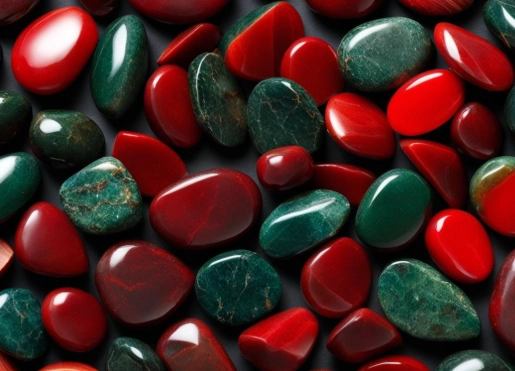
Caring for Your Bloodstone: Cleansing and Charging
Bloodstone is tough, but it absorbs a lot of heavy energy because that's its job—to ground and purify. Regular cleansing is non-negotiable.
- Water: Safe under running lukewarm water. Visualize stagnation washing away. Pat dry. Avoid long soaks if set in metal to prevent rust.
- Earth: Bury it in dry soil (like a potted plant) for 24 hours to deeply reset its connection to grounding energy.
- Smoke: Pass it through the smoke of sage, palo santo, or cedar.
- Sound: Use a singing bowl or tuning fork.
Charging: Unlike some stones, bloodstone doesn't love intense, direct sunlight for long periods, which can fade it. It prefers moonlight or gentle morning sun. Charging it on a bed of hematite tumbled stones amplifies its grounding and iron-rich properties perfectly.
Bloodstone FAQs: Your Questions Answered
Can bloodstone help with anxiety and stress?
It can, but in a specific way. It's not a sedative. If your anxiety is rooted in feeling ungrounded, scattered, or powerless, bloodstone's fortifying energy can create a sense of inner stability that makes stressors feel more manageable. For panic or nervous anxiety, a more soothing stone like lepidolite might pair better.
What’s the best way to wear bloodstone for maximum benefit?
It depends on your goal. For boosting physical vitality and circulation, wear it as a pendant. For turning intention into action (like finishing work tasks), a ring on your dominant hand. For general emotional grounding and protection throughout the day, a bracelet on either wrist works well. Don't overthink it—just get it on your body.
Can I put bloodstone in water to make an elixir?
Physically, yes, bloodstone is generally water-safe. However, you should only make an indirect elixir for safety. Place the cleansed stone in a small glass container, then place that container inside a larger bowl of water. This transfers the energy without the stone physically touching the water you'll use. Never ingest water that has had crystals soaking in it directly unless you are 100% certain of the mineralogical safety and have consulted an expert.
Is bloodstone associated with a specific zodiac sign or chakra?
It's most commonly linked to Aries (ruled by Mars, matching its red sparks) and Pisces (needing its grounding energy). Its primary chakra is the Root (Muladhara) for grounding and survival. Secondarily, it connects to the Heart (Anahata) for emotional resilience and the Solar Plexus (Manipura) for willpower and action. The red spots specifically activate the Root, while the green field works on the Heart.
Related Articles
Unlocking the Secrets of Tiger Eye Stone: Your Expert Guide to Meaning, Benefits & Buying
Larimar Stone Zodiac Guide: Meanings, Signs & Healing Properties
Bloodstone Crystal Guide: Healing Properties, Uses, and Buying Tips
Crazy Lace Agate: Benefits, Uses & How It Can Transform Your Life

The RISC-V ecosystem is about to explode, and the flat-headed brother enters the