Quick Guide to Crazy Lace Agate
- Where on Earth Does This Crazy Stone Come From?
- What's It Made Of? The Nitty-Gritty Physical Stuff
- Beyond the Look: Meaning and Uses (The Metaphysical Side)
- Crazy Lace Agate in Jewelry and Decor
- The Tricky Part: How to Spot the Real Deal
- Caring for Your Crazy Lace Agate
- Answers to the Questions People Actually Ask
You know how some stones just sit there looking pretty? Crazy lace agate isn't one of them. The first time I held a good piece, I actually laughed. It was like someone took a paintbrush dipped in carnival colors and just went wild inside a rock. Swirls of orange, red, white, and gray all tangled together in what looks like chaotic lace. Hence the name, I suppose. But here's the thing – that chaos isn't random. There's a whole geological story behind it, and once you know what you're looking at, it gets even more interesting.
I've been collecting and working with stones for years, and crazy lace agate always stands out on the shelf. It's not the most expensive gem out there, but it might be one of the most cheerful. People are drawn to it, asking about the patterns, where it's from, what it's for. So let's just dive right in and untangle everything about this vibrant stone, from how it's born in volcanic fires to how you can spot a real one from a fake.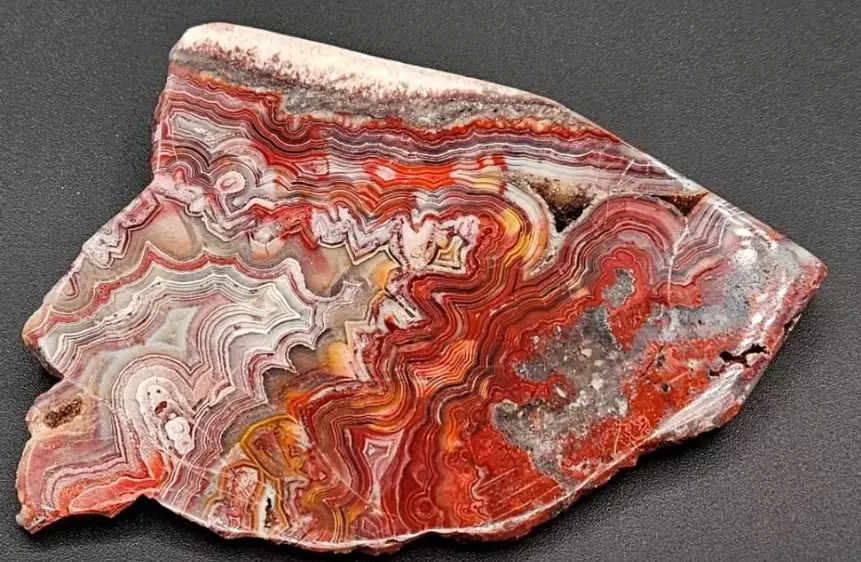
The Core of It: Crazy Lace Agate is a variety of banded chalcedony (a type of quartz) known for its extremely complex, swirling, and often brightly colored banding patterns that resemble lace. It's primarily mined in the state of Chihuahua, Mexico, which is why you'll sometimes hear it called "Mexican agate."
Where on Earth Does This Crazy Stone Come From?
Almost all the crazy lace agate you'll find today comes from one place: Mexico. Specifically, the northern state of Chihuahua. The mining areas around there have been the primary source for decades. It forms in cavities within ancient volcanic rock – think lava flows that cooled down millions of years ago.
Here's the basic recipe: silica-rich water, loaded with iron oxides and other minerals, slowly seeps into these rocky cavities. Over unimaginably long periods, the silica deposits layer by layer on the cavity walls. The different colors come from those impurities – the iron gives you reds and oranges, other minerals create the grays, whites, and yellows. The "crazy" pattern happens because of shifts in the flow, pressure, and mineral content of the water during this painfully slow process. It's not a calm, even filling. It's more like a slow, pulsing, geological dance.
That's why no two pieces are ever exactly alike.
You might see stones labeled as crazy lace from other places, but they rarely have the same intensity of color and complexity. The specific geology of that region in Mexico is what makes the classic form. The Gemological Institute of America (GIA) notes that agates, in general, are found worldwide, but the distinctive "lace" varieties often have very localized sources. For the real vibrant stuff, Mexico is king.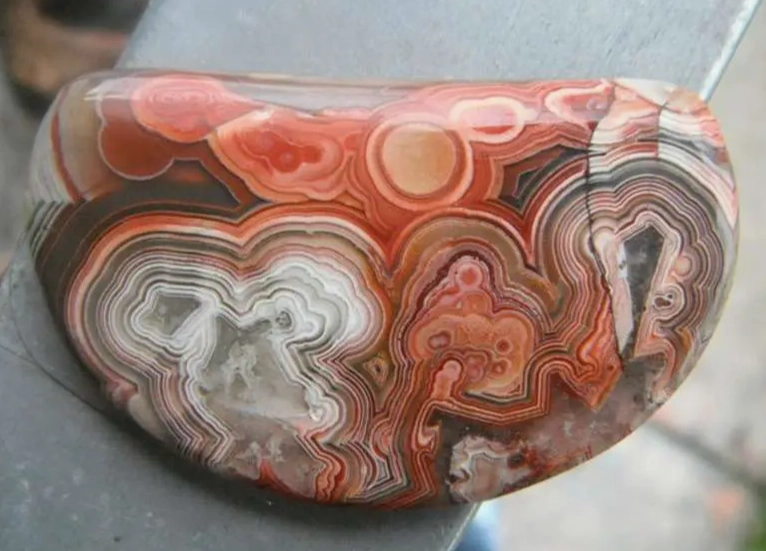
What's It Made Of? The Nitty-Gritty Physical Stuff
Let's get technical for a minute, but only a minute. I promise it's useful, especially if you're thinking of buying or wearing it.
At its heart, crazy lace agate is a form of chalcedony, which itself is a microcrystalline variety of quartz. That means its crystals are too small to see with the naked eye, giving it a smooth, waxy look when polished. This makes it different from, say, amethyst or citrine, which have larger, visible crystals.
| Property | Details for Crazy Lace Agate |
|---|---|
| Chemical Composition | SiO₂ (Silicon Dioxide) with impurities of iron, manganese, etc. |
| Hardness (Mohs Scale) | 6.5 - 7. This is decent. It can scratch glass but can be scratched by harder things like topaz or diamond. Good for everyday jewelry with a little care. |
| Luster | Waxy to vitreous (glassy) when polished. Dull when rough. |
| Transparency | Mostly translucent to opaque. You might get some light passing through thinner slices. |
| Key Identifier | The defining, complex, contorted banding in multiple colors. It should look layered, not painted on. |
That hardness is a practical point. A ring made of crazy lace agate can last if you're not too rough with it, but I'd think twice about using it for heavy manual work. A pendant or earrings are safer bets. The polish it takes is really beautiful – it brings out the depth of those layers.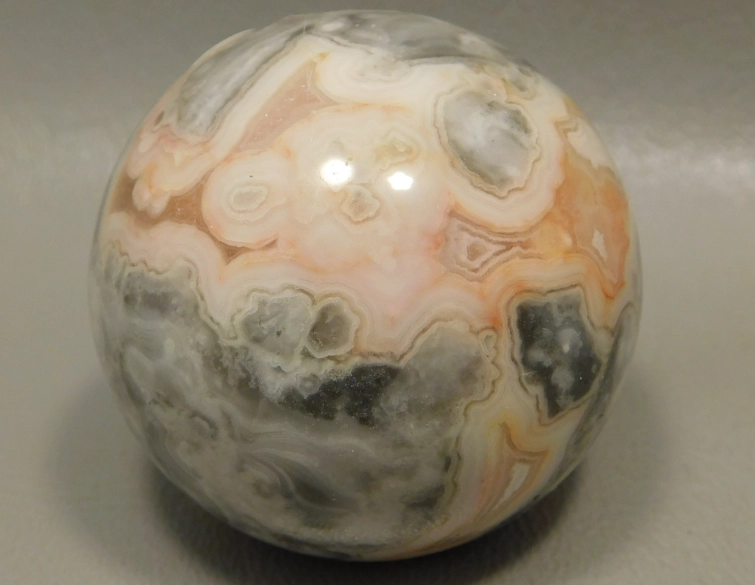
Personally, I think the rough, unpolished chunks are just as fascinating as the shiny ones. You can see the raw skin of the geode, and it feels more connected to the earth it came from. Polishing shows off the color, but the rough shows the story.
Beyond the Look: Meaning and Uses (The Metaphysical Side)
Alright, this is where things get subjective. I'll lay out what's commonly said about crazy lace agate in crystal healing and metaphysical circles, but take it with a grain of salt. Not everyone believes in this stuff, and that's fine. I find some of the associations poetic, even if I'm not sold on all the claims.
Commonly, crazy lace agate is called a "stone of joy." Given its appearance, that's not a huge surprise. It's associated with lifting the mood, promoting a positive outlook, and combating negative energy or patterns of thinking. The idea is that its chaotic patterns can help untangle the chaotic thoughts in your own mind.
Some of the specific associations I've come across repeatedly:
- Energy & Stamina: Linked to providing a gentle boost of energy, not a jittery caffeine-like rush, but a sustained flow. It's sometimes recommended for people who feel drained or stuck in a rut.
- Balance: The stone is said to help balance the physical, emotional, and intellectual parts of oneself. The lace pattern symbolizes interconnection.
- Focus & Decision Making: By supposedly clearing mental clutter, it's thought to aid in focus and making clearer decisions. Can it replace a good night's sleep and a cup of coffee? Probably not. But as a tactile reminder to center yourself, maybe.
How do people use it for this? Usually by carrying a tumbled stone in a pocket, wearing it as jewelry (so it's in contact with the skin), or placing it in a home or workspace. Meditation with the stone is also popular – just holding it and focusing on its patterns as a way to quiet the mind.
Is It a "Birthstone" or Associated with Zodiac Signs?
It's not a traditional birthstone like the monthly list from the jewelry industry. However, in more modern metaphysical systems, it's sometimes associated with Gemini. The reasoning is that Gemini is about duality and communication, and the complex layers of the agate reflect a complex, lively mind. But this isn't a hard rule. I've seen it recommended for almost any sign that needs a bit of lightening up.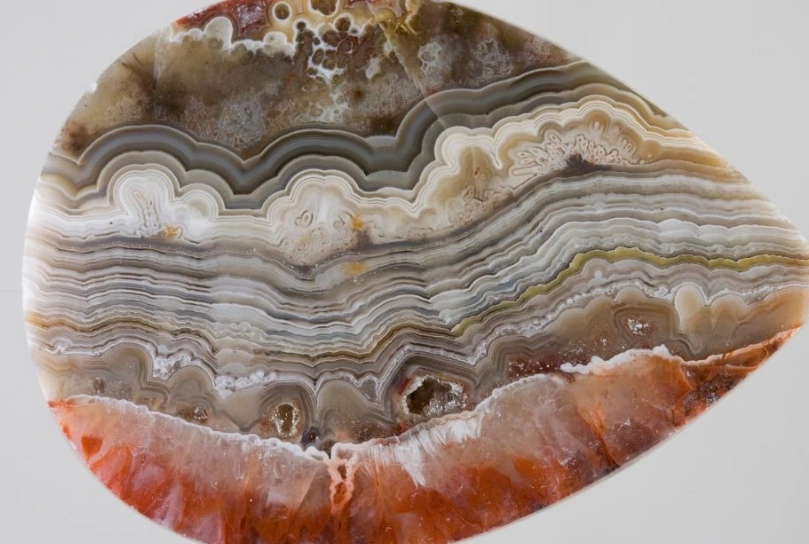
Crazy Lace Agate in Jewelry and Decor
This is where the stone really shines, literally. Its durability makes it a favorite among lapidary artists and jewelry makers.
Common Cuts and Forms:
- Cabochons: The most common. The stone is shaped and polished into a smooth, domed top with a flat back for setting into rings, pendants, and bracelets. This cut maximizes the visual impact of the bands.
- Slabs and Slices: Thin slices cut across the layers, often mounted as pendants or used in inlay work. These can be stunning, showing the full lace pattern like a miniature landscape.
- Tumbled Stones: Small, smooth, rounded pieces perfect for carrying, grids, or decorative bowls.
- Carved Items: You'll find crazy lace agate carved into spheres, eggs, pyramids, and figurines. A polished sphere can be a fantastic decorative piece, with the patterns swirling in all directions.
In home decor, larger polished slabs or bookends are popular. A lamp with a base made of crazy lace agate casts a wonderfully warm, patterned light. It's a statement piece.
A Quick Tip for Buyers: The value in jewelry is driven more by the artistry of the cut and the setting than the raw stone itself, as crazy lace agate is relatively abundant. A silver setting with a beautifully matched pattern will cost more than a simple wire-wrapped piece. Look for pieces where the cutter has followed the natural flow of the bands.
The Tricky Part: How to Spot the Real Deal
This is a big one. With the popularity of crystals, fakes and imitations are everywhere. The good news is that crazy lace agate, with its specific patterns, is harder to fake convincingly than a plain-colored stone, but it still happens.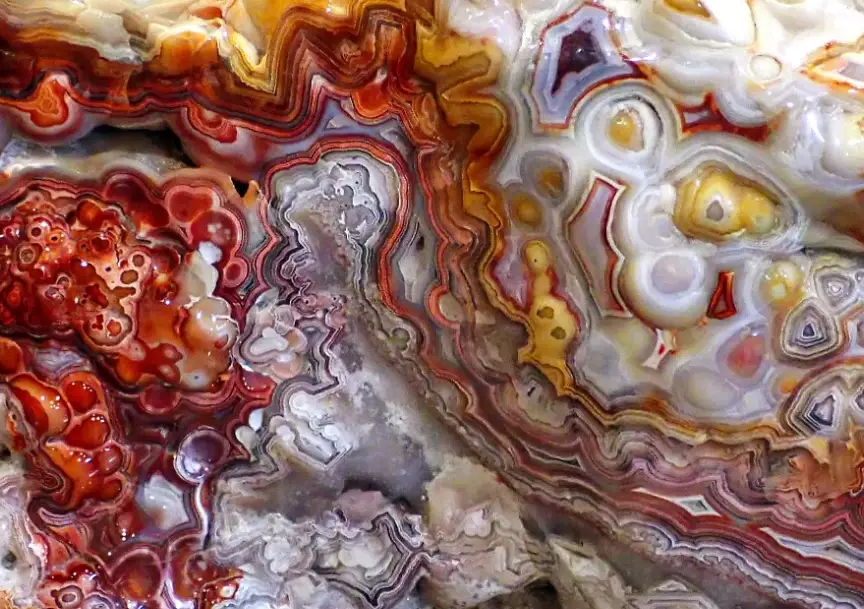
Red Flags and How to Avoid Them:
1. Unnaturally Bright or Uniform Colors: Real crazy lace agate has a certain earthiness to its colors. If the reds look like neon paint or the pattern repeats in a perfect, mechanical way, be suspicious. Nature is messy.
2. The "Painted-On" Look: This is the biggest giveaway. In real agate, the bands are inside the stone. They have depth. If you look at the edge of a cabochon, you should see the bands going into the stone, not just sitting on the surface. Fake ones often have a printed or dyed pattern that looks flat. Tilt it in the light. Real bands will have a 3D quality.
3. Dye Leaching: Sometimes, plain gray agate is dyed to imitate the bright colors of crazy lace. Cheap dyes can rub off or look blotchy. If you see a piece where the color seems concentrated in cracks or is overly saturated, it's likely dyed. A quick (but not always definitive) test is to rub it with a cotton ball soaked in acetone (nail polish remover). If color comes off, it's dyed. Be gentle, and this may not work on all dyes.
4. Temperature and Weight: Real stone feels cool to the touch and has a certain heft for its size. Plastic or glass imitations feel lighter and warm up quickly in your hand.
My advice? Buy from reputable sellers, especially those who source directly or can tell you about the mine origin. Don't be afraid to ask, "Is this naturally colored?" A honest seller will tell you. The Mexicanist cultural site has some great background on authentic Mexican minerals, which can help you understand the sourcing context.
Caring for Your Crazy Lace Agate
It's a sturdy stone, but not indestructible. Here’s how to keep it looking lively.
- Cleaning: Warm, soapy water and a soft brush (like an old toothbrush) is perfect. Avoid harsh chemicals, ultrasonic cleaners (they can crack it if there are internal flaws), and steam cleaners.
- Storage: Wrap it in a soft cloth or keep it in a fabric-lined box. Don't just throw it in a jar with harder stones like diamonds or sapphires, as they can scratch it.
- Sunlight: Prolonged, direct sunlight can fade the colors over many years, especially the reds and oranges. It's not an immediate thing, but don't leave your best piece on a sunny windowsill permanently. Display it in indirect light.
- Charging/Cleansing (Metaphysical): If you're into that, common methods are okay. Smudging with sage, placing it on a selenite plate, or using sound (like a singing bowl) are considered safe. Some advise against long water immersion for energetic cleansing, though physically a quick rinse is fine.
Answers to the Questions People Actually Ask
Is crazy lace agate rare?
Not rare in the sense that diamonds or alexandrite are rare. It's commercially available because there are active mines in Mexico. However, high-quality pieces with exceptional, bright, and complex patterning are less common and more sought after. You won't find it at every corner store, but a good rock shop or online mineral dealer will have it.
What's the difference between crazy lace agate and regular agate?
All crazy lace is agate, but not all agate is crazy lace. "Regular" agate typically has simpler, parallel bands in fewer colors (like gray and white). Crazy lace agate is defined by its complex, swirled, non-parallel, multi-colored banding that looks like tangled lace. It's a specific variety within the agate family.
Can it go in water?
Physically, yes. It has very low porosity, so a short immersion in water for cleaning is completely safe. Don't soak it for weeks, but washing it is fine. Metaphysically, some believe running water can cleanse its energy, while others prefer other methods. From a pure preservation standpoint, water won't hurt it.
Is it expensive?
Generally, no. It's an affordable gemstone. Small tumbled stones cost a few dollars. A nice, medium-sized cabochon for a pendant might be $10 to $50 depending on quality. The cost comes from the labor of cutting, polishing, and the metal in the jewelry setting, not from an exorbitant raw material price. This makes it a great entry point for collectors.
How can I use it for anxiety?
This is a very common search. The idea is that its joyful energy counteracts worry. Practically, people use it as a grounding tool: holding a piece and focusing on tracing the intricate patterns with your eyes or fingers can pull you out of a spiral of anxious thoughts. It acts as a physical anchor. Whether it's a placebo or a real energy shift, if it helps, it helps. I know people who swear by keeping a palm stone in their pocket for stressful days.
Where is the best place to buy it?
For confidence in authenticity, I lean towards specialized gem and mineral shows, reputable online rock shops with detailed photos and descriptions, or established Etsy sellers with strong reviews. Avoid generic e-commerce platforms where the seller can't tell you anything about the stone. A seller who mentions Chihuahua, Mexico, is a good sign.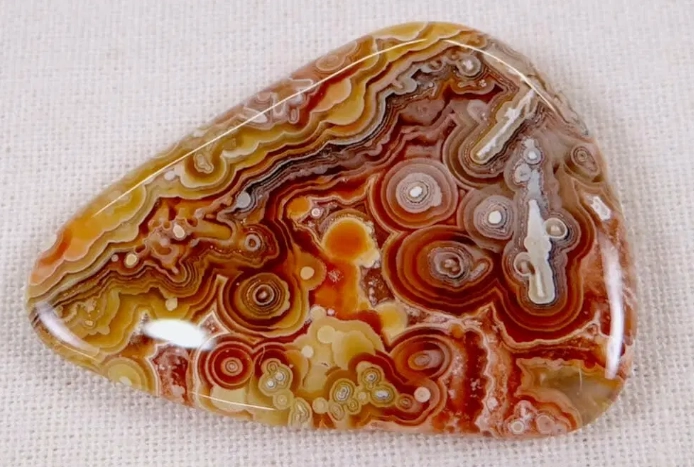
Final Thought: Crazy Lace Agate is a gem of contradiction. It's formed from slow, patient geological processes, yet it looks explosively energetic. It's a sturdy, practical stone, yet it inspires talk of joy and energy. Whether you're drawn to it for its wild beauty, its supposed metaphysical properties, or just the fascinating science behind its patterns, it's a stone that has earned its popularity. It reminds you that complexity and chaos can be breathtakingly beautiful. Just hold a piece. Look at the layers. It took millions of years to make that. That alone is pretty crazy.
If you want to dive deeper into the geology of agates, the Mindat.org mineral database entry for agate is a fantastic, scientifically rigorous resource. And for a glimpse into the cultural and mining context in Mexico, the official tourism page for Chihuahua sometimes features its mineral wealth, including these incredible agates.
Related Articles
Sunstone Crystal Guide: Healing Properties, Identification, and Practical Uses
Larimar Stone Meaning: Healing, Spiritual Properties & How to Use
Obsidian Crystal Meaning: Healing, Protection & Practical Uses
Selenite: The Ultimate Guide to Meaning, Uses, and Care
Rose Quartz Meaning: The Ultimate Guide to the Love Stone