Quick Guide
Let's talk about adamite. If you're into minerals, you've probably seen pictures of those stunning, neon-green clusters that seem to glow from within. Maybe you've even wondered what it is, where it comes from, and if you could ever hope to own a piece. I remember the first time I saw a really good specimen in a museum. It wasn't huge, but the color was so intense it looked fake. That's the thing about adamite – it has a way of stopping you in your tracks.
But there's a lot more to this mineral than its good looks. It's a story about specific chemistry, rare geological conditions, and a collector's market that can be as tricky to navigate as the mines it comes from. This guide is my attempt to unpack all of that. We'll get into the nitty-gritty of what adamite is, where you can actually find it (hint: not many places), what makes a specimen valuable, and some honest truths about collecting it. Think of this as a friendly chat from someone who's spent too much time reading mineral catalogs and talking to dealers.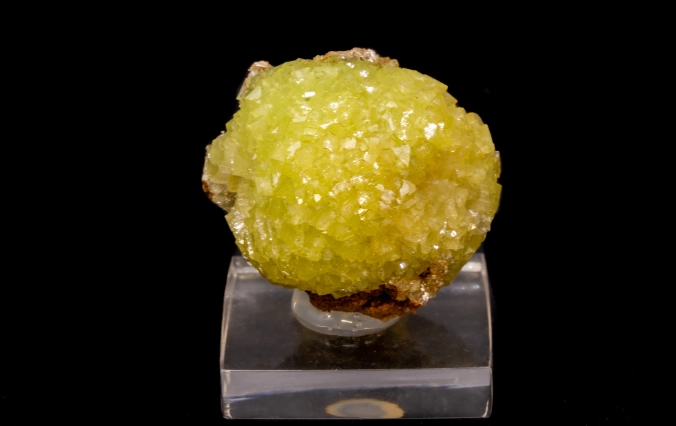
What Exactly is Adamite?
At its core, adamite is a zinc arsenate hydroxide mineral. Its chemical formula is usually written as Zn2(AsO4)(OH). Now, don't let that scare you off. What that means in plain English is that it's a mineral built from zinc, arsenic, oxygen, and a bit of hydrogen. It forms under very specific conditions, typically in what geologists call the "oxidized zone" of ore deposits. This is the part of a deposit near the surface where water and air have chemically altered the original minerals.
The arsenic in its composition is a big part of its story. It's what often gives adamite its signature colors, especially when copper sneaks into the crystal structure. Pure adamite without impurities is actually colorless. It's the trace elements that throw the party.
So, the dazzling green? Thank copper.
The crystal habits of adamite are a key identifier. You rarely see perfect, isolated individual crystals. Instead, it tends to form in these wonderful, messy, natural-looking groups. Think of bunches of tiny spheres, radiating clusters that look like sea urchins, or crusts that coat other rocks. The crystals themselves are usually small, maybe a few millimeters long. A crystal over a centimeter is considered large and noteworthy. The luster can range from vitreous (glassy) to a more greasy or silky look, especially on those spherical aggregates.
Key Properties of Adamite at a Glance
- Chemical Class: Arsenate Mineral
- Hardness: 3.5 on the Mohs scale. That means it's relatively soft. A steel knife can scratch it, and you need to be careful handling it.
- Color: Most famously green (due to copper), but also yellow, purple (cobalt), colorless, white, and rarely blue.
- Crystal System: Orthorhombic.
- Transparency: Transparent to translucent.
- Where to Verify Data: For authoritative, peer-reviewed crystallographic and chemical data on adamite, the Webmineral page for Adamite is an indispensable resource for serious students.
Where in the World is Adamite Found?
This is where adamite gets its reputation for being rare. It doesn't just pop up anywhere. It needs a very specific geological recipe: a primary zinc deposit that has been weathered and oxidized, and one that happens to have arsenic around. These conditions aren't met in many places on Earth. So, when a locality produces good adamite, it becomes legendary in collector circles.
Let's break down the top spots. I've put this in a table because it's easier to compare what makes each place special.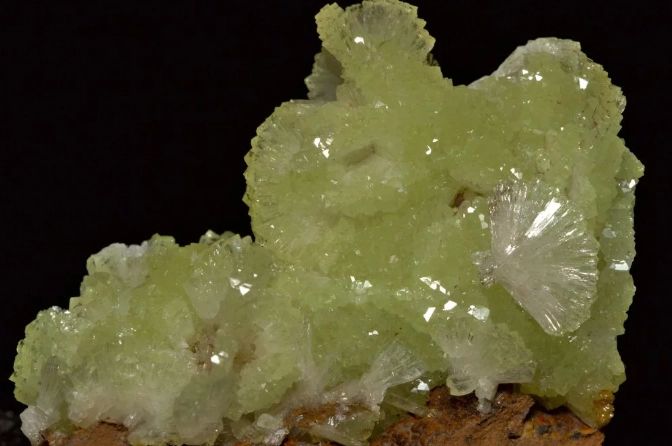
| Locality | Country | What Makes It Famous | Typical Specimen Style | Current Status |
|---|---|---|---|---|
| Mapimí, Durango | Mexico | The classic source. Produced the iconic apple-green spherical clusters on matrix. Often associated with legrandite and other rare minerals. | Spherical aggregates, crusts, on limonite matrix. | Mostly mined out. Specimens are old stock and command high prices. |
| Chile (Various deposits) | Chile | Perhaps the most important current source. Famous for spectacular, sharp individual crystals and groups in vibrant colors. | Well-formed individual crystals, druzy crusts, often on quartz. | Active finds, especially from the Atacama region. The source of most modern cabinet specimens. |
| Tsumeb Mine | Namibia | Produced some of the world's finest and most diverse adamite, including rare blue and purple varieties. A mineralogical paradise. | All forms: crystals, spheres, crusts, in many colors. | Mine closed. Specimens are highly prized and expensive. |
| Laurium | Greece | Historic source, known for yellow and green adamite. Often forms interesting pseudomorphs. | Small crystals and crusts. | Ancient slag deposits still yield specimens occasionally. |
| United States (UT, NV) | USA | Locations like the Gold Hill District in Utah produce good adamite, but it's often less aesthetic than the classic locales. | Typically crusts and small vug fillings. | Small, sporadic finds. More of interest to local collectors. |
Looking at that table, it's clear Chile is the kingpin right now. Dealers I've spoken to say 80% of the attractive adamite on the market in the last 15 years has come from Chilean finds. The arid climate there seems to create perfect conditions for forming those sharp, colorful crystals. The Tsumeb material is the stuff of legend, but good luck finding a piece for sale that doesn't cost as much as a used car.
A quick personal gripe: You'll see a lot of adamite online labeled just "Mexico." Be skeptical. True, old-time Mapimí material is scarce. Much of what's sold as Mexican may be from other, less famous mines or might even be mislabeled. Always ask for the specific locality if it matters to you.
Why Are These Places So Special?
It all comes down to geology and climate. The primary ore in these deposits was sphalerite (zinc sulfide). Over millions of years, oxygen-rich water percolated down, oxidizing the sulfur and releasing the zinc and arsenic. In arid or semi-arid places like Chile or Mexico, the water evaporates slowly, allowing well-formed adamite crystals to precipitate in cracks and cavities. A wetter climate would just wash everything away. For the most comprehensive and community-vetted locality data for adamite, including lesser-known occurrences, Mindat's Adamite page is the absolute bible. It's a living database updated by geologists and collectors worldwide.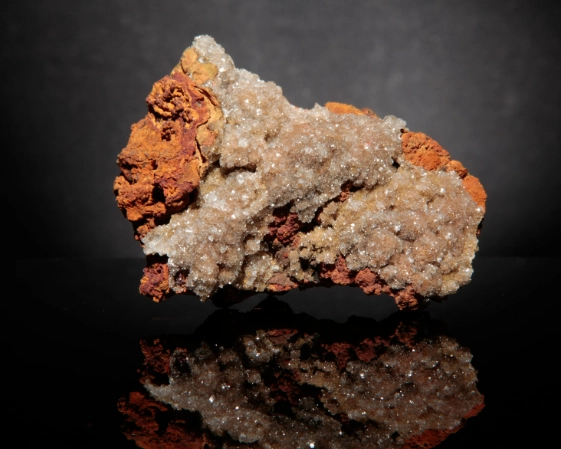
The Collector's Perspective: Value, Care, and Common Pitfalls
Okay, so you want to buy a piece of adamite. What should you look for? And more importantly, what should you avoid? Let's get practical.
First, value drivers. For adamite, it's a combination of factors, but color is queen. A strong, saturated apple-green or lime-green commands the highest prices, especially if it's due to copper. Good yellow adamite is also desirable. Purple (from cobalt) is incredibly rare and valuable. Pale or washed-out colors are less sought-after.
After color, it's all about the form and presentation. A specimen with well-defined, undamaged spherical aggregates or sharp crystals is worth more than a crumbling crust. The matrix (the rock it's on) matters too. A specimen where the adamite is nicely contrasted against a dark limonite or clean quartz matrix is more display-worthy. Size plays a role, but a small, perfect piece is often more valuable than a large, mediocre one.
Now for the less fun part: the pitfalls.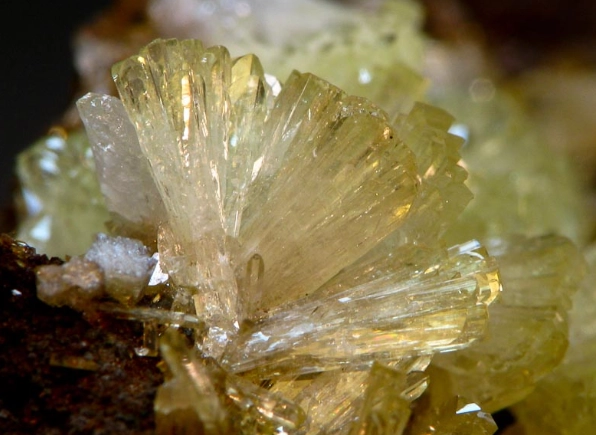
- Softness: Remember, hardness 3.5. It's fragile. Don't handle it roughly. Store it in a padded box, away from harder minerals that could scratch it. I learned this the hard way when a nice small cluster got a scratch from simply being placed next to a quartz point.
- Water Sensitivity: Some adamite, especially from certain localities, can be slightly water-soluble or can degrade in high humidity. Never clean it with water! A soft dry brush is your best tool.
- Fakes and Misrepresentations: Outright fakes of adamite are less common than with, say, rubies. But misrepresentation is rampant. Dyed howlite or magnesite is sometimes sold as "green adamite" to beginners. Real adamite has a specific texture and crystal habit. If it looks too perfectly round and smooth, be suspicious. Also, beware of "composite" specimens where small adamite clusters are glued onto a more impressive matrix.
- The Arsenic Question: People always ask: is it toxic? The arsenic in adamite is locked in the crystal structure. It's not going to leap out and harm you on your shelf. However, it's prudent practice to wash your hands after handling any mineral, and definitely don't grind it up and inhale the dust. Use common sense.
Adamite Q&A: Your Questions Answered
I get a lot of the same questions about this mineral. Here are the ones that come up most often.
Yes, but with a caveat. As a species, it's not exceedingly rare—it's found in many oxidized zinc deposits worldwide. However, aesthetic, collector-quality adamite is absolutely rare. The number of localities that produce those stunning, colorful specimens you see in museums can be counted on two hands.
Great question, because they look similar and occur in the same environments. Both are green arsenate minerals. The key difference is chemistry. Adamite is a zinc arsenate (Zn). Olivenite is a copper arsenate (Cu). So olivenite is always copper-based and is usually a darker, olive green. Adamite can be green from copper impurities, but it can also be other colors. In the field, you'd need a test to be sure, but for collectors, the locality often gives it away—they tend to come from different mines.
Maybe, but it's a challenge. Most of the famous localities are on active mining claims or in remote, harsh environments. You can't just walk into the Mapimí district and start digging. Your best bet is to join a mineral club that organizes field trips to known localities in your country (like in Utah or Nevada). Always, always get permission before collecting on any land.
Not all of it is, but many adamite specimens put on a spectacular show under shortwave ultraviolet (UV) light. They can glow a bright, lemony yellow-green. This fluorescence is caused by trace elements (often manganese) in the crystal structure that get excited by the UV energy. It's a fantastic way to confirm an identification and add a whole new dimension to a specimen.
A UV flashlight is a mineral collector's best friend.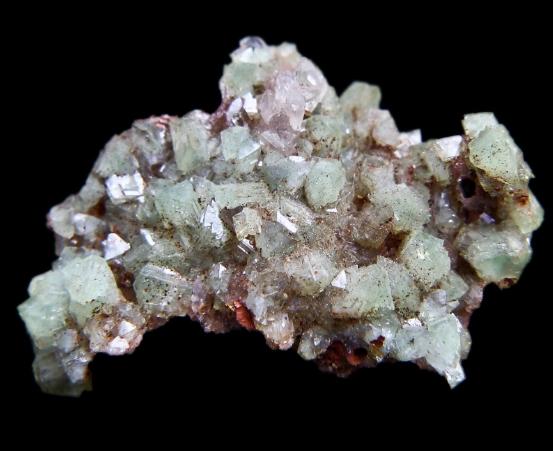
Wrapping It Up: A Mineral Worth the Hunt
Adamite occupies this special niche in mineral collecting. It's not the hardest, not the biggest, but it has a personality that's hard to beat. Its formation story is a lesson in geochemistry. Its scarcity teaches patience. Its beauty is a direct reward for that patience.
If you're just starting out, don't feel you need to buy a museum-grade piece. A small, affordable specimen from Chile is a perfect way to appreciate its charm. Study it. Look at how the crystals grow. Shine a UV light on it. That's where the real connection happens—not just in owning it, but in understanding the incredible natural process that created it.
And maybe, like me, you'll find yourself down a rabbit hole, comparing localities, debating the exact shade of green, and marveling at how something so small can be so captivating. That's the magic of minerals like adamite. It's more than a rock; it's a tiny, colorful window into the forces that shape our planet.
Related Articles
Pink Quartz Meaning: More Than Just a Love Stone
White Larimar Stone Meaning: Healing, Properties & How to Use
Black Obsidian Meaning: Healing Properties, Uses & Spiritual Guide
Discover the Spiritual Meaning of Jade: Peace, Protection & Luck
Apatite Meaning: Healing Properties, Uses & How to Spot Fake Crystals