Quick Guide
- What Exactly Is Raw Blue Fluorite? Let's Start with the Science
- Why Are People So Drawn to It? Uses and Properties
- The Buyer's Minefield: How to Spot Real vs. Fake Raw Blue Fluorite
- Where to Buy and What to Expect to Pay
- Caring for Your Raw Blue Fluorite
- Your Blue Fluorite Raw Questions, Answered
- Quick-Reference Table: Raw Blue Fluorite at a Glance
- Wrapping It Up: Finding Your Piece of the Sky
Let's talk about blue fluorite raw. You've probably seen pictures of these stunning, glassy blue chunks online, maybe on Etsy or Instagram, and wondered what the big deal is. Is it just a pretty rock? Is all the hype about its "energy" real, or just clever marketing? And more importantly, if you decide you want a piece, how do you know you're not getting ripped off with a fake or heavily processed stone?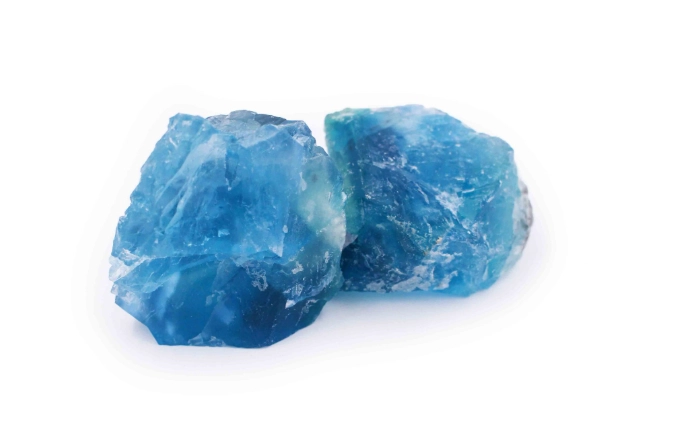
I've been collecting minerals for years, and fluorite has always fascinated me. The blue variety, especially in its raw, unpolished form, has a certain mystery. It's not as common as the purple or green stuff, and finding a good, natural specimen can feel like a mini treasure hunt. But the market is also flooded with misleading information and, frankly, some not-so-great pieces.
So, I'm writing this guide to cut through the noise. We'll go beyond the basic "it's a calming stone" spiel. We'll get into the actual geology, the good and the bad of how it's mined and sold, how to spot a genuine piece of blue fluorite raw, and what you can realistically do with it. Whether you're a crystal healing enthusiast, a mineral collector, or just someone who likes cool-looking natural art, this should give you the straight facts.
What Exactly Is Raw Blue Fluorite? Let's Start with the Science
First things first, let's strip away the mystical layer for a second and look at what this stuff actually is. Fluorite is a mineral, pure and simple. Its chemical name is calcium fluoride (CaF₂). It forms in cubic or octahedral crystals within hydrothermal veins—basically, cracks in rocks where hot, mineral-rich water has flowed and cooled down over millions of years.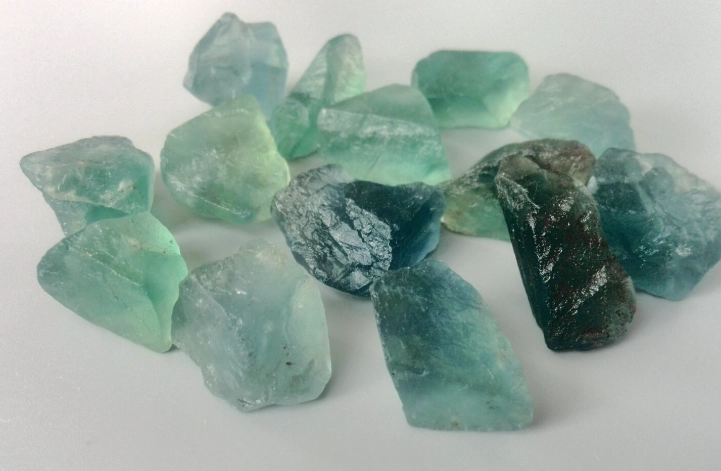
The color in blue fluorite is a bit of a geological puzzle. Unlike many minerals that get their color from a key ingredient (like chromium in emeralds), fluorite's color often comes from tiny defects in its crystal structure or exposure to natural radiation over eons. The blue hue is frequently attributed to these "color centers" caused by radiation, sometimes from trace amounts of radioactive elements in the surrounding rock. This is why color can be uneven or zoned within a single piece of raw blue fluorite.
"Raw" means it hasn't been cut and polished into a smooth shape. It's in the form it was found: a broken chunk (massive) or, if you're lucky, a cluster of natural crystals. The surfaces might be rough, etched, or coated with other minerals like quartz. That's the real deal. A perfectly smooth, deep blue "tumble stone" sold as "raw" is almost certainly tumbled and polished, which is a different product altogether.
Key Takeaway: Genuine blue fluorite raw is a natural mineral with color that forms over immense geological time. Its raw state preserves its natural form, flaws and all, which is a big part of its appeal for collectors and purists.
Why Are People So Drawn to It? Uses and Properties
Okay, science class is over. Now, why does anyone care? The interest in blue fluorite raw usually comes from two very different angles: the metaphysical and the aesthetic/practical.
In Crystal Healing and Energy Work
This is where you'll find most of the popular buzz. In crystal healing traditions, blue fluorite is associated with the throat and third eye chakras. The common themes you'll hear are:
- Calming a Busy Mind: It's often called the "stone of discernment" or "the genius stone," believed to help with focus, clear thinking, and cutting through mental fog. The blue color links it to clarity and communication.
- Emotional Regulation: Many users report it helps with creating emotional boundaries and calming chaotic feelings. It's not a sedative, more like a mental organizer.
- Supporting Communication: Linked to the throat chakra, it's thought to aid in speaking one's truth clearly and calmly.
Now, here's my personal take. I'm a bit skeptical of over-the-top claims. You won't find scientific papers proving these effects. However, I can't deny the personal ritual value. Holding a cool, heavy piece of blue fluorite raw during meditation does provide a tangible focus point. It grounds you. Whether that's a "vibration" or just the psychological power of intention is up to you to decide. I think it works because you believe it will work, and that's perfectly valid if it helps you.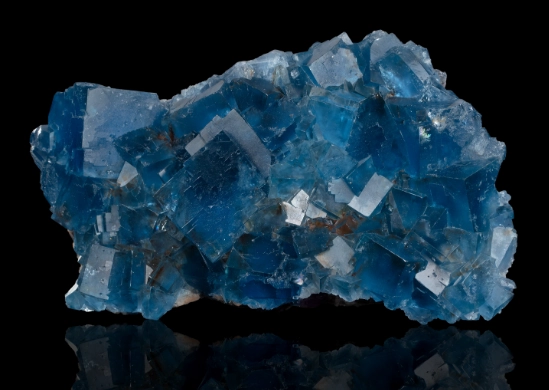
Practical and Decorative Uses
This is the side I personally lean into more. A beautiful specimen of raw blue fluorite is a piece of Earth's art.
- Mineral Collecting: For collectors, the value is in the specimen's aesthetics: color depth, crystal form, and association with other minerals. A cabinet-sized piece with sharp, glassy blue cubes on a matrix is a prize.
- Home & Office Decor: A good-sized raw piece makes a stunning, natural paperweight or shelf display. The blue color can be very soothing in a workspace.
- A Tool for Mindfulness: Even without buying into energy work, using it as a physical reminder to pause and breathe can be powerful. See a problem? Hold your blue fluorite raw for a minute. It forces a moment of stillness.
The very-short
It's either a spiritual tool or a natural sculpture. Sometimes, it's both.
The Buyer's Minefield: How to Spot Real vs. Fake Raw Blue Fluorite
This is the most important section. The market for crystals, especially popular ones like blue fluorite, has a real problem with fakes, misrepresentations, and heavy treatments. Let's arm you with knowledge.
Biggest Red Flag: If a piece of "raw blue fluorite" is a single, solid, intense royal blue with no variations, no matrix rock, and a perfectly smooth surface, be extremely suspicious. Nature rarely produces perfection in raw form.
Common Tricks and What to Look For
1. Dyed Howlite or Magnesite: This is a classic. Howlite is a cheap, white, porous stone that takes dye easily. It's often dyed blue and sold as "turquoise" or, yes, "blue fluorite." How to tell? Look at the pattern. Howlite has distinctive grey or black web-like veining. Fluorite does not have that. Dye also tends to pool in cracks—look for concentrated color in crevices.
2. Glass: Some fakes are just plain glass. Glass often has bubbles trapped inside (a huge giveaway), feels warmer to the touch than crystal, and its "cleavage" (how it breaks) is wrong. Fluorite has perfect octahedral cleavage, meaning it wants to break along specific planes into shapes with eight faces. A glass fake will have conchoidal (shell-like) fractures.
3. Overly Enhanced/"Aura" Coated Fluorite: Sometimes, they start with a low-grade, pale fluorite and coat it with a thin metallic film (often titanium or cobalt) to create an iridescent "aura" look. This is sold as "Aqua Aura" or similar. It's man-made. While it can be pretty, it's not a natural raw blue fluorite. The coating gives it an unnatural metallic sheen.
4. Misleading Photography: This is huge online. Sellers use bright blue LED lights, wet the stone (which dramatically darkens the color), or heavily edit photos. Always ask for a photo in natural, neutral daylight. A reputable seller will provide one.
The Hallmarks of Genuine Raw Blue Fluorite
- Color Zoning: The color is rarely uniform. You'll see bands or patches of lighter and darker blue, sometimes fading into clear or purple. This is a sign of natural formation.
- Surface Texture: It should look naturally broken or crystalline. Look for cleavage planes—flat, shiny surfaces where the crystal naturally split. It might be coated in a duller "rind" or have other minerals clinging to it.
- Transparency: Good quality blue fluorite raw is often translucent to transparent. Hold a smaller piece up to a light source. You should see light passing through, though it may be somewhat cloudy.
- Hardness: Fluorite is relatively soft (4 on the Mohs scale). It can be scratched by a steel knife (which is about 5.5). A glass fake will be harder. (Be careful testing this on a piece you don't own!).
- The UV Test: Many (but not all) fluorites fluoresce under ultraviolet light, often glowing blue or purple. This isn't a definitive test alone, as some fakes might too, but it's a fun characteristic of real fluorite. The Gemological Institute of America (GIA) mineral database notes fluorescence as a key identifying feature for fluorite.
I wish I could say all sellers are honest, but they're not. Your best defense is a skeptical eye and asking detailed questions.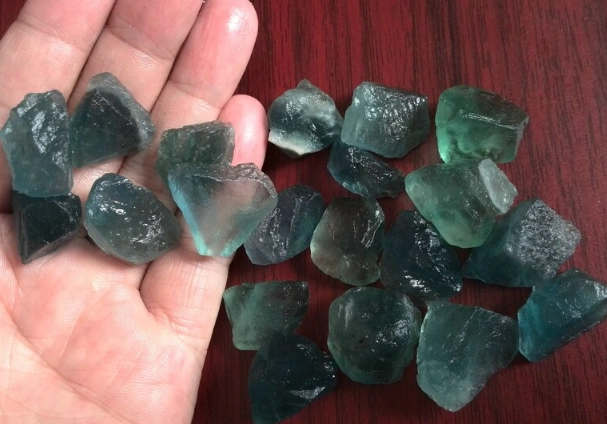
Where to Buy and What to Expect to Pay
So you're ready to shop for some blue fluorite raw. Where do you go, and how much should it cost?
Online Marketplaces (Etsy, eBay, Specialist Crystal Shops): This is the most common route. Pros: Huge selection. Cons: High risk of misrepresentation. Tips: Read reviews obsessively. Look for sellers who specialize in minerals, not just "crystals." They often use terms like "specimen grade" and provide locality info (e.g., "Weardale, England" or "China"). Ask for the size/weight dimensions, not just "small" or "large." A seller providing a locality is a good sign—it shows they know their material. For example, some of the finest blue fluorite historically comes from the Weardale area in the UK, a fact documented by geological surveys.
Gem & Mineral Shows: The absolute best place to buy. You can hold the piece, examine it under different lights, and talk directly to the dealer, often a collector or miner themselves. You'll pay for quality, but you know exactly what you're getting.
Local Crystal/Metaphysical Shops: Convenient, and you can see the piece. However, markups can be high, and the staff's mineralogical knowledge can vary wildly.
Pricing: It's All Over the Map
There's no fixed price per gram for blue fluorite raw. It depends entirely on:
- Quality: Color saturation, clarity, and crystal form.
- Size: Larger, display-quality pieces command exponentially higher prices.
- Locality: Specimens from famous, depleted locations (like certain English mines) are more valuable.
- Aesthetics: Is it on an attractive matrix? Is the shape interesting?
A small, low-grade tumbler might be $5. A palm-sized, good-color raw chunk might be $20-$50. A large, museum-quality specimen with pristine crystals could cost hundreds or even thousands.
My advice? Set a budget before you look. It's easy to get carried away. For a first piece, aim for the $25-$50 range online—you should get something decent and substantial enough to appreciate. Don't buy the cheapest option; it's often cheap for a reason.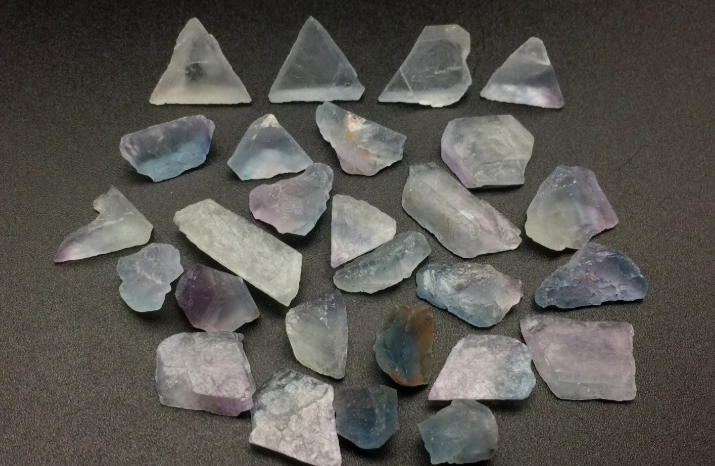
Caring for Your Raw Blue Fluorite
You've got your piece. Now, don't ruin it. Raw blue fluorite is more delicate than it looks.
Hardness & Scratching: Remember, it's a 4 on the Mohs scale. Store it separately from harder stones like quartz, amethyst, or topaz, or they will scratch it. A soft cloth pouch or individual compartment in a box is ideal.
Water Warning: This is critical. Do not soak your raw blue fluorite in water for long periods. Avoid salt water entirely. Water can slowly degrade the surface, especially if it has internal fractures. A quick rinse under lukewarm tap water to remove dust is fine, but dry it thoroughly and immediately with a soft cloth. Some people say it's "water-safe," but I've seen pieces develop a dull film from repeated soaking. Why risk it?
Sunlight Fading: Prolonged direct sunlight can fade the color of some fluorites over time. It's not an immediate thing, but don't use it as a permanent windowsill decoration. Display it in indirect light.
Cleansing & Charging (Metaphysical Care): If you use it for energy work, avoid water and salt methods. Instead, try:
- Smudging with sage or palo santo smoke.
- Placing it on a bed of selenite or clear quartz overnight.
- Burying it in dry brown rice for a few hours.
- Using sound from a singing bowl or bell.
The short-paragraph
Treat it like the delicate, ancient geological artifact it is.
Your Blue Fluorite Raw Questions, Answered
I get asked a lot of the same things. Let's bundle them up here.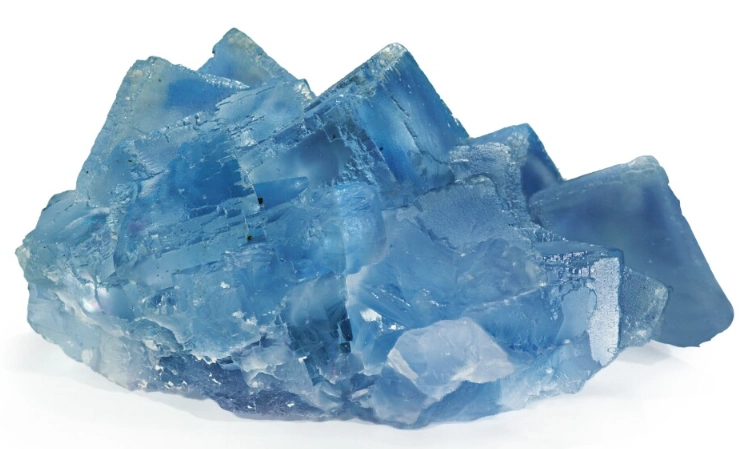
Is raw blue fluorite radioactive?
This is a common fear. The short answer: the blue fluorite raw you buy as a specimen is almost certainly not dangerously radioactive. While the color can be caused by natural radiation exposure in the ground over millions of years, the mineral itself does not retain dangerous levels of radioactivity. It's inert. You are in far more radiation exposure during a cross-country flight. However, if you're buying from an old uranium mining district (like some localities in the US Southwest), it's not impossible for a specimen to have trace associated minerals that are slightly radioactive. Reputable dealers will disclose this. For absolute peace of mind, you could avoid pieces labeled from known uranium areas.
Can I sleep with it under my pillow?
You can, but I wouldn't recommend it, and not for energetic reasons. It's a hard, often sharp, chunk of rock! You could roll onto it and hurt yourself, or it could chip or break. If you want its energy nearby at night, place it on your nightstand. Much safer.
How does raw compare to tumbled blue fluorite?
It's a different experience. Tumbled stones are smoothed, polished, and often have a more uniform color (because the tumbling process can wear away the outer, differently colored layers). They're great for carrying in a pocket. Raw blue fluorite retains all its natural geometry, crystal faces, and history. Many believe the "energy" or connection to the earth is stronger in the raw form because it's unaltered. Aesthetically, raw is more interesting to me; tumbled is more practical.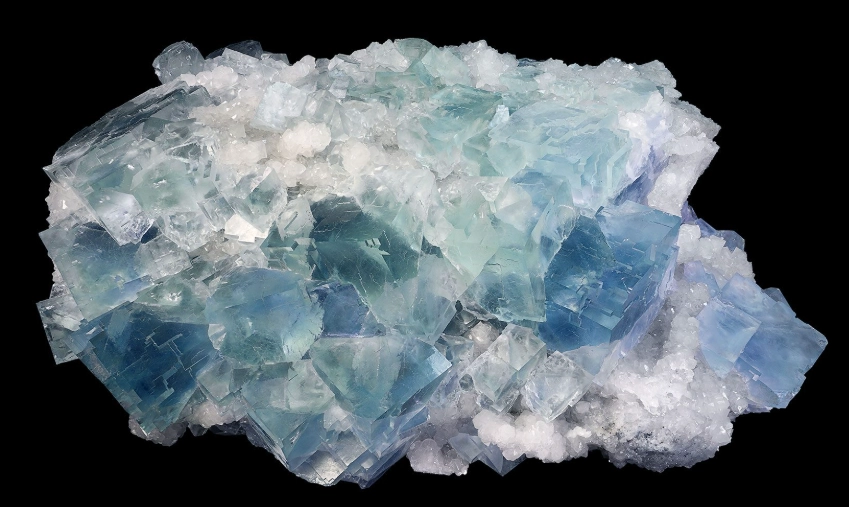
What's the best size to get?
For handling and meditation, a piece that fits comfortably in your closed fist is perfect—anywhere from a small egg to a tennis ball size. For display, go with what fits your space and budget. A common mistake is going too small; a tiny chip of blue fluorite raw can be underwhelming. Get something with some presence.
How can I tell if my blue fluorite raw is working?
This is entirely subjective. Don't expect lightning bolts. Notice subtle shifts. Do you feel calmer when you hold it during a stressful work call? Does it help you focus when it's on your desk? Does it simply make you happy to look at it? That's "working." The effect is often more about the mindfulness ritual you build around the stone than the stone itself emitting magic waves.
Quick-Reference Table: Raw Blue Fluorite at a Glance
| Aspect | Key Facts & Tips |
|---|---|
| What It Is | Natural calcium fluoride mineral. Blue color from crystal defects/natural radiation. |
| "Raw" Means | Uncut, unpolished, in its natural found state (crystals or massive chunks). |
| Key Identifier | Color zoning, octahedral cleavage, translucency, softness (scratches easily). |
| Common Fakes | Dyed howlite (look for webbing), glass (look for bubbles), aura-coated stone (metallic sheen). |
| Hardness (Mohs) | 4 - Handle with care! Store away from harder stones. |
| Biggest Care Mistake | Soaking in water or salt. Use a dry cloth or smoke for cleansing. |
| Price Range (Palm-sized) | $20 - $100+, wildly varies by quality, color, and locality. |
| Best Place to Buy | Gem & Mineral Shows (for inspection), then reputable online mineral specialists. |
Wrapping It Up: Finding Your Piece of the Sky
Looking for the right piece of blue fluorite raw is a journey. It's part geology lesson, part consumer caution tale, and part personal quest for something beautiful or meaningful. Forget the generic sales pitches. Look for the story in the stone—the color bands, the cleaved faces, the bits of host rock still clinging on. That's what makes a raw specimen special.
Don't get pressured by mystical jargon you don't understand. Buy it because you like how it looks, because you're curious about minerals, or because the idea of holding a piece of the earth's slow artistry appeals to you. Any of those reasons is perfect.
Start small, ask lots of questions, and buy from someone who seems to genuinely know and care about their minerals, not just moving inventory. Your perfect chunk of raw blue fluorite is out there. It might not be the first one you see, but when you find a genuine piece that speaks to you, you'll know. It has a quiet, cool, intelligent presence that's hard to fake. Just like the real thing should.
And if your first piece isn't perfect? Don't sweat it. Mine wasn't. It's all part of learning. Now you know what to look for next time.
Related Articles
Turquoise Meaning: Color Psychology, Healing & Modern Uses
Amethyst Crystal Meaning: Healing, Spirituality & Practical Uses
Dalmatian Jasper: Meanings, Healing Uses & How to Spot Fakes
Onyx Properties Explained: Beyond Beauty to Practical Power
Are Sodalite and Lapis Lazuli the Same? No, Here's the Real Difference