Quick Guide
If you've ever found yourself browsing mineral shops or gem shows, your eyes have probably landed on a stunning, deep blue specimen labeled "azurite." Then your eyes likely darted to the price tag. And if you're anything like I was when I first started collecting, you probably took a sharp breath and thought, "Seriously? For a rock?" I remember seeing a small, gorgeous cluster from Arizona priced higher than my first car payment. It felt absurd. But after years of talking to miners, dealers, and fellow collectors, and after making a few painful (but worthwhile) purchases of my own, I've come to understand the puzzle. The question why is azurite so expensive isn't answered by one thing, but by a perfect storm of geology, economics, and pure human desire.
Let's be clear from the start: we're not talking about the crumbly, earthy azurite used as pigment. That's cheap. We're talking about the gemmy, crystalline, museum-quality specimens that make collectors weak in the knees. That's where the real money is. The price isn't arbitrary; it's a direct reflection of a brutal series of hurdles between the earth and the display case.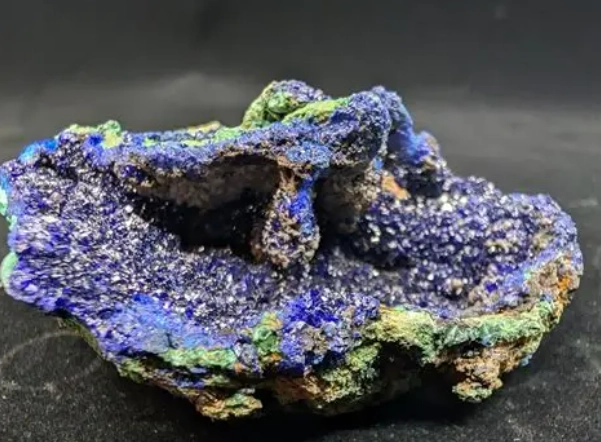
The Core Reasons: It's More Than Just a Pretty Color
So, let's break it down. When you ask why azurite is so expensive, you're really asking about a chain of events. I like to think of it in layers, starting with the stuff that happens deep underground, long before anyone even thinks about money.
1. Sheer, Brutal Scarcity (The Foundation of All Value)
This is the big one, the non-negotiable. You can't have a market for something that doesn't exist. Gem-quality azurite crystals are ridiculously rare. Azurite itself, as a copper carbonate mineral, isn't super uncommon in certain copper deposits. But the conditions needed to grow those perfect, undamaged, deep-blue crystals—the kind you want to own—are incredibly specific and fleeting.
Think about it. It needs a copper-rich solution, the right chemical balance, a cavity to grow in without being crushed, and then it has to survive millions of years of geological change. Most of the time, you get a messy, intermixed mass of azurite and malachite, or tiny crystals, or it's all been oxidized away. The classic, iconic specimens come from a handful of places that got the recipe just right, and many of those are now completely mined out.
Major historical sources like the famous mines of Chessy, France (where it got its name 'chessylite') are closed. The legendary deposits in Tsumeb, Namibia, produced some of the world's best, but that well has largely run dry. Today, the main sources for collector material are places like the Copper Queen mine in Arizona (Bisbee) and a few localities in Morocco and China. Even there, the pockets yielding top-tier specimens are few and far between. A miner might work for months and only hit one small vein of something worthy. That immediate scarcity drives the base price through the roof before the specimen even sees daylight.
2. The Mining Nightmare: Extraction is a Destructive Art
Okay, so let's say a miner miraculously finds a pocket of beautiful azurite crystals. The celebration is short-lived. Now they have to get it out. This is where the second major cost driver kicks in, and it's a huge one. Azurite is a soft mineral (only 3.5-4 on the Mohs scale, as noted by the Gemological Institute of America's gem encyclopedia). It's also often brittle. The crystals can be attached to a matrix that's even more fragile.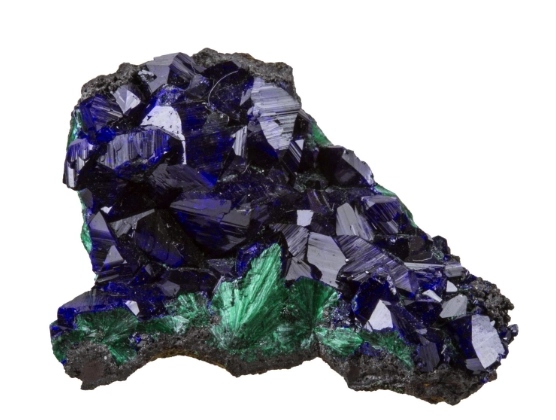
Imagine trying to excavate a delicate, blue sugar sculpture from hard rock, in the dark, with power tools vibrating everything around it. It's a nightmare. The majority of specimens are damaged during extraction. They might shatter, the crystals might get scratched or cleaved, or the matrix might fall apart. The skill required to carefully extract a specimen intact is immense, and that labor is expensive. Miners aren't just moving dirt; they're performing micro-surgery with jackhammers and chisels.
I once bought a small azurite from a miner in Morocco who told me the story of the piece. He said they found a pocket about the size of a basketball, filled with crystals. They spent three days, working in shifts, carefully picking away the surrounding rock by hand with small tools. Out of that whole pocket, only two pieces were recovered without significant damage. The one I bought was the smaller of the two. The cost of those three days of highly skilled, careful labor? That's baked right into my price.
So when you see a pristine piece, you're not just paying for the mineral. You're paying for the successful rescue operation that brought it to the surface in one piece. This hands-on, destructive reality is a core part of understanding why azurite commands such a high price.
Is it just about the color?
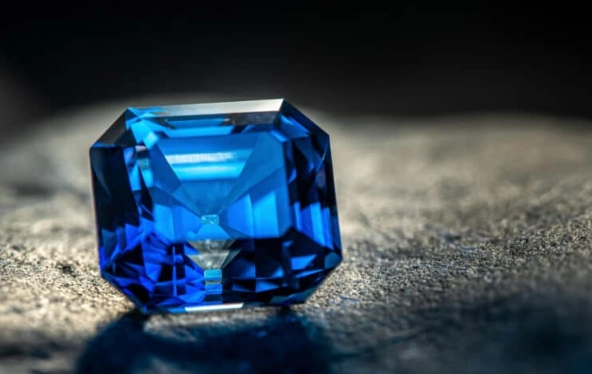
Not at all. While the intense "azurite blue" is its signature, the value is in the combination of color, crystal form (often tabular or prismatic), luster (glassy to almost adamantine), and the presentation on the matrix. A dull blue, crudely formed mass is cheap. A cluster of sharp, lustrous, deep-blue crystals on a contrasting rock? That's the money.
3. The Aesthetic & Collector Frenzy Factor
Let's talk demand. Minerals aren't like bread or gasoline; we don't need them to survive. Their value is almost entirely driven by how much people want to own and look at them. And azurite, when it's good, is one of the most visually arresting minerals on the planet. That blue is hypnotic. It doesn't look real. It draws people in.
The collector market for minerals is global and passionate. Museums like the Smithsonian National Museum of Natural History house and study world-class specimens, setting a standard for quality. Wealthy private collectors and institutions are constantly competing for the best pieces that come to market. When a truly exceptional specimen from a classic locale surfaces at a major auction like Heritage or Bonhams, the bidding wars can be fierce, setting new record prices that ripple through the entire market.
This creates a kind of feedback loop. Scarcity increases desire. High prices from auctions validate the desire. More people want in, pushing prices higher for the remaining good material. It's a classic case of supply and demand where the supply is shrinking and the demand from a dedicated group is steady or growing.
I've seen it at shows. A dealer will put out a tray of good minerals. The azurite pieces, even the small ones, always have a crowd around them first. There's just a magnetic pull. That desire translates directly to dollars.
What Makes One Azurite More Valuable Than Another?
Not all expensive azurite is created equal. Once you get past the basic fact of it being gemmy crystal, a whole set of grading criteria comes into play. This is where you start to see the real price stratification. A $500 piece and a $50,000 piece might both be "azurite," but they're worlds apart in the eyes of a collector.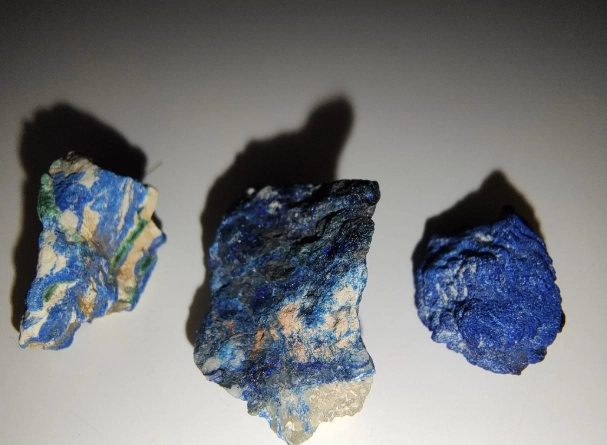
Here’s a breakdown of the key value drivers, the things dealers and collectors are meticulously judging:
| Value Factor | What It Means | Impact on Price |
|---|---|---|
| Color | Depth and saturation of blue. Vivid, royal to deep navy blue is top. Pale or greenish (malachite contamination) lowers value. | Extremely High. The #1 visual factor. |
| Crystal Size & Form | Large, undamaged, well-formed crystals (sharp terminations). Clusters are often preferred over singles. | Very High. Size matters, but perfection matters more. |
| Luster | A bright, glassy (vitreous) shine. Dull or earthy surfaces are a major detractor. | High. Luster brings the piece to life. |
| Matrix & Association | The rock it's on. A clean, attractive, complementary matrix (like white limestone or brown iron oxide) adds value. Association with other minerals like malachite (creating "azurite-malachite") can increase or decrease value based on aesthetics. | Moderate to High. It's about the overall presentation. |
| Locality | Where it's from. Specimens from famous, historic, or depleted mines (Bisbee, Tsumeb, Chessy) carry a significant premium due to their provenance and reputation for quality. | Extremely High. Provenance is a huge part of the story and value. |
| Condition | No damage, repairs, or glue. Completely natural and intact. | Critical. Any damage can slash value by 50-90%. |
You see, it's a report card. A piece that aces all these categories is the valedictorian of azurites, and its price reflects that elite status. A piece with a few B's and C's will be priced accordingly. This grading is subjective, of course, but there's a strong consensus among serious collectors about what constitutes an A+.
Provenance—the locality—is such a big deal it's worth its own mention. An azurite from Bisbee, Arizona, isn't just an azurite. It's a Bisbee azurite. That name carries weight, history, and a guarantee of a certain type of quality and color that collectors trust and seek out. It's the difference between a generic sports car and a specific, classic Ferrari. The pedigree adds a premium you can't escape, which is another clear answer to why azurite is so expensive for top-shelf material.
Common Questions (And Some Straight Answers)
Apples and oranges, really. Commercial-grade lapis, which is often dyed or contains a lot of white calcite, is cheap and used in mass-market jewelry. Top-grade, intense blue lapis from Afghanistan with minimal pyrite can be very expensive. However, for mineral specimens (not beads or carvings), a fine azurite specimen will almost always command a higher price per carat or per specimen than a comparably sized piece of lapis lazuli. Azurite's crystalline nature and the factors we've discussed give it the edge in the collector market.
That's azurite-malachite. Azurite (blue copper carbonate) is unstable at surface conditions and often alters to malachite (green copper carbonate) over time. This process can create stunning mixtures. Value depends on the pattern. A beautiful, banded mix (sometimes called "bluebird") can be more valuable than plain azurite. A messy, muddy mix is less desirable. It's nature's art, and the market prices the masterpiece versions highly.
Honestly? I wouldn't recommend it, and this is a key point of frustration for some buyers. Remember that softness (3.5-4 Mohs)? That means it can be scratched by dust (which contains quartz, hardness 7). It's also sensitive to heat, acids (like sweat and perfumes), and even prolonged bright light, which can fade the color. A ring or bracelet with an azurite cabochon is a recipe for disappointment. It's best as a pendant or earring, worn occasionally and with great care. This fragility limits its use in mainstream jewelry, keeping the finest material in the realm of collectors who will keep it in a case.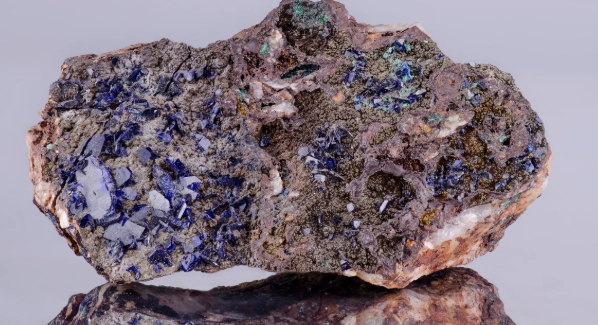
This is the million-dollar question, isn't it? My personal, non-financial-advice opinion is this: buy it because you love it, not because you expect to retire on it. The high-end, museum-quality specimen market has shown strong appreciation over decades, but it's illiquid and requires expert knowledge. You can't sell it as easily as a stock. For the vast majority of people, the "return" is the daily joy of owning a tiny, perfect piece of the planet's history. If it goes up in value, that's a bonus. But don't sink your life savings into it expecting a guaranteed payout. The market can be niche and quirky.
And that brings me to a final, personal thought.
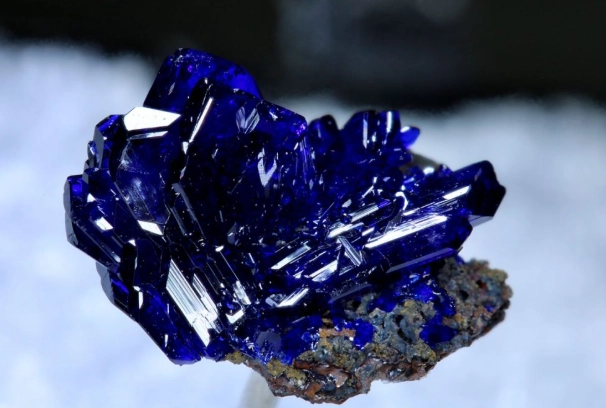
After all this talk of markets and mining, I look at my own little azurite from Morocco. I don't think about its potential resale value anymore. I think about the miner who spent days freeing it. I think about the specific chemical conditions in that rock pocket millions of years ago that decided to grow cobalt blue instead of forest green. The price I paid feels less like a purchase and more like a contribution to a chain of effort and a ticket to hold a geological miracle. It's expensive because it's the end product of a long, difficult, and unlikely journey.
So, why is azurite so expensive? It's the tax on rarity, the fee for skilled rescue, and the premium on breathtaking beauty. It's expensive because, in a very real sense, it has earned the right to be.
If you're considering buying a piece, my advice is to learn to appreciate those factors. Start small. Get a lower-grade piece to see the color in person. Talk to dealers. Handle pieces at a show if allowed. The understanding of what goes into that price tag will make the blue all the more captivating when you finally decide to bring a piece of it home.
Related Articles
Blue Aventurine Meaning: Healing Properties, Uses & Benefits
Crazy Lace Agate: Benefits, Uses & How It Can Transform Your Life
Selenite Meaning: More Than Just a Pretty Crystal
Blue Kyanite Meaning: The Ultimate Guide to This Communication Crystal
Lapis Lazuli Crystal Meaning: Uses, Healing & How to Spot Fakes