In This Deep Dive
- What Exactly Is Azurite, Anyway?
- The Deeper Meaning of Azurite: Beyond the Pretty Color
- Azurite vs. Lapis Lazuli: Don't Get Them Confused
- How to Use Azurite in Your Daily Life (Practical Stuff)
- The Non-Negotiable: How to Tell If Your Azurite is Real
- Caring for Your Azurite: It's High-Maintenance
- Common Questions About Azurite Crystal Meaning
- Wrapping This Up: The Heart of the Azurite Crystal Meaning
I remember the first time I saw a real, high-quality azurite specimen. It was in a tiny rock shop off the beaten path. The color stopped me dead in my tracks. It wasn't just blue; it was a blue so deep it felt like you were looking into a midnight sky or the very depths of the ocean. The owner, an older gentleman with dust on his sleeves, saw me staring. "That's azurite," he said. "The stone of heaven. It's for when you need to see the truth, even if it's uncomfortable." That stuck with me. The azurite crystal meaning isn't just about peace and love; it's often about clarity, even when that clarity is harsh.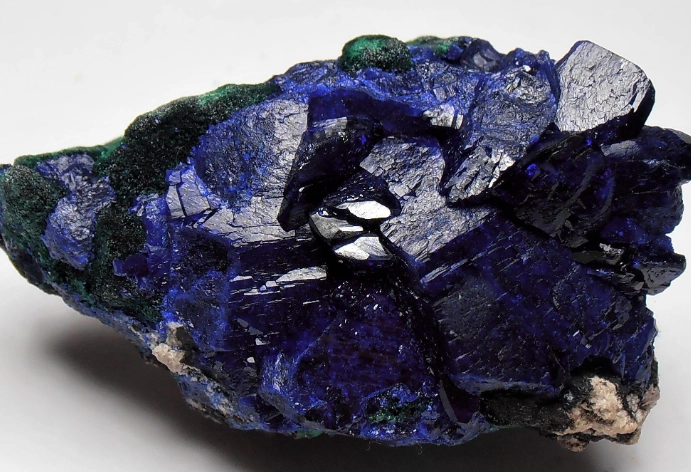
What Exactly Is Azurite, Anyway?
Before we jump into the spiritual stuff, let's get our facts straight on what this stone actually is. Azurite is a copper carbonate mineral. That's science-speak for: it forms when copper deposits weather and interact with carbon dioxide and water. You'll almost always find it in places where copper is mined. Its chemical formula is Cu3(CO3)2(OH)2, which is why it has that brilliant blue color—copper is the star of the show here.
It's pretty soft, only a 3.5 to 4 on the Mohs hardness scale. For comparison, your fingernail is about a 2.5. This means azurite scratches easily. It's also sensitive to heat, sunlight, and even humid air over long periods. A real azurite crystal meaning often includes this idea of beautiful fragility. It's powerful but needs care. You can't just toss it in your pocket with your keys and expect it to stay pristine.
Geologically, it's often found with its green cousin, malachite (another copper carbonate). Sometimes they grow together, forming a stunning stone called azurite-malachite. If you want to nerd out on the pure geological specs, the Mindat page on azurite is the ultimate authority. It's a mineralogical database used by professionals and hobbyists worldwide.
The Deeper Meaning of Azurite: Beyond the Pretty Color
Okay, here's where it gets interesting. The meaning of azurite crystal in metaphysical circles is dense and multifaceted. It's not a one-trick pony. Different traditions and practitioners emphasize different aspects, but some core themes are almost universal.
Spiritual and Metaphysical Properties
First and foremost, azurite is known as the stone of insight and intuition. It's linked heavily to the Third Eye Chakra (the one between your eyebrows associated with intuition and vision) and the Throat Chakra (communication). The idea is that it helps remove mental fog and blockages, allowing you to access deeper knowledge and see situations—and yourself—with stark clarity.
Think of it less as a "happy pill" crystal and more like a wise, sometimes brutally honest, friend who tells you what you need to hear.
People use it for things like:
- Enhancing Psychic Abilities: Many meditators and psychics keep azurite nearby to deepen their practice and sharpen their intuitive hits. I've found that placing a piece on my third eye during meditation can sometimes feel overwhelming—the insights come fast. It's not always a gentle experience.
- Aiding Communication: Because of its link to the Throat Chakra, the azurite meaning often includes speaking your inner truth. It's not about being loud, but about being clear and authentic. If you struggle to find the right words or speak up for yourself, this is a stone many turn to.
- Breaking Old Mental Patterns: This is a big one. It's said to help you identify self-sabotaging thoughts, limiting beliefs, and ingrained habits that hold you back. By bringing them to light, it gives you a chance to work through them. It's like cognitive behavioral therapy in a rock.
- Dream Work: Placing azurite under your pillow or on your nightstand is a common practice for those wanting to remember dreams more vividly or have lucid dreams. The results here are mixed in my experience, but many swear by it.
Emotional and Physical Benefits (A Note of Caution)
Here's where we have to be careful. You'll see tons of sites making wild claims about azurite curing specific diseases. Let's be real and responsible: crystals are not medicine. They are not a substitute for professional medical advice, diagnosis, or treatment.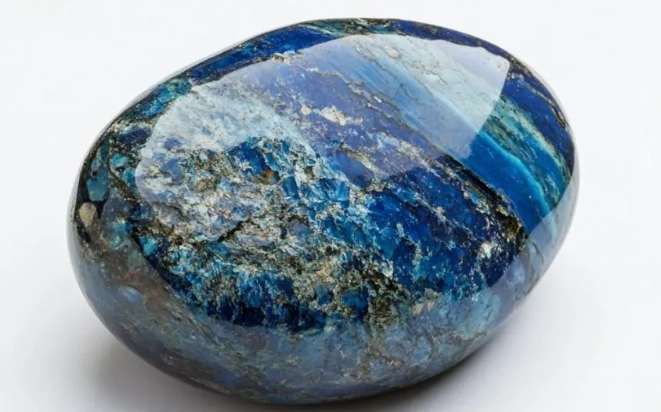
That said, within the framework of complementary and energy practices, azurite is often associated with supporting overall well-being. Some of the more common, non-medical claims include:
- Helping to release stress and anxiety by calming a racing mind.
- Supporting the health of the joints and skeletal system (perhaps symbolically linked to its structure).
- Aiding in detoxification processes (linked to its historical use as a pigment, oddly enough).
I view these more as intentions for meditation or energy focus rather than guaranteed physical outcomes. Your mileage will absolutely vary.
Azurite vs. Lapis Lazuli: Don't Get Them Confused
This is a classic mix-up. Both are deep blue, both are popular in spirituality. But they're very different. Knowing this is part of understanding the true azurite crystal meaning, because using the wrong stone based on a misidentification means you're not working with the energy you think you are.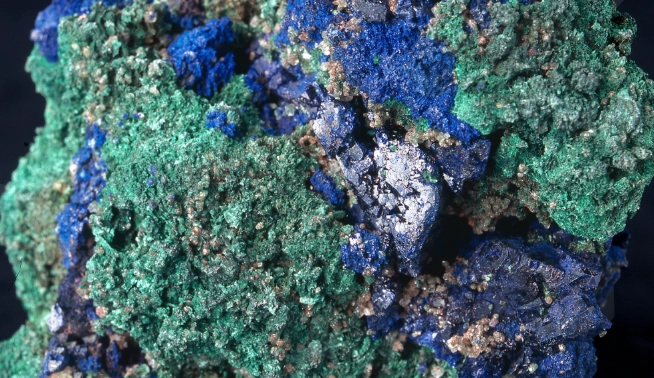
| Feature | Azurite | Lapis Lazuli |
|---|---|---|
| What it is | A single mineral (copper carbonate). | A rock composed of multiple minerals (mainly lazurite, with calcite and pyrite). |
| Key Color | Azure to dark blue, often with a lighter blue streak. | Deep blue, almost always with flecks of golden pyrite ("fool's gold") and white calcite veins. |
| Hardness (Mohs) | Soft (3.5-4). Scratches easily. | Harder (5-6). More durable. |
| Metaphysical Focus | Inner vision, truth, intuition, breaking mental blocks. | Wisdom, truth, self-expression, but with a more "royal" and communicative energy. |
| Biggest Giveaway | No pyrite flecks. Softer, can crumble. Often found with green malachite. | Almost always has those tiny, shiny gold pyrite spots. White veins are common. |
See? Totally different. Lapis is like the regal, outgoing statesman, while azurite is the intense, introspective philosopher.
How to Use Azurite in Your Daily Life (Practical Stuff)
Alright, so you've got a piece and you understand the core azurite stone meaning. Now what? How do you actually work with it? Here are the methods I've tried and seen others use effectively.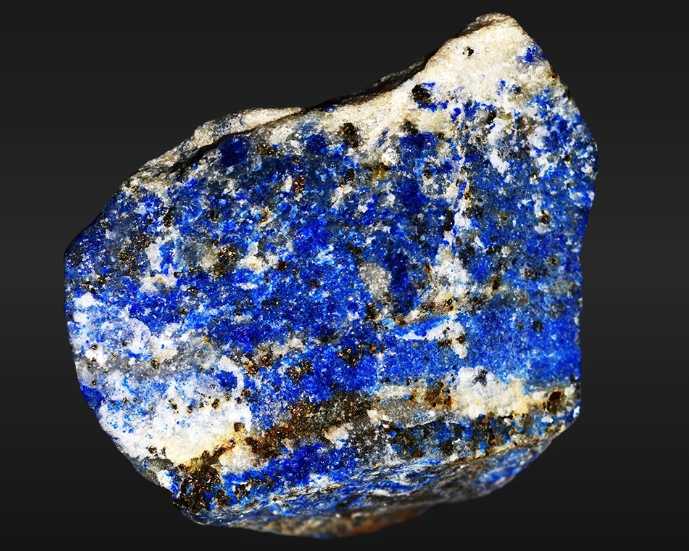
Meditation and Journaling
This is, hands down, the most powerful way to connect with azurite. Hold it in your hand or place it on your third eye (forehead). Set an intention like, "Show me what I need to see clearly today." Then meditate. Don't force thoughts; just observe what comes up. Afterwards, journal immediately. You'll often find surprising insights or connections you'd missed. I've solved creative block problems this way that had me stuck for weeks.
Creating a Sacred Space
Place a specimen on your desk, altar, or meditation corner. Its energy is said to purify the space and promote a clear-headed atmosphere. It's a visual reminder to seek truth. Just keep it out of direct sunlight, or that gorgeous blue will fade to a dull greenish-black over time. Trust me, I learned that the hard way with a small piece on a windowsill.
Carrying It With You
If you want to carry it, be gentle. Put it in a soft pouch. Don't let it bang around with harder crystals. The intention here could be to help you communicate clearly in meetings or see through confusing situations during your day.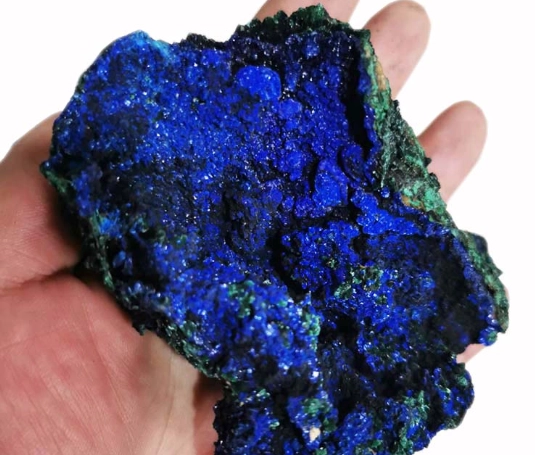
The Non-Negotiable: How to Tell If Your Azurite is Real
This might be the most important section here. The market is flooded with fakes. Understanding the azurite crystal meaning is pointless if your stone is just dyed howlite or molded resin. Here's a quick, tough-love guide.
- The Price Test: Large, deep blue, flawless spheres or towers for $20? Almost certainly fake. Real azurite is fragile. Carving it into perfect shapes is difficult and wasteful, so it commands a higher price. A rough, natural specimen is more common and often more affordable.
- The Hot Pin Test (Careful!): Heat up a needle or pin (use pliers) and gently touch it to an inconspicuous spot. Real stone won't melt or smell like plastic. Resin or plastic will melt and give off a chemical smell. Do this at your own risk and only on a tiny area you don't mind damaging.
- The Look and Feel: Real azurite has a velvety, almost dull luster. It's not glassy. It can feel a bit chalky. If it's perfectly smooth, shiny, and has bubbles inside, it's glass. If the color is too uniform and bright, it's likely dyed.
- The Hardness Test: Remember, it's soft. Try to scratch it gently with a copper coin (hardness ~3). A real azurite might get a scratch. It will definitely be scratched by a steel knife (hardness ~5.5). If nothing happens, it's something harder pretending to be azurite.
My personal rule? Buy from reputable dealers who specialize in minerals, not just general "crystal shops." Ask questions. A good seller will know where their stones are from. For scientific verification of properties, resources like the Gemological Institute of America (GIA) provide definitive information on mineral characteristics, though they don't authenticate every piece sold online.
Caring for Your Azurite: It's High-Maintenance
You can't cleanse this one in salt water or sunlight like other crystals. Salt water will dissolve it. Sunlight will fade it. So what do you do?
- Smudging: Pass it through the smoke of sage, palo santo, or incense. Quick and effective.
- Sound: Use a singing bowl, bell, or tuning fork. Sound vibrations are great for clearing energy without physical contact.
- Other Crystals: Place it on a large selenite plate or in a bowl of clear quartz points overnight. Selenite is my go-to for cleansing anything delicate.
- Intention/Breath: Simply hold it, set the intention to clear it, and visualize bright light washing over it. Sometimes the simplest methods are the best.
Store it separately in a soft cloth or box to prevent scratches. Handle it with clean, dry hands.
Common Questions About Azurite Crystal Meaning
Wrapping This Up: The Heart of the Azurite Crystal Meaning
At the end of the day, the meaning of azurite crystal boils down to one powerful concept: profound inner sight. It's not about giving you magical powers. It's about stripping away the noise, the self-deception, and the fear so you can perceive your life, your path, and your own mind with unprecedented clarity.
It's a stone for the seeker, the thinker, the one who is tired of going around in mental circles. It's for the person who needs to find their authentic voice. It demands respect—in how you acquire it (get the real thing), how you care for it (gently), and how you work with it (with honest intention).
If you approach it with that mindset—not as a quick fix, but as a tool for deep, sometimes challenging, self-work—then understanding the azurite crystal meaning can be a genuinely transformative part of your journey. Just remember to keep your expectations grounded, your fake-detector on high alert, and maybe have a comforting rose quartz nearby for when the azurite's truths hit a little too close to home.
Hope this deep dive helped you see azurite in a whole new light. Go take another look at your piece. What is it trying to show you?
Related Articles
Green Moss Agate: A Complete Guide to Its Healing Properties & Uses
Pink Quartz: Complete Guide to Meanings, Uses & How to Tell It Apart

What Are Antares and Betelgeuse? A Guide to the Giant Red Stars
Unveiling Green Onyx Properties: A Deep Dive into Its Meaning, Uses & Care
Selenite Meaning: More Than Just a Pretty Crystal