Your Larimar Journey
- So, What Exactly IS Larimar? The Hard Facts
- The Deep Meaning Behind the Blue: More Than Just a Pretty Stone
- The Many Uses of Larimar: From Your Jewelry Box to Your Meditation Corner
- Navigating the Market: How to Spot Real Larimar and Avoid Scams
- Larimar Color Grades and Quality: What You're Actually Paying For
- Caring for Your Larimar: Keeping the Vibe Alive
- Answering Your Burning Questions (FAQs)
- Putting It All Together: Making Larimar Work for You
You know that feeling when you see a photo of a tropical beach, the water so clear and blue it almost doesn't look real? That's what holding a piece of high-quality Larimar feels like. It’s like having a tiny, solidified piece of the Caribbean Sea in your hand. I remember the first time I saw a Larimar necklace in a small shop in Santo Domingo. The vendor called it "the Atlantis stone," and honestly, the name stuck with me more than the sales pitch. There's just something about it.
But beyond the pretty blue surface, what's the real deal with this stone? Is it just another trendy crystal, or is there more to the story of Larimar stone meaning and uses? Let's dive in, and I promise to skip the overly mystical fluff and give you the straight talk, from its surprising geological backstory to how you can actually use it in your daily life.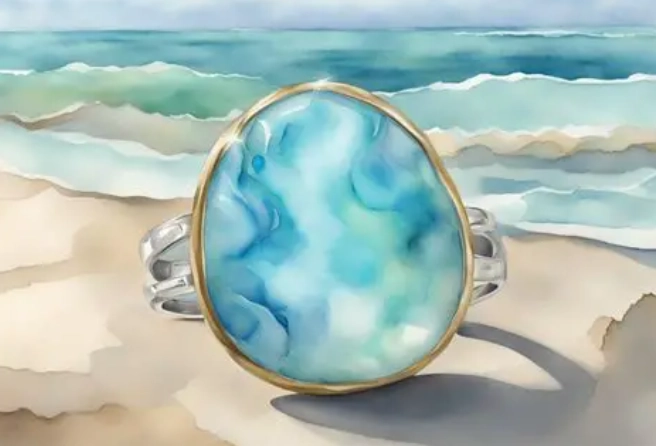
Quick Truth Bomb: Larimar is only found in one place on Earth—a single, remote mountain range in the Dominican Republic. That alone makes it special. It’s not a stone you can just go out and mine anywhere, which explains the price tag on good pieces.
So, What Exactly IS Larimar? The Hard Facts
Let's get the textbook stuff out of the way first, because understanding what it is made of helps you spot fakes later. Larimar is a variety of the mineral pectolite. Now, pectolite itself is usually a dull white or gray and isn't much to look at. The magic—that stunning blue color—comes from trace amounts of cobalt (and sometimes copper) substituting into the mineral's structure during its formation.
Geologically, it's a volcanic rock. Millions of years ago, volcanic activity in the Caribbean forced mineral-rich gases and fluids through volcanic tubes. As these cooled and crystallized in cavities within the basalt rock, Larimar was born. The official discovery for the gemstone world is credited to a Dominican man named Miguel Méndez and a Peace Corps volunteer, Norman Rilling, in 1974. Miguel named it after his daughter Larissa and the Spanish word for sea, "mar." A sweet story, right?
But locals in the Barahona province knew about the blue stones long before that. They'd find them washed up on the beach after heavy rains eroded the inland cliffs. They just didn't have a global market for it.
The mining process is no joke. It's mostly small-scale, artisanal mining. Miners dig narrow tunnels by hand into the mountainside, following the veins of blue. It's tough, dangerous work. When you hold a piece of Larimar, you're holding a piece of that effort and a very specific slice of planetary history.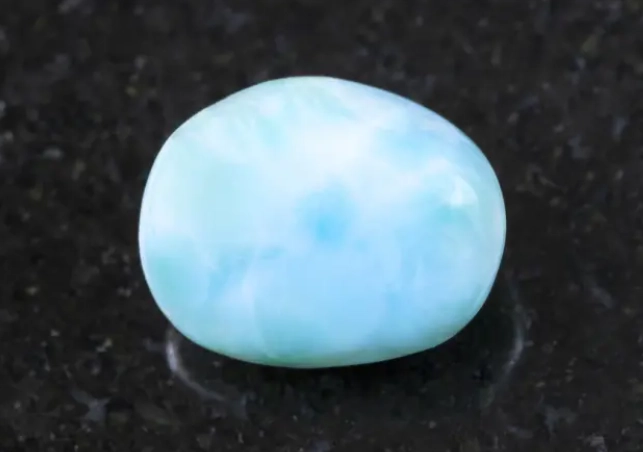
The Deep Meaning Behind the Blue: More Than Just a Pretty Stone
Alright, here’s where we bridge the gap between geology and feeling. The meaning of Larimar isn't something you'll find in a standard geology journal, but it's a huge part of why people are drawn to it. It’s built on a combination of its physical origin, its color, and the stories that have grown around it.
First and foremost, Larimar is connected to the element of water. That's the most obvious link. Its colors mirror the sea—from pale sky blue to deep ocean teal, often with white, wavy patterns that look like sea foam or clouds. This connection anchors its meaning in themes of calm, flow, purification, and emotional clarity. Think about how you feel sitting by the ocean. That sense of peace, of your thoughts untangling? That's the core energy people associate with Larimar.
Then there's the whole Atlantis legend. This is the fun part. Some believe the Dominican Republic is a remnant of the lost continent of Atlantis. The story goes that the Atlanteans used Larimar for its healing and spiritual properties, and the stone was lost with the continent, only to be rediscovered in modern times. Is there any archaeological proof? Not a shred. But it’s a powerful narrative that adds a layer of mythical depth to the Larimar stone meaning and uses. It connects it to ancient wisdom and lost civilizations, which for many, amplifies its perceived power.
On a more practical, psychological level, the meaning of Larimar often centers on communication—specifically, speaking your truth from a place of inner calm rather than reactive emotion. It's linked to the throat chakra (the energy center associated with communication), but with a watery, soothing twist. It’s not about forceful debate; it's about expressing yourself with clarity, compassion, and peace. If you ever feel choked up, like the words just won't come out right, Larimar is said to help smooth that flow.
I’ll be honest, I was skeptical about all this at first. But I started wearing a Larimar pendant during a particularly stressful period at work, where every meeting felt like a battle. I can't say it magically fixed everything, but I did find myself pausing to take a breath before reacting. Maybe it was just the physical reminder of the stone against my chest, a cue to calm down. That, in itself, is a use that has real meaning.
So, when people ask about the Larimar stone meaning, it’s a blend: it’s the tranquility of water, the myth of a lost world, and a tool for clearer, kinder communication. It’s about finding your flow.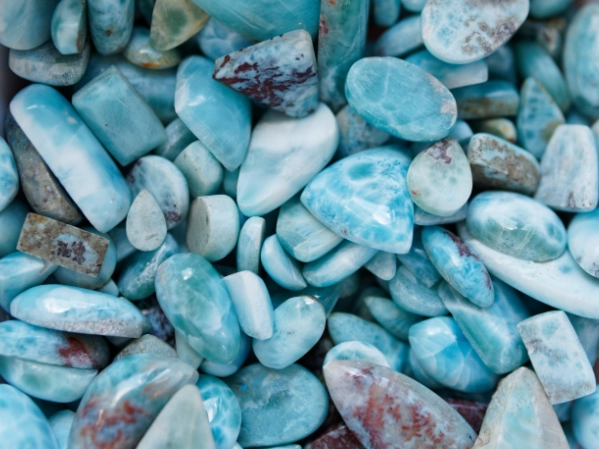
The Many Uses of Larimar: From Your Jewelry Box to Your Meditation Corner
This is the hands-on part. Knowing the meaning is one thing, but how do you actually *use* Larimar? Its applications in energy work and daily life are the most practical aspect of exploring Larimar stone meaning and uses. It's not a stone you just put on a shelf and admire (though you can do that too).
Wearing Larimar Jewelry: The Everyday Anchor
This is the most popular and effective way to keep its energy with you. Where you wear it can subtly shift its focus.
- Necklaces & Pendants: Worn over the heart or throat, this is prime real estate. Over the heart, it promotes emotional healing and calm. Over the throat, it directly supports that clear, peaceful communication we talked about. A simple Larimar pendant on a long chain is incredibly versatile.
- Bracelets: Great if you work with your hands a lot or want a constant, gentle reminder on your wrist. As your hands move throughout the day—typing, cooking, gesturing—the energy is said to be actively circulated.
- Rings or Earrings: More subtle. Rings connect the energy to your personal will and actions. Earrings, being close to the head, can help calm mental chatter and promote serene thoughts.
My personal go-to is a pendant. It’s out of the way but always there.
Meditation and Mindfulness Practices
Hold a piece of Larimar in your hand during meditation. Focus on its cool surface and visualize its blue light washing over you like gentle waves, calming turbulent emotions. Place it on your throat chakra (the hollow of your throat) while lying down to focus on releasing blockages around expression. Some people even place a small piece on their forehead (third eye) during meditation to calm an overactive mind and invite intuitive insights that feel peaceful, not chaotic.
Creating a Calm Space
Place a larger, raw or polished piece of Larimar in your living room, bedroom, or office. It acts as a visual and energetic anchor for tranquility. In a home office, it might help defuse tension. In a bedroom, it can promote restful sleep and pleasant dreams. Think of it as functional decor with a purpose.
Emotional First Aid
Feeling overwhelmed, anxious, or stuck in a loop of angry thoughts? This is where Larimar can be a practical tool. Simply sit quietly, hold the stone, and focus on your breath. Imagine the stressful emotion as a dark color, and with each exhale, see the Larimar's blue light dissolving it. It’s a mindfulness exercise, and the stone serves as a powerful focal point. The physical act of holding something beautiful and cool can be centering all by itself.
Navigating the Market: How to Spot Real Larimar and Avoid Scams
Here’s a major user pain point, and for good reason. The popularity of Larimar has led to a flood of fakes and imitations. Understanding Larimar stone meaning and uses is pointless if you end up with a piece of dyed howlite or plastic. Let's get street-smart.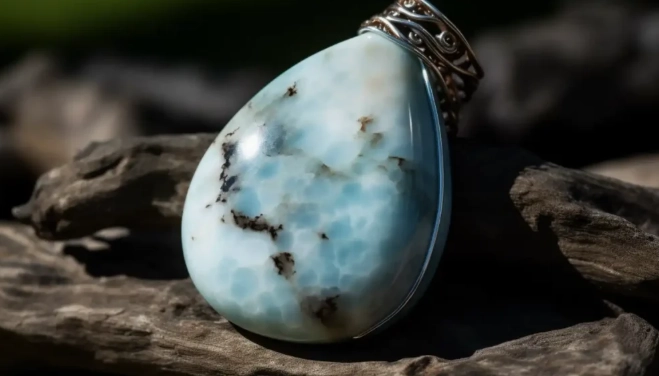
Common Fakes:
- Dyed Howlite or Magnesite: These white stones are porous and easily dyed blue. They often have a similar web-like pattern but look unnaturally uniform and saturated.
- Resin/Plastic: Cheap, lightweight, and often too perfect. You might see bubbles inside under magnification.
- Glass: Can have a similar color but feels different—often warmer to the touch and has a glassy shine, not a waxy or vitreous luster like real stone.
- "Larimar" from China or other countries: Remember, genuine Larimar is only from the Dominican Republic. Any seller claiming it's from elsewhere is selling a look-alike mineral or a fake.
The Real Deal Checklist:
- Origin Story: A reputable seller will proudly state it's mined in the Dominican Republic. If the origin is vague or missing, be wary.
- The Color and Pattern: Genuine Larimar has a unique, watery blend of blues and whites. The blue can range from pale to deep, but it's never a single, flat, electric blue. The white patterns are organic, cloud-like, or feathery, not perfectly symmetrical spider webs. Look for subtle variations within a single piece.
- Temperature and Weight: It should feel cool to the touch initially and have a substantial, stony weight for its size. Plastic feels light and warm.
- Price: Real Larimar is rare. If the price seems too good to be true for a large, deep blue piece, it almost certainly is. You pay for rarity and quality.
- Seller Reputation: Buy from established gem & mineral dealers, reputable crystal shops (brick-and-mortar or online with strong reviews), or better yet, certified sellers from the Dominican Republic. For authoritative information on pectolite (Larimar's mineral family), you can refer to resources from organizations like the Mindat mineral database, which is a trusted non-commercial reference.
When I bought my first piece abroad, I made the classic tourist mistake and overpaid for a lower-grade stone. It was a lesson learned. Now, I ask questions and prefer sellers who can talk knowledgeably about the mining process.
Larimar Color Grades and Quality: What You're Actually Paying For
Not all Larimar is created equal. Its value is heavily determined by its color, pattern, and clarity. Knowing this helps you make an informed choice based on your budget and purpose. Here’s a breakdown:
| Grade Name | Color & Description | Typical Use & Note |
|---|---|---|
| Volcanic Blue / Sky Blue | Very light, almost white-blue. The most common grade. Has visible white matrix (the rock it formed in). | Affordable jewelry, smaller pieces. The energy is there, but the visual impact is softer. |
| Standard Blue | A clear, medium blue (like a swimming pool). Less white matrix than volcanic grade. | The sweet spot for many. Good color at a reasonable price. Great for everyday jewelry. |
| Deep Blue / Caribbean Blue | Vivid, saturated blue with minimal white. Highly desirable. | Higher-end jewelry, focal pieces. This is the color you see in stunning pendants and rings. |
| Deep Ocean Blue / Vetetable Blue | The rarest and most valuable. An intense, dark blue-green (teal) with a translucent quality, sometimes with red traces (from included copper). | Collector-grade pieces, premium jewelry. This is the top tier, and the price reflects it. |
A quick thought on quality: A smaller, high-quality deep blue cabochon can be more powerful (and expensive) than a large, pale, included piece. Decide what matters more to you—size or color saturation. For meditation, sometimes a rough, unpolished piece you can hold feels more connected than a highly polished gem, regardless of grade.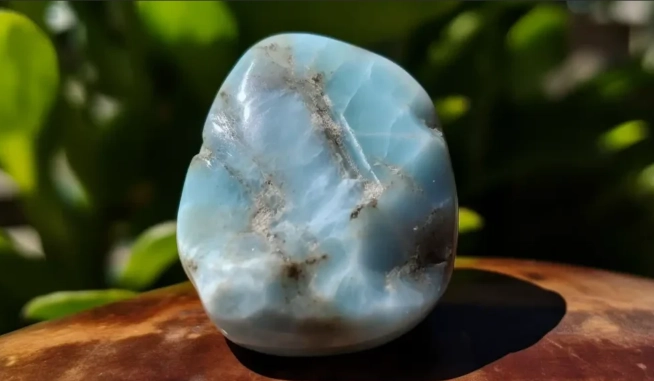
Caring for Your Larimar: Keeping the Vibe Alive
Larimar is relatively soft (around 4.5-5 on the Mohs scale). That means it can be scratched by harder materials and is sensitive to chemicals. To preserve its beauty and energy:
- Clean Gently: Use lukewarm water, a soft cloth, and mild soap if needed. Never use ultrasonic or steam cleaners. Avoid harsh chemicals, perfumes, hairsprays, and acids (like lemon juice or vinegar).
- Store Safely: Keep it separate from harder gems like quartz, sapphire, or diamond in a soft pouch or a fabric-lined jewelry box.
- Recharge Its Energy: The classic method is to place it in moonlight (especially a full moon), which is gentle and watery. You can also place it on a bed of clear quartz crystals. Avoid direct sunlight for long periods, as some believe it can fade the color over time (though the science on this is debated, better safe than sorry).
- Handle with Care: Remove Larimar jewelry before sports, gardening, cleaning, or any strenuous activity.
Answering Your Burning Questions (FAQs)
Putting It All Together: Making Larimar Work for You
So, after all this, what’s the takeaway on Larimar stone meaning and uses? It's a stone of rare geological beauty with a profound, water-based symbolism. Its uses are deeply personal. Maybe for you, it's a meditation aid. Maybe it's a beautiful pendant that reminds you to stay calm in traffic. Maybe it's a statement ring that sparks conversations.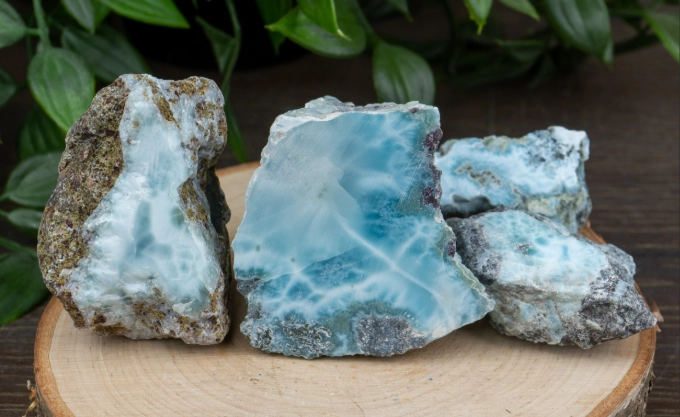
The journey with any stone is personal. Don't get bogged down in doing it "right." If you feel drawn to Larimar, start simple. Get a small, genuine piece. Hold it. See how it makes you feel. Wear it for a week and notice any shifts in your mood or communication.
Is it a cure-all? No. No stone is. But as a tool for mindfulness, a symbol of peace, and a connection to a unique part of our planet, its value is real. Whether you fully buy into the metaphysical properties or just appreciate it as a stunning natural wonder, Larimar has a way of making a quiet, deep impression.
Just remember to buy from a source you trust, care for it gently, and let its tranquil blue be a personal anchor in a often-chaotic world. That, in essence, is the heart of its meaning and the most practical of its many uses.
Related Articles
What chip is Jim Keller doing?
Rose Quartz Meaning: More Than Just a Pretty Pink Stone
Brown Jasper Crystal Guide: Healing Properties, Uses & Expert Tips
Garnet Crystal: Meanings, Uses & How to Spot Real vs Fake
