In This Guide
Let's talk about moonstone. You've probably seen it – that milky, almost magical gem with a blue or white glow that seems to move just under the surface. It's not like a diamond or a ruby. There's something softer, more mysterious about it. I remember the first time I held a good quality piece. I turned it in my hand under a lamp, and this wave of light just rolled across it. It was hypnotic. That glow, they call it 'adularescence', is what makes moonstone, well, moonstone. It's why people have been fascinated by it for thousands of years, linking it to lunar deities and feminine energy.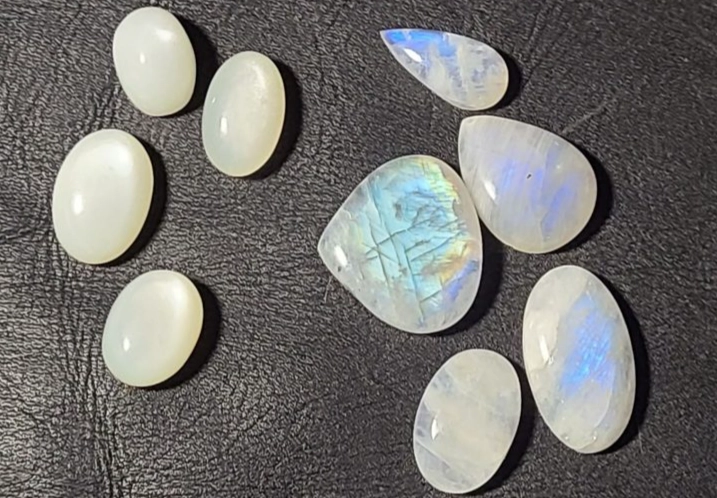
But what exactly is it? On a technical level, moonstone is a variety of the feldspar mineral group. It's not a single mineral, but an intergrowth of two different types of feldspar. That layered structure is the secret. Light enters, bounces between those tiny layers, and scatters, creating that signature sheen. It's science, but it feels like magic. You can read more about the mineralogical specifics from authoritative sources like the Gemological Institute of America (GIA), which is pretty much the gold standard for gem info.
The Different Faces of Moonstone: It's Not All White and Blue
This is where things get interesting. If you think moonstone is just a white gem, you're in for a surprise. The variety is honestly staggering. The classic is the transparent to translucent white or colorless stone with a blue sheen. That's the poster child. But then you have rainbow moonstone. Now, this name is a bit of a misnomer – it's actually a different type of feldspar (usually white labradorite), but the trade calls it rainbow moonstone because it displays stunning flashes of blue, purple, green, and yellow. It's incredibly popular, and I personally think it offers more visual bang for your buck sometimes.
Then there's the peach moonstone. Warm, peachy-pink hues with a soft glow. It's less common and has a really comforting vibe. Grey moonstone feels more modern and sleek. And occasionally, you'll find a cat's eye moonstone or a star moonstone, which are real rarities. The body color can range from completely colorless to white, grey, peach, brown, and even green. The sheen isn't always blue, either. It can be silver, white, or even a peachy color to match the body.
To make sense of it all, here's a quick breakdown of the main types you'll encounter:
| Type | Body Color | Sheen (Adularescence) Color | Key Characteristic & Notes |
|---|---|---|---|
| Classic Blue Moonstone | Colorless to White | Blue (most prized) | The standard for quality. Sheen should be centered and roll across the dome. |
| Rainbow Moonstone | White, Grey, Colorless | Multi-color (Blue, Purple, Green, Yellow) | Actually a form of labradorite. Often more readily available and flashy. |
| Peach Moonstone | Pale Peach to Pink-Orange | Silver or Peach | Softer appearance. Associated with emotional healing in crystal lore. |
| Grey Moonstone | Light to Dark Grey | Blue or Silver | Modern, sophisticated look. The sheen can be very striking against the dark background. |
| Cat's Eye Moonstone | Various | Blue or Silver (as a sharp line) | Extremely rare. Shows a chatoyant line (like a cat's eye) instead of a rolling sheen. |
I have a small collection of these, and the grey one is my current favorite. It just looks so elegant in a simple silver setting. The rainbow variety is what most people seem to gravitate towards first, though. It's hard to resist those colors.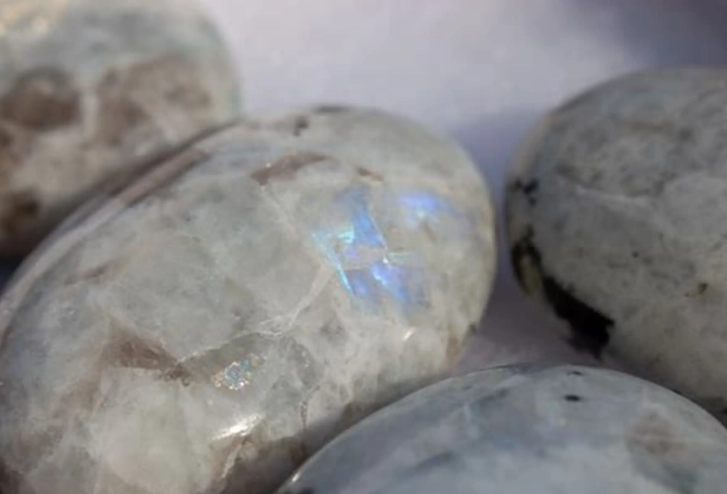
Buying Moonstone: How Not to Get Ripped Off
Alright, let's say you're sold and you want to buy a piece of moonstone jewelry. What should you look for? This is the practical stuff that can save you money and heartache. The value of a moonstone hinges on a few key factors, and they're not the same as for a diamond.
First and foremost is the adularescence. That's the star of the show. You want the sheen to be strong, visible, and ideally a vivid blue. It should be centered on the top of the cabochon (that's the smooth, domed cut they always use) and roll smoothly across the stone as you move it. If the sheen is weak, chalky, or stuck to one side, the value drops. The body should be as transparent as possible. A hazy, milky body can dampen the effect. The best stones are nearly clear, letting that blue glow shine through from within.
Cut is crucial. A moonstone must be cut as a cabochon to display the effect. A good cutter will orient the stone so the sheen sits perfectly on the dome. A bad cut can make even good material look dead. Color of the body matters too. Colorless or white is top tier. While peach and grey are beautiful, the classic blue-sheen-on-a-colorless-body commands the highest prices in the market. Clarity... well, moonstones almost always have inclusions. Some silk-like veils or tiny cracks. You just don't want large, distracting cracks that threaten the stone's durability. A completely flawless moonstone is a unicorn.
Spotting Fakes and Treated Stones
This is important. Moonstone isn't as heavily faked as, say, jade, but there are imitations. The most common is just plain glass. Glass will look too perfect, and the "sheen" will be painted on or applied in a way that looks fake and static. It won't have the depth or the rolling movement. Then there's something called "opalite," which is a man-made glass that often gets sold to beginners as "rainbow moonstone." Opalite is uniform, often has an orange or pink tint in transmitted light, and its rainbow effect is more surface-level. Real rainbow moonstone has a more internal, flashy play of color.
As for treatments, most moonstone on the market is untreated. But you might encounter coatings or dye. A coated stone will have the sheen feel like it's sitting on top, and it might wear off over time. When in doubt, buy from a reputable dealer who discloses treatments. The Mindat.org mineral database is a fantastic, non-commercial resource to check the natural properties of minerals like feldspar, which helps you know what to expect from the real thing.
I made a mistake early on. Bought a cheap "blue moonstone" ring from a street market. The blue was just... stuck there. Like a sticker under the surface. A total waste of twenty bucks. Learn from my error.
Caring for Your Moonstone Jewelry
Moonstone is beautiful, but let's be honest, it's not a tank. On the Mohs scale of hardness, it's about a 6 to 6.5. That means it can be scratched by things like dust (which contains quartz particles at hardness 7), sand, and of course, harder gems. It also has what's called "perfect cleavage," meaning it can split along certain planes if hit hard at the right angle.
So, you can't treat it like a diamond. Don't wear your moonstone ring while gardening, lifting weights, or doing the dishes. The chemicals in household cleaners are bad news, and sudden temperature changes can cause stress. To clean it, just use warm, soapy water and a soft cloth. No ultrasonic cleaners, no steamers. Dry it thoroughly afterwards.
Store it separately, wrapped in a soft cloth or in its own compartment in a jewelry box. Don't just toss it in a pouch with other pieces where it can get knocked around.
If you follow these simple rules, a moonstone piece can last for generations. It's not fragile to the point of being impractical, but it does demand a little respect.
Meaning, Myths, and Modern Uses
You can't talk about moonstone without diving into its lore. It's been a sacred stone in many cultures. In Hindu mythology, it's made of solidified moonlight. The Romans believed it was formed from the light of the moon. It's been a talisman for travelers, especially at night, and a gift for lovers to stir passion and ensure fidelity. For centuries, it's been tied to the feminine, to intuition, and to the cycles of nature.
Today, in the world of crystals and metaphysics, moonstone is hailed as the ultimate "new beginnings" stone. It's linked to the crown and third eye chakras, said to enhance intuition, promote calm, and help with emotional balance. Whether you buy into that 100% or not, there's no denying that holding a calming, glowing moonstone can have a soothing effect. It's a meditative object. Many people use it as a touchstone during times of stress or change.
In modern jewelry, designers love it for its ethereal, non-flashy beauty. It works beautifully in bohemian, vintage-inspired, and minimalist settings alike. It's a statement gem that doesn't shout.
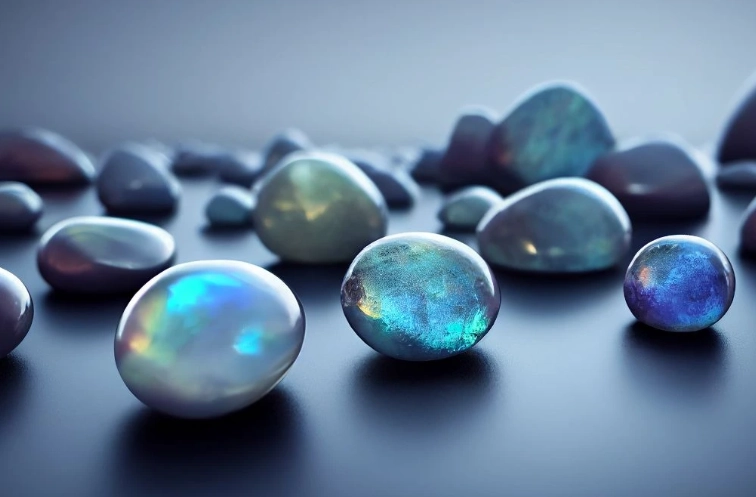 It's more than just a pretty gem. It's a little piece of captured light with a story.
Your Moonstone Questions, Answered
I get asked a lot of the same things about moonstone. Here are the real, no-nonsense answers.
Is moonstone a precious gem?
In the traditional sense (precious: diamond, ruby, sapphire, emerald), no, moonstone is considered a semi-precious gemstone. But that term is falling out of favor in the trade because it's dismissive. A fine blue moonstone can be far more valuable than a low-quality sapphire. Let's just call it a gemstone. Its value depends entirely on its quality.
What's the difference between moonstone and opal?
Great question. They both have play-of-light, but it's different. Opal's play-of-color is fiery, sparkly, and comes in distinct patches of spectral color. Moonstone's adularescence is a softer, billowing sheen that usually moves as a wave. Opal is silica gel; moonstone is feldspar. They feel different, too.
Can moonstone get wet?
Yes, brief contact with water is fine (like washing hands). But don't soak it for long periods, and definitely keep it away from saltwater and chlorinated pools, as these can damage the surface or the setting over time.
Is moonstone good for an engagement ring?
I'll be blunt: it's a risky choice. With a hardness of 6-6.5 and that cleavage, it's not ideal for a ring you plan to wear every single day, through all kinds of activities. If you're set on it, choose a protective bezel setting, insure the ring, and be prepared for it to show wear over time. Consider it for a special occasion ring instead.
How can I tell if my moonstone is real?
Look for the rolling blue or white sheen (adularescence) from within the stone. Check for natural inclusions (most have some). The temperature should feel cool to the touch, like glass. If it's perfectly clear with no inclusions and a static, painted-on looking sheen, be suspicious. When in doubt, have it looked at by a qualified gemologist.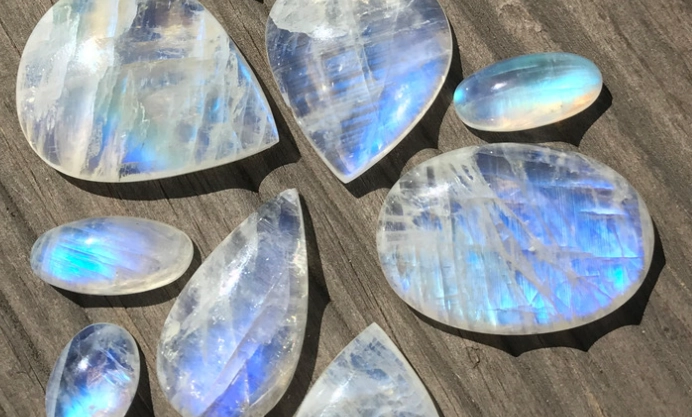
Wrapping It Up
So, there you have it. Moonstone isn't just a simple white gem. It's a world of glowing blues, rainbow flashes, and soft peaches. It's a gem that asks for a bit of care but gives back a unique, mesmerizing beauty. Whether you're drawn to its look, its history, or its purported calming energy, understanding what makes a good moonstone—that strong, centered adularescence in a relatively clear body—is the key to buying a piece you'll love for years.
Forget the hype and the overly spiritual jargon for a second. At its core, it's a beautiful natural phenomenon you can hold in your hand. A little piece of geological magic that reminds you of moonlight on water. And honestly, who doesn't need a bit of that?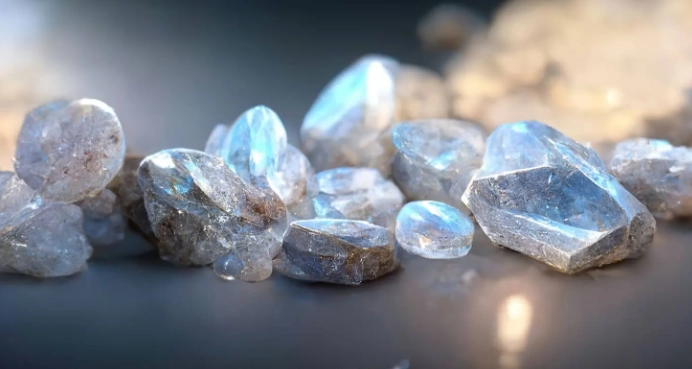
The next time you see one, pick it up. Tilt it slowly. Watch the light swim across its surface. You'll see what I mean.
Related Articles
Selenite Crystal Meaning: Spiritual Uses, Healing & How to Avoid Fakes
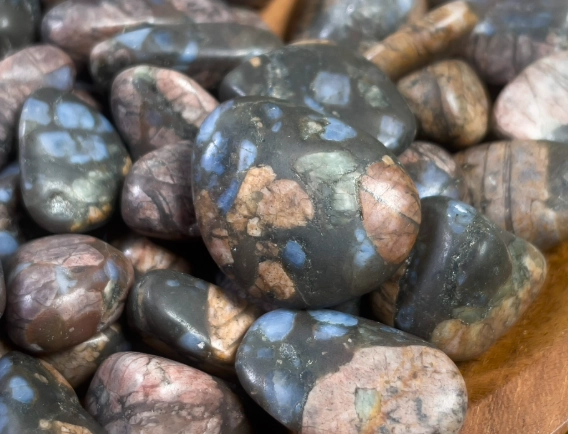
Que Sera Stone: Meaning, Healing Properties, and Practical Uses Guide
Iolite: The Viking's Compass Stone for Intuition & Clarity
Top 10 Benefits of Ruby Stone: Healing & Spiritual Guide
Blue Tourmaline: The Complete Guide to Meaning, Uses, and Buying Tips