Let's talk about blue jadeite. You've probably seen it online or in a high-end jewelry store—a mesmerizing, cool blue stone that seems to hold depth and mystery. It's not your average crystal. The price tags can be shocking, and the information out there is a mix of marketing hype, spiritual claims, and hard geology. After years of collecting and advising clients, I've seen the good, the bad, and the utterly fake. This guide cuts through the noise. We're going beyond the basic "it brings peace" description. We'll look at what actually gives it that color, how its value is determined in the real world (spoiler: it's not just about being blue), and the critical mistakes people make when trying to buy a piece.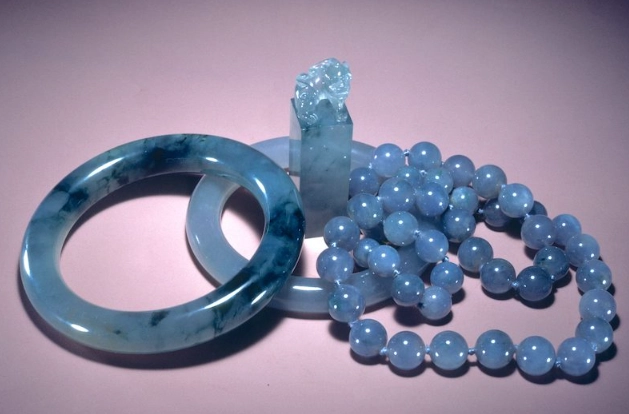
What You'll Discover
The Real Meaning Behind the Blue
Most articles will tell you blue jadeite symbolizes calmness, communication, and spiritual wisdom. That's a fine starting point. But here's what they often miss: the specific shade of blue tells a different story, and its origin story in the earth matters just as much as its metaphysical one.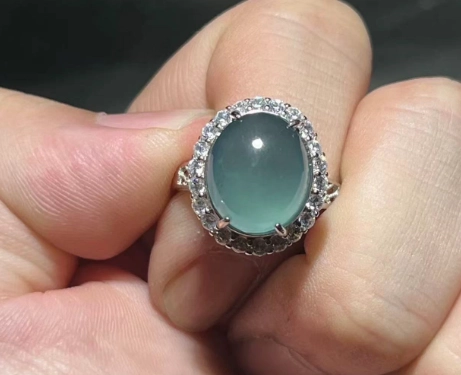
The blue color primarily comes from iron, not copper like in some other blue minerals. This iron integrates into the jadeite's crystal structure under immense pressure. That geological process—transformation under pressure—is, to me, the core of its symbolic power. It's not just a stone of peace; it's a stone of resilient peace. It's about finding clarity and calm after or during a period of challenge.
A Common Misconception: Many newcomers assume a deeper, more saturated blue is always more "powerful" or valuable. In spirituality, a pale, lavender-blue (often called "ice blue") is frequently associated with higher, cooler frequencies of psychic opening and clarity, while a deep navy might relate to profound emotional depth and release. The "best" shade depends entirely on what you're drawn to and working on.
In my practice, I've found people are drawn to blue jadeite when they're dealing with throat chakra issues—not just fear of public speaking, but a deeper inability to express complex or painful truths. One client, a writer with chronic creative block, found that keeping a rough blue jadeite palm stone on her desk didn't magically make the words flow. Instead, it helped quiet the internal critic long enough for her to write a single honest sentence. That's the practical magic of it.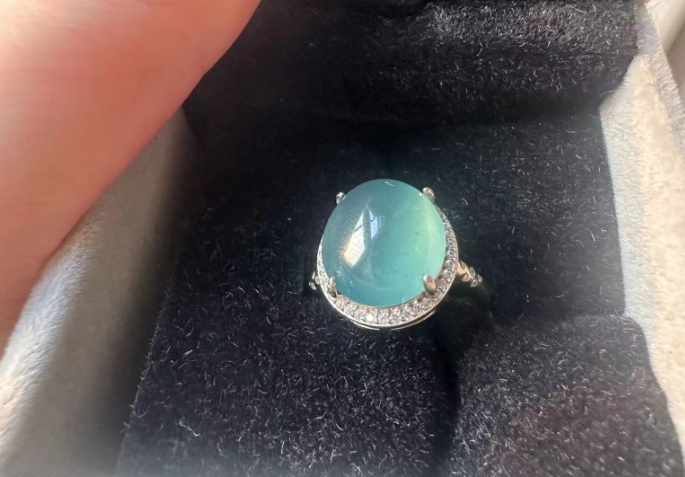
What Actually Drives Its Sky-High Value
Seeing a $50,000 necklace can make anyone's head spin. Let's break down why. Forget the simple "rarity" explanation. It's about a perfect storm of factors, and understanding them keeps you from overpaying for a mediocre piece.
The most critical factor is color, but it's nuanced. The ideal is a vivid, even, medium-blue hue often referred to as "royal" or "kingfisher" blue. However, a uniform lavender-blue or a deep indigo can also command top dollar if the other factors align. Grayish or uneven patches dramatically reduce value.
Transparency is huge. Jadeite can range from opaque to semi-transparent. The finest blue jadeite has a high degree of translucency, making the color appear to glow from within. An opaque piece, even with good color, won't reach the same price tier.
Then there's texture. The best material is fine-grained and smooth. You shouldn't see obvious granularity. When polished, it should feel like cool, dense glass.
Finally, craftsmanship. A master carver can work around minor flaws, using design to highlight the best color. A clumsy carving on perfect material destroys its value.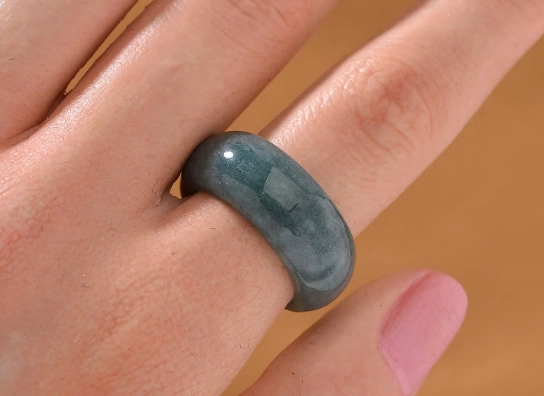
| Factor | High-Value Example | Lower-Value Example | Impact on Price |
|---|---|---|---|
| Color | Even, vivid "kingfisher" blue | Muddy, grayish-blue or uneven blotches | Extreme. Can be a 10x+ difference. |
| Transparency | Semi-transparent, glowing interior | Opaque, waxy appearance | Very High. Translucency is rare in blue. |
| Texture | Fine-grained, impossibly smooth | Coarse, visibly granular | High. Affects the beauty and feel. |
| Flaws | Minimal to no visible cracks or inclusions | Visible cracks, white mineral strings | High/Make-or-Break. Cracks are a major red flag. |
I remember a bracelet that came across my desk. The color online looked like a perfect sky blue. In person, under a proper light, it was a network of thin, pale blue veins in a mostly white stone that had been dyed to even it out. The seller was asking for "rare blue jadeite" prices. This is the gap between marketing and reality.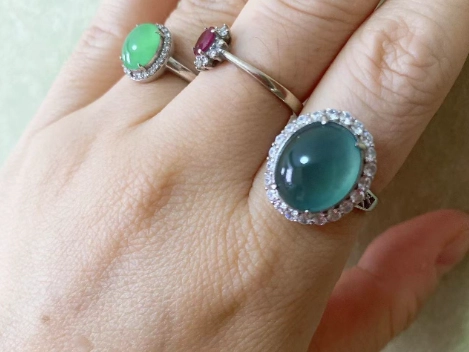
How to Spot Real Blue Jadeite (The Expert's Method)
This is where most buyers get tripped up. The market is flooded with treated, imitation, and outright fake material. Here's a step-by-step approach, moving from what you can do at home to what requires a pro.
Step 1: The Basic Sensory Check
Temperature and Weight: Genuine jadeite feels denser and colder than glass or plastic. Pick it up. It should have a substantial heft for its size and remain cool to the touch for a surprisingly long time.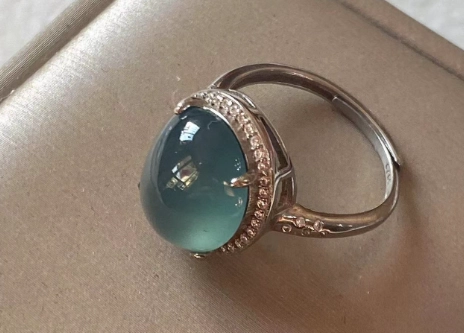
Look Closely: Use a simple 10x jeweler's loupe. You're looking for a fibrous, interlocking structure. Dye treatments often pool in tiny surface cracks or look concentrated around edges. If the color looks perfectly uniform and sits on the surface, be suspicious.
Step 2: Understanding Treatments (The B, C, and B+C)
This is crucial. The Gemological Institute of America (GIA) classifies jadeite treatments:
- Type A: Natural, only polished with wax. This is what you want for top-tier pieces.
- Type B: Bleached to remove impurities, then polymer-impregnated. It's still jadeite, but the structure is compromised. It may look too perfect and can degrade over years.
- Type C: Dyed. The color is not natural.
- Type B+C: Bleached, impregnated, and dyed. Common for fake "blue" jadeite.
Ask the seller directly: "Is this Type A jadeite?" A reputable dealer will answer honestly and provide a lab report.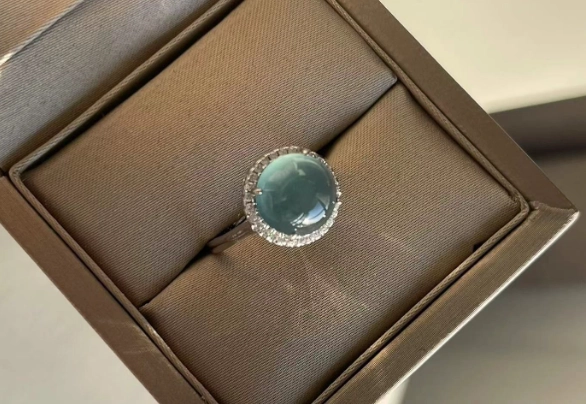
Step 3: The Non-Negotiable – The Lab Report
For any significant purchase, a report from a major gemological lab like GIA, Gubelin, or AGL is mandatory. It will specify if the stone is natural jadeite, its color origin (natural or dyed), and any treatments detected. Don't accept vague "store certificates." Insist on an independent, reputable lab.
I once bought a small, inexpensive carved piece from a market just because I liked the shape. I knew it was likely Type B or C. The lab report later confirmed it was B+C jadeite—dyed a blue it never was. It sits on my shelf as a $80 teaching tool, not a $800 treasure.
A Practical Guide to Buying Blue Jadeite
Let's get concrete. Where do you go, what do you ask, and how much should you expect to pay?
Where to Look:
- Specialized Jade Dealers: Shops in major cities with a long reputation (think Jade Market specialists in New York, San Francisco, or Hong Kong). They have expertise and access to better stones.
- Reputable Auction Houses: Sotheby's and Christie's often have fine jadeite in their jewelry auctions. This gives you a benchmark for top-quality prices.
- Trusted Online Platforms: Sites like 1stDibs or even Etsy can have good pieces, but vetting is 100% on you. Scrutinize return policies and demand lab reports.
Price Ranges (for loose cabochons or simple beads):
- Low-Tier (Dyed or Poor Quality): $20 - $200. Often B+C material. Color is artificial and may fade.
- Mid-Tier (Natural color, but low saturation or opaque): $200 - $2,000. This is where you find genuine, natural blue jadeite that's just not top-grade. Perfect for a real piece on a budget.
- High-Tier (Natural, semi-transparent, good color): $2,000 - $20,000+. This is investment-grade material. Every factor from the table above is in play.
- Auction/Investment Grade: $20,000 into the millions. Exceptional color, transparency, and size.
My advice? Start in the mid-tier. Get a small, genuine, natural-color cabochon. Feel it, study it under light, and get it lab-tested for confirmation. This experience is worth more than any guide. It builds your eye.
Caring for Your Investment
Jadeite is tough but not indestructible. Its main vulnerability is to sudden temperature changes (thermal shock) and harsh chemicals.
Cleaning: Use warm, soapy water, a soft brush, and a soft cloth. Dry thoroughly. Never use ultrasonic or steam cleaners, especially for treated (Type B/B+C) stones, as the polymers can be damaged.
Storage: Wrap it in a soft cloth or keep it in a separate compartment in your jewelry box. Jadeite can scratch other gems (like quartz) and can be scratched by diamonds or sapphires.
Wearing: It's fine for daily wear, but take it off before heavy lifting, gardening, or using cleaning products. That chlorine in the pool? Not a friend to your jade.
Your Questions, Answered
Can blue jadeite help with anxiety, and how should I use it?
Many people find its cool energy calming. Don't expect a miracle cure. The practical way is to use it as a mindfulness anchor. Hold a palm stone during meditation, or when you feel anxious, focus on its temperature and weight. The act of focusing on a physical, beautiful object can interrupt the anxiety spiral. I recommend a smooth, un-carved piece for this—fewer distractions.
What's the biggest mistake people make when buying blue jadeite online?
Trusting the photograph and the description without verification. Screen brightness and photo editing can make a stone look vastly more saturated and translucent. They also skip asking for a lab report, assuming a high price equals authenticity. Always, always request a video of the stone under natural light and a copy of the lab report before paying.
How can I tell if my old blue jadeite ring has been dyed?
Look at the wear points. If the piece is old and frequently worn, check areas that rub against your skin or clothing (like the underside of a ring band or the high points of a carving). If the color appears noticeably lighter or worn away in those spots, revealing a paler base, it's almost certainly dyed. Natural color is integral to the stone and won't wear off.
Is blue jadeite a good financial investment?
Only at the very high end, and only if you have deep expertise or work with a completely trusted expert. The market for mid and low-tier pieces is not liquid. You're buying for beauty and personal value, not as a tradable asset. If investment is your primary goal, top-color, large, translucent pieces with impeccable provenance and lab reports have historically appreciated, but it's a specialist's game with high entry costs.
What's a simple, foolproof test I can do at home to rule out glass or plastic?
The thermal conductivity test is your best bet. Jadeite is a great heat sink. Hold the stone in your hand to warm it up for 30 seconds, then touch it to the sensitive skin of your upper lip or eyelid. Immediately after, touch a piece of glass or plastic you've warmed similarly. The jadeite will feel distinctly colder. Glass and plastic warm up and cool down much faster. It's not a definitive test for treatments, but it's excellent for spotting cheap imitations.
Related Articles
Blue Fluorite Benefits: The Ultimate Guide to This Calming Crystal

OPPO releases the second chip, entering the deep water area of technology!
Moss Agate Properties: The Ultimate Guide to Meaning, Uses & Healing
Opal Spiritual Meaning: More Than Just a Pretty Stone
Obsidian Crystal Meaning: Your Ultimate Guide to Protection & Clarity
