Your Opal Exploration Guide
You know, I remember the first time I held a really good opal. It wasn't in some fancy jewelry store. It was at a gem and mineral show in Tucson, of all places. This older guy had a tray of rough Australian opals, and one of them caught the light just right. It wasn't even polished, just a rough nodule, but inside it had this little pocket of flashing reds and greens that seemed to move as you tilted it. I must have stood there for ten minutes just turning it over in my hand. That's the thing about opal – it doesn't just sit there. It lives. It plays. And that experience got me digging into what exactly makes this gem so utterly unique. So, if you've ever wondered what is special about opal, you're not alone. Let's break it down, without the jargon.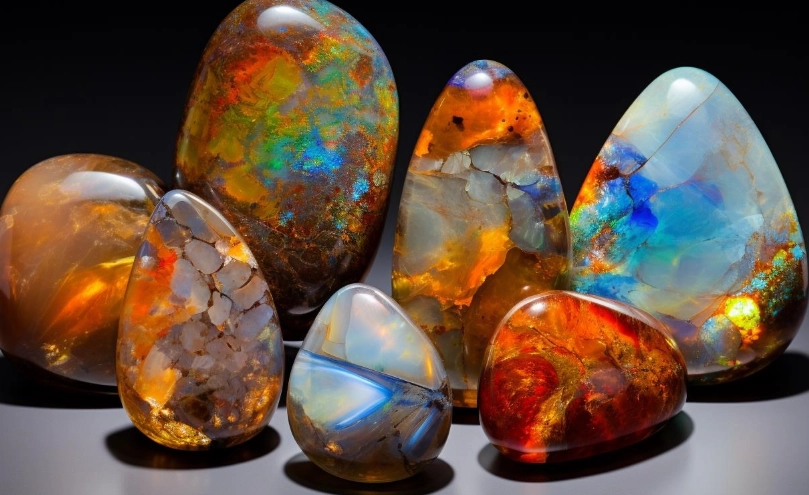
The Science of the Sparkle: Why Opal Has That Magic
Most gems get their color from chemical impurities. Think chromium in ruby or iron in peridot. Opal? It's a trick of the light, literally. It's made of tiny spheres of silica (think super-fine sand or glass) stacked together in a kind of three-dimensional grid. When these spheres are all roughly the same size and packed in a very orderly way, magic happens.
Light waves enter this grid and get diffracted. They split apart, like light through a prism, but in a much more complex way. The size of the spheres determines the color you see. Smaller spheres diffract towards the blue/violet end of the spectrum, and larger ones allow for reds and oranges. If the spheres are a chaotic mess of sizes, you get a milky or common opal with no play-of-color. But when nature gets its act together and lines them up just so, you get precious opal. That's the first and most fundamental answer to what is special about opal – its color is structural, not chemical. The Gemological Institute of America (GIA) has some fantastic, detailed resources on this if you love the hardcore science.
And the formation story is just as wild. Most opal forms in dry, ancient environments like the Australian outback. Silica-rich water seeps down into cracks and cavities in the rock – often where bones, shells, or wood have rotted away. Over millions of years, the water evaporates, leaving behind these layers of microscopic silica spheres. It's a painfully slow process, which is part of why good opal is rare. You can't rush nature when it's building something this precise.
A Rainbow of Types: Not All Opals Are Created Equal
When people say "opal," they're usually thinking of the white or milky kind with flashes of color. That's just one player on the team. The variety is staggering, and each type has its own personality and value. Understanding these types is key to answering what is special about opal, because its specialness comes in many flavors.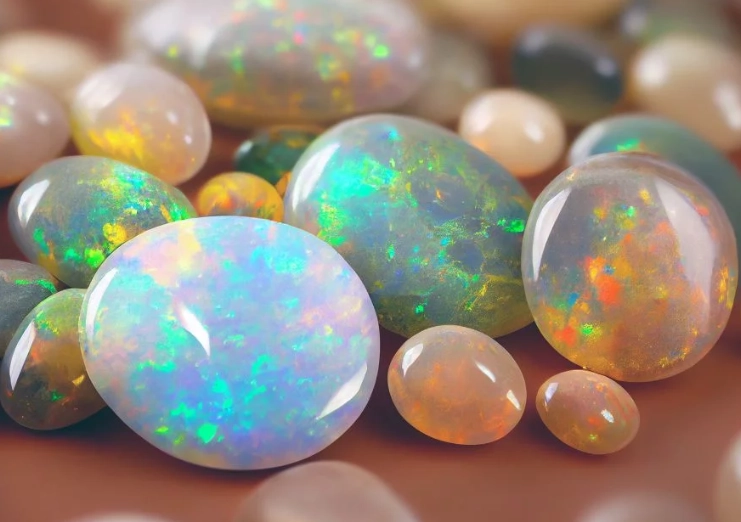
What It Looks Like
Key Source (The Famous Ones)
My Take on Vibe & Value
White or Light Opal
Light body color (white, cream, pale grey) with play-of-color. The "classic" look.
Coober Pedy, Australia
The friendly, accessible intro to opal. Usually more affordable, but can still have stunning fire. A great starter stone.
Black Opal
Dark body color (dark grey to jet black) with play-of-color. The color contrast is intense.
Lightning Ridge, Australia
The rockstar. The dark background makes the colors pop unbelievably. Often commands the highest prices per carat. Serious, dramatic vibe.
Boulder Opal
Thin veins of opal forming within ironstone rock. The opal and host rock are cut together.
Queensland, Australia
My personal favorite for rugged beauty. The ironstone backing makes it very durable. The patterns are often wild and organic. Great value for the visual impact.
Crystal Opal
Transparent to semi-transparent body with play-of-color throughout. You can see through it.
Multiple Australian fields, South America
Ethereal and deep. The color seems to float inside. Can be cut into stunning faceted gems, which is rare for opal. Elegant and modern.
Fire Opal
Transparent to translucent, usually with a warm body color (yellow, orange, red). May or may not have play-of-color.
Mexico (primarily)
Warm and sunny. Valued more for its fiery body color than play-of-color. Often faceted. A completely different personality from Australian types.
Ethiopian Opal
Often hydrophane (absorbs water), can be white, brown, or crystal. Play-of-color can be large-patterned and vivid.
Wollo Province, Ethiopia
The new kid on the block (since the 1990s). Can be stunningly bright and often more affordable. BUT requires special care due to porosity. A bit of a diva.
See what I mean? Asking what is special about opal is like asking what's special about music – there are whole genres. A fiery red flash on black opal feels completely different from the soft pastel blues in a piece of white opal. And that's before we even get into pattern types – harlequin, pinfire, ribbon, flagstone – each with its own fans and price tags.
What Makes One Opal More Valuable Than Another?
So you're looking at two opals. Both are black opals, roughly the same size. One costs $500, the other $5,000. What gives? Figuring out what is special about opal in terms of value comes down to a few key factors that gemologists and dealers grade. It's not just size.
- Play-of-Color: This is the big one. They look at the range of colors (red is rarest and most valued, then orange, green, blue), the brightness and intensity of the colors (dull vs. electric), and the pattern (rare, distinct patterns like harlequin are top-tier).
- Body Tone: For Australian-type opals, the darkness of the background body. The GIA has a scale from N1 (black) to N9 (white). Generally, darker tones (N1-N4) provide better contrast for the color, boosting value.
- Clarity & Transparency: For crystal opals, the clearer the better. In all opals, a lack of cracks, pits, or sand inclusions is preferred.
- Cut & Shape: A good cutter maximizes the play-of-color and creates a stone with good proportions and polish. A poorly cut stone can hide its best fire.
- Carat Weight: As with all gems, size matters, but it's nonlinear. A small stone with incredible fire can be worth more per carat than a large, dull one.
I once saw a small, almond-shaped black opal, maybe 2 carats, that had a perfect, tiny harlequin pattern of red and green. It was priced higher than a 10-carat stone with a muddy blue flash next to it. The difference was night and day.
The Care and Feeding of Your Opal (It's Not as Scary as You Think)
Here's where people get nervous, and sometimes for good reason. Opal has a reputation for being delicate. It's not a diamond. It's softer (around 5.5-6.5 on the Mohs scale) and can contain water (typically 3-10% for Australian opal). The horror stories of opals cracking or "dying" are often about poor treatment, not an inherent flaw.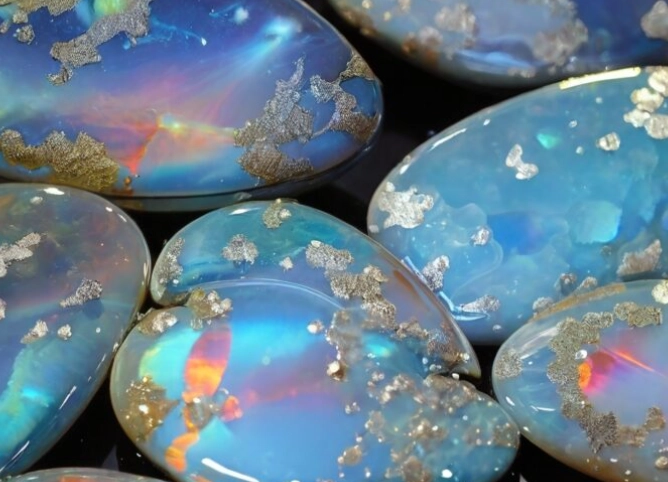
- Avoid Extreme Temperature Changes: Don't leave it on a sunny dashboard or wear it in a sauna. Sudden heat can cause cracking.
- Keep it Away from Harsh Chemicals: Household cleaners, acids, hairspray, perfume. Put your opal jewelry on last when getting ready.
- For Ethiopian Hydrophane Opal: This is the extra-sensitive one. It can absorb liquids and change appearance (often becoming temporarily transparent). Keep it away from water, oils, and lotions. Clean only with a dry, soft cloth. The Australian Opal Association has specific guidance on this.
- Storage: Don't toss it in a jumbled jewelry box where harder gems can scratch it. A soft pouch or a separate compartment is ideal. Some people suggest a cotton ball with a drop of water for very dry climates to prevent dehydration crazing, but for most modern opals, this is overkill.
- Cleaning: Warm, soapy water and a soft brush are usually fine for Australian opals. Dry thoroughly. When in doubt, wipe with a damp cloth.
Look, it's not a gym rock. You shouldn't wear an opal ring for gardening or weightlifting. But with a little common sense, it can absolutely be worn and enjoyed regularly. The idea that opals are "unlucky" is pure superstition, often spread by jewelers who didn't know how to set or care for them properly in the old days.
Beyond the Bling: Opal in Culture and History
Part of what is special about opal is its story. The ancient Romans prized it above all gems, calling it "cupid paederos," the child of beauty. They believed it contained the virtues of all other gems because it showed all their colors. Aboriginal Australians have Dreamtime stories about the creator coming to earth on a rainbow, and where his foot touched the ground, the rocks became alive with color – creating opal.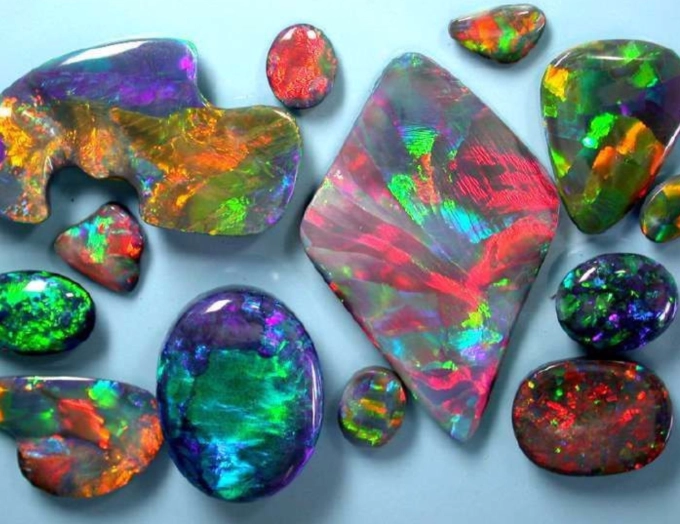
It fell out of favor in medieval Europe due to a combination of its fragility (leading to broken stones in poorly made settings) and its changing colors, which superstitious folks linked to inconsistency and the evil eye. Sir Walter Scott's novel *Anne of Geierstein* in the 1800s famously featured an opal that lost its fire when touched by holy water, cementing a bad reputation for a while. Thankfully, Queen Victoria loved opals and gave them as gifts to her daughters, helping to revive their popularity. Today, it's the official gemstone of South Australia and the birthstone for October.
Common Questions People Are Too Shy to Ask
The Market Today: What You're Really Buying
Walking into a store or browsing online, it's a jungle. You'll see everything from $50 Ethiopian opal pendants to five-figure Australian black opal rings. Knowing what is special about opal also means being a smart buyer.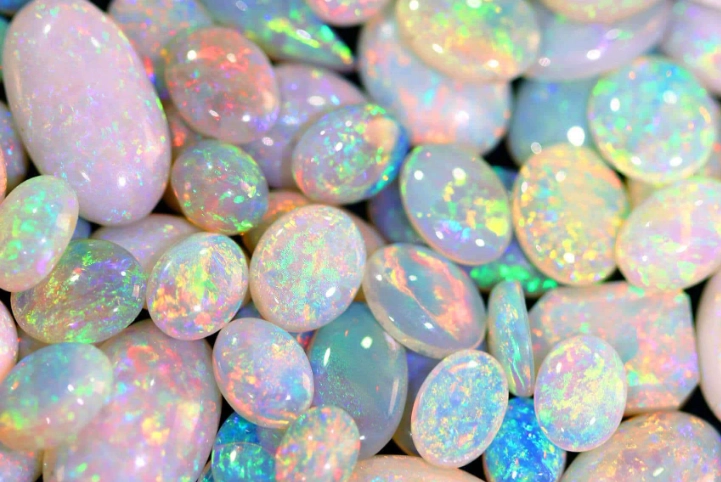
My advice? Always, always see the stone in person or in multiple video angles under different lights if buying online. An opal can look amazing in one direct light and dead in another. Reputable dealers will show you this. Ask if it's natural, if it's been treated (some are smoked or sugar-treated to darken the body tone), and its origin. Get a proper invoice stating what it is. And trust your eyes more than the certificate sometimes – you're buying the beauty you see, not just a piece of paper.
The market for fine Australian opal remains strong because the mines are largely worked out. New Ethiopian finds have flooded the market with affordable, often spectacular material, but it has also created confusion about care. It's an exciting time to be an opal lover.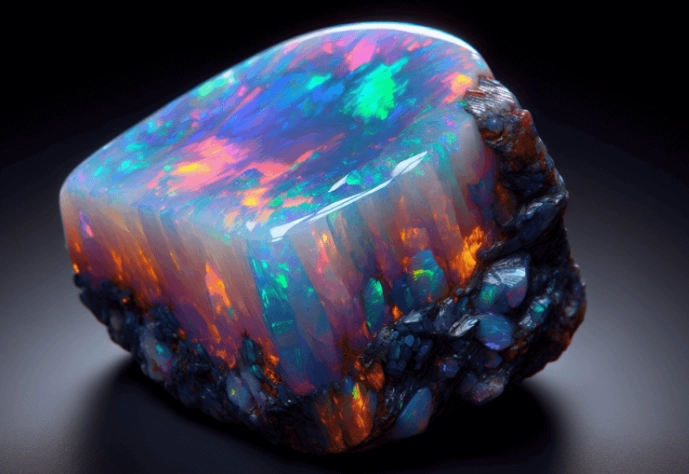
Related Articles
What Does Jasper Crystal Do Spiritually? A Complete Guide to Meaning & Uses
What is Black Obsidian Good For? Ultimate Guide to Protection & Grounding
What Does Selenite Protect Against? 5 Key Shields Explained
Malachite Safety Guide: Who Should Avoid It & Why
White Moonstone: Ultimate Guide to Meaning, Uses & Healing Properties