If you search for "garnet crystal," you're likely looking for more than just its birthstone status. You might be curious about its deep red color, its supposed healing powers, or even if it's just a pretty rock to add to your collection. I get it. I've been collecting and studying crystals for over a decade, and garnet holds a special place – not just on the shelf, but in its practical uses.
Let's cut through the noise. Garnet isn't just one crystal; it's a whole family of silicate minerals that share a similar structure but come in a stunning variety of colors. The deep red garnet (almandine or pyrope) is the classic January birthstone, but have you ever seen a vibrant green garnet? That's tsavorite, and it's spectacular. There's also the orange spessartite and the rare blue color-change garnet. This variety is part of what makes garnet so fascinating and, frankly, a bit confusing for newcomers.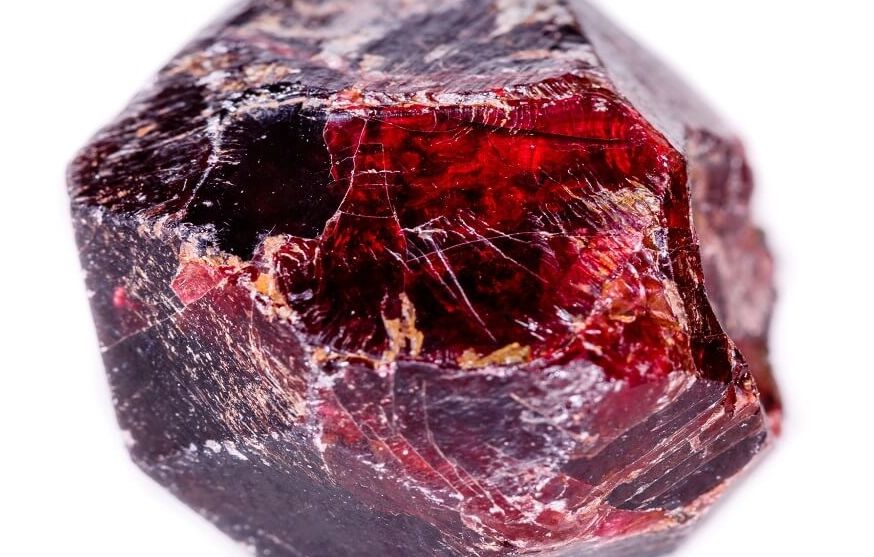
Here’s what we’re going to cover:
What You'll Find in This Guide
A Quick History: Not Just a Victorian Gem
Many people think of garnet as those dark red, polished stones in antique brooches. That's one look, but it's like judging a book by its cover. The use of garnet dates back thousands of years. The ancient Egyptians used red garnet inlaid in their jewelry and as talismans. The Romans carved signet rings from it.
But here's a point that's often missed: garnet was also a critical industrial mineral. Its hardness (6.5 to 7.5 on the Mohs scale) made it an excellent abrasive. Before modern synthetics, garnet sandpaper was the standard for woodworking. I remember visiting an old mine in upstate New York that now operates as a museum. The guide showed us piles of what looked like coarse, dark sand. "This," he said, picking up a handful, "was once more valuable than gold in this town. It cut the timber, it ground the lenses, it built the local economy." That stuck with me. It's a crystal that literally built things.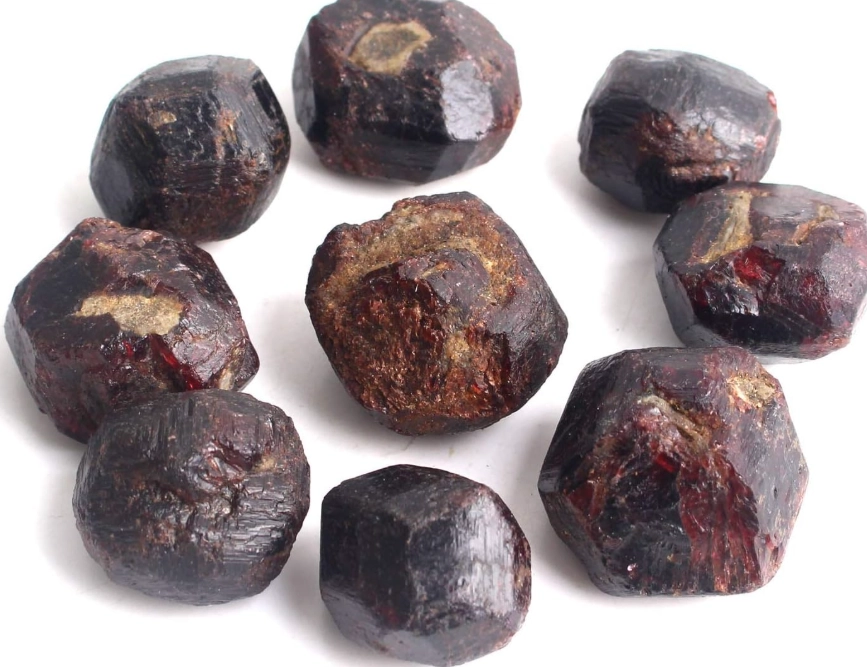
What Makes Garnet Special: The Physical Properties
Let's talk about what you're actually holding. The garnet family is defined by a specific crystal structure (isometric), but the chemical composition varies. This is why you get different colors.
Color: This is the big one. While red is most common, garnet can be virtually any color of the rainbow except blue (until recently, with some very rare finds). This isn't just a marketing gimmick. The color depends on the trace elements present during formation.
Iron gives you the deep reds and browns (almandine). Manganese and aluminum create the vibrant oranges and pinks (spessartine, rhodolite). Vanadium is responsible for the stunning color-change garnets that shift from blue-green in daylight to purplish-red under incandescent light.
I have a small tsavorite specimen on my desk. Under the lamp, it's a brilliant green. Move it to natural light, and it takes on a more yellowish hue. This isn't a defect; it's a specific optical property called pleochroism that some garnets display, and it's a key identifier for experts.
Hardness: Garnet sits at 6.5 to 7.5 on the Mohs scale. This is important. It's hard enough for everyday wear in jewelry (resistant to scratches), but it's not the hardest. Diamond is a 10, sapphire is a 9. This means a garnet ring can handle daily knocks, but you wouldn't want to use it to scratch glass intentionally. A common mistake I see is people using garnet to test hardness against other minerals in a haphazard way. You need a proper hardness pick set, not just another crystal.
Clarity and Luster: Garnet often forms with inclusions. These aren't necessarily flaws; they can be proof of natural formation. A completely flawless, deep red garnet might be a sign to look twice at. The luster is vitreous (glass-like), which is why it takes such a good polish.
Common Myths and Misconceptions About Garnet
Now, let's address some of the biggest myths. You've probably heard that garnet is only for January birthdays, or that it's just a "love stone." That's only scratching the surface.
Myth 1: "Red garnet is the only real garnet." Absolutely false. As we've seen, the garnet family is color-diverse. Demantoid garnet, a green variety, can display more fire (brilliance) than some diamonds due to its high dispersion. The value of a garnet isn't determined solely by its redness.
Myth 2: "Garnet has weak energy." This is a misunderstanding based on comparing it to crystals like clear quartz. Garnet's energy is often described as dense, grounding, and protective. It's not a subtle, high-frequency energy; it's a slow, steady pulse. Think of it like a deep bass note versus a flute's high pitch. One isn't weaker; it's serving a different purpose.
Myth 3: "You need to cleanse garnet under the full moon every month." Here's a nuanced take from years of handling: Garnet, particularly almandine (the common red variety), is one of the few crystals I rarely recommend cleansing with water or salt. Why? The iron content that gives it that rich red color can make it susceptible to rust or dulling if submerged in salt water for extended periods. Instead, I prefer methods like smudging with sage, placing it on a selenite plate, or simply leaving it in moonlight. The idea that it requires frequent, intense cleansing is, in my opinion, overstated and can sometimes do more harm than good to the stone's surface.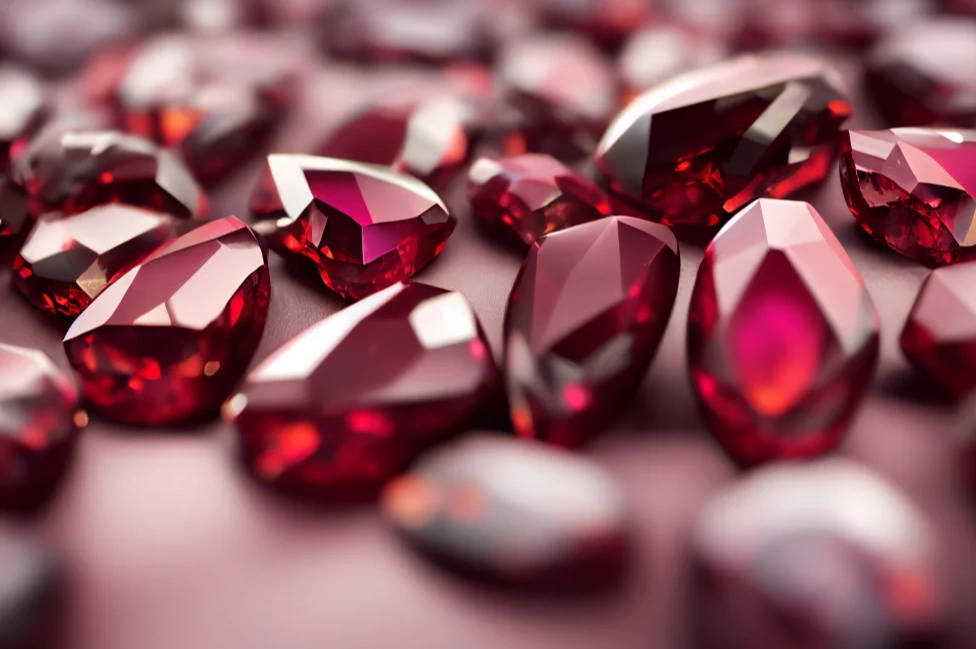
Surprising Uses for Garnet Crystal (Beyond Jewelry)
Sure, we all love a beautiful piece of garnet jewelry. But let's be honest, most of us aren't buying museum-grade specimens. The real power of garnet crystal lies in its practical applications.
I first used a piece of rough garnet (almandine) in a very specific way. I was having trouble focusing while writing. I placed it on my desk, not really expecting much. But I found myself naturally drawn to look at it during moments of distraction. Its deep, opaque red seemed to act as a visual anchor. This wasn't a mystical experience; it was a simple case of using a physical object to interrupt a mental habit loop.
Here are some ways you can incorporate garnet into your life that go beyond just wearing it:
- As a Focus Tool: Keep a small tumbled stone on your computer monitor or by your phone. When your eyes wander to it, let it be a reminder to return to the task at hand. It's not about the stone's energy, but about your own conscious redirection of attention.
- In Your Living Space: Place a larger raw cluster in the corner of a room where you spend time relaxing. The idea is to associate its presence with a state of calm. Over time, the visual connection can become a trigger for relaxation.
- For Creative Projects: I know an artist who keeps a piece of green garnet (tsavorite) on her painting desk. She says the color itself stimulates ideas for landscapes. Whether that's true or not, it works for her as a personal creative talisman.
The point is this: don't get bogged down in the pressure to "use it correctly." The most common mistake I see beginners make is treating their crystal like a battery that needs perfect charging protocols. They worry about which hand to hold it in, which phase of the moon to cleanse it under, which chakra to place it on. They forget to just live with it.
I have a garnet point that sits in my plant pot. Do I think it's making my fern grow faster? No. But I like the way the morning light catches its facets through the soil. It brings me a moment of simple visual pleasure. That's enough.
The Critical Step: How to Spot Real Garnet vs. Common Fakes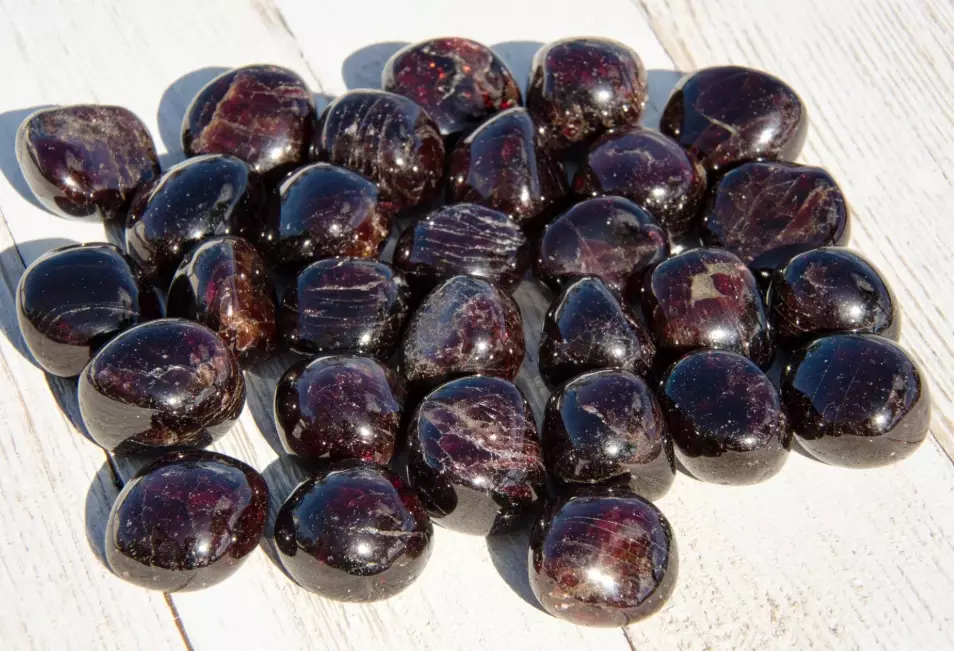
This is where things get practical. The market is flooded with imitations, especially for red garnet. Glass is the most common fake. Here’s how to avoid getting fooled:
1. Temperature Test (The Quick and Risky One): Real garnet feels cool to the touch and will take longer to warm up in your hand than glass. This is a classic test, but it requires some experience. A better method is to use a thermal conductivity probe (often sold as a "diamond tester" – but be warned, not all are calibrated for garnet).
2. Look for Inclusions (The Eye Test): Most natural garnets have some internal characteristics. These can be needle-like inclusions (rutile), crystal inclusions of other minerals, or color zoning (where the color isn't perfectly even). Glass imitations tend to be too perfect, or they contain perfectly spherical bubbles.
3. Check the Hardness (The Scratch Test – Use Caution): Remember, garnet is hard (6.5-7.5). It can scratch glass. But so can many other materials. This test alone is not definitive. Never perform a scratch test on a finished, polished gemstone you value – you could damage it. If you must, use an inconspicuous area like the bottom girdle of a loose stone or a very tiny, hidden spot on a setting.
4. The Weight Test: Garnet has a high specific gravity. It will feel noticeably heavier in your hand than a piece of glass of the same size. This takes practice to judge.
5. When in Doubt, Ask for Documentation: Any reputable seller should be able to provide at least a basic identification card or report, especially for larger or more expensive pieces.
Here’s a personal rule I follow: If a deal on a red garnet seems too good to be true, it probably is. The vibrant, cheap red stones you often see in mall kiosks or online marketplaces are frequently glass or dyed quartz. A real, deep red almandine garnet has a richness and depth that is hard to replicate perfectly in glass.
My advice? Start with a small, tumbled stone from a trusted, specialized crystal shop. Hold it. Feel its weight. Look at it in different lights. Learn its character. This hands-on experience is worth more than any list of tests.
Your Questions, Answered
 How often do I need to cleanse my garnet crystal, and what's the best method?
Related Articles
Iolite: The Viking's Compass Stone for Intuition & Clarity
Blue Crystals Raw: A Complete Guide to Types, Uses, and Buying Tips
Azurite Crystal: Deep Blue Stone for Intuition & Insight
Pink Quartz Benefits: Love, Healing & How to Use It
Who Should Not Wear Moonstone? Safety Guide & Contraindications