Quick Navigation
- What Exactly Is Blue Chalcedony? Let's Get Geological
- The Many Faces of Blue: Varieties and Lookalikes
- Meaning, Metaphysics, and the Murky World of Healing Properties
- How to Spot a Fake: A Buyer's Survival Guide
- Buying Blue Chalcedony: What to Ask For
- Caring for Your Stone
- Your Blue Chalcedony Questions, Answered
You've probably seen it. That soft, dreamy blue stone in a necklace or a tumbles stone bowl at a crystal shop. It catches the light in a gentle way, not flashy like a sapphire, but calming. Almost like holding a piece of a quiet sky or a still lagoon. That's blue chalcedony. But here's the thing – most people who buy it, or even sell it, only scratch the surface of what this stone is about. It's not just another "pretty blue rock." There's a whole world of geology, history, and yes, even controversy, behind that serene color.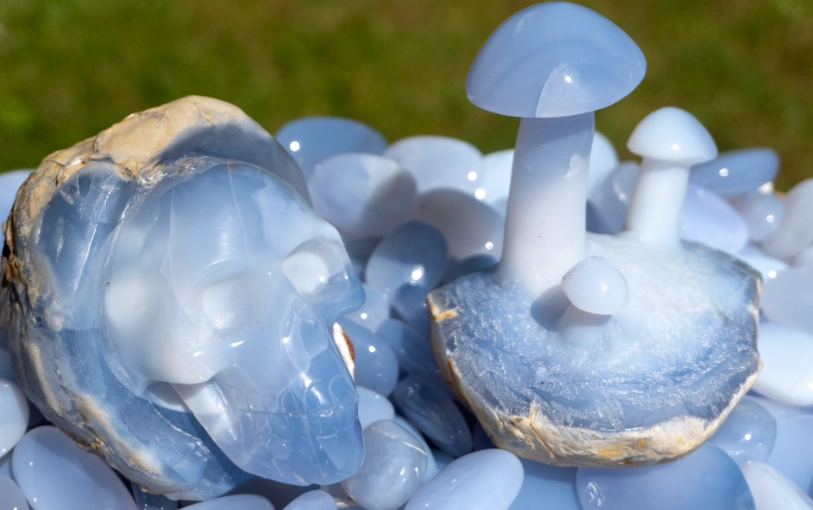
I remember the first piece of blue chalcedony I ever bought. It was a small, polished palm stone from a local gem show. The seller just said, "It's good for communication." That was it. I took it home, and while it did feel nice, I was left with a bunch of questions. Is it natural? Where does it come from? Why are some pieces cheap and others ridiculously expensive? Is the healing stuff just marketing fluff? It took me years of digging, talking to lapidaries (stone cutters), and even getting burned on a fake piece to really understand it.
So, let's cut through the vague descriptions and crystal shop hype. This guide is what I wish I had when I started. We're going to get into the nitty-gritty: what it really is, how it forms, the different types you'll encounter (some are shockingly rare), what people genuinely use it for, and most importantly, how to buy the real deal without getting ripped off. Whether you're a crystal newbie, a seasoned collector, or just someone charmed by its color, there's something here for you.
Quick Reality Check: Blue chalcedony is a variety of chalcedony, which is itself a microcrystalline form of quartz. Think of it as quartz's smooth, non-crystalline cousin. The blue color? It's usually not from a single element like copper in turquoise. More on that soon – it's trickier than you might think.
What Exactly Is Blue Chalcedony? Let's Get Geological
If you want to understand any gemstone, you have to start with the science. Otherwise, you're just admiring a mystery. Chalcedony (pronounced kal-SED-uh-nee) is a catch-all term for a specific kind of quartz. While your typical clear quartz crystal grows in big, pointy six-sided prisms, chalcedony is cryptocrystalline. That's a fancy word meaning its crystals are so tiny you need a microscope to see them. This gives it a waxy luster and a smooth, often translucent appearance, unlike the glassy look of crystalline quartz.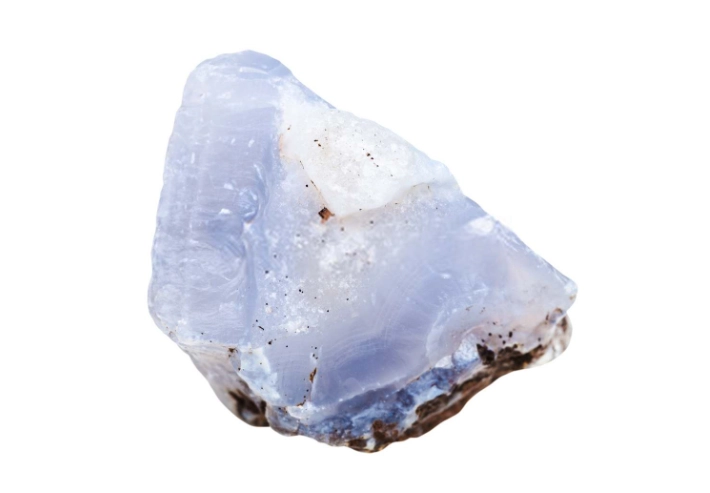
Now, here's where it gets interesting for the blue variety. Pure chalcedony is white or gray. The color comes from impurities or structural quirks. For blue chalcedony, the classic explanation has been trace amounts of copper, similar to turquoise or chrysocolla. But many gemologists now point to a different cause: Rayleigh scattering. This is the same phenomenon that makes the sky blue – tiny particles or structures within the stone scatter blue light. Sometimes it's microscopic inclusions of other minerals; sometimes it's the way the silica molecules are packed. This is why the color is often so soft and cloud-like, not a solid, piercing blue.
The presence of other minerals can create sub-varieties or influence the hue. A little nickel or iron can push it towards greenish-blue. The geological conditions – temperature, pressure, what minerals were in the groundwater as it formed – create the unique character of material from different locations. This isn't just academic; it affects the value, durability, and even the energy some people feel from the stone.
Let's talk sources. Not all blue chalcedony is equal. Some of the most famous and sought-after material comes from specific locales:
- Namibia (African Blue Chalcedony): This is the king. The material from places like the Erongo Mountains is legendary for its consistent, robin's-egg to cornflower blue color and high translucency. It's the standard against which others are judged.
- Turkey: A major historical and modern source, often producing beautiful material.
- United States (Arizona, California, Oregon): Produces nice material, often with a slightly grayish or milky undertone.
- Indonesia: A newer source on the market, sometimes offering very affordable pieces, but quality can be wildly variable.
The locality matters. A carved bird from Namibia will command a much higher price than a similar-looking one from Indonesia, and a knowledgeable collector will know the difference. It's like wine from Napa vs. a generic table wine.
The Many Faces of Blue: Varieties and Lookalikes
This is where confusion sets in, even in reputable shops. "Blue chalcedony" is often used as an umbrella term, but under it are specific names for specific looks. Knowing these will make you a savvier buyer.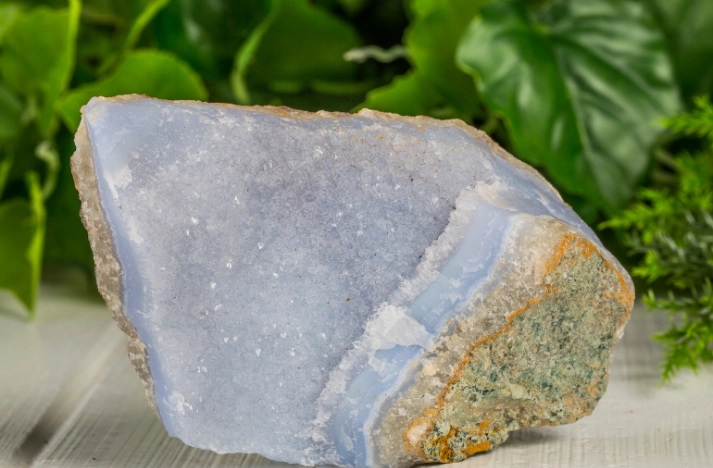
| Name | What It Is | Key Identifier | My Personal Take |
|---|---|---|---|
| Blue Chalcedony (Generic) | The standard, solid blue material. Can range from pale sky blue to a deeper cornflower. | Uniform color, waxy luster, translucent. | The "workhorse" of the family. Reliable and widely available in beads and cabochons. |
| Holly Blue Agate | A specific, highly prized blue banded agate. Agate is just chalcedony with bands. | Distinct, often concentric bands of blue and white. | Stunning and collectible. True Holly Blue is rare and expensive. Be wary of imitations. |
| Ellensburg Blue ("E-Blue") | A specific, rare chalcedony found only near Ellensburg, Washington, USA. Can be solid or have plume-like patterns. | Unique, often intense blue color, sometimes with white plumes. Has a dedicated cult following. | Extremely rare and expensive. If a seller has piles of it cheap, it's fake. Period. |
| Blue Lace Agate | Delicate, light blue chalcedony with fine, lacy white bands. Very popular. | Looks like delicate blue and white lace. The bands are finer than Holly Blue. | Beautiful, but one of the most commonly faked/dyed stones out there. Tread carefully. |
And then there are the lookalikes. Howlite (a white stone) is often dyed a perfect turquoise-blue and can be passed off as cheap blue chalcedony. Dyed magnesite is another one. Glass is an ever-present imitation for any translucent gem. Sometimes, even other minerals like celestite or blue opal can be confused with it. The best defense is knowledge and a suspicious mind when a deal seems too good.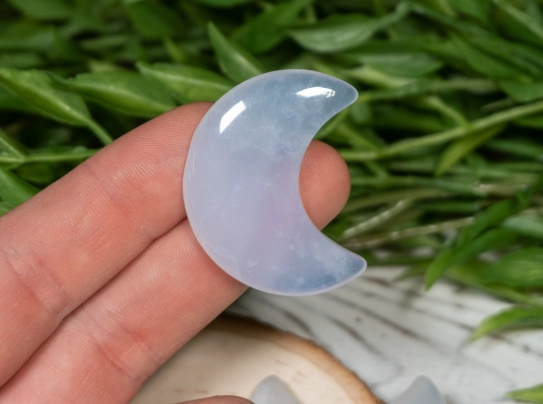
Watch Out For: An overwhelming amount of "blue chalcedony" beads on the mass market, especially from Asia, are actually dyed howlite, dyed quartzite, or even just colored glass. They're often an unnaturally uniform, bright blue. Real blue chalcedony usually has subtle color variations and a softer, more natural hue.
Meaning, Metaphysics, and the Murky World of Healing Properties
Alright, let's address the elephant in the room. This is the part that draws many people to blue chalcedony, and it's also the part that makes geologists roll their eyes. I'll try to bridge the gap with some honesty.
Across cultures and history, blue stones have been associated with the throat, communication, and the sky/water elements. Blue chalcedony is no exception. In ancient traditions, it was carved into seals and amulets. Today, in metaphysical circles, it's hailed as the "Stone of Communication." The idea is that its gentle, non-confrontational energy helps you speak your truth with clarity and compassion, easing social anxiety and promoting active listening.
Other commonly cited properties include:
- Emotional Balancer: Said to absorb negative energy, calm frayed nerves, and combat irritability. It's often recommended for people in caregiving roles or high-stress jobs.
- Promoter of Brotherhood/Goodwill: Linked to fostering feelings of generosity and community. Some say it's good for group dynamics.
- Memory and Historical Connection: Anecdotally linked to recalling past lives or ancestral memories, though this is obviously in the realm of pure belief.
Here's my personal, somewhat critical view. I think a lot of these properties are extrapolated from its physical appearance and its geological "personality." It's a soft, cool, gentle-looking stone. It's not shocking that people attribute soft, cool, gentle properties to it. Does that make the experience invalid for the person holding it? Not necessarily. The placebo effect and the power of focused intention are real psychological forces. If holding a beautiful, cool piece of blue chalcedony helps someone center themselves before a difficult conversation, who am I to say it doesn't "work"?
But – and this is a big but – be deeply skeptical of any seller making concrete medical claims. Blue chalcedony will not cure thyroid disease, fix your laryngitis, or lower your blood pressure. Any site claiming that is engaging in dangerous misinformation. Reputable sources in the crystal community talk about supporting well-being, not treating illness. The Mindful website has great resources on how mindfulness practices (which can include using objects like stones as focal points) can reduce stress, which is a legitimate health benefit.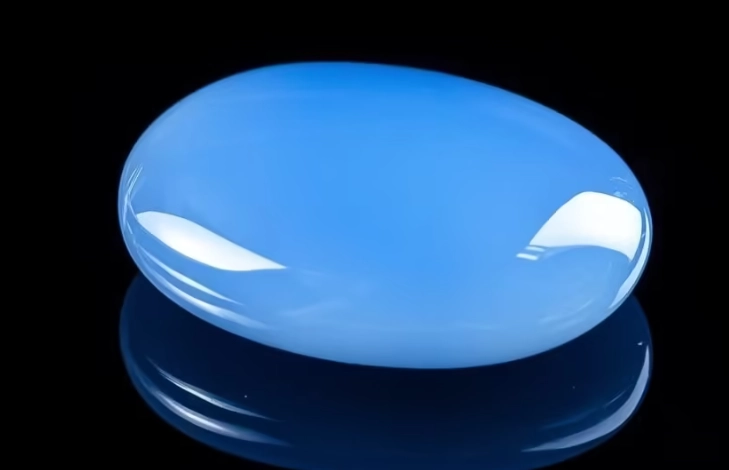
I keep a piece of Namibian blue chalcedony on my desk. When I'm stuck writing or need to craft a delicate email, I'll sometimes roll it in my hand. Does it magically give me the words? No. But the tactile ritual pulls me out of my frantic headspace. It acts as a physical reminder to slow down and choose my words carefully. That, to me, is its real "power."
How to Spot a Fake: A Buyer's Survival Guide
This is the most practical section. The market is flooded with fakes, especially online. Let's say you've decided you want a piece of genuine blue chalcedony. How do you not get scammed?
Visual and Physical Tests (What You Can Do at Home)
1. The Color Test: Look for unevenness. Nature is rarely perfect. Real blue chalcedony often has subtle shifts in tone – slightly lighter in some spots, slightly more saturated in others. A completely uniform, electric, or neon blue is a huge red flag. Also, look at any white bands. In real lace agate, the blue and white blend naturally. In dyed stone, the color often looks like it's sitting on top, and you might see dye concentrated in cracks (use a loupe if you have one).
2. The Temperature Test: Chalcedony is quartz, and quartz is an excellent thermal conductor. Pick it up. It should feel noticeably cool to the touch and take a moment to warm up in your hand. Glass and plastic will feel closer to room temperature immediately. This isn't foolproof, but it's a good first clue.
3. The Magnification Test: If you have a 10x jeweler's loupe (a $15 investment that every crystal buyer should make), look closely. You're looking for:
- Bubbles: Glass will often have tiny round bubbles trapped inside. Chalcedony should not.
- Graininess: You might be able to see the very fine, granular structure of the cryptocrystalline quartz.
- Dye Concentrations: As mentioned, look for spider-web-like patterns of concentrated color in fractures.
Seller & Context Clues (Often More Telling)
1. The Price: Know the market. A large, deep blue, translucent freeform from Namibia should not cost $20. If it seems too good to be true, it is. High-quality blue chalcedony is not dirt cheap.
2. The Description: Reputable sellers will tell you the source (e.g., "Namibian Blue Chalcedony") and will use honest terms. Be wary of sellers who only use vague, flowery metaphysical language with no geological info. A good seller is proud of the stone's origin.
3. The Seller's Other Inventory: Do they also sell obvious dyed howlite as "turquoise"? Do they have a huge stock of perfectly identical, bright blue stones? These are bad signs.
For authoritative information on gemstone identification and treatments, the Gemological Institute of America (GIA) website is an unparalleled resource. They are the global standard for gemology.
Buying Blue Chalcedony: What to Ask For
Let's say you're ready to buy. Whether it's online or at a gem show, being specific will get you better results and show the seller you're informed.
- Ask for the locality: "Where is this blue chalcedony from?" A good seller will know or be honest if they don't.
- Ask about treatment: "Has this been dyed, irradiated, or stabilized in any way?" Most blue chalcedony is natural color, but it's always good to ask. The answer should be "no" for high-quality pieces.
- Ask for pictures in natural light: Studio lighting can hide flaws and drastically alter color. A trustworthy seller will provide them.
- Know what form you want: Tumbled stones are great for pockets and meditation. Cabochons (polished, domed shapes) are for jewelry. Carvings are decorative. Rough pieces show the stone in its natural state. Each has a different price point and feel.
Caring for Your Stone
Blue chalcedony is relatively durable (Mohs hardness of 6.5 to 7), but it's not indestructible. It can chip or scratch if banged against harder materials.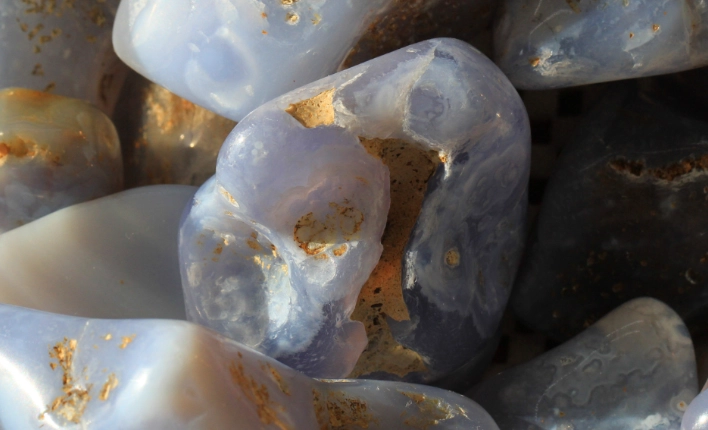
Cleaning is simple.
Warm, soapy water and a soft brush are perfect. Avoid harsh chemicals, ultrasonic cleaners (the vibrations can sometimes fracture it), and steam cleaners. To recharge it metaphysically, people often place it in moonlight (sunlight can fade the color over many years) or on a bed of clear quartz or selenite.
Store it separately from harder gems like diamonds, sapphires, or topaz to prevent scratches. A soft pouch or a separate compartment in a jewelry box is ideal.
Your Blue Chalcedony Questions, Answered
Is blue chalcedony the same as sapphire?
Absolutely not. Sapphire is corundum, one of the hardest minerals (Mohs 9), and is a single crystal. Blue chalcedony is a form of quartz (Mohs 7) and is microcrystalline. They're completely different mineral families. Sapphire is orders of magnitude more valuable.
Can I wear blue chalcedony every day?
In a protective setting like a bezel, yes, it's durable enough for daily wear in a ring or pendant. As a bracelet, it's more prone to knocks. Use common sense.
How does it compare to blue lace agate?
Blue lace agate is a type of blue chalcedony, specifically one with fine, lacy white bands. "Blue chalcedony" usually refers to the more solid blue material. Lace agate is often lighter in color and more patterned.
Is it a birthstone?
Not an official modern birthstone. However, it is sometimes listed as an alternative or historical stone for the month of May or for Gemini (which falls in May/June), likely due to its association with communication.
My stone has little cracks inside. Is it broken?
Those are likely natural inclusions or fractures from formation. They don't necessarily mean it's fake or low quality; they're part of its character. However, surface-reaching cracks can make it more fragile.
At the end of the day, blue chalcedony is a fascinating intersection of geology, art, and human belief. It’s a stone that rewards a closer look. Whether you're drawn to its serene color, its purported calming energy, or simply the thrill of owning a beautiful piece of the Earth, understanding its true nature only deepens the appreciation. Don't just take the vague description. Know what you're getting, ask the right questions, and you'll find a piece that truly resonates – not because of marketing, but because of its authentic, quiet beauty.
Go find your piece of the sky.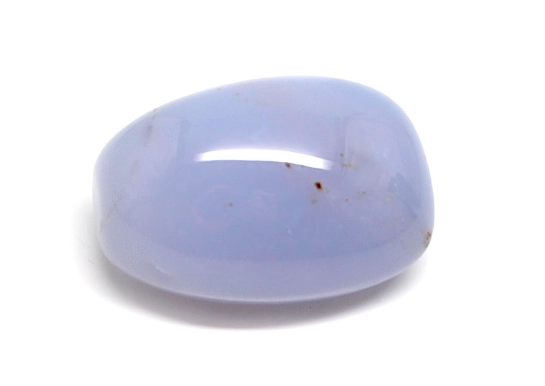
Related Articles
Moss Agate Benefits: A Complete Guide to Its Healing & Practical Uses
Garnet Properties: More Than Just a Pretty Gemstone
Red Jasper Spiritual Meaning: Grounding, Protection & Vitality Explained
How Rare Is Green Jasper? A Complete Guide to Its Scarcity & Value

Blue Crystal Guide: Meaning, Types, and How to Use Them