Quick Navigation
Let's talk about Lapis Lazuli. You've probably seen it—those deep, midnight blue stones flecked with golden pyrite, looking like a piece of the night sky captured in rock. It's stunning, no doubt. But beyond its beauty, there's a whole world of lore, history, and yes, purported spiritual benefits tied to this ancient stone. For thousands of years, from the pharaohs of Egypt to the Renaissance masters, people have been drawn to it not just for decoration, but for its perceived power.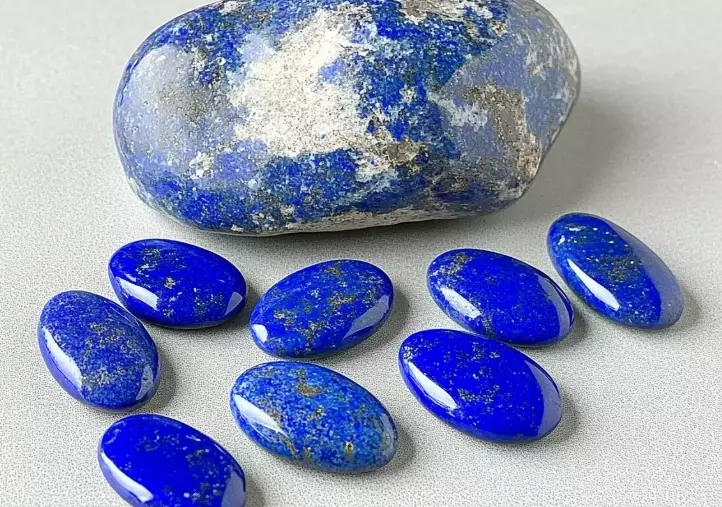
I remember the first time I held a piece of genuine, high-quality Lapis. It was cooler than I expected, and heavier. The blue was so intense it almost felt like it was pulling me in. But honestly? My first thought was also, "Is this all just a pretty rock, or is there something more?" That's the question we're going to dig into.
This isn't about making wild, unproven claims. It's about unpacking the tradition, the experience, and the practical ways people have used Lapis Lazuli for spiritual and personal growth. We'll look at what the spiritual benefits of Lapis Lazuli are said to be, how you might actually use it, and how to tell if you've got the real deal (because there's a lot of fakes out there).
The Core Idea: At its heart, the spiritual meaning of Lapis Lazuli revolves around truth, inner vision, and communication. It's often called the stone of wisdom and awareness. Think of it less as a magic wand and more like a tool for tuning your own internal radio to a clearer frequency.
What Exactly Is Lapis Lazuli? (It's Not Just a Blue Gem)
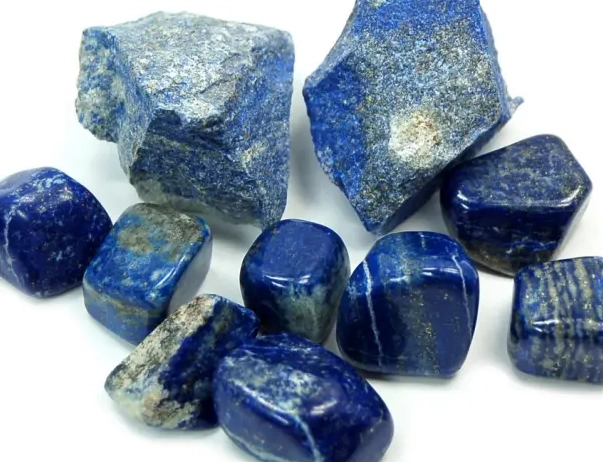
Before we jump into the spiritual stuff, we gotta know what we're dealing with. Lapis Lazuli isn't a single mineral like quartz. It's a rock, a combination of several minerals. The main one is lazurite, which gives it that famous royal blue color. The golden sparkles? That's pyrite, or "fool's gold." And often, you'll see white streaks or patches of calcite.
That mix is actually important. In spiritual circles, the blend is sometimes seen as symbolic—the blue (spirit), the gold (wisdom/light), and the white (purity) all working together. The most prized stones have a deep, uniform blue with sparse, sparkly pyrite. But let's be real, the ones with wild, swirling white calcite can be just as beautiful, even if they're less "perfect" and usually cheaper.
Its history is mind-blowing. It was mined in Afghanistan over 6,000 years ago and traded across the ancient world. Cleopatra used ground Lapis as eyeshadow. Renaissance artists like Michelangelo paid a fortune for the powdered form to create the pigment "ultramarine" for their masterpieces. This wasn't just a pretty stone; it was wealth, power, and divinity rolled into one. The Smithsonian has a fascinating piece on its geological and historical significance that's worth a look if you're a history buff.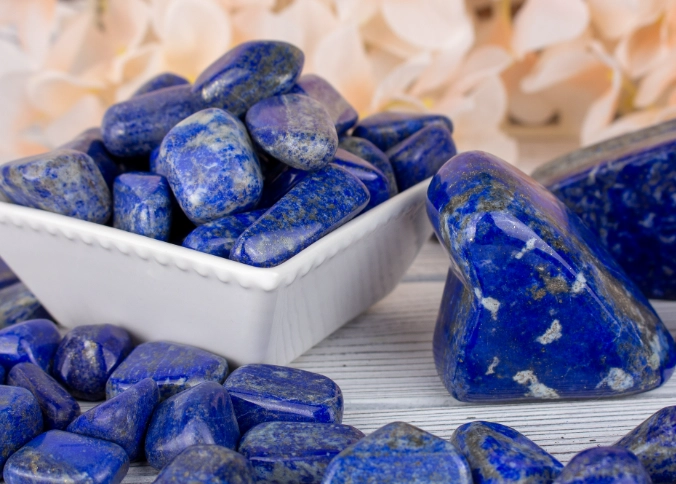
So, you're holding something with a literal millennia-old resume. That history alone adds a certain weight to it, doesn't it?
The Spiritual Benefits of Lapis Lazuli: A Deep Dive
Alright, let's get to the heart of it. What are people actually saying about the spiritual benefits of Lapis Lazuli? I've sifted through mountains of books, forums, and traditions. Here’s the breakdown, not as gospel, but as a report on the common themes and uses.
The Third Eye and Intuition Connection
This is the big one. In systems like yoga and Ayurveda, we have energy centers called chakras. The "Third Eye" chakra (Ajna), located between your eyebrows, is linked to intuition, insight, and perception beyond the physical senses. Lapis Lazuli is considered a primary stone for this chakra.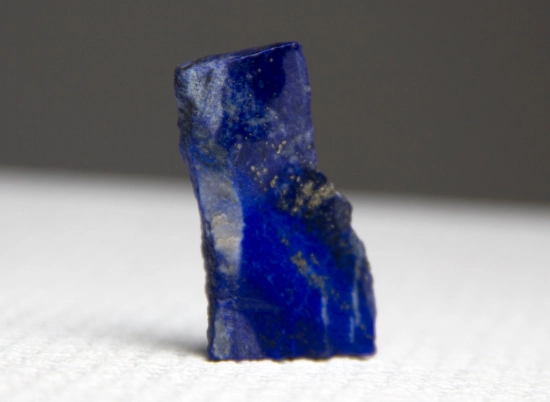
The idea is that its energy helps clear away mental fog, confusion, and outdated beliefs. It's like wiping dust off a pair of glasses. You might find yourself having more "aha!" moments, trusting your gut feelings more, or making connections between ideas that previously seemed unrelated. It's not about becoming psychic overnight (despite what some overly enthusiastic websites claim). It's more about sharpening your own innate awareness.
How does this play out in real life? Maybe you're struggling with a decision, going in circles in your head. Spending some quiet time with Lapis might help calm that mental chatter, allowing a deeper sense of knowing to surface. It's less about the stone telling you what to do and more about it helping you hear your own inner voice.
Truth-Teller and Authentic Communication
Lapis is fiercely associated with truth. But this works in two directions, and the inward one is often the tougher one.
Self-Truth: It's said to encourage honesty with oneself. That means facing things you might be avoiding—your own role in a problem, a fear you haven't acknowledged, a dream you've put on the shelf. This isn't always a comfortable process. One of the lesser-discussed lapis lazuli spiritual benefits is that it can bring things to the surface that need to be looked at. It's not always a "feel-good" stone in the moment; it's a "get-real" stone.
Expression: Outwardly, it's linked to the Throat chakra, supporting clear, compassionate, and authoritative communication. The goal isn't to be brutally blunt, but to express your truth with confidence and integrity. If you have to give a speech, have a difficult conversation, or just want to articulate your ideas better, keeping a piece of Lapis nearby is a common practice.
Emotional and Energetic Healing
Here’s where we get into the lapis lazuli healing properties for the inner landscape. Deep blue is often associated with calm and depth. Emotionally, Lapis is seen as a ally for soothing overwhelm, releasing stress, and calming anger or frustration.
It's particularly noted for addressing issues tied to communication—like the anger that comes from feeling unheard, or the anxiety that stems from not speaking your piece. By supporting both the Throat and Third Eye centers, it aims to create a clear channel: understanding within, expression without.
Some also associate it with relieving tension, especially around the head, neck, and shoulders—areas where we physically hold stress and blocked communication. Again, this is not a medical claim, but an energetic one noted in many crystal healing traditions.
| Spiritual Benefit Area | How It Manifests (Common Reports) | Typical Use Case |
|---|---|---|
| Intuition & Insight | Clearer dreams, stronger gut feelings, moments of sudden clarity, enhanced creativity. | Meditation, placing under a pillow, holding during contemplation. |
| Communication & Truth | Finding courage to speak honestly, improved self-expression, less fear of judgment. | Wearing as a necklace (near throat), holding before important conversations. |
| Emotional Calm | Reduction in mental chatter, feeling less reactive, a sense of deep peace. | Carrying as a pocket stone, placing in a room where you relax. |
| Self-Awareness | Confronting personal patterns, understanding motivations, spiritual awakening. | Journaling with the stone present, using in energy work sessions. |
See, the spiritual benefits of Lapis Lazuli aren't one single thing. They're interconnected. Better intuition leads to clearer self-truth, which leads to more authentic communication, which in turn reduces internal conflict and stress. It's a cycle.
How to Use Lapis Lazuli for Its Spiritual Benefits (Practical Tips)
Okay, so let's say you're intrigued. You've got a piece. Now what? Just putting it on a shelf won't do much. The "how" is where the rubber meets the road. Here are the most common, practical methods people use.
Meditation and Mindfulness
This is probably the most powerful way to connect with the stone. You don't need to be a zen master. Just find a quiet spot, hold the Lapis in your hand or place it on your forehead (Third Eye area), and breathe. Don't force anything. Just feel its weight, its temperature. Notice the color behind your closed eyes if you can. The goal is to quiet down and let any impressions, feelings, or thoughts arise naturally. Sometimes you'll feel a sense of calm. Other times, your mind might race—that's okay too. The stone can sometimes act as a catalyst for what needs to come up.
Wearing It as Jewelry
This is about constant, gentle contact. A Lapis necklace keeps its energy near your throat and heart. A ring or bracelet keeps it in your personal energy field throughout the day. It becomes a touchstone—literally. When you feel anxious or scattered, you can touch it and take a conscious breath, re-centering yourself. It's a physical reminder of your intention to be clear and truthful.
A Quick Reality Check: Lapis is relatively soft (around 5-5.5 on the Mohs scale) and can be sensitive to chemicals, prolonged sun, and hard knocks. Don't wear your nice Lapis ring while gardening or cleaning with harsh products. The color can fade or the stone can get scratched. Treat it like the ancient treasure it is.
Creating a Sacred Space
Place a larger piece or a cluster on your desk, meditation altar, or bedside table. It sets an intention for the space—a space for truth, clarity, and inner work. I have one on my writing desk. Does it make me a better writer? Not directly. But looking at that deep blue helps me shift from a scattered, email-checking mode into a more focused, thoughtful headspace.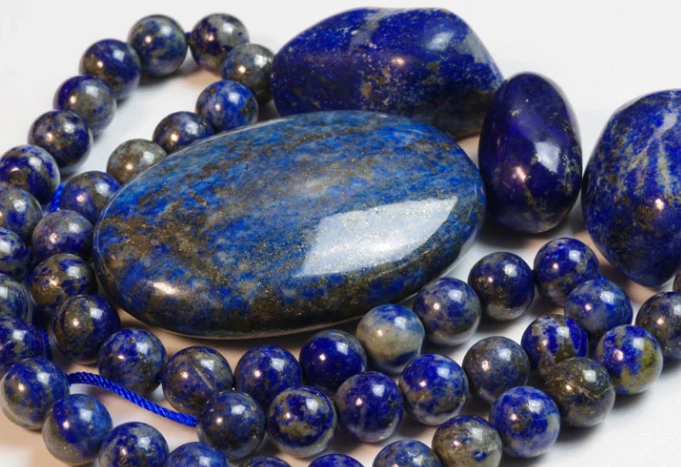
Dream Work
Lapis has a long association with enhancing dream recall and promoting insightful dreams. Try placing a piece under your pillow or on your nightstand. Keep a dream journal nearby. The idea is that it can help bridge your conscious and subconscious minds during sleep.
The key with all these methods is intention.
You're not just passively receiving; you're actively engaging. You're setting a goal—"I want to be clearer in my communication today"—and using the stone as a focal point for that intention. That human intention, coupled with the stone's traditional symbolism, is where the real magic happens.
Spotting the Real vs. The Fake: A Crucial Skill
This is a massive pitfall in the crystal world, and Lapis is one of the most commonly faked stones. If you're investing in the lapis lazuli spiritual benefits, you want the real thing. Howlite or sodalite dyed blue, synthetic materials, and glass imitations are everywhere.
Here’s a blunt, no-nonsense guide:
- Too Perfect & Cheap: If it's a deep, uniform blue with NO white calcite, has very evenly distributed pyrite that looks painted on, and costs $10 for a big pendant... it's almost certainly fake. Real, high-quality Lapis is expensive because it's rare.
- The Pyrite Test: Real pyrite inclusions are three-dimensional, crystalline, and have sharp, geometric edges. They're embedded in the stone. Fake pyrite often looks like flat, gold-colored paint splatters or glitter sprinkled on the surface.
- The Scratch Test (Careful!): Real Lapis is soft. You can carefully scratch an inconspicuous spot with a steel pin. If it leaves a scratch and reveals a lighter blue or white powder underneath, it's likely real. If it doesn't scratch, or if the color chips off to reveal a different color (like gray howlite), it's fake. Obviously, don't do this on a finished piece of jewelry you love!
- Look for the Mix: Genuine Lapis is almost always a mix. Look for variations in the blue, patches of white calcite, and uneven distribution of pyrite. Imperfection is a sign of authenticity here.
Buy from reputable dealers who specify the origin (Afghanistan is the classic source, but Chile and Russia also produce it). Ask questions. A good seller will know their material. The Gemological Institute of America (GIA) provides excellent, scientifically-backed information on Lapis Lazuli's composition and identification, which is a great resource to cross-check what a seller tells you.
Your Questions Answered: Lapis Lazuli Spiritual Benefits FAQ
Safe methods include:
- Smudging: Passing it through the smoke of sage, palo santo, or incense.
- Sound: Using a singing bowl, bell, or tuning fork near it.
- Gentle Moonlight: A few hours under the moon (not direct sun).
- Other Crystals: Placing it on a cluster of clear quartz or selenite overnight.
The best method is the one that feels right to you. I usually give mine a quick rinse under lukewarm running water (not hot) and then leave it on a selenite plate.
The journey with a stone like this is personal. Maybe for you, the primary lapis lazuli spiritual meaning will be about creative inspiration. For someone else, it might be about finding their voice. That's the beauty of it. It's an ancient companion for a very modern, very human search for clarity and truth.
Related Articles
Blue Jadeite: The Complete Guide to Meaning, Value & Care
Moonstone Benefits for Women: Emotional Balance & Feminine Energy Guide
Blue Chalcedony: Unveiling Its Other Name & Gemstone Secrets
Rainbow Moonstone Crystal: Healing, Uses & How to Spot Fakes
Rhodonite Bracelet Benefits: Emotional Healing & More Explained
