Quick Guide
- Where Does That Incredible Orange Color Even Come From?
- What Actually Makes a Raw Orange Sapphire Valuable?
- How to Buy Raw Orange Sapphire Without Getting Burned
- Caring for Your Raw Orange Sapphire Crystal
- Your Top Questions About Orange Sapphire Raw Stones, Answered
- Wrapping This Up: Trust Your Eyes, Do Your Homework
Let's talk about orange sapphire raw stones. If you're like me, the first time you saw one, it stopped you in your tracks. It's not the polished, perfect gem in a ring. It's something wilder. A piece of the earth that caught fire and decided to stay that way. I remember holding my first decent-sized piece of raw orange sapphire—it felt warm, almost like it had absorbed sunlight for a million years and was gently giving it back. That's the magic we're diving into today.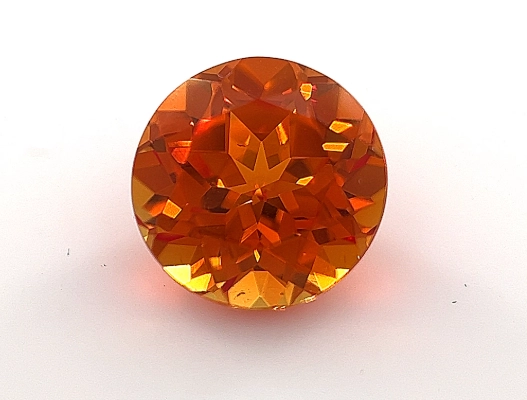
Most guides out there talk about cut sapphires. The shiny, faceted ones. But what about the raw, untouched crystal? The one that shows you exactly how it grew, deep in the earth? That's a whole different story, and honestly, it's a story more collectors and jewelry enthusiasts are getting curious about. There's a raw honesty to it. A raw orange sapphire doesn't hide behind a perfect cut. Its value is all in its natural form, its color straight from the source, and the story its crystal faces tell.
Here's the thing a lot of sellers won't tell you straight up: The market for raw orange sapphire is a bit of a wild west. It's booming with interest, but that means there's good stuff, bad stuff, and a lot of misleading information floating around. My goal here isn't to sell you anything. It's to give you the same toolkit I wish I had when I started, so you can navigate it yourself with confidence.
Where Does That Incredible Orange Color Even Come From?
You don't get a color that vibrant by accident. Sapphires are corundum, which is just aluminum oxide. Pure corundum is actually colorless. The magic—the orange fire—comes from tiny, tiny amounts of other elements getting tangled up in the crystal as it forms. For orange, it's usually a specific cocktail of iron and chromium. Sometimes a dash of something else. The exact mix and the conditions (heat, pressure, the chemistry of the surrounding rock) decide whether you get a soft peach, a blazing sunset orange, or a deep, reddish-orange padparadscha-like hue.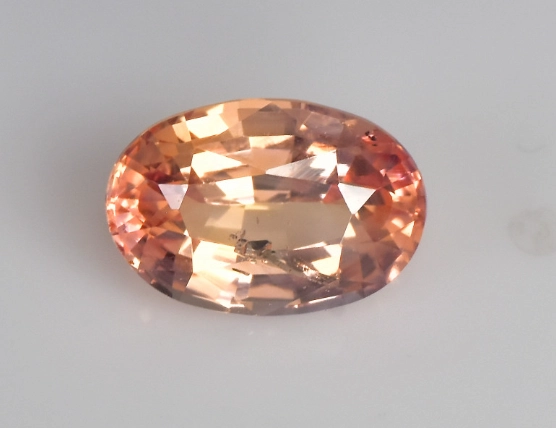
It's a geological lottery. And that's why finding a truly fine piece of orange sapphire raw material feels like such a win.
The Color Spectrum: From Peach to Pumpkin
Not all "orange" is the same. When you're looking at raw orange sapphire, you'll see a range.
- Pale Peach or Apricot: Often from certain deposits in Madagascar or Tanzania. They have a delicate, almost pastel quality. Lovely, but usually less saturated and therefore often more affordable in the raw crystal market.
- Vivid Mandarin Orange: This is the classic, saturated orange. Think of the fruit. It's bright, energetic, and highly sought after. Sri Lanka and Madagascar can produce these.
- Deep Pumpkin or Reddish-Orange: When the orange deepens and flirts with red. This gets into the territory of what some might call "padparadscha sapphire" in its raw form, though the true padparadscha definition is hotly debated and usually reserved for cut stones. These can be stunningly rich.
The hue is one thing, but with raw stones, you also have to consider how the color is distributed. Is it even throughout the crystal? Is it zoned in bands? Sometimes that zoning can create beautiful effects, but generally, even color is more desirable for most buyers.
What Actually Makes a Raw Orange Sapphire Valuable?
This is where people get tripped up. Evaluating a polished gemstone has established rules (the 4 Cs). Evaluating a raw orange sapphire crystal is more art than science, but there are still key factors. I've ranked them in order of what I think matters most, based on what collectors actually pay for.
| Factor | Why It Matters | What to Look For (and Beware Of) |
|---|---|---|
| 1. Color Saturation & Hue | The single biggest driver of value. A strong, pure, vibrant orange commands a massive premium over a weak or brownish one. | Look at the crystal in different lights. Does the color stay vibrant? Does it look dull or muddy in shadow? Avoid stones where the color is only skin-deep on the surface. |
| 2. Crystal Form & Integrity | A well-formed, undamaged crystal is a natural sculpture. It shows the gem grew in ideal conditions and survived extraction intact. | Sharp, defined crystal faces (like hexagonal barrels or bipyramids) are great. Major chips, cracks, or abrasions drastically reduce value for collectors. Minor natural etching is usually okay. |
| 3. Clarity & Transparency | Can you see into it? A translucent or near-transparent raw orange sapphire is much rarer than an opaque one. | Hold it up to a light. Even if it's not gem-clear, some internal glow is good. Milky clouds or heavy inclusions can obscure the color and make it look dead. |
| 4. Size (Carat Weight) | Bigger is generally better, but only if the quality is there. A small, perfect crystal can be worth more than a large, poor-quality one. | For raw crystals, size is about visual impact. A 10-carat crystal with great form can be more desirable than a 20-carat fragment. |
| 5. Origin | Certain locations have reputations for specific colors or qualities, which can affect market price and desirability. | Madagascar and Sri Lanka are major sources. Some rare origins (like the Umba Valley in Tanzania) can have a cachet. Always be skeptical of unsupported origin claims—they are hard to verify in raw stones. |
| 6. Evidence of Treatment | An untreated, natural-color raw orange sapphire is the holy grail. Heat treatment is common for sapphires but can be harder to detect in rough. | This is tricky. Sometimes unnatural color zoning or a glassy surface sheen can hint at treatment. For high-value purchases, insist on a report from a reputable lab like the Gemological Institute of America (GIA) if possible, though this is less common for rough. |
See that last point on treatment? It's a huge one. A lot of the orangy and padparadscha-colored sapphires on the market are actually heat-treated to achieve that color. There's nothing inherently wrong with that—it's a standard practice—but you should know what you're buying. A natural, unheated orange sapphire raw crystal is significantly rarer and more valuable. The problem is, proving a raw stone is unheated without cutting it open is very difficult. This is a major pain point for buyers.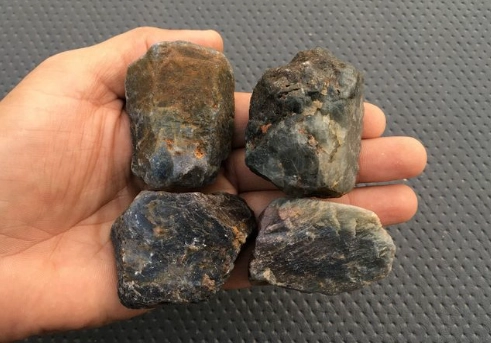
A Reality Check: Don't get hypnotized by a single factor. I've seen people overpay for a large piece of orange sapphire raw material that had a great color but was crisscrossed with fractures, making it useless for cutting or fragile as a specimen. Balance is everything.
How to Buy Raw Orange Sapphire Without Getting Burned
Okay, so you're interested in getting one. Where do you even start? The online marketplace is the most common place now, from big platforms to specialized dealer sites. Gem shows are fantastic if you can attend—you get to hold the stones, talk to the dealers, and learn a ton.
Red Flags and Green Lights
Let's get practical. Here's my personal checklist when I'm evaluating a piece of orange sapphire raw for sale.
Red Flags (Walk Away):
- Price seems too good to be true. It almost always is. Fine orange corundum is not cheap.
- The seller uses only trade names like "Fanta Orange" or "Sunset Fire" but gives no concrete data on origin or treatment.
- Photos are all blurry, shot in intense neon light, or heavily filtered to boost the color. Ask for a video in natural daylight.
- The description avoids the word "corundum" and just says "orange crystal." It could be something else entirely, like citrine or calcite.
- No return policy. Reputable dealers understand you need to see the stone in person.
Green Lights (Good Signs):
- The seller openly discusses the stone's potential flaws (inclusions, chips on the back).
- They provide dimensions, weight, and mention if the color is natural or heat-treated. If they claim it's unheated, ask why they think so.
- They have a history of positive reviews for selling natural gemstones, not just beads or synthetic material.
- Photos include a scale (like a ruler or coin) and are in focus.
My #1 Tip: Before you buy a significant piece of raw orange sapphire, ask yourself: "What is my purpose for this?" Is it for a collection specimen? For future cutting? For wire-wrapping into jewelry? The purpose dictates what qualities are most important. A cutter will prioritize internal clarity and lack of cracks. A collector might prioritize a perfect crystal shape over transparency.
And honestly? Start small. Buy a few lower-cost pieces from different sellers first. Get a feel for the weight, the texture, how the color looks in your own home lighting. It's the best education.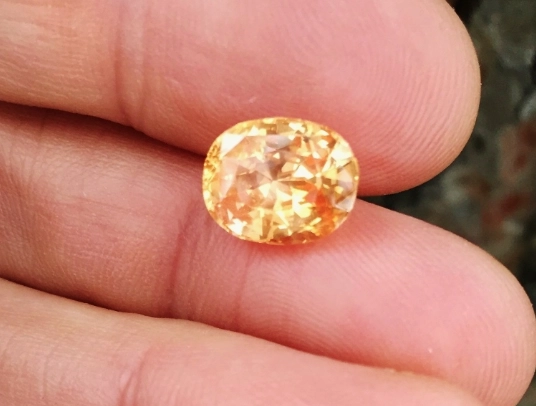
Caring for Your Raw Orange Sapphire Crystal
This isn't a cut gem you can just toss in a jewelry box. Raw crystals have nooks, crannies, and sometimes surface features that need a gentle touch.
Sapphires are very hard (9 on the Mohs scale), so they're resistant to scratching, but that doesn't mean they're indestructible. Their crystal structure can have cleavage planes, meaning a sharp knock in the wrong direction can cause a split. The main danger to your raw orange sapphire is other hard objects banging into it.
| Do | Don't |
|---|---|
| Store it alone in a soft cloth pouch or a compartmentalized box with fabric lining. | Throw it loose in a bag or drawer with other crystals and metals. |
| Clean it with warm water, mild dish soap, and a very soft brush (like a baby toothbrush). | Use ultrasonic or steam cleaners. Vibrations can exploit tiny fractures you can't even see. |
| Dry it thoroughly and gently with a soft, lint-free cloth. | Use harsh chemicals, acids, or abrasive cleaners. |
| Display it away from prolonged, direct sunlight which could (over many years) potentially fade very sensitive colors, though sapphire is generally stable. | Assume it's "just a rock" and doesn't need care. |
I learned the "no ultrasonic" lesson the hard way with a different mineral specimen years ago. A tiny, beautiful crystal cluster just... came apart. It was heartbreaking. Sapphire is tougher, but why risk it?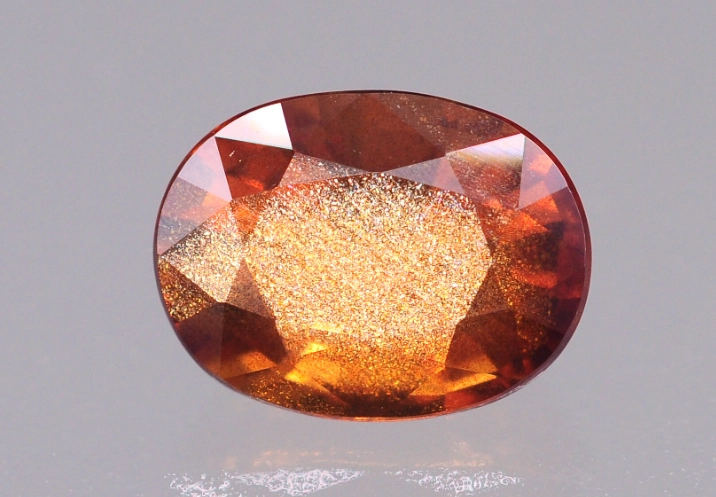
Your Top Questions About Orange Sapphire Raw Stones, Answered
Is raw orange sapphire rare?
Yes, especially in fine quality. Good sapphire rough of any color is getting harder to find. Orange is one of the less common sapphire colors to begin with. Finding it in a well-formed, vibrant, and relatively clean raw crystal is a notable event. That said, small or lower-quality pieces are more readily available on the market.
Can you wear a raw orange sapphire as jewelry?
Absolutely! Raw gemstone jewelry is a huge trend. The key is setting it securely to protect the natural shape. Bezel settings or custom cages that hold the crystal without drilling into it are popular. Remember, a raw crystal has points and edges that can catch on clothing, so consider the setting and your daily activities. A raw orange sapphire pendant or statement ring can be breathtaking.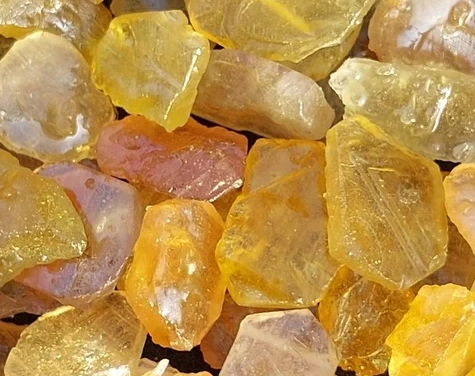
How can I tell if it's real and not glass or something else?
This is crucial. First, trust your senses. Sapphire is dense. It should feel heavier than a same-sized piece of glass or quartz. Second, check the hardness. Sapphire can scratch glass, but glass cannot scratch sapphire (test on an inconspicuous spot if you must). Third, look for natural inclusions. Glass is often too clean or has bubbles that are perfectly round. Natural crystals have growth lines, mineral inclusions, and imperfections. When in serious doubt, consult a gemologist. Resources from the International Colored Gemstone Association (ICA) can help you find reputable appraisers.
What's the difference between 'raw', 'rough', and 'natural' sapphire?
In casual use, they often mean the same thing: an uncut, unpolished crystal. "Raw" and "rough" are interchangeable. "Natural" is a broader term meaning not synthetic (lab-created). A stone can be natural but cut and polished. So, a "natural orange sapphire" could be cut. A "raw natural orange sapphire" specifies it's uncut and from the earth.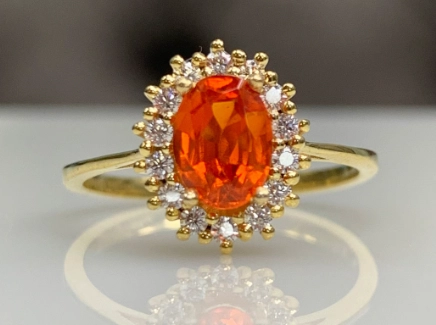
Is it a good investment?
I'm hesitant to call any collectible a surefire investment. The market can be niche. However, high-quality, natural-color orange sapphire rough from reputable sources has shown a steady increase in value over the long term as fine material becomes scarcer. Buy it because you love it and are fascinated by it. Any potential financial gain should be a secondary, hopeful bonus. Don't sink your savings into it expecting to flip it quickly.
Wrapping This Up: Trust Your Eyes, Do Your Homework
The world of orange sapphire raw crystals is incredibly rewarding. It connects you to geology, art, and color in a way a finished piece sometimes can't. It requires more knowledge, a more careful eye, and a bit more courage to buy than a pre-set gem.
Start by learning to appreciate the color. Then understand the form. Ask a million questions from sellers. Compare, compare, compare. Look at museum collections online—the Smithsonian has incredible mineral specimens you can study virtually.
And finally, enjoy the hunt. Finding that one piece of orange sapphire raw material that speaks to you—that has the fire, the shape, the presence—is a fantastic feeling. It's a little piece of planetary history you get to hold. Just make sure you're holding the real thing. Now you have the map to go find it.
Related Articles

Pyrite: Fool's Gold, Real Uses & Crystal Guide
Mookaite Jasper: The Ultimate Guide to Meanings, Properties & How to Buy
Ruby in 2024: Why It's Still a Top Choice for Modern Web Development
Unveiling Green Onyx Properties: A Deep Dive into Its Meaning, Uses & Care
Red Kyanite Crystal Meaning: The Complete Guide to Properties & Uses