Explore This Guide
- So, What Exactly Is Black Onyx? Let's Get Technical (But Not Boring)
- The Physical and Chemical Properties of Black Onyx: The Hard Facts
- Beyond the Physical: Metaphysical and Healing Properties of Black Onyx
- Practical Uses: From Your Finger to Your Living Room
- Caring for Your Black Onyx: Make It Last a Lifetime
- Your Black Onyx Questions, Answered
- The Final Word: What You Really Need to Know
You've probably seen black onyx jewelry. It's everywhere, from high-end boutiques to local crystal shops. That deep, glossy black is hard to miss. But here's the thing – most people buying it have only a vague idea of what it actually is. Is it just a black agate? What's the deal with its supposed healing powers? And why does one piece cost $20 while another looks identical but costs $200?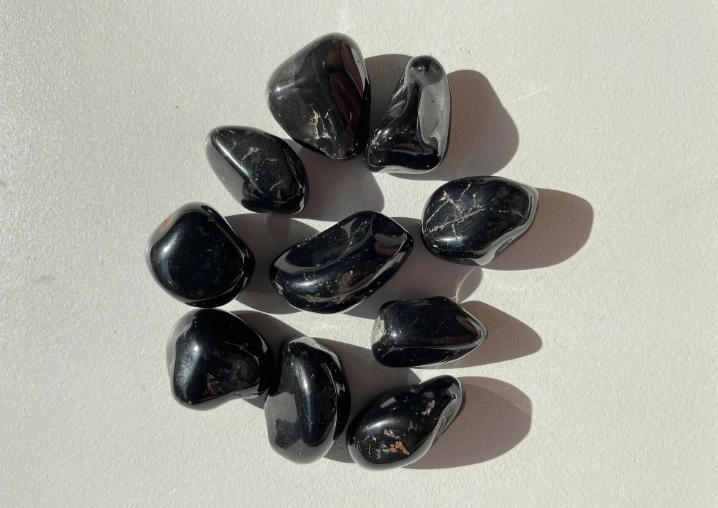
I used to wonder the same things. I bought a black onyx ring years ago because I liked the look. It was heavy, felt solid, and honestly, I thought it made me look a bit more grounded. But I had no clue about the actual black onyx properties – not just the physical ones you can measure, but the whole history and lore behind it. Turns out, there's a lot more to this stone than meets the eye.
Quick Take: Black onyx is a chalcedony quartz, which is a fancy way of saying it's a type of microcrystalline quartz. Its iconic black color is often achieved through treatment, but natural black specimens do exist. It's been used for centuries in everything from cameos to protective talismans.
So, What Exactly Is Black Onyx? Let's Get Technical (But Not Boring)
If we're going to talk about black onyx properties, we need to start with what it's made of. Calling it a "black stone" is like calling a smartphone a "rectangular thing" – technically true, but missing all the important details.
Geologically speaking, onyx is a banded variety of chalcedony, which itself is a form of quartz (SiO2). The bands are typically parallel and straight, unlike the curved bands of agate. The classic onyx has alternating black and white bands. When we say "black onyx," we're usually referring to a solid black variety, which is often a treated form of agate or onyx where the natural bands have been dyed a uniform, deep black. This isn't a scam – it's a standard, accepted practice in the gem trade to enhance color, but it's something you should know.
Natural, uniformly black onyx is rarer. Its color can come from inclusions of minerals or organic materials. The key point is that whether treated or natural, the fundamental properties of black onyx in terms of its structure and most of its physical characteristics remain the same.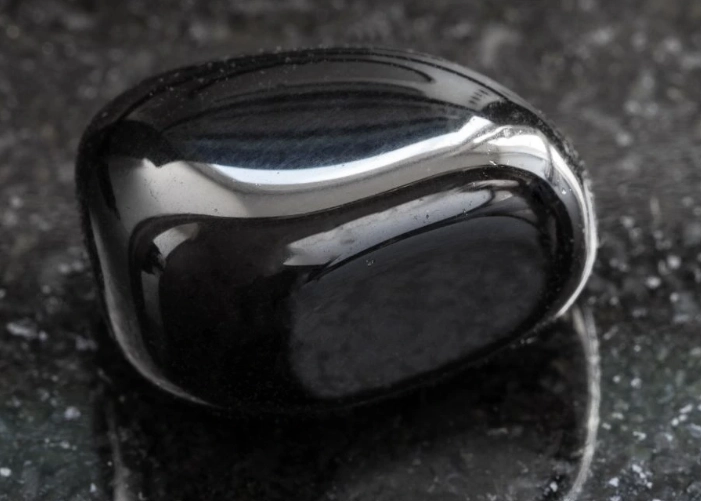
Where does it come from? Major sources include Brazil, India, Uruguay, and the United States. The mining process isn't glamorous – it's hard work extracting these stones from the earth.
The Physical and Chemical Properties of Black Onyx: The Hard Facts
This is where we move past the mystique and into the measurable. Understanding these core physical black onyx stone properties is crucial, especially if you're buying it for jewelry. You want something that lasts.
| Property | Details & Specifications | What This Means for You |
|---|---|---|
| Chemical Composition | Silicon Dioxide (SiO₂). The same as amethyst, citrine, and agate. | It's a quartz. This tells you about its family and general behavior. It's resistant to many chemicals but can be damaged by harsh ones like hydrofluoric acid (not something you usually have at home!). |
| Crystal System | Trigonal (microcrystalline). The crystals are too small to see with the naked eye, giving it a smooth, waxy look. | This is why it has that smooth, non-sparkly appearance compared to, say, a diamond. It takes a great polish, which is why it looks so glossy in rings and pendants. |
| Hardness | 6.5 to 7 on the Mohs scale. | This is a key practical point. It's hard enough for daily wear in rings and bracelets without getting scratched by dust (which contains quartz). But it can be scratched by harder gems like sapphire or diamond. Don't store it loosely with them. |
| Luster | Vitreous to waxy. When polished, it has a beautiful glass-like shine. | That beautiful shine isn't a coating; it's the nature of the stone when expertly polished. Dullness often means it needs a clean or was poorly polished. |
| Density / Specific Gravity | Around 2.58 - 2.64. It feels hefty for its size. | This is why a black onyx ring feels substantial and solid. If a piece feels suspiciously light, be wary – it might be plastic or glass. |
| Transparency | Opaque. Light does not pass through it. | Its beauty is all in surface reflection and depth of color, not internal sparkle. A good piece should have a deep, absorbing black, not a grayish or washed-out look. |
That hardness rating of 6.5-7 is the sweet spot for jewelry. It means it's durable. I've worn my onyx ring while typing, cooking, and doing light chores for years, and it still looks great. No major scratches. But I did learn the hard way not to wear it while moving heavy furniture – a sharp knock against a metal leg left a small chip on the edge. So, it's tough, but not indestructible.
A Quick Reality Check: A lot of "black onyx" sold in cheap fashion jewelry is actually glass, resin, or polished hematite. Glass will feel warmer to the touch initially and is often lighter. Real onyx feels cool and has that distinct weight. When in doubt, the price is a big clue – real stone isn't dirt cheap.
How to Spot the Real Deal: A Quick Identification Guide
Given the treatments and imitations, how can you be sure? Here's a non-technical checklist I use:
- The Temperature Test: Real stone feels noticeably cooler to the touch than room temperature plastic or glass. Hold it to your cheek or lips.
- The Weight: It should have a satisfying heft. Plastic feels cheap and light.
- Look Closely at the Polish: Under a magnifying glass (your phone's camera zoom can work), a perfect, pore-less surface might indicate glass. Natural stone, even polished, can have tiny pits or variations.
- The Scratch Test (Careful!): On an inconspicuous spot, real onyx (hardness 7) cannot be scratched by a steel knife (hardness ~5.5). Glass can be. Only do this if you own the piece and are willing to risk a tiny mark.
For definitive, scientific information on mineral properties, I always cross-reference with authoritative sources like the Gemological Institute of America's (GIA) entry on onyx or the Mindat mineral database. These are gold standards for accurate, unbiased data.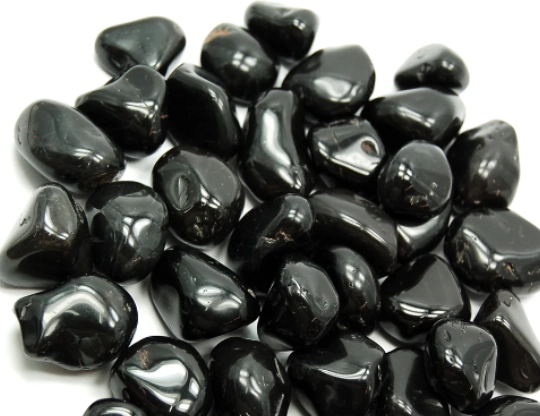
Beyond the Physical: Metaphysical and Healing Properties of Black Onyx
Alright, let's address the elephant in the room. This is the part about black onyx healing properties that fills Instagram and crystal shops. I'll be straight with you – there is zero scientific evidence that crystals can heal diseases or manipulate energy fields in a way proven by modern physics. The FDA doesn't regulate them as medical devices for a reason.
However, and this is a big however, the metaphysical properties of black onyx have been a part of human culture for millennia. The placebo effect is powerful, and the ritual of using an object for focus, intention, or comfort is undeniably real psychology. So let's explore this as cultural history and potential psychological tool, not medical fact.
Historically, black stones have been associated with protection. Ancient Roman soldiers carried black onyx into battle, believing it would make them brave and guarded. In various traditions, it's been seen as a stone that absorbs and transforms negative energy, or at least, the wearer's perception of it.
Here’s a breakdown of the commonly cited black onyx benefits in metaphysical circles:
- Grounding & Stability: This is the most frequent claim. Its weight and earthy black color are said to help root a person, reducing feelings of flightiness or anxiety and promoting emotional stability. When I'm feeling scattered, holding my onyx palm stone does have a calming, focusing effect. Is it the stone or my intention? Probably both.
- Protection: Viewed as an energetic absorber, it's thought to shield the wearer from negativity, whether from others or from one's own pessimistic thoughts. It's like a symbolic filter.
- Strength & Willpower: Linked to its historical use by warriors, it's associated with mental fortitude, perseverance, and mastering one's instincts. Some say it helps with making difficult decisions and sticking to them.
- Emotional Balance: It's believed to help balance extreme emotions, soothing grief or tempering excessive excitement, bringing one back to center.
- Past-Life Work: In some New Age beliefs, its deep black is associated with accessing memories or lessons from the past.
If You Want to Try It: Don't just buy it and stick it in a drawer. Set an intention. Hold it during meditation. Use it as a physical reminder of a goal (like willpower). Cleanse it periodically according to your belief system – running water, moonlight, smoke, or simply your own focused intention to "reset" it. The value is in the practice, not just the object.
Practical Uses: From Your Finger to Your Living Room
Understanding black onyx properties is useless if you don't know what to do with it. How do these properties translate into real-world use?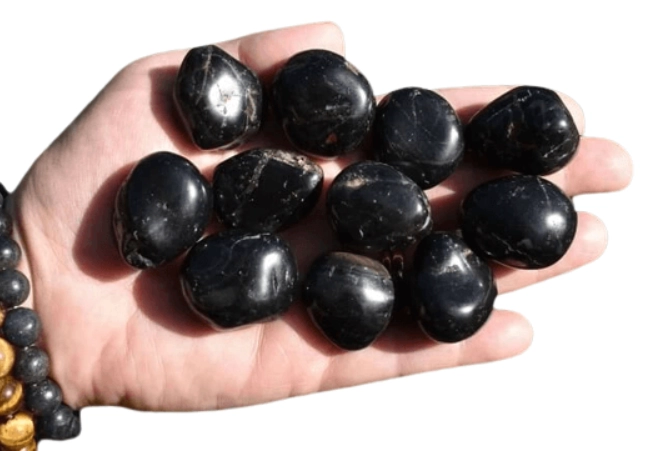
Jewelry: The Most Common Application
Its durability, polish, and neutral color make it a jeweler's favorite, especially for men's jewelry. Common uses:
- Rings & Signets: Its hardness makes it perfect for rings. Black onyx signet rings are a classic.
- Cufflinks & Tie Bars: Adds a touch of elegant, understated masculinity to formal wear.
- Pendants & Necklaces: Often cut into cabochons (smooth, domed shapes) or carved into shapes. A simple black onyx pendant goes with everything.
- Beaded Bracelets: Popular in both men's and women's fashion and wellness circles.
But honestly, the weight can be a problem. A large beaded bracelet can get heavy. And while it's scratch-resistant, the polish can dull over many years of abrasive wear. It's not a "set it and forget it" stone for jewelry.
Decorative Objects & Feng Shui
Beyond the body, black onyx is used for carvings, pyramids, spheres, and worry stones. In Feng Shui, black is associated with the North (Career) and the Water element. A black onyx object placed in the North area of your home or office is believed to support career flow, wisdom, and inner journeying.
I have a small, polished onyx egg on my desk. I like the look of it. Does it help my career? Who knows. But it doesn't hurt, and it's a nice paperweight.
Caring for Your Black Onyx: Make It Last a Lifetime
Knowing the properties of black onyx tells you how to care for it. Here's the simple routine:
- Cleaning: Use warm, soapy water and a soft cloth or brush. Avoid harsh chemicals, ultrasonic cleaners (they can shake loose treatments or crack stones with hidden fractures), and steam cleaners. Dry thoroughly.
- Storage: Keep it separate from harder gems (diamond, sapphire, topaz) to prevent scratches. A soft pouch or a separate compartment in a jewelry box is ideal.
- Wear Mindfully: Take it off before heavy lifting, sports, gardening, or using harsh cleaning products. Protect it from sharp blows.
- Re-polishing: If it gets heavily scratched over many years, a professional jeweler can re-polish it to restore its shine.
Your Black Onyx Questions, Answered
Black Onyx: Quartz. Hardness 7. Opaque, takes a high polish. Metaphysically: grounding, protection, willpower.
Black Tourmaline: A different mineral (silicate). Hardness 7-7.5. Often has striations and a more matte luster. Metaphysically: known as a powerful psychic protection stone, said to repel negativity.
Obsidian: Volcanic glass. Hardness around 5-5.5 (softer). Has a conchoidal fracture (sharp edges) and can be transparent in thin slivers. Metaphysically: for deep cleansing, shadow work, and cutting ties.
Physically, onyx is the best for fine jewelry that needs a polish. Tourmaline is trickier to cut. Obsidian is too soft and sharp for most ring settings.
The Final Word: What You Really Need to Know
So, after all this, what's the bottom line on black onyx properties?
Physically, it's a durable, attractive quartz gem perfect for jewelry that needs to stand up to daily life. It's hard enough, takes a killer polish, and has a presence due to its weight and color. Just know that the deep black is often enhanced, and that's standard practice.
Metaphysically, its value lies in its history and its use as a tool for focus and intention. Don't expect miracles, but don't dismiss the psychological power of a meaningful object. Its purported benefits of grounding, protection, and strength are about creating a mindset, not a force field.
If you're buying it, buy it first because you love how it looks. Feel its cool weight in your hand. Appreciate the craftsmanship of a well-cut cabochon. Then, if you're inclined, explore the deeper layers of meaning and ritual that have been attached to it for centuries. That's the most authentic way to connect with this stone.
It's more than a pretty black rock. It's a piece of the earth that humans have shaped, valued, and storied for ages. Whether you wear it for style, for a sense of calm, or just because it was a gift, understanding its true properties – both the scientific and the symbolic – makes owning it that much richer.
And hey, if nothing else, now you can spot the difference between a $20 piece of glass and the real thing. That's a useful black onyx property to know all on its own.
Related Articles
Moldavite Crystal Benefits: Spiritual Transformation and Healing Guide
Obsidian Crystal Meaning: Your Ultimate Guide to Protection & Clarity
Ultimate Guide: What Not to Do with Selenite Crystals (Protect Your Stone)
Kyanite Formula: Your Guide to Crystal Energy & Healing