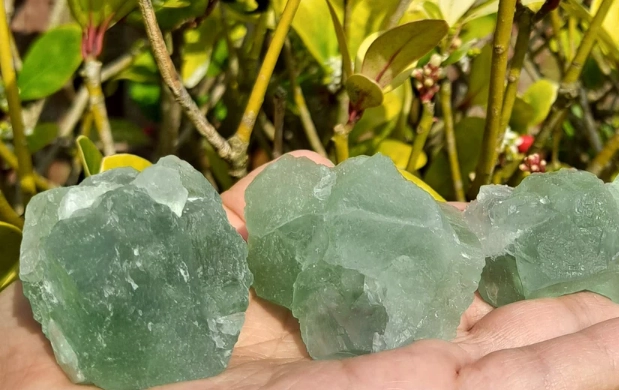
Guide Highlights
- So, What Exactly Is Green Moss Agate?
- The Many Faces of Moss Agate: Types and Colors
- Why Do People Seek Out Green Moss Agate? Meaning and Uses
- The Practical Stuff: Buying, Identifying, and Caring for Your Stone
- Your Questions, Answered (The Real Ones People Ask)
- Going Deeper: The Science and Sources
- Final Thoughts: Is Green Moss Agate Right for You?
You know that feeling when you're walking through a dense, quiet forest after a rain? The air is cool, the ground is soft, and everywhere you look there's that vibrant, almost glowing green moss clinging to stones and tree roots. It's peaceful. It feels alive. That's the exact essence captured inside a piece of green moss agate. It's not just a crystal you buy; it's a tiny, permanent landscape. A pocket-sized piece of the deep woods.
I remember the first time I held a really good specimen. It wasn't in some fancy shop, but at a small, cluttered stall in a weekend market. The seller, an older guy with dirt under his fingernails, just plopped it in my hand. "Look closely," he said. And I did. It was like gazing into a miniature world. Dark green, fern-like patterns suspended in a clear, frosty quartz. Some strands looked like pine needles, others like dense, lush clover. I was hooked. But as I started learning more, I realized there's a whole lot of confusion out there. What makes it different from other agates? Is the green color always real? And what's the deal with all those healing properties people talk about?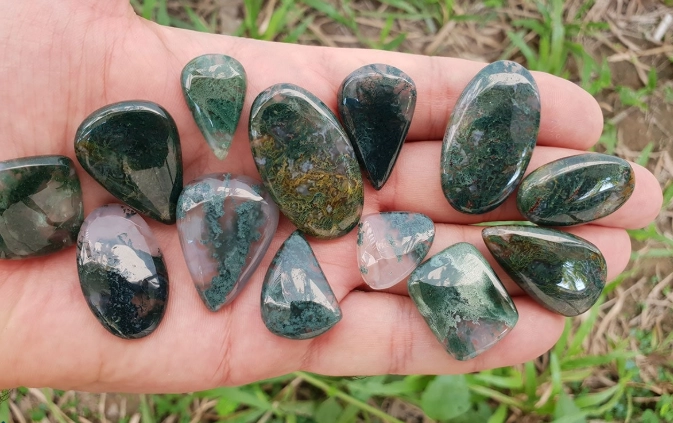
Let's clear the fog. This guide is for anyone who's ever been captivated by that internal garden, whether you're a seasoned collector, a crystal healing enthusiast, or just someone who thinks it's pretty and wants to know more before buying. We're going to dig into everything – how it's formed, how to tell if you're getting the real deal, how to care for it, and what people genuinely use it for. No fluff, just the stuff that actually matters.
So, What Exactly Is Green Moss Agate?
First thing's first: let's bust a common myth. The "moss" isn't actually plant matter. I know, it's disappointing in a way. You're not holding a fossilized fern. That beautiful, organic-looking pattern is made from mineral inclusions, primarily chlorite or hornblende. These are silicate minerals rich in iron and magnesium, which give it that signature green hue.
Think of it like this. Moss agate is a variety of chalcedony, which is itself a type of quartz. It's a semi-precious stone. Now, here's the fascinating part about its formation. It's a story of patience. Imagine mineral-rich water, saturated with silica and those green-forming minerals, slowly seeping into cavities within volcanic or metamorphic rock. Over millennia, the silica deposits layer by layer, trapping the dendritic (tree-like) patterns of the minerals as it goes. The result? A stone with a transparent to translucent chalcedony base, with seemingly floating, landscape-like inclusions. No two patterns are ever the same, which is a big part of its charm. Every piece of green moss agate is a one-of-a-kind natural artwork.
Quick Fact Check: Despite the name "agate," true moss agate often lacks the banding that defines most agates. Geologists might call it a "chalcedony with dendritic inclusions," but in the gem and crystal world, the name "moss agate" has firmly stuck. It's all about those mesmerizing internal landscapes.
Where do you find it? Significant deposits are mined in India, the United States (like Montana and Arizona), Brazil, and Uruguay. The locale can influence the character. Indian moss agate often has very dense, dark green patterns, while some Montana moss agate might have a lighter, more delicate look.
The Many Faces of Moss Agate: Types and Colors
When you search for "green moss agate," you'll see a surprising range. Not all moss is just green, and the base color isn't always crystal clear.
- The Classic Green: This is the poster child. Lush, forest-green or sage-green inclusions in a clear or milky-white chalcedony background. This is what most people imagine.
- Red or Brown Moss Agate: Yep, moss isn't always green! The inclusions here are typically iron oxides (think rust), creating stunning red, orange, or brown dendritic patterns. Sometimes it's called "bloodstone" but that can get confusing with the actual spotted bloodstone.
- Blue Moss Agate: Rarer and quite stunning. The blue tones usually come from minerals like chrysocolla or copper inclusions mixing in.
- Dendritic Agate: This is the broader category. "Dendritic" refers to the tree-like pattern. So, all moss agates are dendritic agates, but not all dendritic agates are green enough to be called "moss." It's a subtle distinction sellers sometimes use.
Then there's the base. It can range from perfectly transparent (allowing you to see every detail of the moss) to a translucent, almost opaque white or gray. Personally, I prefer the translucent ones. They have a softer, more mysterious quality, like looking into a foggy forest. The transparent ones can sometimes look a bit too... obvious? It's a matter of taste.
Why Do People Seek Out Green Moss Agate? Meaning and Uses
This is where things get personal. Beyond its obvious beauty, green moss agate carries a heavy symbolic and metaphysical weight. It's been used for centuries, not just as decoration.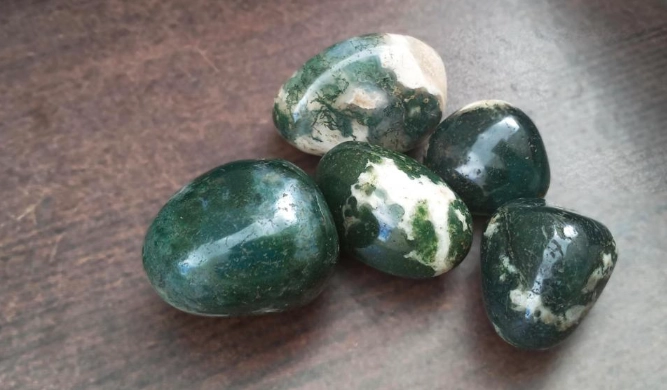
Its core symbolism is deeply tied to nature, growth, and abundance. The color green itself is universally associated with life, renewal, and the heart. Seeing a landscape of growth trapped inside a stone? It's a powerful metaphor for perseverance and finding richness in unexpected places.
In metaphysical and crystal healing practices, green moss agate is a major player. Now, I need to be clear here: these uses are based on traditional beliefs and are not backed by scientific medicine. You should never replace professional medical advice with crystals. That said, understanding these beliefs is part of understanding the stone's cultural footprint.
It's primarily seen as a stone of abundance and prosperity, but not in a "get rich quick" way. More in an "attract growth and new opportunities" sense. Gardeners have historically been fond of it, sometimes placing it in their gardens or carrying it to encourage a good harvest. Makes sense, right?
Emotionally, it's considered incredibly stabilizing and calming. The earthy energy is said to dispel feelings of fear, stress, and insecurity, replacing them with a sense of emotional strength and self-trust. It's often called a stone for "letting go." If you're holding onto old baggage, resentment, or anxiety, working with moss agate (through meditation or simply carrying it) is believed to help release that weight and foster a more positive, grounded mindset.
On a spiritual level, many use it to enhance connection with the natural world and to promote ecological awareness. It's also associated with balancing the heart chakra, encouraging compassion, empathy, and emotional honesty.
How do people actually use it?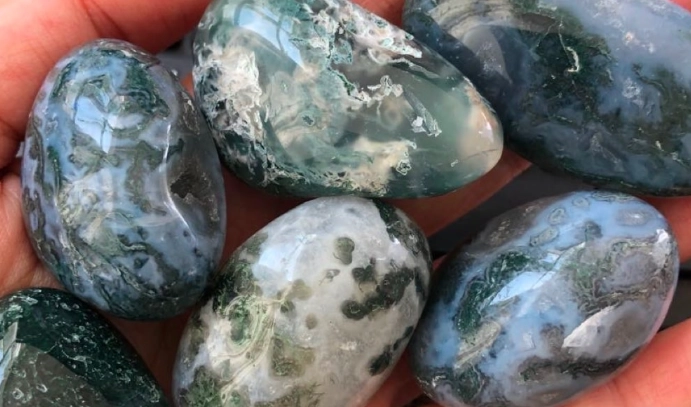
- Jewelry: The most common way. Worn as a pendant, it sits close to the heart. As a ring or bracelet, it's a constant, tactile reminder.
- Meditation: Holding a palm stone or gazing into a sphere during meditation to focus on themes of growth, release, or grounding.
- Placement: Keeping a piece in your home (living room for harmony, home office for abundance) or garden.
- Carrying: A simple tumbled stone in your pocket or purse as a personal talisman.
The Practical Stuff: Buying, Identifying, and Caring for Your Stone
Alright, let's get down to brass tacks. You're interested. How do you make sure you get a good, genuine piece of green moss agate and not a piece of dyed glass or plastic?
How to Spot a Fake or Treated Moss Agate
The market is flooded with fakes, especially online. Here’s a quick, hard-earned checklist from getting burned a couple of times myself.
Red Flags When Buying:
- Unnaturally Vivid, Uniform Green: Nature is rarely that perfect. Real moss agate has variation—different shades of green, browns mixed in, patterns that look organic, not painted.
- Inclusions That Look Painted On: If the "moss" seems to sit on the surface or has a flat, 2D look, be suspicious. Genuine inclusions are inside the stone.
- Dye Residue in Cracks: Examine the stone closely, especially any natural cracks or pits. Dye often pools there, leaving concentrated spots of color.
- Too Perfect, Too Cheap: A large, stunning, perfectly patterned cabochon for $10? That's a major warning sign. Quality, genuine green moss agate has value.
- The "Bleeding" Test (for dyed stones): Soak a cotton swab in acetone (nail polish remover) and gently rub an inconspicuous area. If green comes off on the swab, it's dyed. Be careful, as acetone can damage some stone finishes.
Most genuine moss agate is not dyed, but it is sometimes stabilized with resin, especially if it's a bit porous. This isn't necessarily bad—it makes the stone more durable for jewelry—but a seller should disclose it. Ask: "Is this stone natural and untreated?"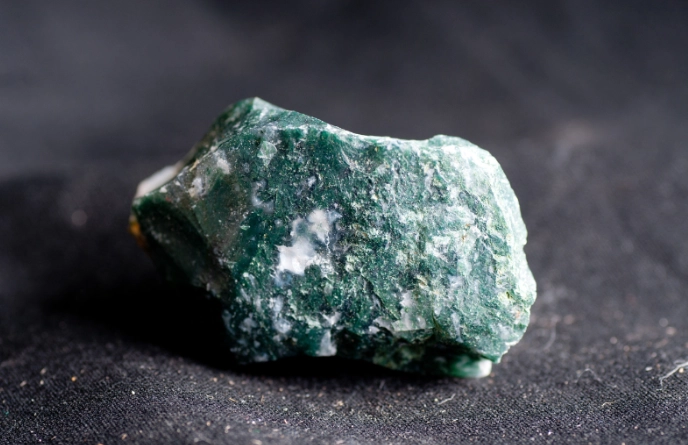
Choosing Your Perfect Piece: What to Look For
Once you're confident it's real, how do you pick? It's subjective, but here are some factors:
| Feature | What to Look For | Why It Matters |
|---|---|---|
| Pattern Clarity & Detail | Sharp, well-defined dendritic formations. Can you see fine, fern-like details? | This is the main artistic appeal. Muddy, blurry patterns are less desirable. |
| Color Contrast | A pleasing contrast between the moss and the base (e.g., dark green on light gray). | Good contrast makes the "landscape" pop and be more visually interesting. |
| Transparency of Base | From clear to opaque. Clear lets you see depth; opaque gives a softer, dreamier look. | Personal preference reigns here. Do you want a window or a misty scene? |
| Cut & Polish | A smooth, well-polished surface without major pits or scratches. The shape should showcase the pattern. | A good polish enhances the stone's luster and protects it. The cut should frame the art inside. |
| Overall "Feel" | Does it speak to you? Does the pattern remind you of something? | This is the most important part for many. You should feel a connection to your chosen piece of green moss agate. |
Caring for Your Green Moss Agate
It's a relatively durable stone (Mohs hardness of 6.5-7), but it's not indestructible. A little care goes a long way.
- Cleaning: Use warm, soapy water and a soft cloth. Avoid harsh chemicals, ultrasonic cleaners, and steamers, as they can damage the polish or any stabilizing resin.
- Storage: Wrap it in a soft cloth or keep it in a fabric-lined box. Don't let it rattle against harder stones like diamonds, sapphires, or even other quartz, which can scratch it.
- Charging/Cleansing (Metaphysical): If you use it for energy work, common methods include placing it on a bed of salt, smudging with sage, or leaving it in moonlight. Avoid prolonged sunlight for charging, as some stones can fade over years of direct exposure.
- Wearing: Take off your moss agate jewelry before heavy physical work, gardening, swimming (chlorine is bad), or applying lotions/perfumes.
I learned the lotion lesson the hard way. A ring I loved developed a dull film that took a gentle polishing to remove. Now it comes off when I wash my hands.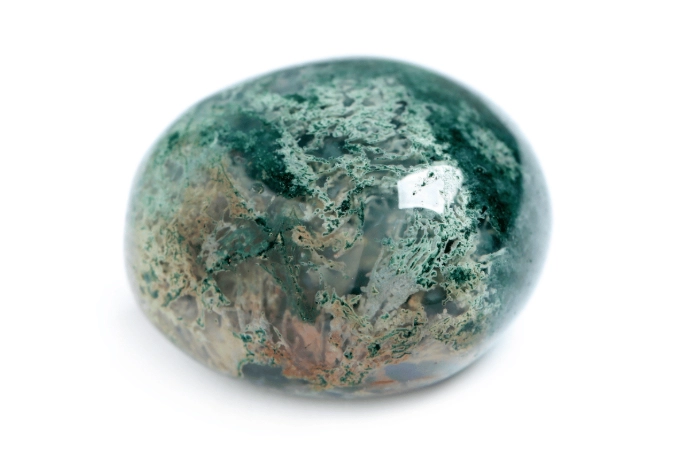
Your Questions, Answered (The Real Ones People Ask)
After talking to dozens of buyers and sellers, here are the questions that keep coming up.
Going Deeper: The Science and Sources
If your curiosity is piqued (like mine was), you might want to learn more from authoritative sources. This isn't just mystical stuff; it's geology.
For a solid, scientific foundation on chalcedony and agate formation, the Gemological Institute of America (GIA) is the gold standard. Their encyclopedia entry on Agate provides a trustworthy, detailed explanation of the mineral family that moss agate belongs to. It helps you understand the "how" from a rigorous perspective.
Similarly, the Mindat.org mineral database is an incredible resource. It's the largest mineral database and locality resource in the world, run by the non-profit Hudson Institute of Mineralogy. You can look up "Moss Agate" on Mindat to see detailed mineralogical data, photos from specific global locations, and understand its formal classification. Seeing the raw, uncut specimens from different mines really drives home the natural variation in green moss agate.
Why link to these? Because anyone can write a blog post about feelings. Backing up the physical facts with links to institutions like GIA and Mindat adds a layer of credibility and trust (that Google loves, and more importantly, that you should demand). It shows the information isn't just made up.
Final Thoughts: Is Green Moss Agate Right for You?
Look, not every crystal is for everyone. Some people prefer the flash of an amethyst or the deep mystery of a lapis lazuli. Green moss agate is quiet. It's subtle. Its beauty is in the details, in the slow reveal. It won't shout at you from across the room.
But if you're someone who finds peace in nature, who values growth and stability, or who simply appreciates the incredible art that geological time can produce, then it might just resonate with you on a deep level. It's a stone that encourages you to look closer, to find complexity and beauty in something that seems simple at first glance.
My advice? Don't just buy the first piece you see online. If you can, visit a shop. Hold a few different pieces. See how the light plays through them. Look for that tiny world inside that speaks to you. Because that's the real magic of green moss agate—it's a personal connection to a moment of nature, captured in stone, waiting for you to discover it.
And remember, whether you're drawn to it for its looks, its symbolic meaning, or its purported energetic properties, the most important thing is that it brings you a sense of calm, focus, or joy. That's a value no one can fake.
Related Articles
Blue Jade: Your Complete Guide to Value, Types & Buying Tips
Unlocking Azurite Crystal Spiritual Meaning: A Complete Guide to Its Powers & Uses
Green Jasper Benefits: Healing Properties and Practical Uses
Unlocking the Heart: The Comprehensive Guide to Rose Quartz Benefits
Lapis Lazuli: The Ultimate Guide to History, Properties & Uses