In This Guide
- What Exactly Is Celestite? Breaking Down the Science
- Where Does Celestite Come From? A Tour of the Major Sources
- The Meaning and Uses of Celestite Crystal: Beyond the Beauty
- How to Identify Real vs. Fake Celestite
- How to Cleanse and Care for Your Celestite
- Your Celestite Crystal Questions, Answered
- Making Your Decision: Is a Celestite Crystal Right for You?
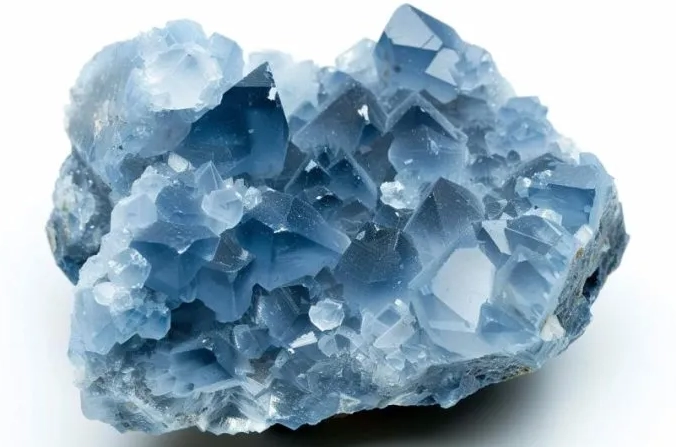
Let's talk about celestite. You've probably seen it – those delicate, sky-blue clusters that look like they've been plucked straight from a dream. Maybe you stumbled upon a picture online, or saw a piece in a friend's home. There's something about it that catches the eye, right? It's not just another pretty rock. For years, I thought it was just a decorative mineral until I held my first piece. The weight was surprising, and the color... it wasn't a flat blue. It had this soft, powdery depth, like the sky just before dusk. That's when I realized there was more to this crystal than meets the eye.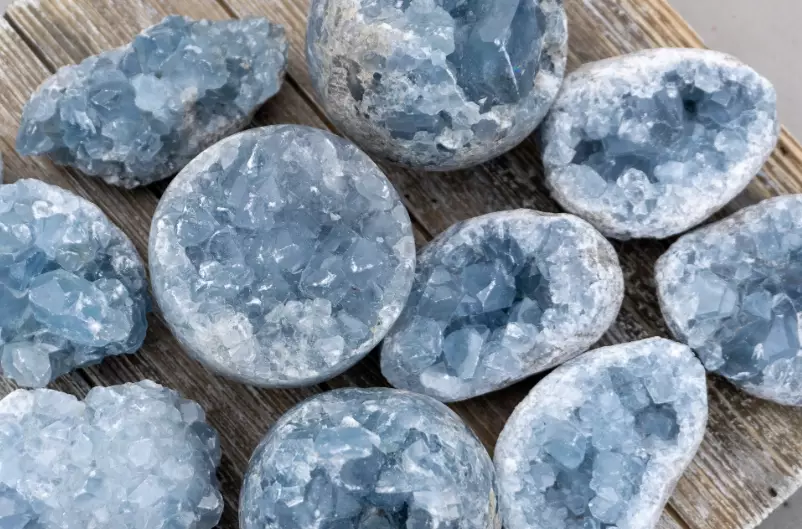
This guide is for anyone who's curious. Whether you're into crystals for their supposed energy, you're a rockhound who loves the geology, or you just want a beautiful object for your shelf, I'm going to walk you through everything. And I mean everything – what it really is, where the hype comes from, how to spot a fake (yes, they exist), and how to actually use it in your daily life. I'll even share a few things I wish someone had told me before I bought my first overpriced specimen.
What Exactly Is Celestite? Breaking Down the Science
Before we get into the mystical stuff, let's ground ourselves in the facts. Knowing what you're actually holding makes the whole experience richer, in my opinion.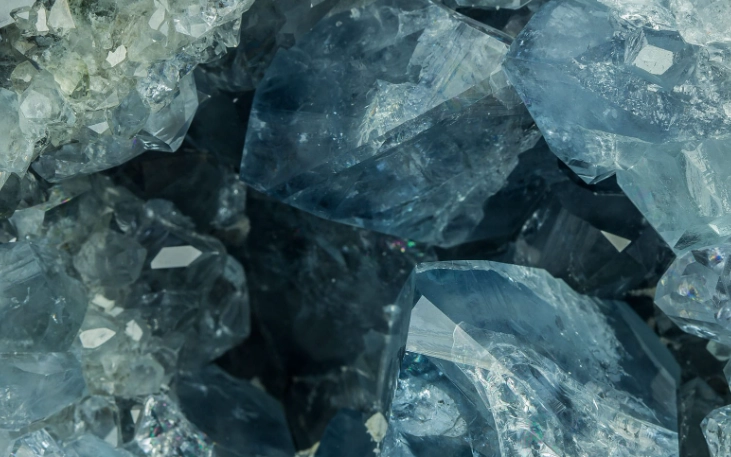
Celestite is a sulfate mineral. Its chemical formula is SrSO4, which means each molecule is made of one strontium atom, one sulfur atom, and four oxygen atoms. Sometimes, barium can substitute for strontium, creating a mix. It forms in sedimentary rock environments, often in cavities within limestone or dolomite, or around sulfur deposits. The crystals grow slowly, layer by layer, which is why they develop those beautiful geometric shapes – typically tabular or prismatic. You'll often find it in clusters of multiple crystals growing together, which is the form most people recognize.
The color is the big draw. That serene blue comes from natural radiation interacting with trace elements in the crystal structure during its formation over millions of years. It's not always blue, though. I've seen pale yellow, white, reddish, and even colorless celestite. The blue variety is just the most sought-after. It has a vitreous to pearly luster, and if you break it (please don't), it has perfect cleavage in one direction, meaning it splits along flat planes.
Here’s a quick, geeky breakdown of its key properties. I find having this info handy makes you a smarter buyer.
| Property | Description | Why It Matters |
|---|---|---|
| Crystal System | Orthorhombic | This dictates its shape—often forming rectangular prisms or tabular crystals. It's why clusters have that structured, geometric look. |
| Hardness (Mohs Scale) | 3 to 3.5 | Very soft. This is crucial! A fingernail is about 2.5, so celestite scratches easily. It tells you how to handle and clean it (gently!). |
| Specific Gravity | ~3.96 | It feels heavier than many common crystals of the same size. A good fake might feel too light. |
| Transparency | Transparent to Translucent | High-quality pieces allow light to pass through with a beautiful glow. Opaque pieces are usually lower grade. |
| Primary Sources | Madagascar, USA (Ohio), Libya, China, Peru, Egypt | Origin affects color, size, and price. Madagascar produces the iconic blue geodes. |
If you want to dive even deeper into the pure mineralogy, resources like Mindat.org's celestite page are fantastic. It's a trusted database used by geologists and collectors worldwide.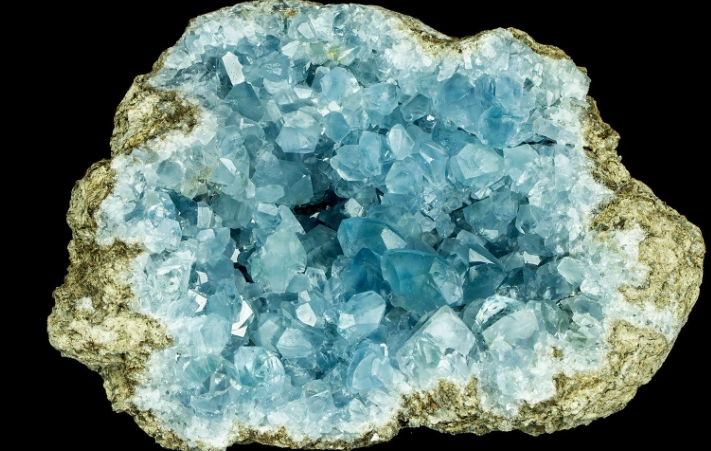
Where Does Celestite Come From? A Tour of the Major Sources
The location where a celestite crystal forms dramatically influences its appearance, size, and even its energy signature according to enthusiasts. Let's look at the big players.
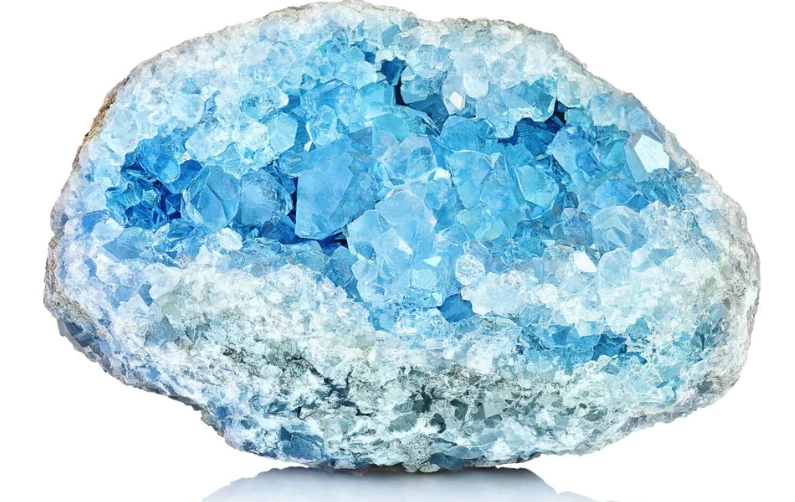
Madagascar: This is the king. When you think of a stunning, deep blue celestite geode, you're probably thinking of material from Madagascar. The crystals from here are often a more vibrant, saturated blue and form in incredible cathedral-like geodes and large clusters. It's the standard for high-quality decorative pieces.
Ohio, USA (Specifically the Put-in-Bay area): This is a classic source with a long history. The celestite here often forms in brown sedimentary rock (dolomite) and the crystals can be large, singly terminated, and range from colorless to a soft blue. They have a different, more rugged aesthetic than the Madagascan material.
Libya and Egypt: Known for producing beautiful, sometimes orange-hued crystals in sedimentary basins. The formations can be quite unique.
China and Peru: These are major commercial sources. You'll find a lot of the smaller tumbles, spheres, and carvings coming from here. The color can be paler, and the material is sometimes more fibrous. It's more affordable, which is great for someone just starting out.
Why does origin matter? For a collector, provenance is everything. For someone using it for spiritual work, some believe the specific geological and energetic environment of the location imprints on the stone. And for a decorator, the color and form from Madagascar might simply fit your color scheme better than the Ohio material.
The Meaning and Uses of Celestite Crystal: Beyond the Beauty
This is where things get interesting, and honestly, a bit divisive. The metaphysical world has embraced celestite wholeheartedly. I'll lay out the common beliefs, but I'll also tell you where I think the line between poetic metaphor and actionable use gets blurry.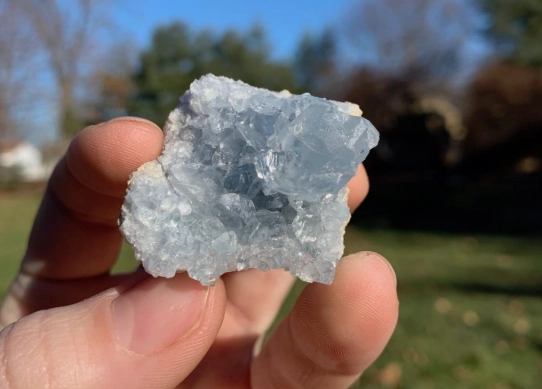
Spiritual and Energetic Properties (The Believed Benefits)
Across crystal healing books, blogs, and communities, celestite is consistently called a high-vibration stone. It's associated with the throat chakra (communication) and the third eye chakra (intuition), but most strongly with the crown chakra (connection to the divine or higher self). People don't just buy it because it's blue; they buy it for what it's supposed to do.
The top three uses people talk about are:
- Promoting Peace and Calm: This is its number one advertised benefit. The gentle blue color is naturally soothing. People use it to quiet a racing mind, ease anxiety, and create a peaceful atmosphere in a room. I can vouch for this one anecdotally – having a cluster on my desk does seem to soften the edge of a stressful workday, even if it's just a visual reminder to breathe.
- Enhancing Communication and Clairvoyance: Linked to the throat and third eye, it's said to help you speak your truth clearly and calmly, and to boost intuitive dreams or meditative insights. Some keep it by their bed or hold it during meditation with this intent.
- Connecting to Angelic or Higher Realms: This is where the "celestial" name really comes into play. It's often dubbed the "Stone of the Angels" and is used in practices aimed at connecting with spirit guides or accessing higher wisdom. Whether you believe in that literally or see it as a tool for accessing your own inner wisdom is a personal choice.
Practical, Everyday Uses for Celestite
Forget the mysticism for a second. How can you actually use this thing in your real life? Here are ways that don't require any special belief system.
- The Decorative Powerhouse: This is its superpower. A medium or large celestite cluster is a stunning natural sculpture. It works in almost any decor style – modern, boho, minimalist, traditional. It adds a focal point, a touch of nature, and a serene color. I've used a cluster as a bookend, and it looked a million times better than the cheap metal ones I had before.
- A Meditation Anchor: Holding a smooth celestite palm stone or just gazing at a cluster can give your mind a single, calming point of focus during meditation. The tactile sensation and visual beauty help pull you away from distracting thoughts.
- A Sleep Aid (Indirectly): Place a small piece on your nightstand. Not because it emits magic sleepy waves, but because creating a tranquil, intentional bedtime environment signals to your brain that it's time to wind down. The soft blue is night-light friendly.
- A Conversation Starter: Seriously. Guests always notice mine. It leads to talks about geology, travel, or personal beliefs. It's a piece with a story.
How to Identify Real vs. Fake Celestite
This is a big one, especially if you're shopping online. As celestite's popularity has soared, so have the fakes and misrepresentations. I've been burned before, so let me save you the trouble.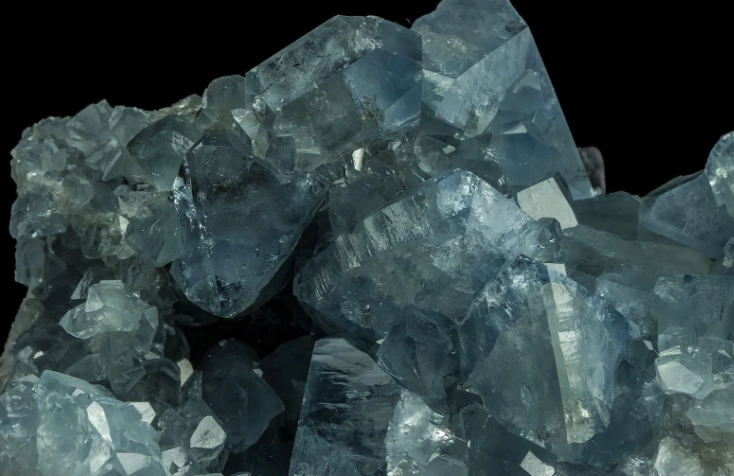
The Usual Suspects:
- Dyed Howlite or Magnesite: This is the most common fake. Howlite is a white stone with a gray web-like pattern. It's porous and takes dye easily. You'll see it dyed a perfect, uniform turquoise or blue and sold as "celestite." The giveaway? The color is too even, and you can often see the dark gray webbing underneath the dye, especially in crevices or on the backside.
- Resin or Glass: Mass-produced decorative items, especially small figurines or cheap spheres, might be made of colored resin or glass. They feel wrong—too light, too warm, or perfectly uniform. Tap a real crystal with your fingernail; it has a denser, sharper click than resin.
- Mislabeled Celestine: Okay, this isn't a fake. "Celestite" and "Celestine" are the same mineral. Sellers might use one name or the other. No issue there.
Your At-Home Detective Kit:
- The Scratch Test (Carefully!): Remember the hardness of 3.5. A real celestite crystal will be easily scratched by a steel nail (hardness ~5.5) or a copper coin (~3.5). Do this in an inconspicuous spot. If it seems impossibly hard, be suspicious.
- The Weight Test: Pick it up. Does it feel appropriately heavy for its size? Resin and plastic are notably lighter.
- The Visual Inspection: Look for natural imperfections, color zoning (variations in the blue), and crystalline structure. Real crystals aren't perfectly uniform. Are the crystal terminations (points) natural and geometric, or do they look molded?
- The Price Check: A giant, deep blue, pristine celestite geode for $29.99? That's a major red flag. Real, high-quality pieces have a substantial cost due to mining, shipping, and their natural rarity.
When in doubt, buy from reputable rock and mineral dealers who provide the locality information. They stake their reputation on accurate labeling.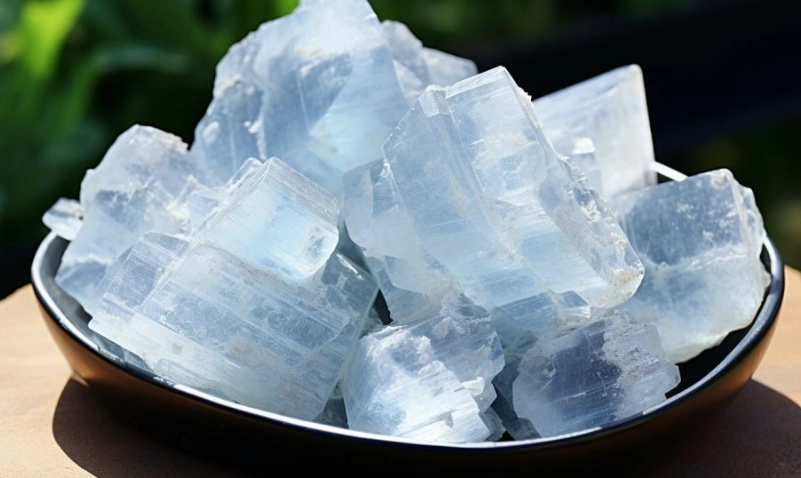
How to Cleanse and Care for Your Celestite
This is non-negotiable if you want your piece to last. Celestite is delicate. The wrong cleaning method can ruin it in seconds.
What NOT to Do:
- DO NOT use water, especially not running water. It's slightly water-soluble. Prolonged exposure can dissolve the surface, causing pitting and cloudiness. A quick damp cloth dab is the absolute maximum.
- DO NOT use salt. Salt is abrasive and can scratch it, and if damp, can create a corrosive solution.
- DO NOT leave it in direct sunlight for extended periods. Like many colored minerals, the beautiful blue can fade over time with intense UV exposure. A sunny windowsill is a risky long-term home.
- DO NOT knock it around. It cleaves and breaks easily.
Safe and Effective Care Methods:
| Method | How-To | Best For | My Opinion |
|---|---|---|---|
| Dry Brushing | Use a soft, clean makeup brush or artist's brush to gently dust the crystals. | Regular maintenance of clusters and geodes. | The best, safest physical cleaning method. Period. |
| Smudging | Pass the stone through the smoke of burning sage, palo santo, or incense. | Energetic cleansing per spiritual traditions. | Effective for the purpose, and perfectly safe for the stone. |
| Sound Cleansing | Use a singing bowl, bell, or tuning fork near the crystal. | Energetic cleansing; good for fragile specimens. | A great, zero-contact option if you're into the practice. |
| Moonlight Bath | Place it in a spot where it will receive moonlight (not necessarily direct). | A gentle energetic recharge, popular in crystal lore. | My go-to. It feels gentle and aligns with the stone's "celestial" vibe. |
| Other Crystals | Place it on or near a large selenite plate or in a bowl of clear quartz points. | Passive, continuous energetic cleansing. | Low effort, and selenite is a popular, trusted choice in the community. |
Your Celestite Crystal Questions, Answered
Making Your Decision: Is a Celestite Crystal Right for You?
So, after all this, should you get one?
Consider a celestite crystal if:
- You are drawn to its aesthetic and want a unique natural art piece.
- You're looking for a tangible tool to support mindfulness, meditation, or creating a calm environment.
- You're a beginning or seasoned mineral collector attracted to sulfate minerals or blue crystals.
- You resonate with its symbolic associations with peace, clarity, and higher thought.
You might want to think twice if:
- You need a durable, wearable stone for daily jewelry.
- You're looking for a guaranteed, scientific medical treatment.
- You're not prepared to care for a delicate object (e.g., you have young children or very active pets).
- You're on a very tight budget, as large, high-quality specimens can be expensive.
My final piece of advice? Don't get swept up in the hype. See it for what it is: a fascinating, beautiful product of the earth with a rich layer of human storytelling and meaning projected onto it. Whether you value it for its geology, its symbolism, or simply its ability to make you stop and stare for a moment, a genuine celestite crystal is a special thing to have around.
Start small. Get a genuine tumbled stone or a small cluster from a reputable seller. Live with it. See how it makes you feel. That's the only review that really matters.
Related Articles

SiC and GaN, the battle has just begun.
Bloodstone Crystal Guide: Healing Properties, Uses, and Buying Tips
Pink Quartz Properties: Healing, Meanings & How to Tell It's Real
Black Kyanite: Ultimate Guide for Protection & Grounding
Moss Agate Benefits: A Complete Guide to Its Healing & Practical Uses