Quick Guide
- First, Let's Find Antares in Your Sky
- The Main Attraction: Antares A, the Red Supergiant
- The Hidden Gem: Antares B, The Hot Companion
- The Life, Death, and Future of Antares A and B
- Observing Antares A and B: A Practical Guide
- Common Questions About Antares A and B (The Stuff You Actually Search For)
- Why Antares A and B Matter (Beyond Just Being Pretty)
Look up on a summer night, find the distinctive hook of Scorpius, and your eye will almost certainly be drawn to a single, unmistakable point of fiery red light. That's Antares. For centuries, it's been the rival of Mars (Ares), hence its name 'Anti-Ares.' But here's the thing most star charts and casual guides don't tell you upfront: that brilliant red dot isn't a single star. It's a dance of two. It's the Antares A and B system, and the story of this binary pair is way more interesting, and complex, than just a pretty red light.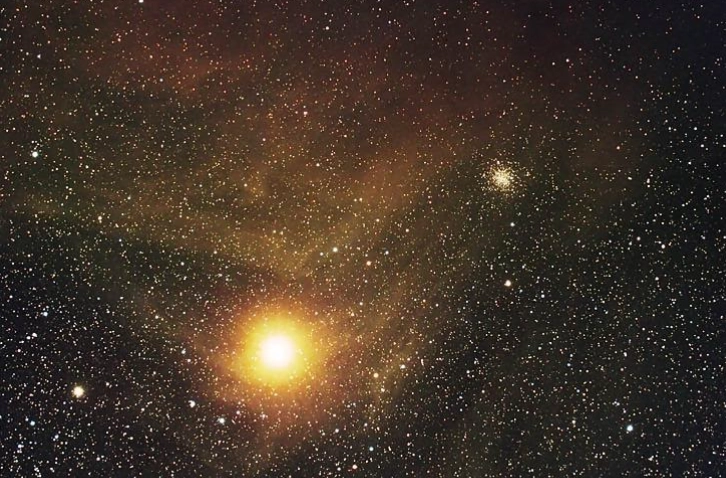
I remember the first time I pointed a decent telescope at it, expecting just a bloated red disc. Finding that tiny, steadfast sapphire pinpoint of Antares B hiding in the glare was a genuine 'aha' moment. It completely changed how I saw that part of the sky. This isn't just one star living out its final act; it's a cosmic partnership with a ticking clock, and one member is utterly dominating the show. Let's pull back the curtain on both of them.
First, Let's Find Antares in Your Sky
Before we dive into the nuclear physics, let's be practical. You want to see this thing, right? Good. It's one of the easiest bright stars to locate.
For those in the Northern Hemisphere, look south on summer evenings. Find the big, obvious 'teapot' shape of Sagittarius. Just to the left (east) of it, you'll see a long, J-shaped curl of stars that looks like a scorpion. The bright red star at the heart of the scorpion's body is Antares A and B. Seriously, its color is obvious even from light-polluted suburbs—it has a distinct orange-red hue compared to the white or blue-white stars around it. In the Southern Hemisphere, it's even more spectacular, soaring high overhead.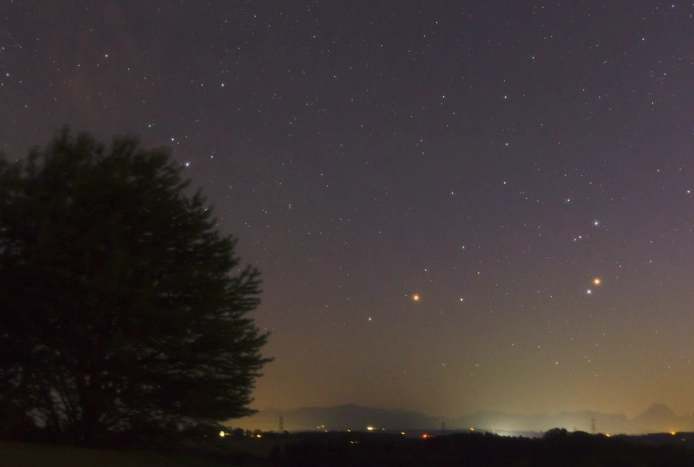
Now, seeing Antares B with your own eyes? That's the real challenge. Antares A is so mind-bogglingly bright and large that its glare swamps the companion. You need a night of very steady air (good 'seeing'), a telescope with at least 4-6 inches of aperture, and you need to wait for the moment when Antares B is at its greatest apparent separation from A in its orbit. Even then, it's a test of patience and optics. That moment of spotting it, though? Worth the hassle.
The Main Attraction: Antares A, the Red Supergiant
Let's talk about the star that gets all the attention. Calling Antares A 'big' is like calling the Pacific Ocean 'damp.' It fails to capture the scale.
If you plopped Antares A where our Sun is, its surface would extend out past the orbit of Mars. Let that sink in. Mercury, Venus, Earth, and Mars would all be inside the star. It's a cosmic vacuum cleaner that never got turned off, ballooning outward as it burns through the final fuels in its core. Its diameter is roughly 700 times that of our Sun. The numbers are so large they become meaningless without a comparison.
| Characteristic | Antares A | Our Sun | What It Means |
|---|---|---|---|
| Diameter | ~700 solar diameters | 1 solar diameter | If the Sun were a marble, Antares A would be a sphere taller than the Empire State Building. |
| Mass | ~12 solar masses | 1 solar mass | It started life much heavier, but has lost huge amounts of mass through its stellar wind. |
| Luminosity | ~75,000 x Sun | 1 x Sun | It pumps out most of its energy in the infrared. It's actually brighter than it looks! |
| Surface Temperature | ~3,500 K (cool) | ~5,800 K | The cooler temperature is why it glows red. It's a cosmic radiator. |
| ~550 light-years | 8 light-minutes | It's relatively nearby in galactic terms, which is why we see it so well. |
The most fascinating and messy thing about Antares A is its atmosphere. It's not a neat, smooth boundary. This star is literally shedding itself into space. Observations, including fantastic ones from the European Southern Observatory's Very Large Telescope, have mapped huge plumes and convection cells on its surface. It's a bubbling, seething cauldron. The stellar wind blowing off it is immense, carrying away about one Earth mass of material every week or so. That lost material is what forms the vast, faint nebula that surrounds the entire Antares A and B system, visible in deep-sky images.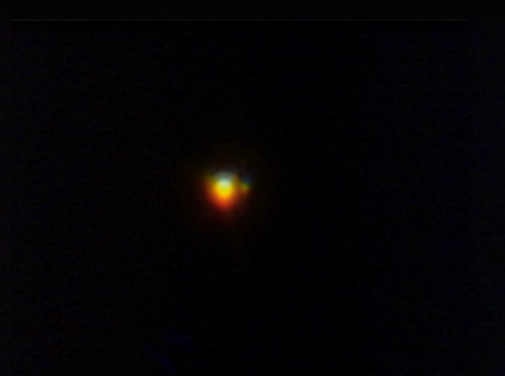
Honestly, I find Antares more mesmerizing than Betelgeuse, its rival in Orion. Betelgeuse is the diva that might explode tomorrow (though it probably won't). Antares feels more like a grand, slow-motion spectacle of inevitable decay. It's less unpredictable, more stately in its final act.
The Hidden Gem: Antares B, The Hot Companion
This is where most casual astronomy articles stop. They talk about the big red star and maybe mention a companion in passing. But Antares B is a fascinating character in its own right, and it's critical to the whole story of the system.
Discovered visually in 1846, Antares B is a hot, main-sequence star of spectral type B2.5V. In human terms: while Antares A is a cool, bloated retiree, Antares B is a lean, hot, blue-white star in the prime of its life, still burning hydrogen efficiently in its core.
Antares B at a Glance:
- Temperature: Around 18,500 K (scorching hot, hence the blue-white color).
- Luminosity: Roughly 2,750 times that of the Sun. Sounds like a lot, but it's utterly dwarfed by Antares A's 75,000.
- Mass: About 7-8 times the mass of the Sun. A heavyweight star by normal standards, but less than Antares A's original mass.
- The Kicker: It orbits Antares A at a distance of about 550 astronomical units (AU). That's 550 times the Earth-Sun distance. For context, Pluto is about 40 AU out on average. This is a wide binary system.
Think about that environment for a second. Antares B is orbiting through the extended, ragged outer atmosphere and the intense stellar wind of its gigantic partner. It's like flying a jet through a slow-moving sandstorm. The companion is undoubtedly plowing through and interacting with the material Antares A is losing. Some theories suggest this interaction might even shape the outflow from the primary star.
Visually, the contrast is what gets you. Through the eyepiece, once you've managed to steady the view and block A's glare (a good occulting bar or high magnification helps), B pops into view as a stunning, steady blue-white point. The color difference against the deep red of A is probably the most dramatic color contrast in the entire night sky for double stars. It's not subtle. It's a jewel.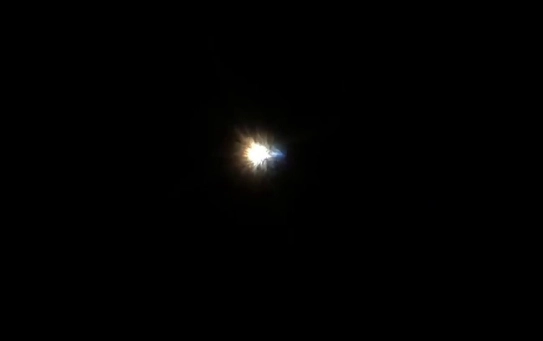
The Life, Death, and Future of Antares A and B
This is the big question, isn't it? What happens next? The story of Antares A and B is a story with a known, violent ending, but an uncertain timeline.
Antares A is a red supergiant. It has left the main sequence and is now fusing heavier and heavier elements in its core in shells, like a layered onion. Right now, it's likely fusing helium into carbon and oxygen. This phase is unstable and relatively short-lived on cosmic timescales—maybe only a few hundred thousand to a million years more.
The end will come when its core finally accumulates enough iron. Iron is a nuclear dead-end; fusing it consumes energy instead of releasing it. At that moment, the core will catastrophically collapse in less than a second, then rebound in a titanic supernova explosion.
What Will That Supernova Look Like From Earth?
This is the fun part to imagine. At 550 light-years away, it will be a spectacular event, but not a life-ending one. It won't be another Eta Carinae, which is much farther away.
- Brightness: It will likely outshine everything in the night sky except the Moon. It could be visible in broad daylight for weeks. Imagine a new, brilliant white 'star' in Scorpius, outshining Venus and everything else.
- Duration: It will peak quickly, then fade over several months. The expanding remnant will become a target for astronomers for centuries.
- Impact: Zero danger to Earth. The cosmic rays and radiation will be negligible at this distance. The main impact will be on astronomers' schedules—every telescope on and around Earth will be pointed at it.
And here's the critical part most sources gloss over: What happens to Antares B?
When Antares A goes supernova, the binary bond will be violently broken. The explosion will likely eject Antares B from the system, sending it careening through the galaxy as a runaway star. It will keep its blue-white color, but it will be a star without a home, a survivor of a cosmic catastrophe. It might even get a speed boost from the explosion. Talk about a dramatic change of scenery.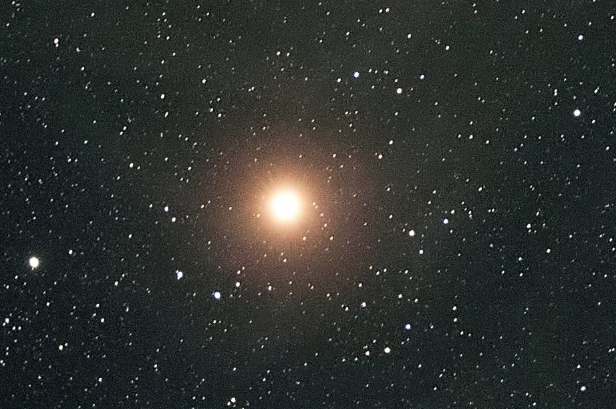
Observing Antares A and B: A Practical Guide
Let's get back to the telescope. You want to split this famous pair. Here’s a no-nonsense breakdown of what works and what doesn't, based on my own frustrating and rewarding nights trying.
The Challenge: The problem is never the separation. At its widest, Antares B is about 2.5 to 3 arcseconds away from the primary. A decent scope can split much closer doubles. The problem is the contrast. Antares A is so bright and turbulent that it creates a boiling, shimmering aureole of light that drowns out the faint companion.
What You Need:
- Aperture: A minimum of 4 inches (100mm), but 6-8 inches is much better. More light-gathering helps, but more importantly, larger aperture usually means better resolution to pierce the glare.
- Steady Air (Good 'Seeing'): This is non-negotiable. If stars are twinkling violently to the naked eye, forget it. You need a night where the stars look like steady pinpoints. Nights after a cold front passes can be good.
- High Magnification: Don't be shy. Crank it up to 150x, 200x, or even 250x if the seeing allows. This spreads out the glare of Antares A, making the tiny dark gap where B hides more apparent.
- Timing: Check its orbital position. Use astronomy software or apps to see when Antares B is near its greatest elongation (farthest point in its orbit from A). This gives you the best shot.
- Patience: Spend at least 15-20 minutes at the eyepiece. Let your eye adapt, wait for those fleeting moments of perfect atmospheric steadiness. It will pop in and out of view. This is normal.
A personal tip: I've had my best views not from a dark sky site, but from my suburban backyard on a night of exceptional seeing. The dark sky helps with fainter objects, but for beating glare, steady air is your best friend.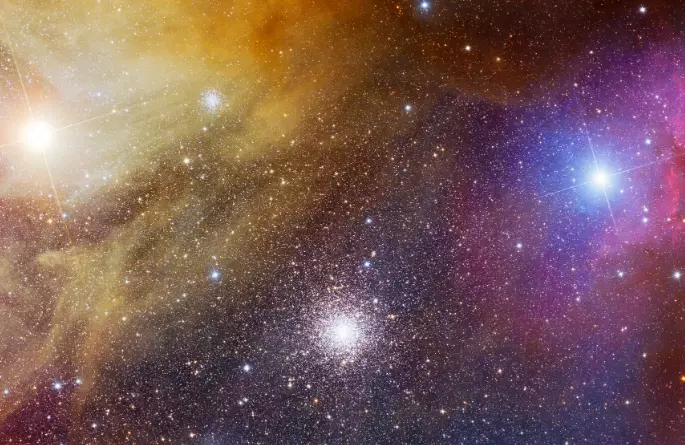
Common Questions About Antares A and B (The Stuff You Actually Search For)
Let's tackle the real queries people type into Google.
It's a tight race, and measurements are tricky because these stars have fuzzy, shifting atmospheres. Recent interferometry studies suggest Betelgeuse might have a slightly larger angular diameter, but Antares is possibly physically larger because it might be slightly farther away. Honestly, they're in the same league. Calling one definitively bigger is splitting hairs on a cosmic scale. Betelgeuse gets more press for its dimming episodes, but Antares A and B as a system is arguably more complex.

Almost certainly no. The glare from Antares A is too overwhelming for the limited resolution and magnification of binoculars. This is a telescope target.
Antares A is a deep orange-red, like a burning ember. Antares B is a vivid blue-white. This stunning contrast is why it's such a prized observation. The combined light to our naked eye is, of course, dominated by the red.
The distance to the Antares A and B system is about 550 light-years, with an uncertainty of maybe ±50 light-years. This is based on parallax measurements from the ESA's Gaia mission, which has revolutionized our knowledge of stellar distances. It's close enough to study in detail, but safely distant.
No. Not at all. You can sleep soundly. At 550 light-years, it will be a harmless celestial firework. A supernova needs to be within about 50 light-years to pose any real threat to Earth's biosphere.
Why Antares A and B Matter (Beyond Just Being Pretty)
It's easy to see this as just another bright star. But for astronomers, the Antares A and B system is a critical natural laboratory.
First, it's one of the nearest and best-resolved red supergiants. Studying its turbulent surface, its mass loss, and its extended atmosphere teaches us about the final stages of massive stellar evolution. This isn't just about Antares; it's about understanding what will happen to thousands of other similar stars in our galaxy. Missions like NASA's Solar Dynamics Observatory, while focused on our Sun, help develop the techniques used to understand stellar atmospheres elsewhere.
Second, the binary nature adds a whole layer of complexity. How does the companion influence the stellar wind? Does it accrete any of the lost material? Observing how Antares B behaves as it orbits through this circumstellar material gives us clues about binary interactions, which are more common than single-star systems.
Finally, it's a gateway object. For many, spotting that blue pinpoint next to the red giant is their first real foray into serious observational astronomy. It turns an abstract concept—a binary star—into a tangible, beautiful sight. It connects the dots between what we see and the underlying science in a very direct way.
So next time you're out on a summer night, take a moment to find that red beacon in Scorpius. Remember it's not alone. It's part of a pair, a system, a story of scale, contrast, and impending transformation. Knowing that the brilliant Antares is actually Antares A and B makes that familiar point of light feel entirely new, and a whole lot more interesting.
Related Articles

Malachite Safety Guide: Who Should Avoid It & Why

Blue Fluorite Healing Properties: The Complete Guide & FAQ
Green Jasper Benefits: Healing Properties and Practical Uses

What Are Antares and Betelgeuse? A Guide to the Giant Red Stars
