- What Exactly Is Azurite Mineral?
- Key Characteristics & Physical Properties (The Nitty-Gritty)
- Is Azurite Valuable? Breaking Down the Price Tags
- How to Identify Genuine Azurite (And Spot the Fakes)
- Where in the World is Azurite Found?
- Caring for Your Azurite: It's Not a Tank
- Frequently Asked Questions (FAQ)
- Wrapping It Up
Let's talk about Azurite. You've probably seen pictures of those stunning, deep blue clusters that look like something from another planet. I remember the first time I held a piece in my hand at a gem show—it was smaller than I expected, but the color just blew me away. It wasn't just blue; it was this intense, almost electric azure that seemed to glow from within. But here's the thing: there's a lot more to azurite mineral than just a pretty face. A lot of what you read online skims the surface, repeating the same basic facts. I wanted to dig deeper (pun intended) and give you the real, practical information you actually need, whether you're a collector, a crystal enthusiast, or just someone who got curious after seeing a photo.
Quick Reality Check: Azurite is a copper carbonate mineral. That's the dry, textbook definition. In practice, it means it's soft, it can be fragile, and that gorgeous color comes with some... maintenance requirements. We'll get into all of that.
What Exactly Is Azurite Mineral?
At its core, azurite is a secondary mineral. That means it doesn't form directly from molten rock. Instead, it's born from the weathering and chemical transformation of primary copper ores. When water and carbon dioxide interact with copper deposits over millions of years, you get these breathtaking blue crystals. It's nature's alchemy at its finest.
The name gives it away. "Azurite" comes from the Persian word "lazhward," which means blue. It's been known and used for thousands of years. Ancient Egyptians ground it up for blue pigment. Medieval artists prized it for illuminated manuscripts. But the mineral itself, in its raw, crystalline form, is a relatively modern obsession for collectors.
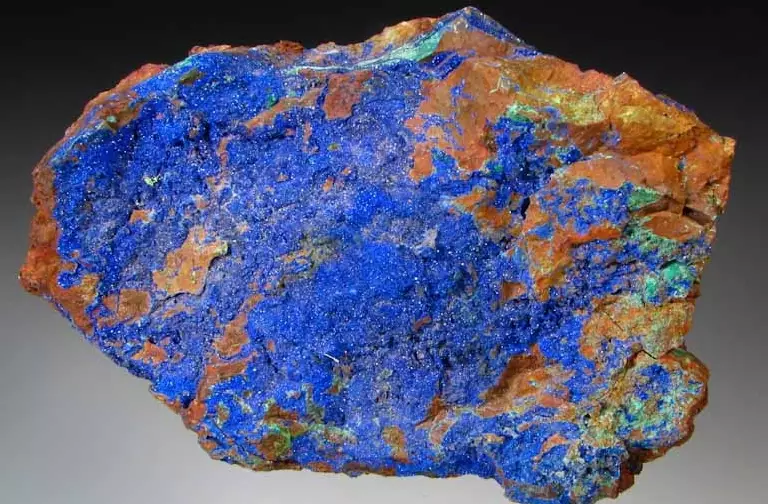
I think one of the coolest things about azurite is how it almost never shows up alone. It's almost always hanging out with its green cousin, malachite (another copper carbonate). You'll find them in stunning combinations—patches of deep blue right next to bands of vibrant green. This duo is so common it has its own name: Azurite-Malachite. Sometimes, you even get a third guest: chrysocolla, adding a turquoise blue to the mix. This natural partnership is a huge part of what makes azurite mineral specimens so sought after.
Key Characteristics & Physical Properties (The Nitty-Gritty)
If you're going to identify, buy, or collect azurite, you need to know its fingerprint. Here's the breakdown, beyond the basic "blue and pretty."
Color & Appearance
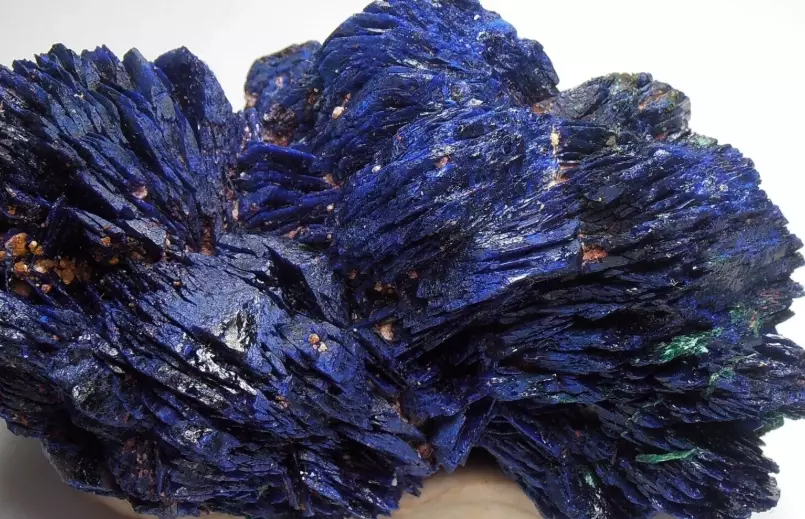
The color is the star. It's described as azure-blue, royal blue, or sometimes a very dark, almost blackish-blue. The finer the crystals, the more intense and vibrant the blue tends to be. Massive, chunkier pieces can look darker. One thing photos rarely capture well is the vitreous (glassy) to sub-adamantine luster on crystal faces. When the light hits it just right, it can look wet or even slightly metallic. It's stunning.
You get it in a few main forms:
- Prismatic Crystals: These are the showstoppers. Sharp, defined, often in clusters or radiating sprays. Think of the famous specimens from the Tsumeb Mine in Namibia (Mindat is an absolute authority for mineral localities, by the way).
- Botryoidal or Nodular: Shaped like a bunch of grapes. This form often appears in the massive material and is super common in the American Southwest.
- Massive: No distinct crystals, just solid blue rock. This is what was historically used as pigment.
- Stalactitic: Like an icicle, but blue. Less common, but incredible when found.
The Hard Truth About Hardness & Durability
This is the part that isn't as fun. On the Mohs scale of mineral hardness, azurite only scores a 3.5 to 4. What does that mean in real life?
Let's be blunt: A 3.5-4 is soft. A steel knife (about 5.5) can scratch it. Your fingernail is about 2.5, so it won't scratch it, but pressure from a fingernail on a delicate crystal cluster can still damage it. This is the number one reason why azurite jewelry is rare and requires extreme care. That gorgeous pendant? It's going to get scratched if you're not careful. I have to admit, the first time I handled a good piece of azurite, I was a bit disappointed by how easily it could scratch. It forced me to change how I thought about "tough" minerals.
It's also brittle. It has perfect cleavage in one direction and conchoidal fracture in others. In plain English: it can break along flat planes or shatter into shell-like pieces. Not a mineral for rough handling.
Density and Other Quirks
It's denser than it looks. Its specific gravity is 3.77, which is pretty heavy for a non-metallic mineral. Pick up a good-sized chunk, and you'll feel the heft. This is actually a useful identification trick against some fakes (like dyed plastic or resin), which feel suspiciously light.
It effervesces (fizzes) in cold, dilute hydrochloric acid. Don't try this at home on a specimen you care about! It's a classic test in a geology lab because the carbonate part of its chemical formula reacts with the acid. This is a dead giveaway that separates it from other blue minerals like lapis lazuli or sodalite.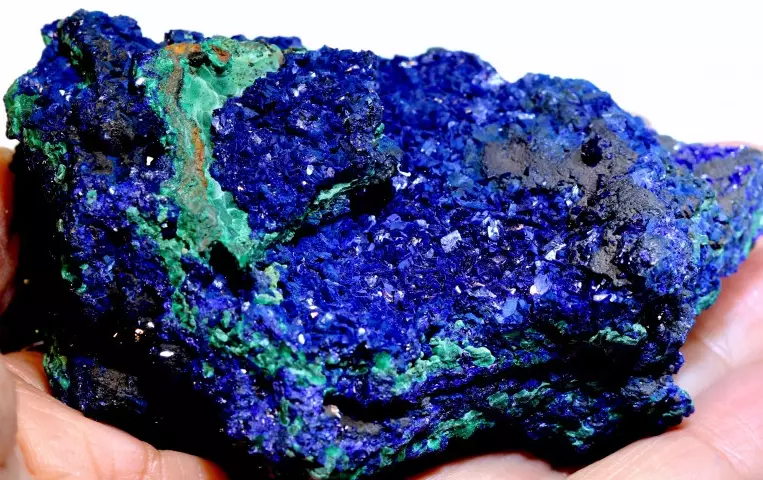
| Property | Details for Azurite | Why It Matters to You |
|---|---|---|
| Chemical Formula | Cu3(CO3)2(OH)2 | It's a copper carbonate. Explains the color and reactivity. |
| Crystal System | Monoclinic | Crystals are often tabular or prismatic. Affects the shape you see. |
| Color | Azure-blue to very dark blue | The main attraction. Can fade to malachite green over time. |
| Mohs Hardness | 3.5 - 4 | Very soft. Scratches easily. Not suitable for everyday wear jewelry. |
| Specific Gravity | ~3.77 | Feels heavy for its size. A good test for light-weight fakes. |
| Luster | Vitreous to sub-adamantine | Can look glassy or slightly diamond-like on crystals. |
| Streak | Light Blue | When scratched on porcelain, it leaves a pale blue powder. |
| Common Associations | Malachite, Chrysocolla, Cuprite, Limonite | Rarely found alone. The combo with malachite is iconic. |
Is Azurite Valuable? Breaking Down the Price Tags
This is the million-dollar question, right? The value of an azurite mineral specimen is all over the map. You can find small, massive chunks for $10, and you can find museum-quality crystal clusters that sell for tens of thousands. It's not like diamonds with a strict carat-price chart. Value depends on a mix of factors.
The Top 3 Value Drivers for Azurite:
- Aesthetics & Color: Is the color a vibrant, intense royal blue? Dull, pale, or grayish-blue pieces are worth less. Dramatic contrast with green malachite adds huge value.
- Crystal Form & Size: Well-formed, undamaged crystals trump massive form. A thumbnail-sized specimen (fits in a 1-inch cube) with perfect crystals can be worth more than a fist-sized lump of massive material. Large, aesthetic clusters are the holy grail.
- Locality: Where it's from matters. A lot. Specimens from classic, famous, or depleted mines command premium prices. Think Tsumeb (Namibia), Touissit (Morocco), or the Copper Queen Mine in Arizona.
Let's talk about jewelry. You'll see azurite beads and cabochons. Frankly, most of it is stabilized or treated in some way. Pure, untreated azurite is too soft and fragile for daily wear. Be wary of prices that seem too good to be true for a "solid azurite" ring. It might be azurite-malachite composite (bits glued together), or worse, dyed howlite or magnesite. A genuine, high-quality azurite cabochon set in protective jewelry will cost you.
For investment? That's tricky. Mineral collecting can be a great passion, but as a pure financial investment, it's niche and illiquid. Buy it because you love it, not because you think it'll pay for your retirement.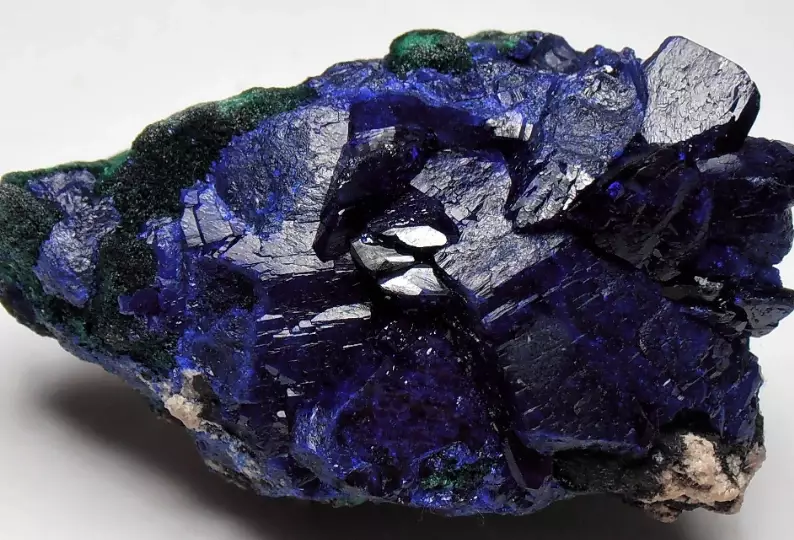
My two cents: I once overpaid for a "rare" azurite specimen online. The photos were amazing, but in person, the crystals were dull and partly coated in a weird crust. I learned the hard way that buying from reputable dealers with good return policies is non-negotiable. The Mineralogical Association and established shows are your friends.
How to Identify Genuine Azurite (And Spot the Fakes)
Frankly, a lot of the "Azurite" being sold online, especially on some social media platforms, is dyed howlite or even just resin. It's frustrating. Here’s a practical guide to separating the real azurite mineral from the imposters.
Real Azurite Behavior:
- The Weight Test: It should feel surprisingly heavy (dense) for its size.
- The Temperature Test: Real stone feels cool to the touch and takes a while to warm up in your hand. Plastic feels warm quickly.
- The Look: Color is often uneven in natural specimens. You might see zoning (darker and lighter blue bands) or patches of green malachite. Perfect, uniform, bright blue is a red flag.
- The Scratch Test (Carefully!): On an inconspicuous spot, see if a steel pin or knife (hardness 5.5) scratches it easily. It should. If it doesn't scratch, it's not azurite. Only do this if you own the specimen and accept the risk!
Common Fakes & Red Flags:
- Dyed Howlite/Magnesite: The dye collects in the cracks, giving a web-like or spider-web pattern of dark blue lines. Real azurite doesn't look like that.
- Blue Plastic or Resin: Lightweight, warm to the touch, may have bubbles or mold marks. Scratches with a pin will peel or curl, not make a powder.
- Reconstituted Azurite: Crushed azurite dust mixed with glue and molded. It looks oddly uniform, lacks crystal structure, and the luster is wrong (often waxy or dull).
Where in the World is Azurite Found?
Azurite forms in the oxidized zones of copper deposits. So, look for it in arid regions with historic copper mining. Some locations are legendary.
| Location | What Makes It Special | Typical Specimen Style |
|---|---|---|
| Tsumeb, Namibia | The classic. Produced stunning, sharp, dark blue prismatic crystals, often on matrix. Highly prized and expensive. | Prismatic crystals, often large and well-formed. |
| Bisbee, Arizona, USA | Famous for rich blue, botryoidal "blueberries" and fantastic azurite-malachite combinations. | Botryoidal masses, pseudomorphs after azurite. |
| Touissit, Morocco | Produces brilliant blue, blocky crystals, sometimes in stunning geodes. | Sharp, gemmy crystals, often on a light-colored matrix. |
| Chessy, France | So famous, azurite was once called "Chessylite." The type locality. | Small but perfect blue crystals. |
| Mexico (Various mines) | Consistently produces great specimens, often with velvety blue crystal sprays. | Velvet-like crystal aggregates, sometimes large. |
| Australia (Burra, etc.) | Notable for deep blue color and interesting formations. | Massive and crystalline material. |
You can sometimes find smaller pieces in rock shops in the American Southwest (Arizona, New Mexico, Utah) for reasonable prices. It's a very collectible mineral, and knowing the locality adds a story to your piece. The U.S. Geological Survey has tons of public data on mineral deposits if you're into the geology side of things.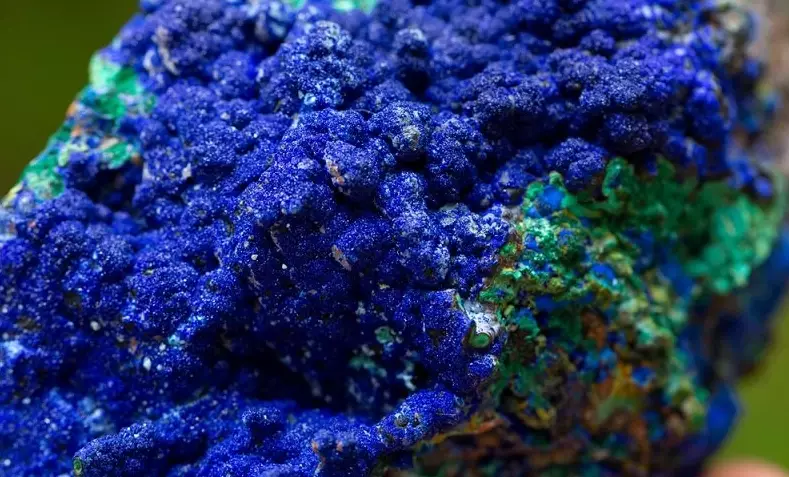
Caring for Your Azurite: It's Not a Tank
If you buy a nice piece, you need to know how to keep it nice. Azurite is not a low-maintenance mineral.
- Keep it Dry: This is huge. Prolonged exposure to water, high humidity, or even skin oils can start the chemical process that turns it into malachite (the green carbonate). Store it in a dry place. Don't clean it with water. A soft, dry brush is best.
- Keep it Dark: Prolonged, direct sunlight can fade the color over time. Display it in a cabinet or on a shelf away from windows.
- Keep it Safe: Store it separately from harder minerals to prevent scratches. Use a padded box or individual compartments. Never toss it in a bag with other rocks.
- No Ultrasonic Cleaners, No Steam: These will absolutely destroy an azurite specimen or piece of jewelry.
Think of it like a delicate painting. You wouldn't hang a valuable painting in direct sunlight or wash it with soap and water. Treat your azurite with the same respect.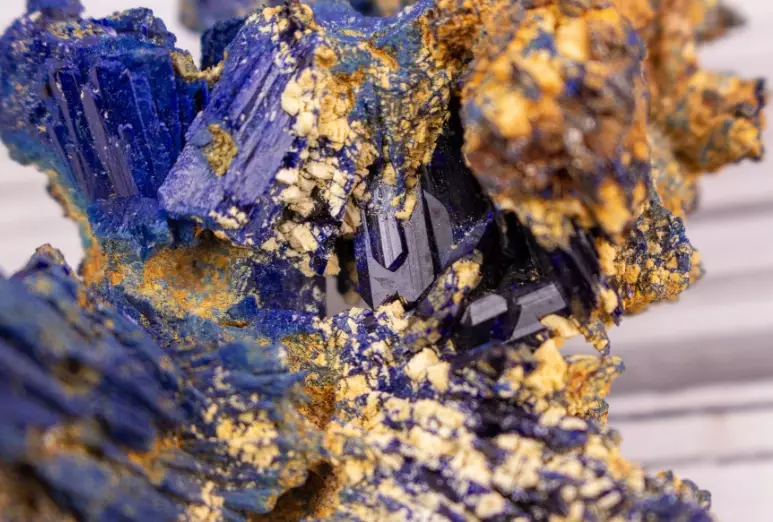
Frequently Asked Questions (FAQ)
No, they are completely different minerals. This is a common mix-up because both are blue. Lapis is a rock, primarily made of lazurite, with white calcite and golden pyrite flecks. It's harder (~5-6). Azurite is a single mineral, softer (3.5-4), often has green malachite with it, and lacks the pyrite flecks. Lapis has a more ancient history as a gemstone; azurite's fame is more in pigment and modern collecting.
Brief, accidental exposure is usually fine. But you should actively avoid it. Don't wear azurite jewelry in the shower, while swimming, or washing dishes. Don't soak specimens to clean them. The water can accelerate its alteration to malachite and potentially damage delicate crystals.
In crystal healing and metaphysical beliefs, azurite mineral is often called the "Stone of Heaven." It's associated with the third eye chakra, intuition, and psychic awareness. People use it for meditation, to enhance dream recall, and to break old, limiting thought patterns. Important note: These are traditional and modern spiritual beliefs, not scientifically proven medical facts. If you're interested in this aspect, it's a deeply personal journey. The intense blue color certainly has a powerful, focusing effect during meditation, in my experience.
As a solid, finished specimen, it's generally safe to handle. However, it is a copper mineral. You should never ingest it, inhale dust from sawing or grinding it, or make "gem elixirs" by putting it in drinking water. Copper can be toxic. Wash your hands after handling raw specimens, especially if they are dusty. Common sense goes a long way.
This is the most natural process in the world for this mineral. Azurite is chemically unstable at the Earth's surface over long periods. It slowly reacts with water and carbon dioxide to transform into its more stable cousin, malachite. If your specimen is developing green patches or fading to green, it's just continuing its natural geological journey. Keeping it dry slows this process way down. Some famous "azurite" specimens in museums are actually pseudomorphs—malachite that has replaced azurite but kept the azurite crystal shape.
Wrapping It Up
So, there you have it. Azurite isn't just a blue rock. It's a fascinating, fragile, and historically rich mineral with a personality. It demands respect in how you handle it and a keen eye when you buy it. Its value lies in its breathtaking color, its fascinating crystal habits, and its story as a product of Earth's slow chemistry.
Whether you're drawn to it for its beauty, its geological story, or its purported metaphysical properties, understanding its true nature—the softness, the care it needs, the way it changes—only deepens the appreciation. Don't just buy the first pretty blue piece you see online. Ask questions. Know the locality. Feel the weight. And if you do bring a piece home, give it the dry, dark, safe spot it deserves. It's a little piece of the deep blue Earth, after all.
Happy collecting!
Related Articles
Jade Uses: What Is Jade Best For in Healing, Jewelry & More?
Citrine Properties: The Complete Guide to the Sunshine Crystal
Kunzite Crystal Guide: Meaning, Properties, and How to Use It
Which Zodiac Signs Should Avoid Citrine? (And Who Thrives!)
Moonstone: The Ultimate Guide to Meaning, Types & Buying Tips