Explore Malachite's Journey
- The Core Physical Manifestation: What You Can See and Touch
- The Historical and Cultural Manifestation: More Than a Pretty Stone
- The Modern Manifestation: Jewelry, Metaphysics, and Caveats
- Identifying Quality and Spotting Fakes
- Common Questions About the Manifestation of Malachite
- Final Thoughts: A Stone of Layers
You've probably seen it—those mesmerizing swirls of deep green, bands of emerald and forest snaking through a polished surface. Maybe it's a pendant, a small carved figurine, or a raw chunk in a crystal shop. That's Malachite. But what you're seeing is just the tip of the iceberg. When we ask, "What is the manifestation of Malachite?" we're not just talking about how it looks. We're digging into its entire story: how it's born from the earth, how it presents itself to us, how humans have been utterly fascinated by it for thousands of years, and what it actually does (and doesn't do) in the modern world.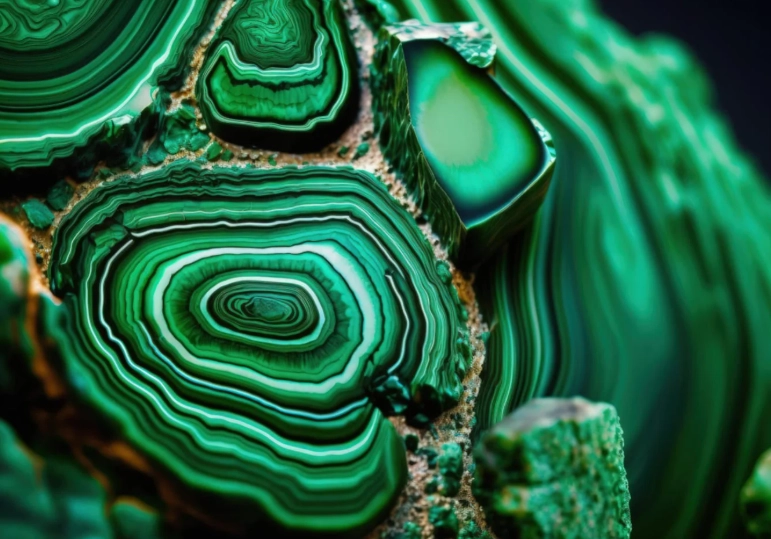
I remember the first time I held a piece of raw Malachite. It felt surprisingly heavy for its size, cool to the touch, and the green was so vivid it almost didn't look real. But it was the bands—those concentric, eye-like rings—that really got me. They looked like a record of something ancient, which, of course, they are. That's a key part of its manifestation: it's a physical diary of its own formation.
So, let's move beyond the simple "green stone" description. The true manifestation of Malachite is a multi-layered puzzle involving geology, chemistry, history, art, metaphysics, and even a bit of commerce. It's a stone that has adorned pharaohs and inspired artists, been ground up for pigment, and is now a staple in jewelry stores and healing circles. But there's also a lot of misinformation out there. I'll try to cut through that, too.
The Core Physical Manifestation: What You Can See and Touch
Let's start with the basics. What does Malachite actually *look* like in its natural state? If you're trying to identify it, here's your checklist.
First, the color is non-negotiable. It's green. But not just any green. We're talking a range from bright, almost neon green to a very deep, dark forest green that can appear almost black. The classic, most sought-after manifestation of Malachite features these intense greens in striking banded patterns. The bands can be concentric circles (like a bullseye), straight stripes, or swirling, irregular patterns that look like marble or agate. No two pieces are ever exactly alike, which is part of its charm.
Then there's the lustre. In its natural, crystalline form—which is pretty rare to find in large pieces—it can be silky or even slightly glassy. The more common massive form (the stuff used for carvings and cabochons) has a nice vitreous to dull lustre when polished, but in its rough state, it can look quite earthy and unassuming. It's not a sparkly diamond; its beauty is in its depth and pattern.
It's also relatively soft. On the Mohs scale of mineral hardness, it sits at a modest 3.5 to 4. That means a steel knife can scratch it, and it can be easily damaged if you're not careful with it. This softness is actually a clue to its identity and limits its use in everyday rings or bracelets that might get knocked around. A Malachite ring is a "special occasion" piece, in my opinion, unless it's very well protected in its setting.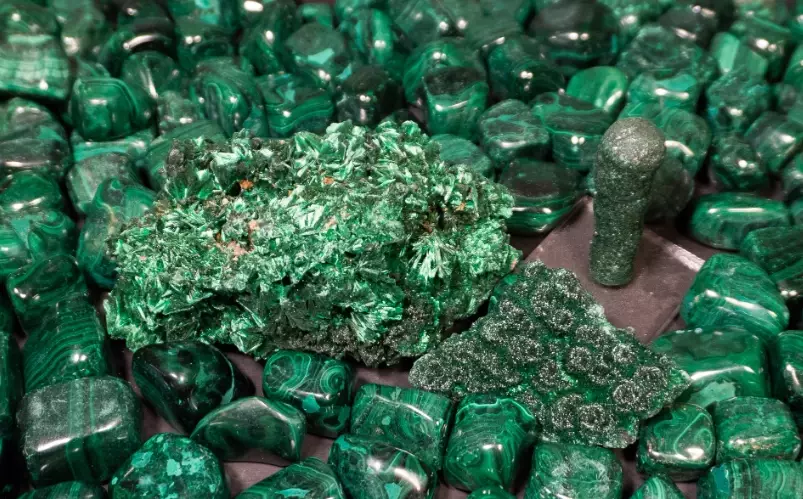
Quick ID Snapshot: Deep green + distinctive bands + relatively soft and heavy feel + will often have a slightly rough or botryoidal (bubbly) surface in its natural state. If it's a uniform, cheap-looking green with no bands, it's probably fake or a different stone altogether.
From Ore to Ornament: How Malachite Manifests in the Ground
You can't really understand the manifestation of Malachite without knowing where it comes from. It's not born in fiery volcanoes like some gems. It's a child of alteration and weathering.
Malachite is a copper carbonate hydroxide mineral. In plain English, it forms when copper ore deposits—things like chalcopyrite or bornite—are exposed to water, carbon dioxide, and oxygen over long, long periods. It's essentially a weathering product, often found in the oxidized zones above copper deposits. Think of it as the elegant, green rust of the copper world.
This process dictates where it's found. Major sources have historically been in what's now the Democratic Republic of Congo, Zambia, Russia (the Ural Mountains were huge), and more recently, Arizona and Australia. The specific conditions—the chemistry of the water, the surrounding rock—influence the quality and pattern of the bands. The famous Russian Malachite, used in the columns of St. Isaac's Cathedral in Saint Petersburg, often had particularly fine, dense bands.
It frequently manifests alongside other beautiful copper-based minerals. You might find it with bright blue Azurite (they're often called sisters), or with turquoise, or chrysocolla. Finding a piece of Malachite with streaks of blue Azurite running through it is a real treat—it's called Azurite-Malachite and is highly prized.
The Historical and Cultural Manifestation: More Than a Pretty Stone
This is where it gets fascinating. The physical stone is one thing, but how humans have interacted with it for millennia is a whole other chapter of its manifestation.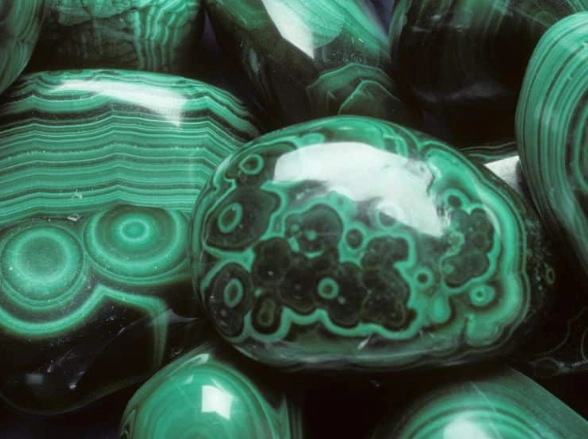
The ancient Egyptians were all over it. They mined it in the Sinai Peninsula over 4000 years ago. For them, the manifestation of Malachite was deeply practical and spiritual. They crushed it into a powder to create a vibrant green pigment for wall paintings and eye makeup. They also associated its green color with fertility and new life, and carved it into amulets for protection, especially for children. They believed it could ward off the "evil eye."
Fast forward to the Greeks and Romans, who used it in jewelry and ornaments. But its real heyday in the West was probably in Russia during the 18th and 19th centuries. The tsars adored it. They used massive blocks of it for monumental decorative arts: tabletops, vases, and those incredible interior columns I mentioned. Visiting the State Hermitage Museum website and searching for "malachite" will show you the staggering scale of this use. It wasn't just a gem; it was a symbol of imperial wealth and power. They developed a special technique called "Russian mosaic," where thin slices of Malachite were carefully fitted together like a veneer over a cheaper base material to create huge, seamless-looking green surfaces. The craftsmanship is mind-blowing.
In China, Malachite has been used for centuries in carvings and ornaments, often appreciated for its resemblance to jade and its beautiful patterns.
I have a small, antique Malachite box, probably from the late 1800s. The workmanship is exquisite, but you can see where the tiny pieces of the "mosaic" meet if you look closely. Holding it, you're holding a piece of geological history *and* human artistic history. It feels substantial in every sense.
The Modern Manifestation: Jewelry, Metaphysics, and Caveats
Today, the manifestation of Malachite is split into a few main streams.
Jewelry and Decorative Arts
It remains a popular, though somewhat niche, gemstone for jewelry. You'll find it set in silver (a classic combo) or gold. Common forms are cabochons (polished, domed ovals), beads for necklaces and bracelets, and carved pendants. Due to its softness and sensitivity, it's best used in pendants, earrings, or brooches rather than rings. A good jeweler will also tell you that Malachite should be sealed or stabilized if it's going to be in a ring, to protect it from sweat and oils.
An important and often overlooked modern use is its role as an ore of copper. While not the primary source, it's still a mineral indicator for copper mining. Geologists get very excited when they see Malachite outcrops.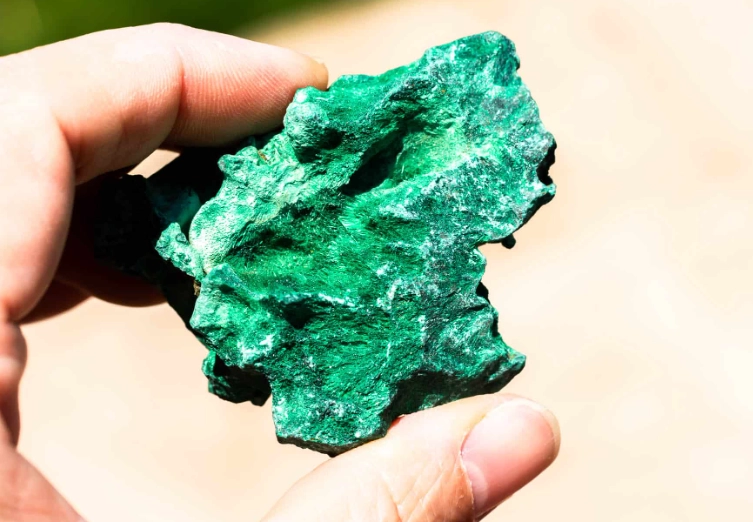
The Metaphysical and "Healing" Realm
This is a huge part of its current popularity. In crystal healing and New Age circles, the manifestation of Malachite is primarily energetic. It's often called the "Stone of Transformation" or a "Power Stone." Proponents claim it can:
- Absorb negative energies and pollutants (from the environment or one's own psyche).
- Encourage risk-taking and change.
- Protect the wearer.
- Help with emotional trauma by bringing buried feelings to the surface.
Let me be straight here.
There is zero scientific evidence to support any of these metaphysical claims. The Mind (mental health charity) website, for instance, discusses complementary therapies but emphasizes evidence-based treatments. However, the placebo effect and the power of belief are very real. If holding a beautiful stone helps someone focus their intentions or feel a sense of calm, that's a valid personal experience—it's just not a mineralogical property of the stone itself. The key is to not forsake real medical advice for a crystal.
A critical and very practical warning in this context: Malachite is toxic. I cannot stress this enough. As a copper carbonate, it releases toxic copper fumes if heated or burned. More relevantly, the dust from cutting, grinding, or even aggressively polishing dry Malachite is poisonous if inhaled or ingested. You should never make an elixir by putting Malachite directly in drinking water. Reputable crystal sellers and metaphysical guides should always include this warning. It's a stone to be worn or displayed, not ingested or used in ways that create dust.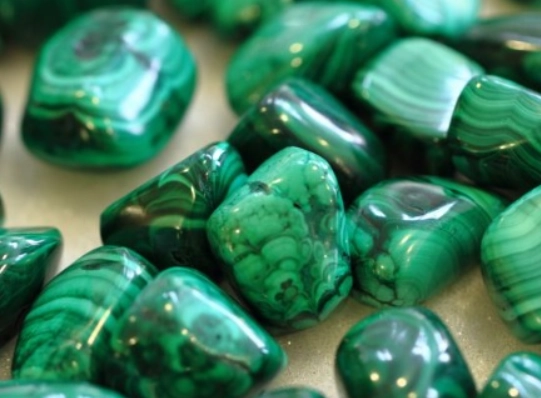
Identifying Quality and Spotting Fakes
With its popularity comes imitation. Understanding the true manifestation of Malachite helps you avoid getting scammed.
| Feature | Real Malachite | Fake/Imitation (Commonly Howlite dyed) |
|---|---|---|
| Pattern | Bands and swirls are natural, with depth and variation. Colors blend and transition. No two patterns are identical. | Patterns often look painted on, too uniform, or have sharp, unnatural lines between colors. May look "fuzzy" or bleed at edges. |
| Color | Rich, varied greens. Light and dark bands are integrated. | Often an artificially bright, uniform, or garish green. The white matrix of howlite may show through as faint web-like lines. |
| Temperature & Weight | Feels cool and heavy for its size (dense). | May feel lighter and warmer (like plastic) or have the right weight if stone-based. |
| The Acid Test* | A tiny drop of weak acid (like vinegar) will fizz/bubble slightly due to carbonate content. (DESTRUCTIVE—use only on a tiny unseen spot!). | No reaction from dyed stone or plastic. |
*Please, do not perform acid tests on finished jewelry you value! This is for rough specimens only and with great caution. The best test is often your eyes and a good magnifying glass. Look for the natural, unduplicatable complexity of the bands.
Common Questions About the Manifestation of Malachite
Final Thoughts: A Stone of Layers
So, what is the manifestation of Malachite? It's not a single thing.
It's a geological process, a chemical reaction frozen in stunning green stone. It's a historical artifact, carrying the tastes of Egyptians and Russian tsars. It's an artistic medium, capable of being both a humble pigment and a monumental decorative element. It's a modern gem, beautiful but requiring knowledgeable care. And for many, it's a symbolic object of personal meaning and intention, though one that demands respect for its physical properties (yes, the toxicity again).
Its layered bands are the perfect metaphor for its own story—each ring representing a different phase of growth, a different era of human discovery and use. Whether you're drawn to it for its beauty, its history, or its purported energy, understanding this full spectrum—the complete manifestation of Malachite—allows you to appreciate it on a much deeper level than just seeing a "pretty green rock." It connects you to the earth's chemistry and to human history in a very tangible way.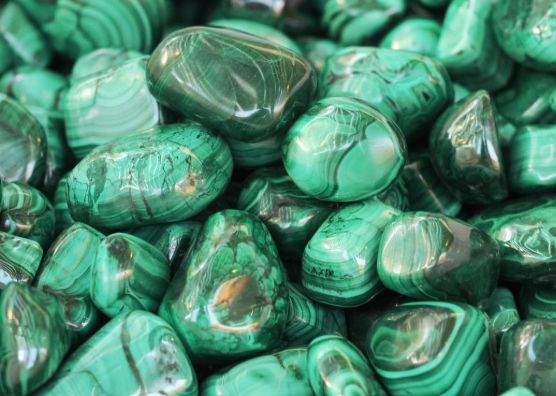
Just maybe don't make tea with it.
Related Articles
Labradorite: The Complete Guide to Healing, Uses, and Buying Tips
Pink Quartz Gift Meaning: Love, Healing & Symbolism Explained
Discover the Spiritual Meaning of Jade: Peace, Protection & Luck
Kunzite Value: Is This Pink Gemstone a Good Investment?

Taiwan's semiconductors, some come and some go