Let's talk about pietersite. You might have seen it in a shop – a dark stone with wild flashes of gold and blue that seem to move when you tilt it. It's captivating, a bit mysterious, and nothing like the orderly stripes of its cousin, tiger's eye. I remember the first piece I held; it felt alive, like holding a piece of a thunderstorm. But what is it really? And more importantly, with so many crystal fakes floating around, how do you know you're getting the real deal?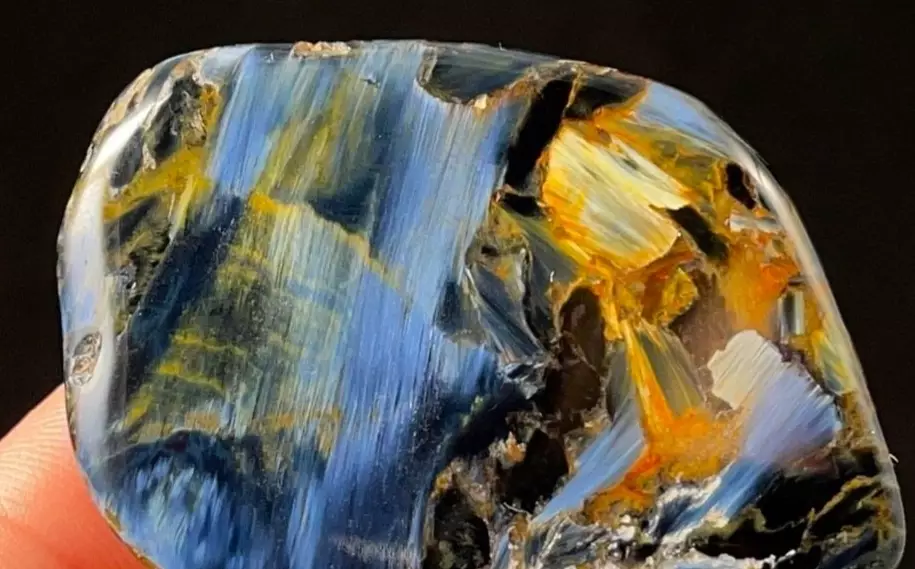
Pietersite is a rare brecciated quartz, a chaotic mix of tiger's eye and hawk's eye minerals that were shattered and naturally glued back together over millennia. It was discovered in Namibia in 1962 by Sid Pieters, and later found in Hunan Province, China. The Chinese material often has more vibrant blues, while the Namibian tends toward deeper golds and reds. That's the textbook answer. The real story is in how you use it and, crucially, how you avoid getting a polished piece of dyed glass instead.
What Exactly Is Pietersite? Beyond the Basics
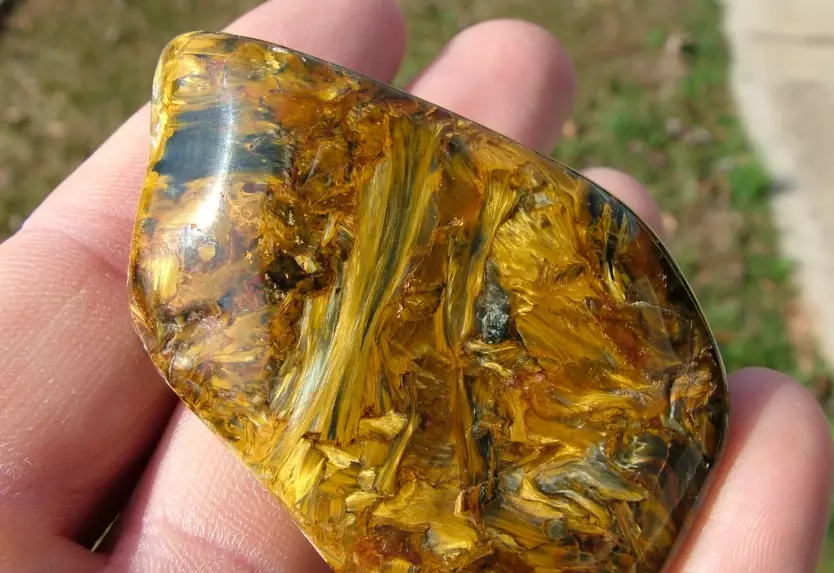
Most guides will tell you it's the "stone of the tempest" and leave it at that. Let's dig deeper. The magic – and the value – lies in its structure. Unlike tiger's eye, where the fibrous crocidolite inclusions are neatly parallel, in pietersite, those fibers are all jumbled up. They've been broken, twisted, and recemented with silica. This creates that signature "chaotic" or "stormy" appearance.
Think of it as geological abstract art. No two pieces are the same. This brecciation is also why it's relatively rare; it's a specific geological event, not a common formation process.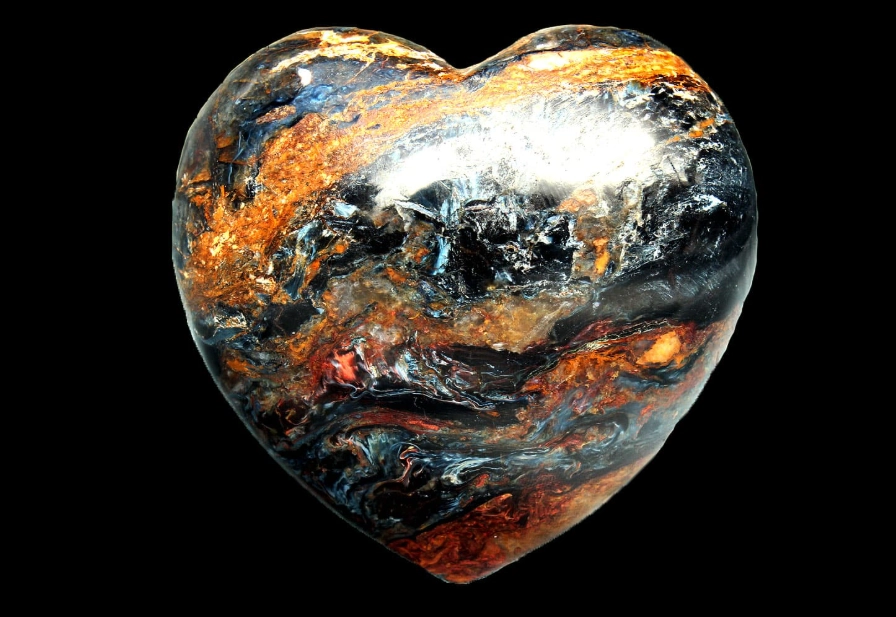
Pietersite at a Glance
Primary Composition: Brecciated Quartz (mainly SiO₂) with inclusions of altered crocidolite (which gives the blue/grey of hawk's eye and the gold/brown of tiger's eye).
Key Feature: Chatoyancy (cat's eye effect) caused by parallel fibrous inclusions – but in pietersite, these fibers are in chaotic, angular patterns.
Hardness: 7 on the Mohs scale (good for jewelry, but can be scratched by harder materials).
Main Sources: Namibia (discovery site) and Hunan Province, China. The two can have slightly different color dominances.
Common Misconceptions Even Experienced Collectors Have
Here's a subtle point most miss. People often call any blue-gold chatoyant stone "pietersite." But true pietersite requires that brecciated, fragmented structure. Some stones sold as pietersite are just lower-grade, mixed-color tiger's eye with wavy bands, not the genuine broken and reformed pattern. The difference is in the pattern's sharpness and the sense of fragmented layers. It's not just a color mix; it's a texture and history.
The Buyer's Guide: How to Spot Fake Pietersite
This is where your money and satisfaction are on the line. The crystal market is flooded with convincing fakes. Pietersite, due to its popularity and rarity, is a prime target.
I learned this the hard way years ago, buying a "pietersite" sphere online that arrived looking like a mood ring from the 90s – uniform, plasticky, with no depth. Here’s what to look for, step by step.
1. The Light Test is Everything. Real pietersite's beauty is in its chatoyancy. Tilt it slowly under a good light source (a lamp, sunlight). You should see distinct bands of light sweeping across the surface, and the colors (blue, gold, grey, sometimes red) should shift and appear to have depth. If the colors are flat, painted-on looking, or don't move, it's a fake. Glass or resin imitations won't have this optical effect.
2. Examine the Pattern. Look for the chaos. Genuine pietersite has angular, broken, sometimes swirling patterns. It should not look like neat, parallel stripes (that's tiger's eye) or uniform speckles. The boundary between color zones can be sharp and geometric. Fake stones often have soft, blended, or overly perfect patterns.
3. Feel and Temperature. Real quartz has a certain heft and a cool, slightly waxy or silky feel. Glass fakes often feel smoother, colder, and heavier for their size. Resin fakes feel lighter and warmer. This takes practice, but it's a useful secondary check.
4. Price and Source. A large, high-quality pietersite palm stone or sphere for $20 is almost certainly fake. This is a rare material. Be suspicious of vendors who don't specify the type of stone beyond "healing crystal" or who use only stock photos. A reputable seller, like those on platforms specializing in minerals or established metaphysical shops, will provide multiple photos and videos showing the chatoyancy.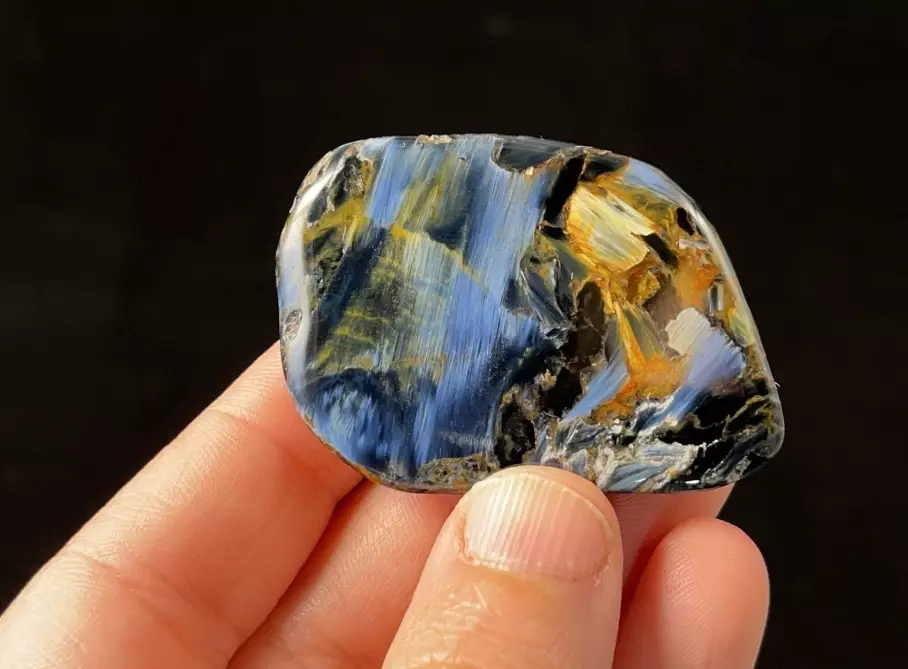
Practical Uses: From Meditation to Your Workspace
Forget vague spiritual claims. Let's talk about actionable ways to use pietersite based on what people actually report and its traditional associations.
For Mental Clarity During Chaos: Place a small tumble stone on your desk if your work involves constant pivoting or handling crises. The stone's association with cutting through confusion isn't just lore; having a tangible, beautiful object to focus on for a moment can be a real mental reset button. I keep one next to my computer for days filled with back-to-back Zooms.
In Meditation: Hold a piece in your non-dominant hand. Don't try to force a blank mind. Instead, focus on the stone's shifting patterns behind closed eyes. The idea is to acknowledge the "storm" of thoughts without getting caught in it. It's a tool for observation, not necessarily for calm. If you're seeking pure peace, you might find pietersite too stimulating.
As Jewelry: A pietersite pendant or ring worn during important meetings or creative sessions can serve as a personal anchor. It's a reminder of inner strength and perception. Practically, set it in a protective bezel for rings, as the stone, while hard, can chip on edges.
A less common use? Try placing a piece in the entryway of your home. In some traditions, it's seen as a protective stone that filters out negative or chaotic external energy before it enters your living space. Whether you buy into the energy aspect or not, it makes for a striking decorative piece that sparks conversation.
Finding Authentic Pietersite: A Realistic Buying Guide
You won't find real pietersite at a big-box fashion store. Here's where to look, ranked by likelihood of success.
1. Specialized Online Mineral Retailers. Websites dedicated to selling collector minerals and gemstones are your best bet. Look for sellers who are members of groups like the International Gem Society or have a strong reputation on mineral forums. They will list details like origin, dimensions, weight, and crucially, provide videos showing the chatoyancy. Expect to pay from $30 for a small tumble to several hundred for a large, high-quality specimen.
2. Reputable Metaphysical/Crystal Shops (Online or Local). A good shop owner is knowledgeable. When I visit a new store, I ask specific questions: "Is this Namibian or Chinese?" "Can I see it under this light?" Their willingness and ability to answer tells you everything. Local shops let you inspect the stone personally, which is invaluable.
3. Gem & Mineral Shows. If you have one in your area, this is a fantastic option. You can handle dozens of pieces from different vendors, compare quality and price on the spot, and talk directly with the dealers, who are often collectors themselves.
Places to Be Cautious: General e-commerce platforms (like Amazon or eBay) are minefields, though not impossible. Scrutinize customer photos, not just the listing photos. Avoid sellers based in regions known for mass-producing synthetic or dyed stones unless they have impeccable, verifiable reviews. Social media marketplaces can be risky unless the seller has a established, transparent business presence.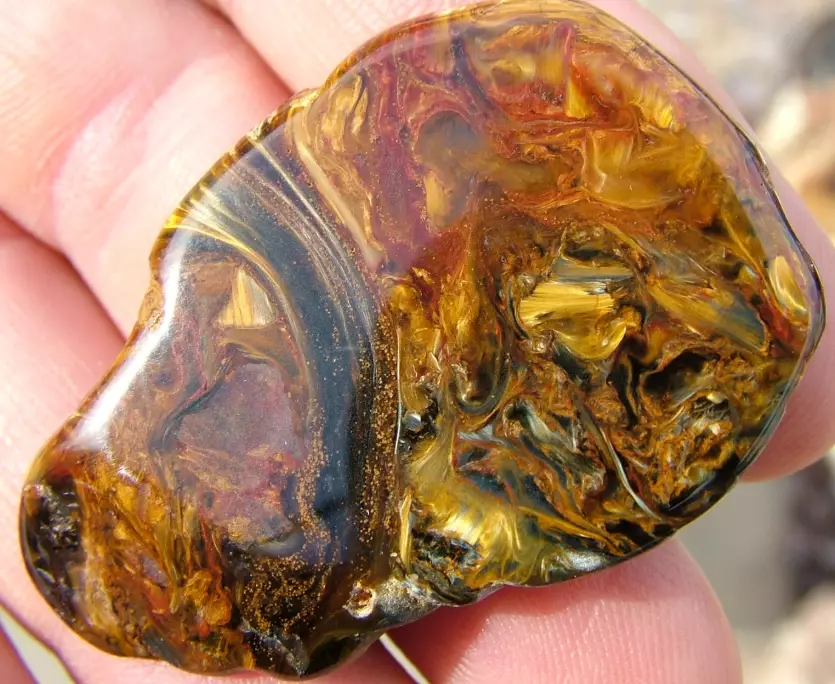
Your Pietersite Questions Answered
 Pietersite isn't a gentle, beginner's crystal. It's complex, powerful, and demands a bit of discernment to own authentically. But that's also its appeal. In a world of mass-produced items, it remains a testament to nature's chaotic beauty. When you find a genuine piece, with its captured storm of light and color, it’s more than a decoration—it's a fascinating geological story you can hold in your hand. Just make sure the story is real.
Related Articles
The True Sodalite Properties Guide: Healing, Uses & Common Mistakes
Clear Quartz Spiritual Meaning: The Ultimate Guide to the Master Healer
A Collector's Guide to Jasper Varieties: Colors, Meanings & Uses
Three giants battle in GPU: A comprehensive analysis of chip architecture
What Does Citrine Attract? Wealth, Joy & Abundance Explained