Most people know garnet as that deep red January birthstone. But if that's all you see, you're missing the whole story. Garnet is a chameleon, a workhorse, and for many, a trusted companion. Its properties span from the intensely practical—grinding down metal in factories—to the deeply personal, sitting on a meditation altar. Let's dig past the surface sparkle.
Quick Navigation: What's Inside
What Exactly Is a Garnet? (It's Not One Stone)
Here's the first big misconception. "Garnet" isn't a single mineral. It's a group of closely related silicate minerals. Think of it like the citrus family—you have oranges, lemons, limes, grapefruits. All citrus, but different flavors and looks.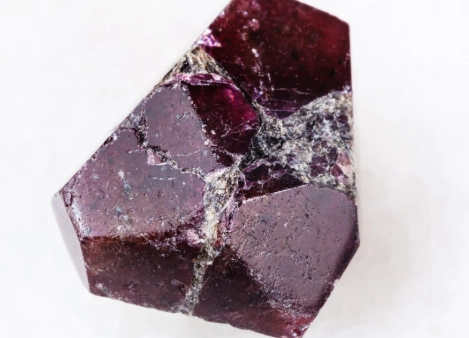
Garnets share a common crystal structure but swap out elements like magnesium, iron, aluminum, and calcium to create different members. This swap is why you get a pyrope (magnesium-aluminum), an almandine (iron-aluminum), or a spessartine (manganese-aluminum). The Gemological Institute of America (GIA) categorizes them into two main series: the pyralspite (pyrope, almandine, spessartine) and the ugrandite (uvarovite, grossular, andradite).
This isn't just academic. It explains everything—why some garnets are blood red and others are vibrant green, why some are perfect for daily-wear rings and others need a gentler touch.
A Quick Thought
I've seen collectors get hung up on finding a "pure" garnet type. In reality, most garnets are solid solutions—a mix. An almandine-pyrope blend is incredibly common and often makes for a richer, more affordable stone. Purity has its place in mineralogy, but in jewelry, the blend is often where the beauty lies.
The Garnet Family: A Spectrum of Color & Character
Forget red. The garnet color palette runs from colorless to black, hitting oranges, pinks, purples, yellows, and every shade of green imaginable. Here's your field guide to the major players.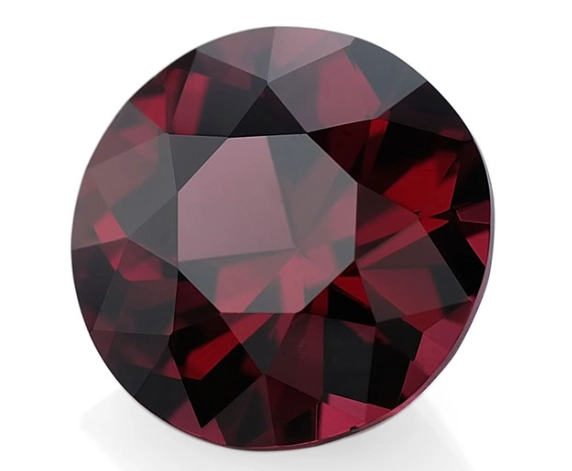
| Type | Typical Color | Key Distinguishing Feature | Notable Source | Hardness (Mohs) |
|---|---|---|---|---|
| Almandine | Deep red, burgundy, brownish-red | The most common gem garnet. Often has a slightly violet undertone. | India, Brazil, Madagascar | 7 - 7.5 |
| Pyrope | Blood red, purplish-red | Often very clean (eye-clean) with high transparency. The classic "garnet red." | Czech Republic, South Africa, USA | 7 - 7.5 |
| Spessartine (Spessartite) | Vibrant orange, reddish-orange, mandarin | High refractive index = incredible brilliance. The "jacinth" of old. | Nigeria, Namibia, Mozambique | 6.5 - 7.5 |
| Grossular | Green (Tsavorite), yellow, orange, colorless | Includes the prized Tsavorite (vivid green) and Hessonite (cinnamon-orange). | Tsavorite: Kenya, Tanzania Hessonite: Sri Lanka | 6.5 - 7.5 |
| Andradite | Black (Melanite), yellow-green (Topazolite), green (Demantoid) | Includes Demantoid, the most brilliant garnet, known for "horsetail" inclusions. | Demantoid: Russia, Namibia, Iran | 6.5 - 7 |
| Uvarovite | Emerald green | Rarely found in large, facetable crystals. Usually seen as druzy crusts. | Russia, Finland, Canada | 6.5 - 7.5 |
See that hardness column? It's crucial. A spessartine or demantoid at 6.5-7 is fine for earrings or pendants, but I'd think twice before setting it in a ring you plan to wear every day, especially if you're hard on your hands. An almandine or pyrope at 7-7.5 is a much safer bet for a ring.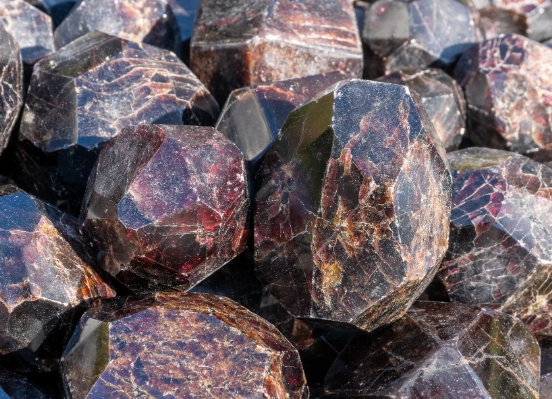
Hard Facts: Physical & Chemical Properties
These aren't just textbook terms. They dictate how your garnet will perform in real life.
The Mohs Scale & Durability
Garnet sits between 6.5 and 7.5 on the Mohs scale. For context, quartz (dust) is a 7, and topaz is an 8. This means garnet is resistant to scratches from everyday materials but can be scratched by harder gems or abrasives. The cleavage is indistinct, meaning it doesn't split easily along planes—a plus for durability. But its toughness (resistance to breaking) is generally fair to good. A sharp knock on a girdle can still chip it.
Refractive Index (RI) & That Famous Sparkle
This is how much a gem bends light. Higher RI usually means more brilliance. Demantoid garnet has an RI of ~1.88, rivaling diamond's fire and dispersion (that rainbow flash). Pyrope and almandine sit around 1.74-1.76, giving them a lovely, deep glow. You can find detailed RI tables for each species on mineralogical databases like Mindat.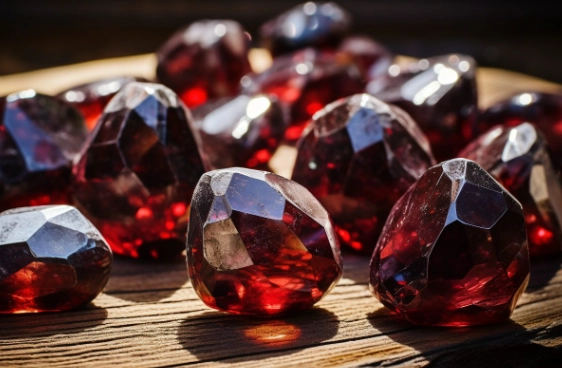
Color & the Role of Trace Elements
Iron gives reds and yellows. Chromium and vanadium are responsible for the stunning greens of tsavorite and demantoid. Manganese creates those fiery oranges in spessartine. Sometimes, color zones are visible—a stone might show patches of orange and pink. It's not a flaw; it's a geological diary.
Beyond the Physical: Metaphysical Properties & Uses
This is where garnet gets personal. For centuries, across cultures, it's been attributed with energetic properties. I approach this with a balance of respect and practicality. Whether you view it as symbolic or energetic, the narratives are powerful.
Garnet is overwhelmingly linked to vitality, passion, and grounding. The red varieties are tied to the root chakra, said to enhance survival instincts, courage, and a sense of security. It's historically been a traveler's stone for protection.
But color changes the story.
- Green Garnets (Tsavorite, Demantoid): Connected to the heart chakra, associated with growth, prosperity, and emotional healing.
- Orange Garnets (Spessartine, Hessonite): Tied to the sacral chakra, linked to creativity, joy, and personal power.
How do people use them? Not just by carrying a tumbled stone. I know a designer who keeps a small tsavorite on her desk when working on new projects for "inspired growth." A friend wears an almandine ring during important meetings as a touchstone for confidence. The key is intentionality—assigning a meaning to the stone and using it to focus your own energy.
A word of caution from the community: Some say garnet's energy can be too intense or stimulating for some people, especially before sleep. It's not a one-size-fits-all crystal.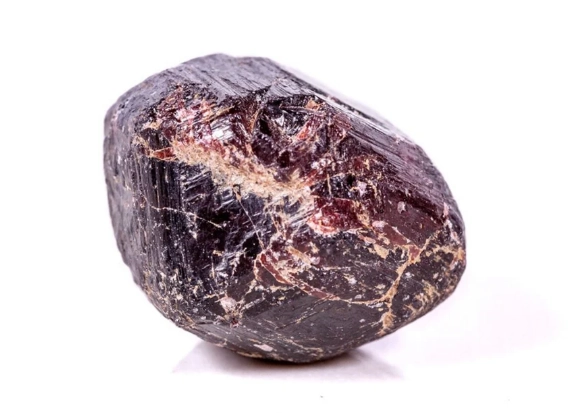
From Jewelry to Jet Blasting: Real-World Uses
Garnet isn't just sitting in a velvet box.
Jewelry & Lapidary Arts
This is the obvious one. From Victorian mourning jewelry (where it was incredibly popular) to modern designer pieces. Demantoid is a collector's dream. Tsavorite competes with emerald for green gem supremacy. The more common almandine and pyrope make stunning, affordable statement pieces. Cabochon-cut garnets with asterism (star effects) are rare but highly sought after.
Industrial Abrasive
This is garnet's day job. Its hardness, sharp fracture patterns, and chemical inertness make it a perfect abrasive. Garnet sandpaper is superior to cheaper alternatives for fine woodworking. It's used in waterjet cutting—a high-pressure stream of water mixed with garnet grit can slice through steel, titanium, and glass with a clean, cool edge. According to industry reports, waterjet cutting consumes the vast majority of mined garnet.
Filtration Media
Crushed garnet's density and hardness make it an excellent filter bed for water treatment, removing sediments and particles more effectively than sand.
Choosing & Caring for Your Garnet
Let's get practical. You're looking at a garnet, maybe online, maybe in a store. What matters?
For Jewelry: Prioritize durability for the setting. Ring? Go for almandine, pyrope, or possibly rhodolite (a purple-red blend). Pendant or earrings? The world is your oyster—softer demantoid or spessartine are fine. Look for good color saturation and a cut that returns light, not a window (a dead spot in the center). Inclusions are common; some, like demantoid's horsetails, add value.
For Crystal Work: Trust your gut. The color or shape that draws you in is often the right one. A raw, unpolished piece can feel more "connected" to the earth than a perfectly faceted one.
Caring for Your Garnet
This is non-negotiable if you want it to last.
- Cleaning: Warm water, mild dish soap, a soft toothbrush. Rinse thoroughly. Dry immediately with a soft, lint-free cloth. Never use ultrasonic or steam cleaners, especially for stones with inclusions or fractures (common in many garnets). The vibrations and heat can cause them to split.
- Storage: Keep it separate from harder gems (diamond, sapphire, moissanite) to prevent scratches. A soft pouch or a separate compartment in a jewelry box is ideal.
- Activities to Avoid: Gardening, cleaning with harsh chemicals, hitting the gym. Take it off. The number of chipped stones I've seen from people forgetting this simple step is staggering.
Your Garnet Questions, Answered
Can I get my garnet ring wet during cleaning?
It depends entirely on the type of garnet and its setting. Almandine and pyrope are generally safe for brief contact with mild soapy water, but you must dry it immediately. However, demantoid garnet can be more sensitive, and many ultrasonic cleaners can damage garnets with inclusions or fractures. The safest method is always a soft brush, lukewarm water, and mild detergent, avoiding harsh chemicals. Many gemologists see more damaged stones from improper cleaning than from daily wear.
How can I tell a garnet from a ruby in my antique jewelry?
Look at the color and sparkle under light. A ruby's red often has a purplish or pinkish secondary hue and shows a stronger, more fiery red under a direct light source due to its higher refractive index. Garnets, especially almandine, tend to have a deeper, more burgundy or brownish red and can appear darker in the center. The most reliable test is hardness; a ruby (9 on Mohs scale) will scratch a garnet (6.5-7.5). If you're unsure, a jeweler with a simple thermal conductivity probe can distinguish them in seconds—rubies conduct heat much better than garnets.
Do the healing properties of garnet fade over time or with use?
This is a common metaphysical belief, but practitioners often frame it differently. The stone doesn't 'run out' of energy. Instead, think of it like a sponge. It can absorb emotional or energetic 'residue' from intense situations. If your garnet starts to feel heavy or dull, it might benefit from cleansing. Methods like placing it on a selenite plate, burying it in dry earth overnight, or using sound from a singing bowl are preferred. Avoid salt and water methods for porous or fracture-filled stones. Regular cleansing, especially after emotional work, is considered good practice to maintain its energetic clarity.
Related Articles
Onyx Stone Meaning: Unlocking Its Mystical and Practical Power
Black Tourmaline: The Ultimate Guide to Benefits, Uses & Care
Labradorite Crystal Healing Properties & Complete Guide