Explore This Guide
- What Exactly Is Azurite Malachite? The Basic Chemistry
- How to Identify Real Azurite Malachite (And Spot Fakes)
- What Do People Actually Use Azurite Malachite For?
- A Practical Buyer's Guide: What to Look For and What to Avoid
- Caring for Your Azurite Malachite
- Common Questions About Azurite Malachite (Answered)
Let's be honest, the first thing that grabs you about Azurite Malachite is its looks. That deep, almost celestial blue swirling and mixing with vibrant bands of green – it's like holding a piece of a stormy, mineral-rich planet in your hand. It stops you dead in your tracks at a gem show. I remember the first time I saw a really good specimen; it wasn't in a museum, but on a dusty table at a local rockhound meet. The dealer just had it sitting there, unassuming, and the contrast was just breathtaking. But here's the thing most people don't realize right away: this stunning mineral pair is a geologist's storybook and a collector's dream, wrapped into one. It's not *just* a pretty face.
If you've landed here, you're probably curious. Maybe you saw a piece of jewelry, or a polished palm stone in a crystal shop labeled "Azurite Malachite," and wondered what the deal is. Is it one mineral or two? Why do the colors mix like that? Is it valuable? Can you get ripped off buying it? And what's with all the talk about its "energy" or "healing properties"? We're going to dig into all of that, without the fluff and without the hype. I'll share some of the pitfalls I've seen collectors fall into, and what the science actually says versus the folklore. This guide is for the curious beginner, the seasoned collector checking facts, and everyone in between.
What Exactly Is Azurite Malachite? The Basic Chemistry
First, a crucial point: Azurite Malachite isn't a single mineral. It's not like, say, quartz which is one thing (silicon dioxide). Nope. This is two distinct copper carbonate minerals that are almost always found growing together in a very intimate dance. They're like mineral cousins, born from similar conditions but with slightly different recipes.
Azurite is the blue one. Its chemical name is copper carbonate hydroxide [Cu3(CO3)2(OH)2]. That copper is what gives it that iconic royal to deep blue color, which mineralogists actually call "azure" – hence the name.
Malachite is the green one. Its formula is copper carbonate hydroxide as well, but arranged differently [Cu2CO3(OH)2]. The copper here interacts with light to produce those rich, banded greens.
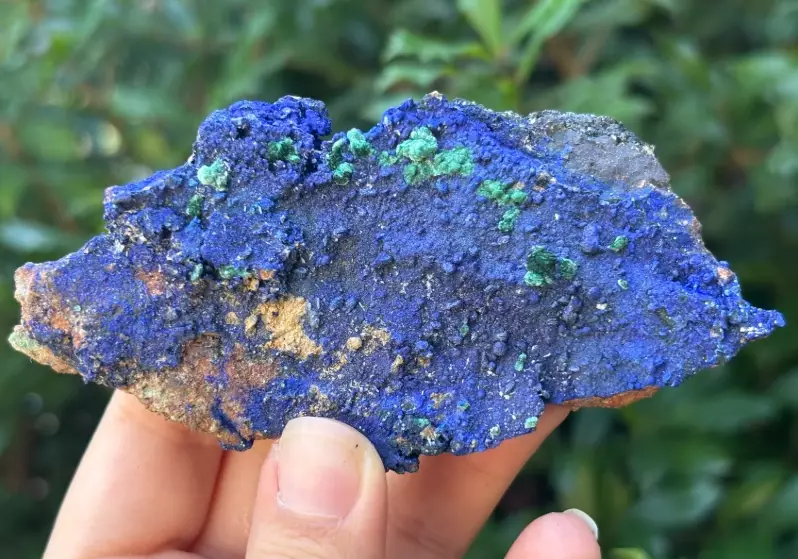
The wild part? They often form from the same source. Imagine copper ore deposits weathering and reacting with water and carbon dioxide. Initially, azurite, the blue mineral, forms. But azurite is not terribly stable at the Earth's surface over geological time. It often alters, transforming into the more stable green malachite. So, when you see a specimen of Azurite Malachite, you're literally looking at a snapshot of that chemical transformation. You're seeing the "before" (azurite) and the "after" (malachite) frozen in stone. Some pieces show sharp boundaries between the two; others have the colors so intricately mixed it looks like a painter's palette. That's what makes every piece unique.
Think of it as a geological process made visible. The blue azurite is the starting material, and the green malachite is the end product of natural weathering. A specimen with both is capturing that change in action.
Now, where does this happen? The famous locations read like a mineral collector's bucket list: the copper mines of Arizona (like the famed Morenci and Bisbee mines), Namibia, Morocco, Mexico, and the Democratic Republic of Congo, among others. Each locale can produce a slightly different character – the Arizona material is often famous for its sharp, dramatic contrasts, while some African specimens might show more botryoidal (bubbly) forms of malachite enveloping azurite cores.
How to Identify Real Azurite Malachite (And Spot Fakes)
This is where things get practical. With its popularity, there are imitations. Mostly, you'll see dyed howlite or magnesite masquerading as Azurite Malachite. Howlite is naturally white and gray-veined, and it soaks up dye like a sponge. The results can be garish, with colors that look painted on and patterns that don't follow any natural logic.
So, how do you know you're getting the real deal?
First, look at the pattern. Real azurite and malachite have a relationship. The colors don't just splatter randomly. You'll often see the malachite forming as rims around azurite, or as veins cutting through it, or as a replacement that follows the original crystal structure. The transition can be sharp or gradient, but it looks *organic*, not like someone flicked a brush.
Second, check the color quality. Genuine azurite has a deep, slightly subdued blue. It's not a neon or electric blue. Malachite has a rich, forest to emerald green, often in concentric bands. If the blue is too bright and uniform, or the green is lime-colored and flat, be suspicious.
Third, do a simple hardness test. Both azurite and malachite are relatively soft minerals. They sit around 3.5 to 4 on the Mohs hardness scale. A steel nail (about 5.5) can scratch them. A piece of dyed howlite will be harder (around 6). Of course, only do this if you own the piece or have the seller's permission on a non-display area!
Finally, and this is a big one for tumbled stones or beads: look at the porosity. Dyed stones often have concentrated color in cracks and pits. A real, polished Azurite Malachite piece will have consistent color throughout the material, because the color is intrinsic to the mineral, not a surface coating.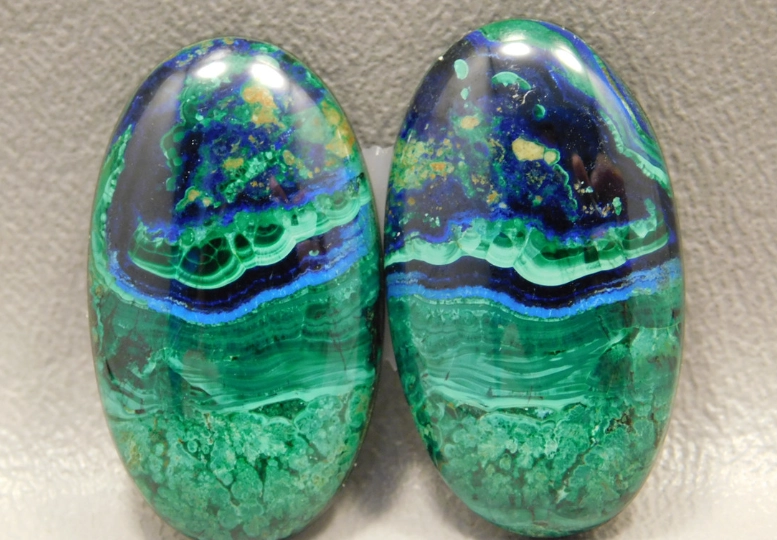
A quick word of caution: genuine malachite can contain copper, and cutting/dry-polishing it can produce dust that is not good to inhale. Reputable lapidaries always use water and proper ventilation when working with it. This is rarely a concern for finished pieces, but it's good to know.
Azurite Malachite vs. Similar-Looking Minerals
It's easy to get confused. Here’s a quick breakdown:
| Mineral/Name | Key Identifying Features | Common Confusion With Azurite Malachite |
|---|---|---|
| Chrysocolla | Sky blue to blue-green, often with a waxy luster. Can be mixed with quartz ("gem silica"). Softer, more amorphous shapes. | Chrysocolla can be similar in color but lacks the definitive dark blue of azurite and the sharp banding of malachite. |
| Smithsonite | Comes in pastel blues, greens, pinks. Has a pearly or vitreous luster. Forms botryoidal crusts. | Blue-green smithsonite might be mistaken from afar, but its luster and typical pastel hues are different. |
| Turquoise | Opaque, blue to green, often with a matrix (host rock) webbing through it. | Turquoise never shows the stark, separate bands of deep blue and forest green that define azurite malachite. |
| Dyed Howlite/Magnesite | Dye concentrates in cracks, colors are unnaturally bright and uniform in pattern. Often has a chalky feel. | The most common fake. The pattern usually looks manufactured, like a bad marble print. |
What Do People Actually Use Azurite Malachite For?
Its uses span from the purely aesthetic to the deeply spiritual, and it's worth understanding the spectrum.
1. Mineral Collecting and Display
This is the primary domain for top-quality material. A spectacular specimen of Azurite Malachite on matrix (its host rock) is the centerpiece of any collection. Value here depends on color contrast, crystal form (azurite can form beautiful, dark blue prismatic crystals), aesthetic arrangement, and size. A thumbnail-sized specimen with perfect, sharp crystals can be worth more than a large, messy chunk. Institutions like the Smithsonian have world-class examples in their collections, which shows its mineralogical importance.
2. Lapidary Arts and Jewelry
Because it's soft, it's not ideal for everyday ring wear. But it is carved into beautiful cabochons, beads, small sculptures, and boxes. Polished, it takes a brilliant, waxy to silky luster. Jewelers often use it in pendants, earrings, or brooches that are less prone to impact. The key for jewelry is stabilization. Some material is porous and can be treated with resin to improve durability and polish. There's nothing inherently wrong with stabilized stone for jewelry purposes—it makes it wearable—but it should be disclosed by the seller.
I've seen some stunning statement necklaces with large Azurite Malachite cabochons. They're conversation starters, for sure. But I'd never recommend it for a child's bracelet or a man's ring that will see hard knocks. It's a "special occasion" or "careful wear" kind of stone.
3. Metaphysical and Healing Properties (The Folkloric Side)
Alright, let's address the elephant in the room. In crystal healing and metaphysical circles, Azurite Malachite is a big deal. It's often called a "stone of transformation" or a "psychic vacuum cleaner." The beliefs here are not scientific, but they are a significant part of why people buy it.
Reported Metaphysical Associations:
- Azurite (Blue): Linked to the third eye chakra. Said to enhance intuition, mental clarity, and insight. It's often called the "stone of heaven" for its supposed connection to higher guidance.
- Malachite (Green): Linked to the heart chakra. Called the "stone of transformation" for its purported ability to bring deep emotional healing, absorb negative energies, and encourage risk-taking.
- Combined (Azurite Malachite): Believed to marry these properties—using the insight of azurite to identify issues and the transformative power of malachite to heal them. It's seen as a tool for personal growth and breaking old patterns.
My personal take? I appreciate the poetry of it. The idea that a stone which is literally transforming in nature could symbolize personal transformation is a beautiful metaphor. Whether you believe in energetic vibrations is a personal matter. From a practical standpoint, holding a beautiful object and meditating on your goals can be a powerful mindfulness practice, regardless of the mineral's "energy." The Mindful organization has great resources on the benefits of meditation itself, which is the core practice, with or without a crystal.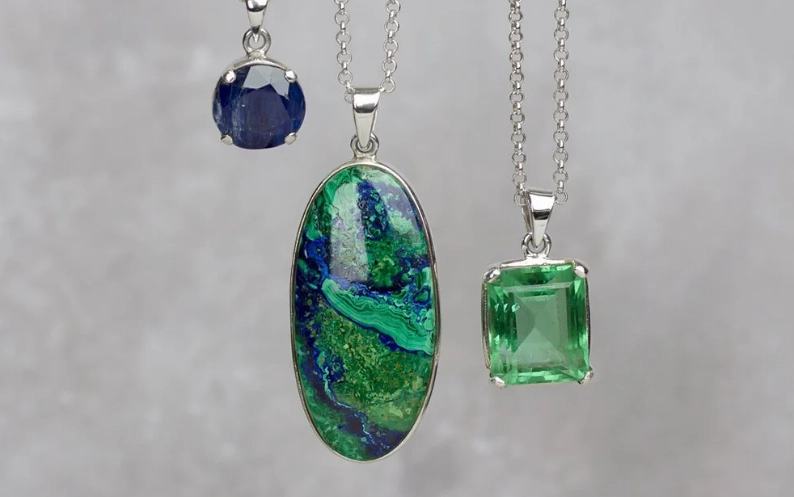
If you're buying it for these purposes, your connection to the piece's appearance is paramount. Choose one that visually resonates with you, that you'll want to hold and look at. That personal connection is more important than any list of properties.
A Practical Buyer's Guide: What to Look For and What to Avoid
Let's get down to brass tacks. You're ready to buy a piece of Azurite Malachite. What now?
1. Define Your Purpose: Are you buying a display specimen, a piece of jewelry, or a tumbled stone for your pocket? This dictates everything.
- For Display: Prioritize aesthetics, contrast, and condition. Look for pieces on a nice matrix, with minimal damage. A label from a known locality (e.g., "Bisbee, Arizona") adds provenance and value.
- For Jewelry: Prioritize durability and cut. Look for well-polished cabochons with good doming. Ask if the stone has been stabilized. Expect it to be set in protective settings (bezels are good).
- For Handling/Tumbling: Go for a smaller, tumbled or rough piece that feels good in the hand. Polish should be smooth, no sharp edges.
2. Set a Budget: Prices are all over the map. A small, low-contrast tumbled stone might be $10-$20. A decent, small cabinet specimen can be $50-$200. A large, showpiece specimen from a famous locale can run into the thousands. Jewelry prices depend heavily on the metal, craftsmanship, and stone quality.
3. Buy from Reputable Sources: This is non-negotiable.
- Mineral Shows: Fantastic places to see quality, ask questions directly to dealers (who are often collectors themselves), and compare pieces side-by-side.
- Specialized Online Mineral Dealers: Look for established sellers with detailed photos, accurate descriptions, and clear policies. They should know their localities and be able to answer technical questions.
- What to Avoid: Be extremely wary of generic marketplaces (like some mass-market sections of Etsy or eBay) where dyed stones are rampant. If the price seems too good to be true for the size and color described, it probably is.
4. Ask Questions: A good seller welcomes them.
- Where is this from? (Locality)
- Has this been treated in any way? (Stabilized, dyed, coated?)
- What is the size/weight exactly? (Use a ruler in photos for scale if online)
- Are there any repairs or restorations? (Sometimes fragments are glued to matrix)
Caring for Your Azurite Malachite
This stuff isn't quartz. It needs a bit of TLC.
Keep it Dry: Prolonged exposure to water, especially hot water and soaps, can damage the surface and leach color over time. Never wear Azurite Malachite jewelry in the shower, pool, or while washing dishes.
Keep it Cool and Dark: Avoid prolonged direct sunlight. Like many colored minerals, strong UV light can, over years, cause fading. The deep blue of azurite is particularly susceptible.
Keep it Safe from Scratches: Store it separately from harder gems. A soft cloth bag or a separate compartment in a jewelry box is ideal. Never toss it loosely into a bag with keys or other jewelry.
Cleaning: Use a soft, dry cloth. For light dusting, a very soft brush (like a makeup brush) works wonders. If you must use a damp cloth, make it a quick wipe with distilled water and dry immediately. No ultrasonic cleaners, no steam, no harsh chemicals. Ever.
Treat it like the delicate, ancient natural artwork it is, and it will stay beautiful for a lifetime.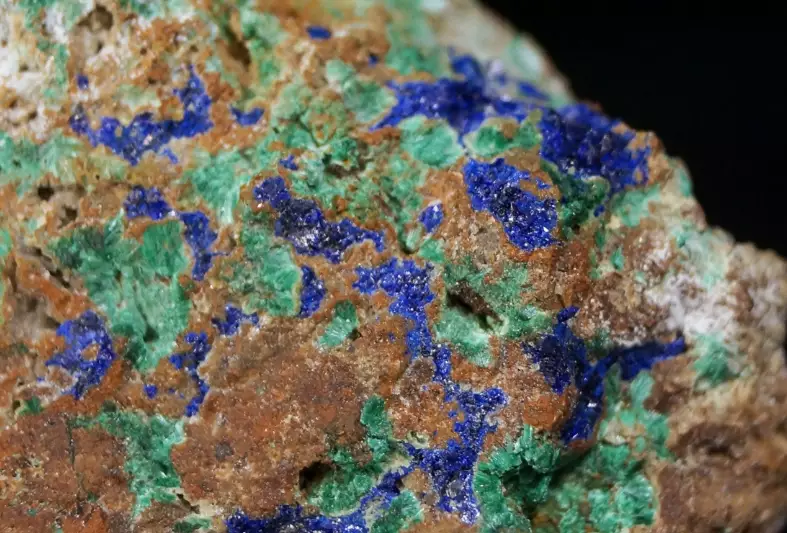
Common Questions About Azurite Malachite (Answered)
---
So, there you have it. Azurite Malachite is a bridge between earth science and art, between geology and human fascination. Whether you're drawn to its stunning visual drama, the geological story it tells, or the symbolic meaning people attach to it, it's a mineral that commands attention. Just remember to buy with your eyes open, care for it properly, and appreciate it for the remarkable natural object it is. That's the real secret to its enduring appeal.
Related Articles
Selenite Crystal: Meaning, Uses & How to Get the Most From It
Peridot: Your Guide to the Gemstone of Light & Abundance
Kyanite: The Ultimate Guide to Properties, Uses & How to Identify It
Clear Quartz Spiritual Meaning: The Ultimate Guide to the Master Healer
Blue Chalcedony: Unveiling Its Other Name & Gemstone Secrets