Quick Guide
- What Exactly Is Selenite Crystal? (It's Not What You Think)
- The Heart of the Matter: What Is Selenite Crystal Used For?
- Selenite vs. Satin Spar: The Confusion You Need to Understand
- How to Identify Real Selenite (and Spot a Fake)
- Caring for Your Selenite Crystal: What NOT to Do
- Answering Your Burning Questions (FAQs)
- My Final Take: Is a Selenite Crystal Worth It?
Let's talk about selenite. You've probably seen those gorgeous, milky-white wands and towers in crystal shops or all over Instagram. They look peaceful, almost like frozen light. But what's the real story behind the selenite crystal? Is it just a pretty decoration, or is there more to it? I remember buying my first piece years ago, drawn to its simplicity, only to realize later I had a lot to learn—like the fact that it can actually get damaged by water (yep, I learned that the hard way).
This guide is the one I wish I had back then. We're going to move past the vague spiritual buzzwords and get into the tangible, practical details. What can you actually do with a selenite crystal? How does it work in a real-world sense? And crucially, how can you be sure you're not buying a cheap look-alike? We'll cover all of that, step by step.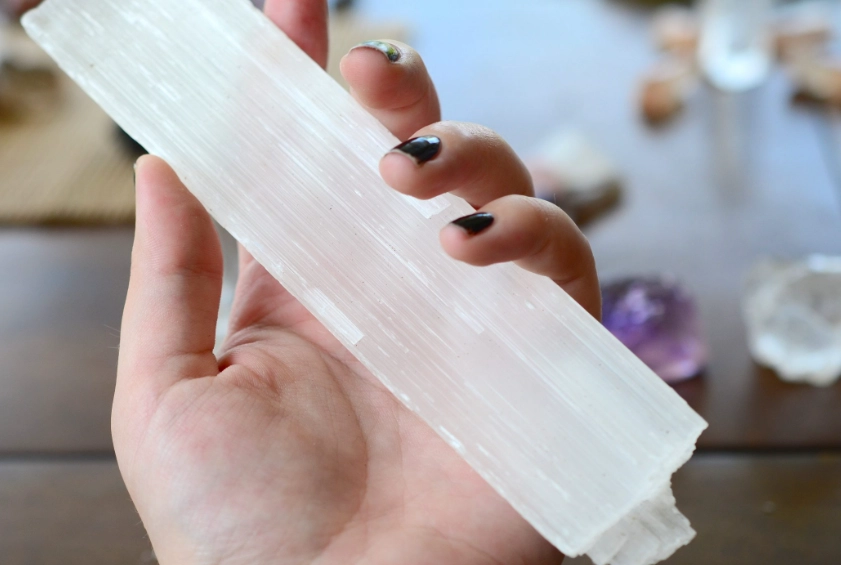
What Exactly Is Selenite Crystal? (It's Not What You Think)
First things first, let's clear up a major point of confusion. When people say "selenite," they're usually talking about a specific form of the mineral gypsum. Gypsum is a hydrous calcium sulfate, and it comes in several varieties. The one we know and love as the clear, translucent, often striated wand or plate is technically the crystalline variety. There's also "satin spar," which is fibrous and silky, and alabaster, which is fine-grained. In the crystal world, the names "selenite" and "satin spar" are often used interchangeably, which drives geologists a bit nuts, but it's the common parlance.
Its formation is fascinating. It often grows in clay or sedimentary rock environments as evaporation occurs, leaving behind these beautiful crystalline structures. Major sources include Mexico, Morocco, and the USA. I have a piece from the Naica Mine in Mexico (often called the "Cave of Swords"), and the clarity is mind-blowing—it looks like glass but has that unmistakable ethereal quality.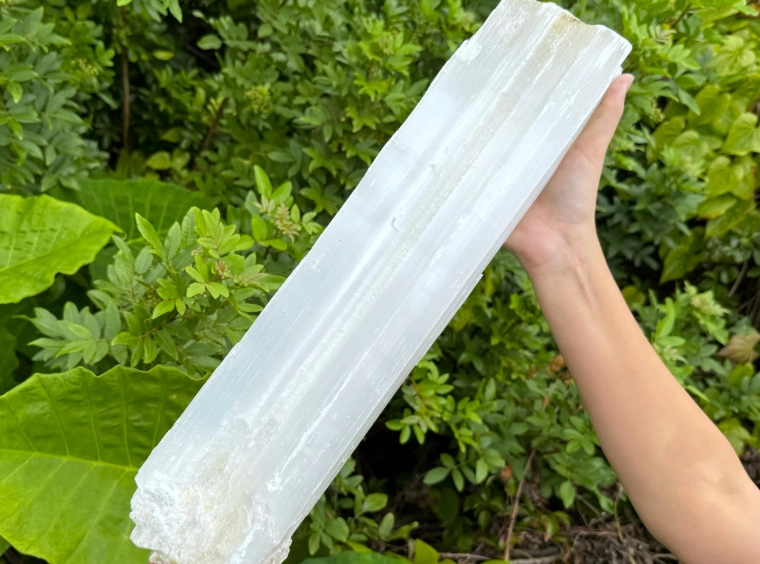
The Heart of the Matter: What Is Selenite Crystal Used For?
This is where people get curious. The uses fall into two main buckets: the spiritual/intentional and the downright practical. Let's break them down without the fluff.
Spiritual and Energetic Uses (The "Why It's Popular" Stuff)
Selenite is primarily known as an energy cleanser and amplifier. Think of it like a spiritual battery charger and a Wi-Fi signal booster combined.
- Cleansing Other Crystals: This is arguably its most famous use. You don't need to use smoke, salt, or sound with your other stones. Simply placing them on a selenite plate or next to a selenite wand is believed to clear stagnant energy. It's passive, requires no effort, and doesn't risk damaging water-sensitive crystals. I use a large selenite slab as a charging station for my entire collection.
- Clearing Space Energy: People often place selenite wands in room corners or on windowsills with the intention of keeping the energy of a space light and clear. It's like having an air purifier, but for the vibe of a room.
- Meditation and Mental Clarity: Holding a selenite wand or placing it nearby during meditation is said to help quiet mental chatter and connect to higher states of awareness. Its association with the crown chakra links it to clarity and divine connection.
Practical, Down-to-Earth Uses
Beyond the metaphysical, selenite has real, tangible uses in your daily life.
- Natural Night Light: Its translucence means it catches and holds light beautifully. A small selenite lamp or orb can provide a gentle, calming glow in a bedroom or nursery, no electricity needed beyond a nearby light source.
- Decoration with Purpose: It's a stunning decorative object. A large, raw selenite tower or a cluster acts as a beautiful centerpiece that also serves its cleansing function. It goes with almost any decor style.
- A Tool for Intention Setting: Many use it as a physical anchor for goals. Writing an intention on a piece of paper and placing a selenite wand on top is a common practice to "charge" that intention with clarity and light.
Selenite vs. Satin Spar: The Confusion You Need to Understand
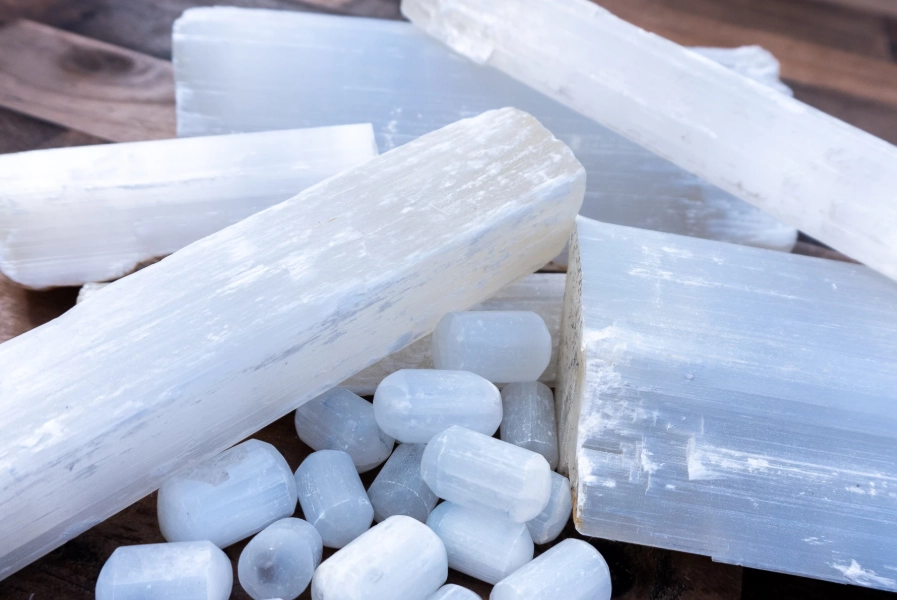
Okay, let's tackle the big elephant in the crystal shop. Most of what's sold as "selenite" is actually satin spar gypsum. This isn't necessarily a scam, but it's good to know the difference.
| Feature | Selenite (Crystalline Gypsum) | Satin Spar (Fibrous Gypsum) |
|---|---|---|
| Structure | Transparent, sheet-like, clear crystalline plates. Can look like glass. | Opaque to translucent, fibrous, silky luster. Shows a "cat's eye" effect. |
| Common Forms | "Windows" or plates, often called "Mariam's Glass." Less common as wands. | Almost all the common wands, towers, and spheres on the market. |
| Feel | Smooth, cool, like glass. | Can feel slightly fibrous or silky to the touch. |
| Price & Availability | Generally rarer and more expensive for large, clear pieces. | Very common, affordable, and widely available. |
| Energetic Reputation* | Associated with higher clarity, visionary work, and mental precision. | Associated with gentle cleansing, emotional soothing, and practical energy work. |
*Note: These energetic distinctions are from crystal healing traditions, not scientific fact.
The key takeaway? For most common uses like cleansing other crystals or as a decorative wand, satin spar works perfectly well and is what you're likely buying. If a seller is charging a premium for a "rare selenite wand" that looks fibrous, they might be capitalizing on the name confusion. True, clear crystalline selenite is special and has a different aesthetic.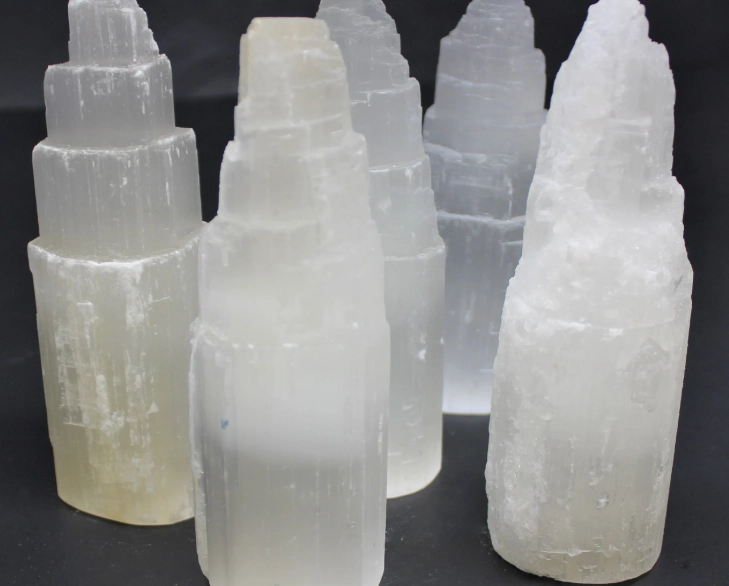
How to Identify Real Selenite (and Spot a Fake)
This is crucial. The main issue isn't usually fake selenite, but confusing it with other materials or poor-quality gypsum. Here’s your cheat sheet.
The Scratch Test (The Best One): Remember the Mohs hardness of 2? Gently try to scratch an inconspicuous spot with your fingernail. If it scratches easily, it's likely real gypsum. If your nail does nothing, it might be calcite (hardness 3) or glass (hardness 5.5). Be gentle—you don't want to ruin a beautiful piece!
The Look and Feel: It should feel cool to the touch. Satin spar will have a fibrous, parallel line structure and a pearly sheen. Clear selenite will have glass-like clarity but with natural inclusions, striations, or a milky haze—it won't be flawless like manufactured glass.
The Water Test (A Last Resort): This is risky. Real selenite is water-soluble. A tiny, tiny drop of water on an unseen area will eventually start to dissolve it, leaving a damp spot. If nothing happens, it's not gypsum. WARNING: Never soak or wash your selenite—this test can damage it!
I once bought a "selenite" sphere online that arrived suspiciously perfect and heavy. Did the scratch test—nothing. It was just molded resin. A total waste. Now I always buy from reputable sellers who provide details on the source.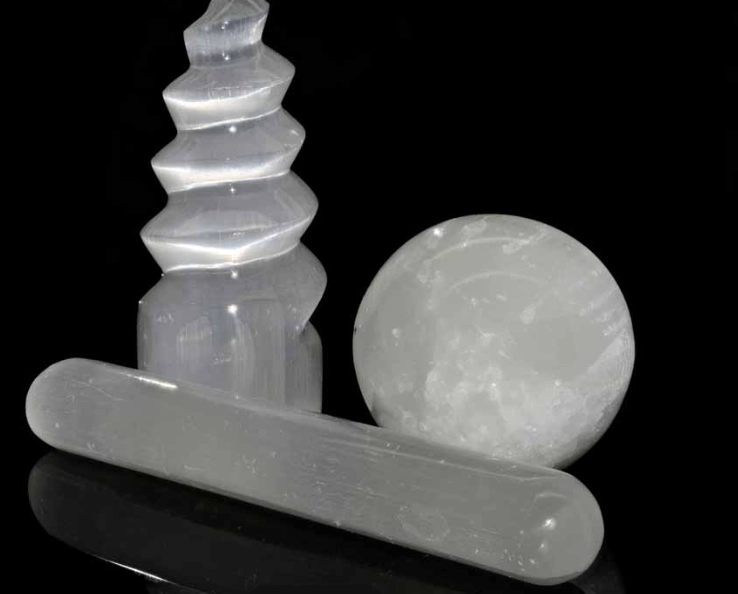
Caring for Your Selenite Crystal: What NOT to Do
This is where many beginners (myself included) mess up. Selenite is delicate. Treat it like a precious, ancient artifact, not a baseball.
- NO WATER. EVER. This is the #1 rule. Do not immerse it, wash it, or leave it in a humid bathroom. It will become dull, soft, and eventually dissolve. If you must clean it, use a dry, soft cloth.
- Avoid Harsh Sunlight: Prolonged direct sun can cause it to become brittle and fade over time. Indirect light is fine.
- Store It Carefully: Don't toss it in a bag with harder crystals like quartz or amethyst. They will scratch it. Wrap it in a soft cloth or keep it separate.
- Recharge It? A common question is, "How do I cleanse my selenite crystal?" The traditional belief is that it self-cleanses. However, if you feel it needs a refresh, placing it in moonlight (not sun) or near clear quartz are safe methods.
Answering Your Burning Questions (FAQs)
Absolutely not. This is dangerous. Because selenite contains gypsum, it can release particles into the water that are not safe for consumption. Never ingest water that has been in contact with selenite. For a "selenite" elixir, use the indirect method: place a cleansed selenite crystal outside a glass jar of water, not inside it.
No, they are completely different minerals. Quartz (silicon dioxide) is much harder (Mohs 7), usually completely clear like ice, and is a master healer/amplifier. Selenite (gypsum) is softer, has a milky or satiny appearance, and is a specialist in cleansing and clarity. They work well together but are not substitutes.
There's no single right way. Common practices include: holding it during meditation, sweeping it through the air around your body to symbolically clear your aura (a practice called "sweeping"), placing it on an altar, or simply laying it across other crystals to cleanse them. Let your intuition guide you.
Popular spots are: near the front door to clear incoming energy, on a workspace for mental focus, in the bedroom for peaceful sleep (its gentle energy is non-stimulating), or in any corner that feels "stuck." I keep a plate on my wifi router—more as a symbolic gesture than anything scientific!
This is almost always due to exposure to moisture (humidity, accidental contact with water) or skin oils from frequent handling. Unfortunately, this damage is often permanent. It's a reminder of its soft, delicate nature.
My Final Take: Is a Selenite Crystal Worth It?
If you're drawn to crystals, yes, a piece of selenite is a fundamental tool. Think of it as a utility player. It's not the flashiest crystal, but it's incredibly useful. Its ability to cleanse other stones alone makes it a workhorse in any collection.
For the purely aesthetically minded, it's a beautiful natural object that brings a soft, luminous quality to a space.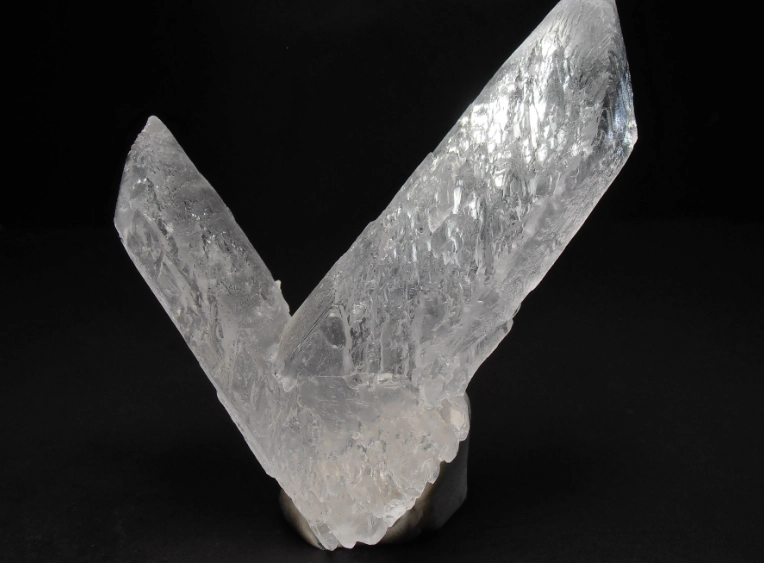
Just go in with your eyes open. Understand you're likely getting satin spar (which is fine). Know how to test it. And for goodness' sake, keep it dry. Start with a small wand or a palm-sized charging plate. See how it feels in your space. You might find its quiet, clarifying presence becomes indispensable.
Want to dive deeper into the geology? The Mindat page for Selenite is an excellent, authoritative resource for mineralogical data. For a broader understanding of gypsum, the USGS Gypsum Information page provides solid, scientific context. And if you're curious about its historical use, the British Museum's collection includes alabaster (a related form) artifacts, showing its long-standing appeal.
At the end of the day, a selenite crystal is a bridge between the ancient earth and a modern desire for peace and clarity. Handle it with care, respect its properties, and it can be a simple, grounding presence in a chaotic world.
Related Articles
How to Use Sodalite Crystal: A Complete Guide for Mind & Body
Blue Chalcedony Meaning: Healing Properties, Uses & How to Spot Fakes
Azurite Crystal: Deep Blue Stone for Intuition & Insight
Rose Quartz Meaning: More Than Just a Pretty Pink Stone
White Larimar Stone Meaning: Healing, Properties & How to Use