Let's be honest. Most people have never heard of phenakite. You walk into a crystal shop, and it's all amethyst and rose quartz. But then you see it—a clear, brilliant stone that looks like diamond but has this strange, fiery sparkle. You ask the price, and your eyebrows hit your hairline. That's your first introduction to phenakite, one of the most undervalued and misunderstood gemstones in the collector's world.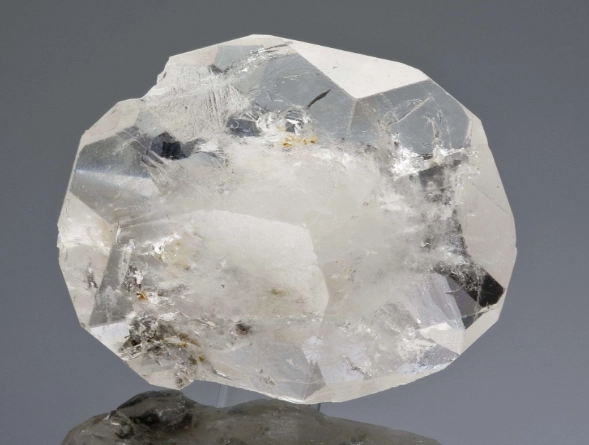
I've been dealing in rare gems for over a decade, and phenakite consistently surprises even seasoned collectors. Its price per carat can rival fine sapphire, yet its name draws blanks. This guide isn't just a list of facts. It's the manual I wish I had when I bought my first piece—a small, flawed crystal I overpaid for because I didn't know how to judge its cleavage.
What's Inside?
What is Phenakite? The Basics Explained
Phenakite is beryllium silicate (Be2SiO4). It was first discovered in 1833 in Russia's Ural Mountains. The name comes from the Greek word 'phenax', meaning 'deceiver', because it was so often mistaken for quartz or diamond. That tells you something about its appearance right off the bat.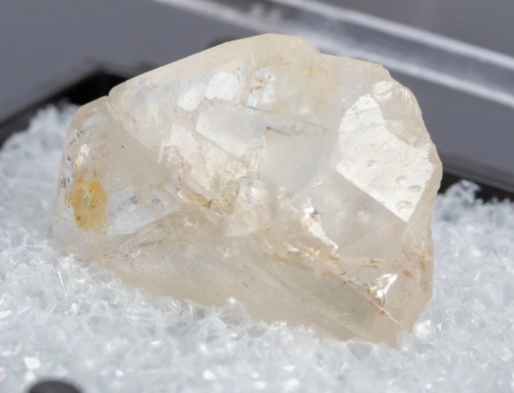
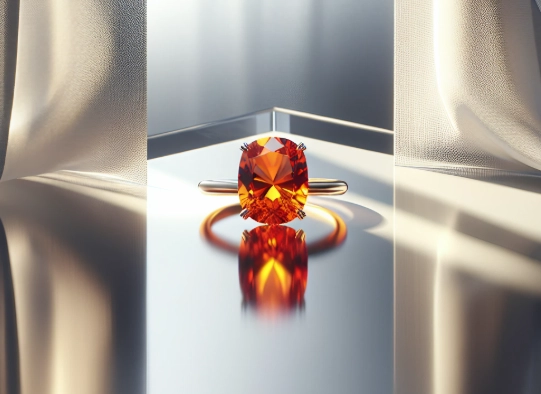
It forms in hexagonal crystals. You'll find them as stubby prisms or flat, tabular plates. The best gem-quality material is usually colorless or a soft champagne hue, but it can also be pale yellow or pink. The absolute rarest? A sherry-orange color from a specific African deposit.
Here’s the technical breakdown that actually matters when you're holding a piece:
| Property | Detail | Why It Matters |
|---|---|---|
| Hardness (Mohs) | 7.5 - 8 | Hard enough for jewelry, but with a big caveat (see below). |
| Refractive Index | 1.65 - 1.67 | Higher than quartz, giving it more sparkle. Not as high as diamond, but the dispersion (fire) is exceptional. |
| Dispersion | 0.015 | This is the key. Its fire is 60% that of a diamond. In good light, it throws rainbow flashes. |
| Cleavage | Distinct / Prismatic | The deal-breaker. It can split cleanly along crystal planes. A sharp knock in the wrong direction = a ruined stone. |
| Double Refraction | Very Strong (0.016) | Look through it at a line. You'll see two lines. This is the easiest at-home test to distinguish it from glass or cubic zirconia. |
The major sources today are Brazil, Russia (the classic locality), Madagascar, and Nigeria. Myanmar and Colorado produce some, but rarely gem quality. The origin dramatically affects value. A Russian phenakite from the original mines commands a huge premium, sometimes double or triple an equivalent stone from Brazil.
Why is Phenakite So Valuable?
It boils down to three things: rarity, optics, and collector demand.
Large, clean crystals suitable for faceting are incredibly rare. Most phenakite is heavily included, etched, or too small. Finding a 5-carat piece with eye-clean clarity is a minor miracle. The market for high-end colored gemstones has pushed interest into formerly "niche" stones like phenakite. Wealthy collectors want something nobody else has.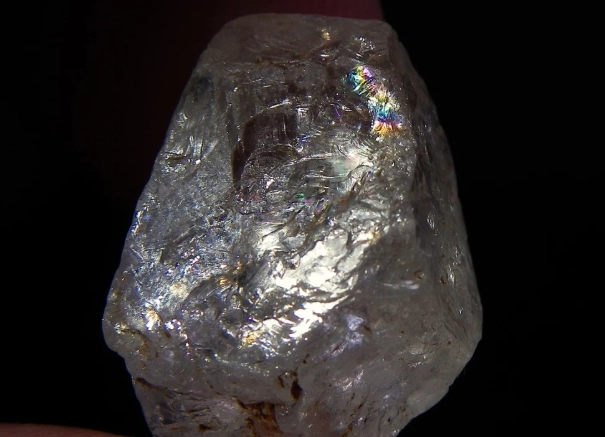
Then there's the brilliance. Cut properly, its combination of high refractive index and strong dispersion creates a scintillating effect that's different from diamond—softer, but with more colorful fire. In the right cut (an oval brilliant or a step cut), it's mesmerizing.
Let's talk numbers, because vague statements are useless. These are 2024 approximate price ranges per carat for faceted stones, based on my recent dealings at the Tucson gem shows and with dealer networks. These assume no premium for Russian origin.
Commercial Grade (Visible inclusions, poor cut): $30 - $150
Good Grade (Minor inclusions, decent cut): $150 - $600
Fine Grade (Eye-clean, excellent cut): $600 - $2,500+
Exceptional/Collector Grade (Large, flawless, ideal cut): $2,500 - $10,000+
Notice the massive jump. A 2-carat "good" stone might be $800 total. A 2-carat "exceptional" stone could be $15,000. The gap is all about clarity and cutting. Most cheap phenakite is cut poorly to save weight, killing its optical performance. It becomes a dull, glassy lump.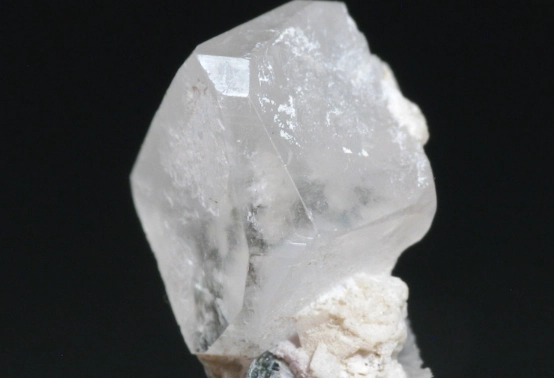
Phenakite vs. Other Gemstones: A Quick Comparison
People confuse it with several stones. Here’s how to think about it.
Phenakite vs. Diamond: Diamond is harder (10), has a higher refractive index, and no cleavage. Phenakite has more fire (colorful dispersion) for its weight. Diamond is for "bling"; phenakite is for connoisseurs who appreciate subtlety and rarity.
Phenakite vs. Quartz (Rock Crystal): This is the most common mix-up. Quartz is softer (7), has much lower refraction and no fire. It looks waxy or glassy by comparison. The double refraction test is instant: quartz shows weak doubling, phenakite shows strong doubling.
Phenakite vs. Topaz: Colorless topaz is common and cheap. It's softer, has lower dispersion, and is often treated. Phenakite is in a different league of rarity and value.
A collector I know puts it well: "Diamond is a luxury car. Phenakite is a hand-built classic sports car. Fewer people understand it, but those who do are fanatical."
How to Buy Phenakite Safely (Without Getting Scammed)
This is where most people get burned. The market is full of mislabeled stones and overpriced, low-quality material.
Where to Buy (and Where to Avoid)
Trustworthy Sources:
* Specialized Gem & Mineral Shows: Tucson, Denver, Munich. You can inspect in person and talk to experts.
* Reputable Gemstone Dealers: Those who provide lab reports from institutions like the Gemological Institute of America (GIA) or American Gemological Laboratories (AGL).
* Auction Houses: For high-end, investment-grade pieces. They do the provenance work for you.
Red Flag Sources:
* General online marketplaces (e.g., eBay, Etsy) unless the seller is a verifiable specialist with a long history.
* Social media live sales where pressure to buy is high and inspection is impossible.
* Any seller who cannot or will not tell you the country of origin.
The 5-Minute Evaluation Checklist
When you're looking at a stone, either online or in person, run through this:
- Clarity: Hold it under a bright light. Are the inclusions black specks (better) or white, cloudy feathers (worse, can weaken the stone)?
- Cut: Does it look brilliant and fiery, or does it have a dead, windowed center? A poor cut is the number one value killer.
- Color: Is it a pure white/colorless, or a pleasant champagne? Avoid gray or milky tones.
- Documentation: Is there a lab report? At minimum, the seller should state origin and confirm no treatments (phenakite is almost never treated, so any mention of treatment is a huge red flag).
- Setting: If already set, is it in a protective bezel or a prong setting that exposes the girdle to chips?
Caring for Your Phenakite Gemstone
This isn't a stone you toss in a jewelry box with your other pieces. That cleavage plane is its Achilles' heel.
Cleaning: Warm water, mild dish soap, and a soft brush. Ultrasonic cleaners? Absolutely not. The vibrations can cause a cleavage crack to propagate. Steam cleaners are also a no-go due to thermal shock risk.
Storage: Keep it separate in a soft cloth pouch or a compartment in a jewelry box. Never let it rub against harder stones like sapphire or diamond.
Wearing: Rings are risky. I don't recommend phenakite for an engagement ring or a daily-wear ring. Pendants, earrings, and brooches are ideal—they suffer less impact. If you must set it in a ring, a bezel setting that covers the entire girdle is mandatory.
A jeweler friend put it bluntly: "Treat it like fine porcelain, not stainless steel."
The Metaphysical Side of Phenakite
In crystal healing circles, phenakite is considered a supremely high-vibration stone. It's linked to the crown chakra and is said to facilitate connection to higher guidance, angelic realms, and deep meditation. Some call it an "amplifier" for other crystals.
My take? As a gemologist, I'm skeptical of metaphysical claims. But I've observed the market enough to tell you this: the spiritual demand is real and affects price. A phenakite labeled as a "high-vibration meditation stone" from a well-known metaphysical seller will often carry a 20-30% premium over an identical stone sold by a traditional gem dealer. Whether that's value or markup depends on your perspective.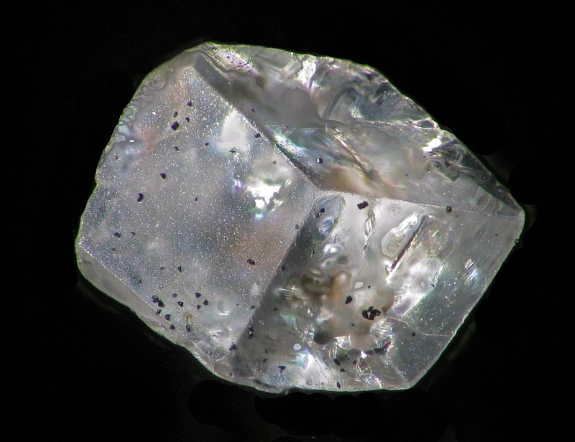
If you're buying for energy work, the physical quality still matters. A cloudy, poorly cut stone won't conduct light—or anything else—effectively.
Your Phenakite Questions, Answered
How can I tell if my phenakite is real?
What's a reasonable price for a 1-carat phenakite?
Is phenakite too fragile for daily wear in a ring?
Where is the best place to buy authentic phenakite?
Related Articles

The RISC-V ecosystem is about to explode, and the flat-headed brother enters the
Moonstone Benefits: Who Is It Good For & How to Use It
Red Jade: The Ultimate Guide to Meanings, Uses, and How to Spot Fakes
Ruby Stone Month: The Complete Guide to July's Birthstone
Orange Sapphire Benefits: Why This Gemstone is a Must-Have