Quick Navigation
- The Core Visual Checklist: Breaking Down the Look
- The Big Question: Real Jasper vs. The Fakes & Lookalikes
- A Tour of Jasper's Family: Popular Types and Their Looks
- Beyond Looks: The Physical Tests (For the Curious Collector)
- Digging Deeper: The Science Behind the Look
- Answers to Your Probable Next Questions (FAQ)
- Bringing It All Together: Your Action Plan
Let's be honest. You're here because you've got a stone, maybe from a shop, a market, or even a riverbed, and someone called it "jasper." Or you're looking at pictures online and everything seems to be labeled jasper. It's confusing, right? One picture shows a smooth red stone, another shows a crazy patterned yellow and green thing. Which one is real? What are you even supposed to be looking for?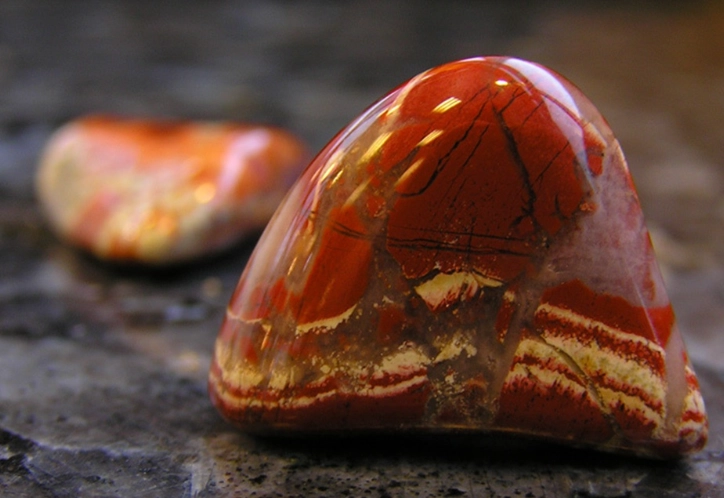
I've been there. Early in my collecting days, I bought a lovely "red jasper" sphere that, upon closer inspection years later, turned out to be dyed howlite. It was a bummer. That experience sent me down a rabbit hole of learning, and now I want to save you the same trouble. We're going to cut through the noise and get straight to the heart of the matter.
When people ask "what does a pure jasper stone look like?" they're often asking two things. First, what are the basic, textbook characteristics of genuine jasper? And second, how do I spot the real deal in a world full of imitations? We'll tackle both.
The Quick Textbook Answer
In simple terms, pure jasper is an opaque, microcrystalline variety of quartz (chalcedony). It's almost never a single, uniform color. Its signature look comes from a dense, grainy structure that holds impurities like iron oxides and clay, creating its famous patterns, bands, spots, and streaks. It has a dull to vitreous (glassy) luster when polished, and it's tough—hard enough to scratch glass.
The Core Visual Checklist: Breaking Down the Look
Forget vague descriptions. Let's get specific. When you're holding a potential piece of jasper, run through this mental checklist. A real one will hit most of these points.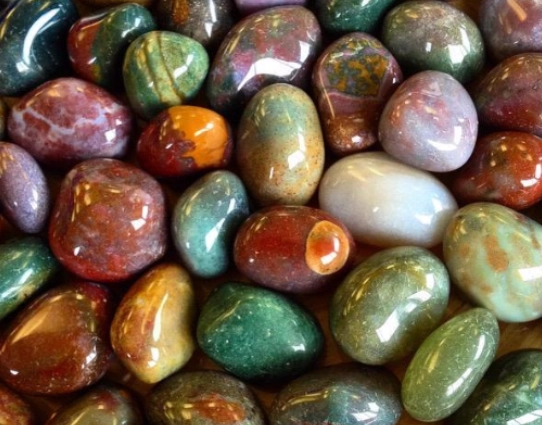
1. Opacity is King (or Queen)
This is the number one rule. Pure jasper is opaque. You cannot see light through it, not even on the thinnest edges. Hold it up to a bright light—nothing passes through. If you see any translucency (light passing through but blurry), you might be looking at agate or chalcedony, which are quartz cousins. Jasper's density and microscopic crystal structure block all light. I can't stress this enough; it's the most consistent visual clue.
2. The Texture & Feel: It's All in the Grain
What does a pure jasper stone look like in terms of texture? Unpolished, it often has a grainy, earthy, sometimes even rough feel. It's not slick like obsidian. Under a loupe (a cheap 10x jeweler's loupe is a collector's best friend), you might see a granular or sugary texture, unlike the fibrous or waxy look of some other stones. When polished to a high degree, it can achieve a beautiful, smooth, vitreous shine, but that underlying granular composition is what gives jasper its solid, substantial weight and appearance.
3. Color & Pattern: The Beautiful Chaos
Here's where it gets fun. Jasper is the artist of the mineral world. Pure jasper is rarely a flat, solid color. Its beauty lies in its inclusions. Think of it as a canvas where mineral impurities paint the picture.
- Common Colors: Reds, browns, yellows, greens, and rarely blues or purples. The reds and browns usually come from iron oxides (rust, essentially). Greens can come from chlorite or other minerals.
- Signature Patterns: Stripes, bands, swirls, spots (like in Dalmatian jasper), orb-like circles (as in Poppy or Ocean jasper), dendritic (tree-like) formations, and scenic, landscape-like patterns (picture jasper is famous for this).
The pattern should look integrated, not painted on. The colors blend and bleed into the stone's matrix. If you see a pattern that looks like it's just sitting on the surface or has very sharp, unnatural lines, be suspicious.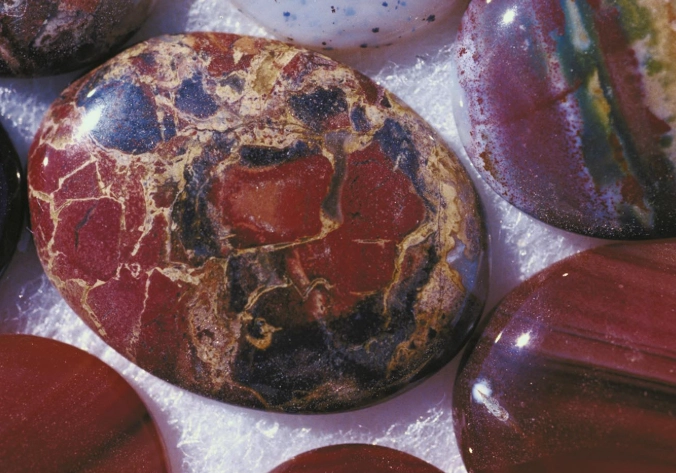
A Quick Reality Check on "Pure" Jasper
This is a nuance most guides miss. In geology, "pure" jasper refers to its composition being primarily silica (quartz). But in the gem and crystal trade, we rarely deal with 100% chemically pure jasper. The "impurities" (iron, clay, etc.) ARE what give it color and character. So when we talk about a pure jasper stone look, we mean a genuine, untampered-with piece of jasper mineral, not a chemically pure one. A "pure" red jasper will still have iron in it—that's what makes it red!
The Big Question: Real Jasper vs. The Fakes & Lookalikes
This is the practical stuff. Knowing what jasper looks like is one thing; spotting a fake in a store is another. The market is flooded with dyed, reconstituted, and mislabeled stones.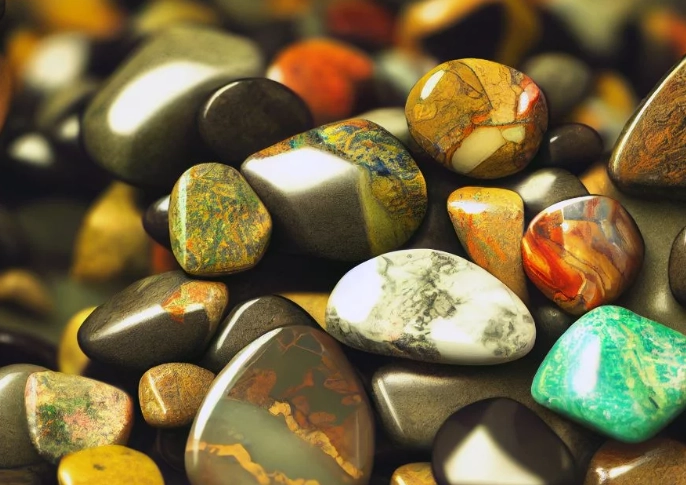
| What You Might See | What It Likely Is | How to Tell the Difference |
|---|---|---|
| Unnaturally Bright, Uniform Colors (e.g., neon blue, hot pink) | Dyed quartz, dyed howlite, or dyed marble. | Check for dye concentration in cracks (use a cotton swab with acetone* gently on an inconspicuous spot). The color looks "painted on." Real jasper's color is internal and granular. |
| Perfect, Repetitive Patterns | Man-made resin or glass imitation. | Feel it. Plastic/resin is warm to the touch, lighter in weight. Glass may have conchoidal (shell-like) fractures. Real jasper is cooler and heavier. Look for air bubbles under magnification—a sign of glass. |
| "Jasper" that is Translucent | Agate or chalcedony (often mislabeled). | The light test! Hold it to a light. If light passes through the edges, it's not jasper. Agate is translucent to semi-transparent. |
| Very Soft, Easily Scratched | Soapstone, gypsum, or a soft composite. | The scratch test (do this carefully on a base you don't mind marking). Jasper has a Mohs hardness of 6.5-7. It should be able to scratch glass. If a steel knife (hardness ~5.5) scratches it easily, it's not jasper. |
*A quick note on acetone testing: Always be cautious. Test on a hidden area first, as it can damage some genuine stones' polish or treatments. It's a good tool for spotting obvious dye jobs on cheap fakes.
A Major Red Flag (Literally)
Be extremely wary of any stone sold as "jasper" that is a single, vibrant, uniform color with zero pattern or inclusion—especially red, blue, or green. While rare solid-color jasper exists (like some Basanite), the vast majority of solid, bright stones in souvenir shops are dyed. That "vibrant blue jasper" tumbler you see everywhere? Almost certainly dyed howlite or magnesite. It's pretty, but it's not answering the true question of what does a pure jasper stone look like.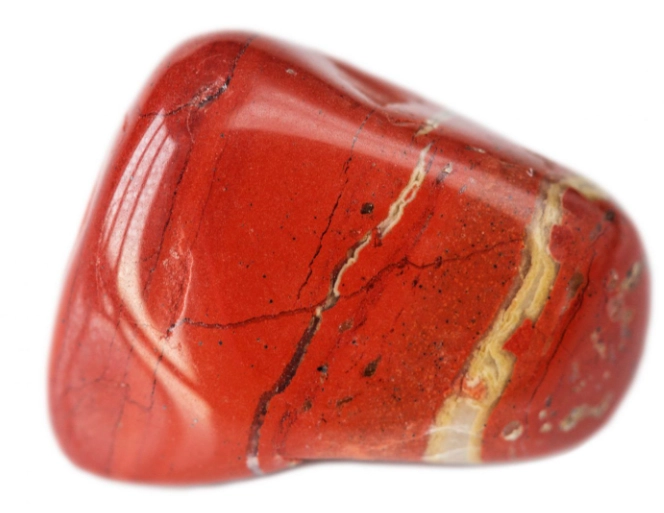
A Tour of Jasper's Family: Popular Types and Their Looks
To really understand jasper's appearance, you need to see its family album. Here’s how some popular named varieties answer the question of what a pure jasper stone looks like in their own unique way.
Red Jasper
The classic. Think deep brick red, rusty brown-red, or oxblood. It often has subtle variations in shade, darker streaks, or inclusions of other colors. It's usually solid-looking but rarely perfectly uniform. Polished, it has a rich, warm, matte to glossy shine. It's one of the most common and often what people picture first.
Picture Jasper
This is where jasper turns into a landscape painting. Browns, tans, creams, and blacks form bands and patterns that look like mountains, deserts, or skies. The key is the scenic, figurative appearance. It's opaque and has that characteristic fine-grained jasper texture. A true masterpiece of nature.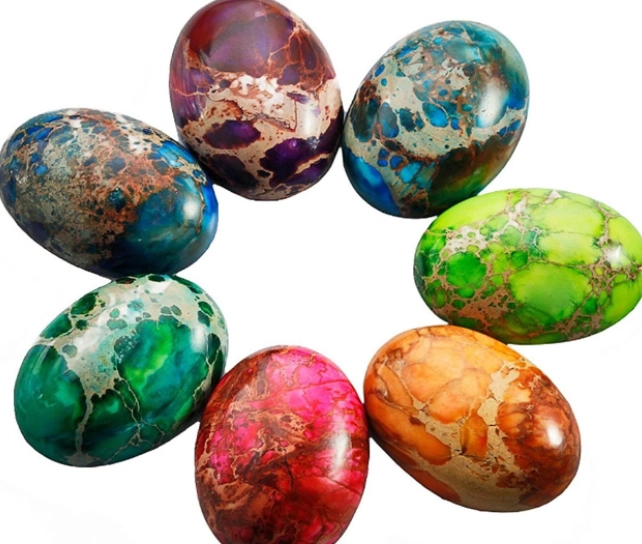
Dalmatian Jasper
You can't miss it. A white to beige base covered in crisp black or brown spots. It looks exactly like a Dalmatian dog's coat. The spots are usually well-defined and random. Important note: True Dalmatian Jasper is actually a igneous rock with feldspar and quartz, not a sedimentary jasper in the strictest sense, but the trade has always called it jasper. It's a great example of how the name is used broadly.
Bumblebee Jasper
A stunning and vibrant variety. It's a mix of bright yellow, orange, and black bands. Crucial fact: This one is a bit of a misnomer too. It's not a true silica-based jasper but a calcite-based stone colored by sulfur and arsenic minerals. It's much softer (hardness around 4). It's included here because it's universally sold as "jasper," and knowing its different properties helps you identify it correctly.
---
Beyond Looks: The Physical Tests (For the Curious Collector)
If you're serious about identification, visual checks get you 90% of the way. These next steps get you to 99%.
The Heft Test: Pick it up. Jasper feels dense and substantial for its size. It's a hefty stone. Resin and plastic fakes feel light and cheap.
The Temperature Test: Jasper feels cool to the touch initially and takes a while to warm up from your body heat. Plastic warms up almost instantly.
The Scratch Test (The Definitive One): This requires a bit of courage. You need a piece of quartz crystal (hardness 7) or a good quality steel file (hardness 6.5). On an unseen part of the stone (like the bottom of a tumble), try to scratch it with the quartz. Genuine jasper, being hardness 6.5-7, should not be easily scratched by the quartz. The quartz might leave a powdery mark that wipes off (the quartz powder), but it won't dig a groove. If the quartz easily gouges it, the stone is softer. Conversely, your jasper should be able to scratch a piece of common window glass (hardness 5.5).
Digging Deeper: The Science Behind the Look
Why does jasper look the way it does? It's born from sediment and silica gel. Imagine ancient volcanic ash or fine clay settling in seabeds. Silica-rich waters percolate through this sediment, cementing it all together with microcrystalline quartz. The iron, manganese, and other minerals present get trapped, creating the colors and patterns. This process makes it incredibly tough and dense—hence the opacity. If you want to dive into the precise mineralogy, resources like the Gemological Institute of America's (GIA) entry on jasper or the mineral database Mindat.org's Jasper page are fantastic, authoritative starting points. They confirm everything we've discussed about its composition and appearance.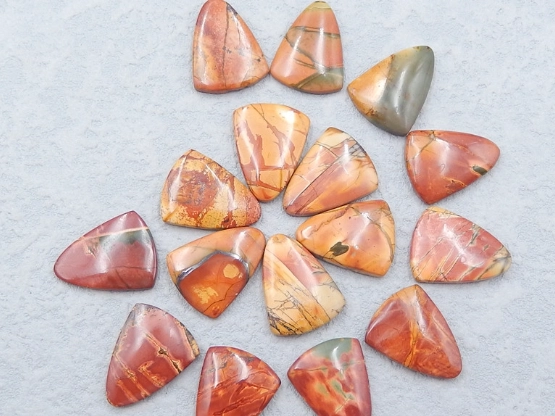
Answers to Your Probable Next Questions (FAQ)
Bringing It All Together: Your Action Plan
So, you're now armed with the knowledge. Next time you're looking at a stone and wondering about its identity, remember this flow:
- Light Test First: Opaque? Good sign for jasper. Translucent? Probably agate/chalcedony.
- Inspect the Pattern: Are the colors and patterns internal, grainy, and integrated? Or do they look superficial, painted, or have bubbles?
- Consider the Feel & Heft: Is it cool, dense, and substantial? Or light and warm?
- When in Doubt, Test (Carefully): Can it scratch glass? Can quartz scratch it?
Understanding what a pure jasper stone looks like is about building a complete picture—opacity + granular texture + integrated, earthy patterns + physical durability. It's not about finding a single, perfect color.
The world of rocks and minerals is wonderfully messy and complex. Jasper, in all its varied glory, is a testament to that. It’s a grounding, earthy stone, both literally and figuratively. Once you train your eye, you'll start spotting its unique character everywhere, and you'll be able to confidently separate the real, beautiful work of nature from the clever imitations. Happy hunting!
Related Articles
What Are Antares and Betelgeuse? A Guide to the Giant Red Stars
Unlock the 7 Key Benefits of Rainbow Moonstone: A Complete Guide
Tiger's Eye Benefits: A Practical Guide to Its Healing Powers & Uses
Unlock the Power of Kyanite: 7 Key Benefits and How to Use Them
Quartz Meaning Explained: Spiritual, Scientific & Practical