What You'll Find in This Guide
- Meet Betelgeuse: The Fickle Shoulder of Orion
- Meet Antares: The Rival of Mars at the Scorpion's Heart
- Side-by-Side: The Red Supergiant Showdown
- Why Are They So Red? The Physics of Cool Giants
- The Inevitable End: What Happens to Stars Like These?
- How to Find Them in the Night Sky
- Common Questions About Antares and Betelgeuse
Look up on a clear night, and if you know where to point your eyes, you might spot them. Two unmistakable, fiery gems in the vast blackness. One anchors the shoulder of the mighty hunter Orion. The other burns at the heart of the celestial scorpion. They don't twinkle like pinpricks; they glow with a steady, ominous red hue that feels ancient and powerful. So, what are Antares and Betelgeuse, really? That's the question we're going to unpack together.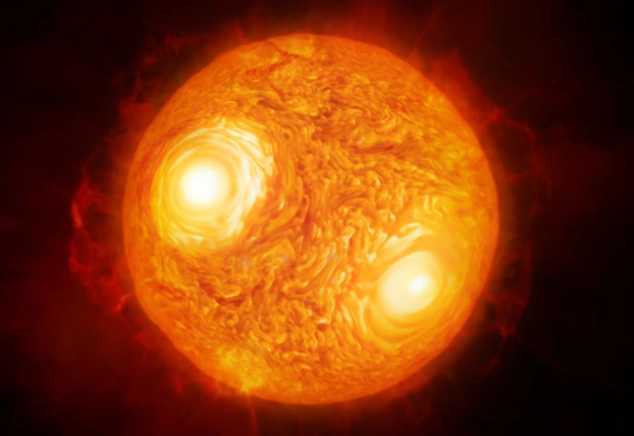
I remember the first time I identified Betelgeuse through a pair of cheap binoculars. It wasn't just a point of light. It had a presence. A sort of smoldering quality that made the other stars around it look pale and cold. Antares came later for me, lower in the summer sky, and it hit me then—these two are in a league of their own. They're not just stars; they're cosmic landmarks, each telling a story of creation, life, and a spectacularly violent future.
In a Nutshell: Antares and Betelgeuse are both red supergiant stars. They're among the largest, most luminous, and most evolved stars we can easily see with the naked eye. They're called 'supergiants' for a reason, and 'red' because their surface temperatures are relatively cool, giving them that distinctive ruddy color. Think of them as stellar retirees who have lived long, bloated lives and are now nearing their dramatic, explosive end.
This isn't going to be a dry textbook entry. We're going to chat about what makes these stars tick, how to find them, why they look so red, and what their fates tell us about the universe. I'll also throw in some personal stargazing tips and point you to the best resources if you want to dive deeper. Let's get started.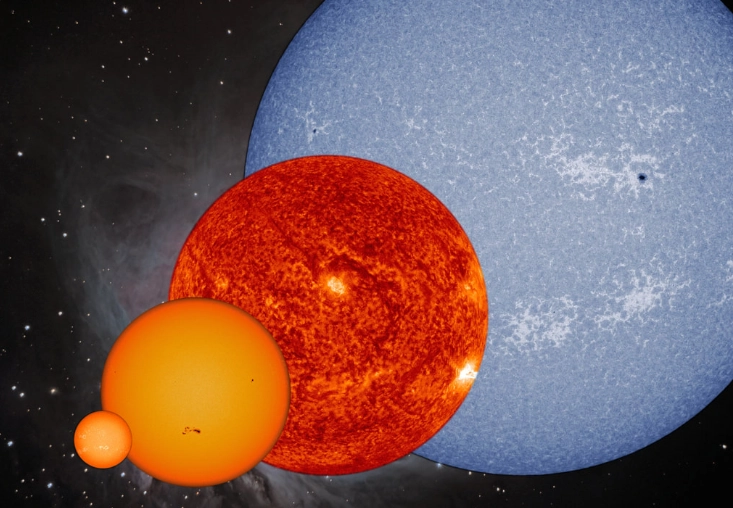
Meet Betelgeuse: The Fickle Shoulder of Orion
Let's start with the one more people have probably noticed, even if they didn't know its name. Betelgeuse (pronounced "BEETLE-juice" or "BET-el-juice"—astronomers argue, I say the first) is the bright orange-red star marking the left shoulder of the Orion constellation. It's impossible to miss Orion in the winter months, a giant rectangle of stars with a belt of three in the middle.
Betelgeuse is a star of superlatives and mysteries.
For one, its size is mind-boggling. If you plopped Betelgeuse down in the center of our solar system, its surface would extend past the orbit of Jupiter. It would swallow Mercury, Venus, Earth, and Mars without a second thought. All that space, for a single star. Wrapping your head around that scale is tough. I sometimes try to imagine it while looking at it, and my brain just gives up.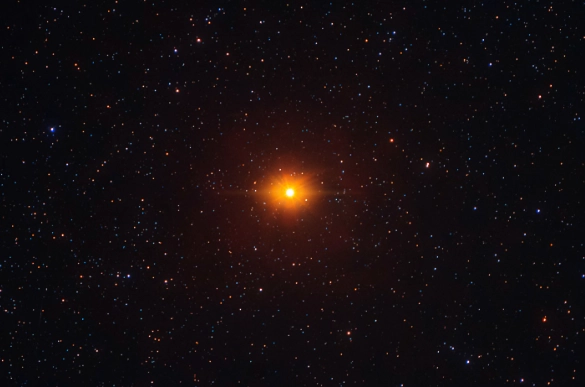
Here's a wild thought: Betelgeuse is so huge and its outer atmosphere so diffuse that it doesn't have a sharp, defined surface like our Sun. It's more like a seething, fuzzy ball of hot gas. This makes measuring its exact size surprisingly tricky for astronomers.
Then there's its behavior. Betelgeuse is a variable star. It doesn't shine with a constant brightness. It dims and brightens over periods of months and years. In late 2019 and early 2020, it did something dramatic: it "The Great Dimming." It faded to about 40% of its normal brightness, visible even to casual observers. The astronomy world went into a minor frenzy. Was this it? Was Betelgeuse about to go supernova?
Turns out, it wasn't.
Observations from powerful telescopes like the Hubble Space Telescope and the European Southern Observatory's Very Large Telescope revealed the likely culprit: a gigantic cloud of dust. The star had belched out a huge amount of material that cooled and condensed, partially blocking our view. It was a cosmic sneeze, not a death rattle. A bit anticlimactic for some, but for scientists, it was a front-row seat to the kind of mass loss that happens in a star's final chapters.
So, what are Antares and Betelgeuse telling us through events like this? They're showing us that these giant stars are incredibly dynamic and unstable. They're literally falling apart as they near the end.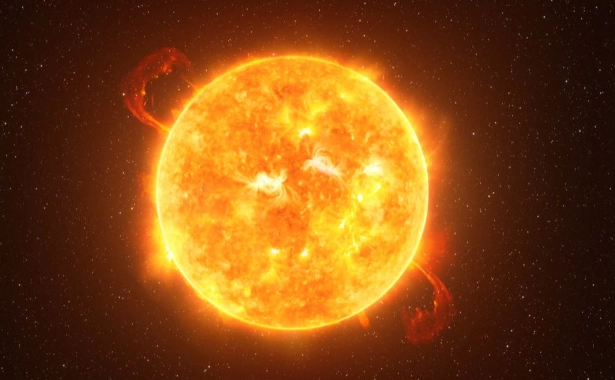
Key Facts About Betelgeuse at a Glance
- Constellation: Orion
- Distance: About 550 light-years away. The light you see tonight left the star around the time of the Renaissance.
- Mass: Roughly 15-20 times the mass of our Sun. All that mass is what drives its short, furious life.
- Luminosity: About 100,000 times brighter than the Sun. It's one of the most intrinsically bright stars in our galactic neighborhood.
- Stage of Life: It has burned through the hydrogen in its core and is now fusing heavier elements like helium and carbon. It's in the final 1% of its life.
Meet Antares: The Rival of Mars at the Scorpion's Heart
Now, let's swing over to the summer sky. Antares is the brilliant heart of the constellation Scorpius. Its name comes from ancient Greek, meaning "Rival of Mars" (Anti-Ares), because its red color closely matched that of the planet Mars. When Mars passes near Antares in the sky, it's a stunning sight—two red dots, one a planet, one a dying star.
I find Antares a bit more elusive than Betelgeuse. Scorpius lies closer to the southern horizon for many in the Northern Hemisphere, so it often swims in atmospheric haze, making it twinkle and flash with intense reds and greens. It's a beautiful, chaotic sight through a telescope.
In terms of sheer physical size, Antares might have a slight edge over Betelgeuse. If placed in our solar system, its surface would reach about three-quarters of the way to Jupiter. It's a toss-up which is actually bigger, as both stars are pulsating blobs, but they're in the same incredible league.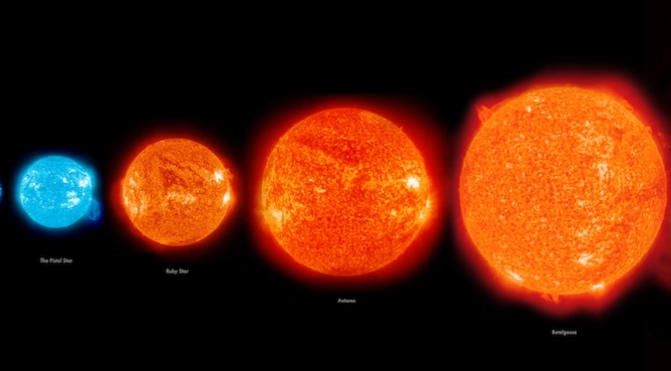
Antares has a surprise: a hot, blue companion star. Antares B is a much smaller, hotter star that orbits the primary red supergiant. It's incredibly difficult to see because it's drowned in the brilliant glare of Antares A. You need a decent-sized telescope and excellent atmospheric conditions to split them. I've tried a few times and only succeeded once on a rock-steady night. It's a fantastic challenge for amateur astronomers.
What are Antares and Betelgeuse doing differently? One interesting distinction is their environment. Antares is located in a region rich with interstellar dust and gas. This material sometimes glows with a faint red hue in long-exposure photographs, lit up by the intense radiation from Antares itself. It creates a more dramatic cosmic backdrop than the relatively cleaner space around Betelgeuse.
Key Facts About Antares at a Glance
- Constellation: Scorpius
- Distance: About 550-600 light-years away. Similar distance, different part of the sky.
- Mass: Around 12-15 times the Sun's mass. Slightly lighter than Betelgeuse, but still a heavyweight.
- Luminosity: About 75,000 times brighter than the Sun. A staggering output of energy.
- Stage of Life: Like Betelgeuse, it's a red supergiant burning heavier elements in its core, racing toward a supernova.
Side-by-Side: The Red Supergiant Showdown
It's natural to compare them. When you ask "what are Antares and Betelgeuse," you're really asking how they stack up. Let's put them in a head-to-head table. The numbers have some wiggle room (astronomy is hard at these distances!), but this gives you the clear picture.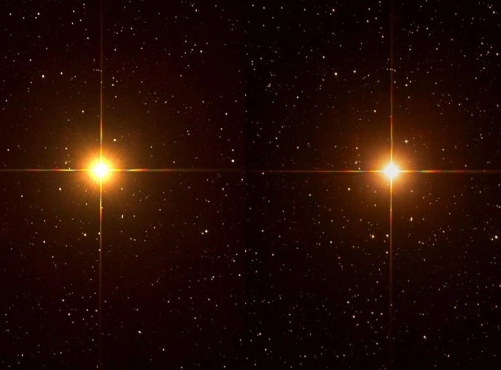
| Feature | Betelgeuse (Alpha Orionis) | Antares (Alpha Scorpii) |
|---|---|---|
| Best Seen | Winter (Northern Hemisphere) | Summer (Northern Hemisphere) |
| Apparent Color | Orange-Red | Distinct Red |
| Estimated Radius (Sun=1) | ~700 - 1,000 | ~750 - 800 |
| If in Our Solar System... | Would pass Jupiter's orbit | Would reach ~3/4 to Jupiter |
| Mass (Sun=1) | 15 - 20 | 12 - 15 |
| Luminosity (Sun=1) | ~100,000 | ~75,000 |
| Variable Star Type | Semi-regular (famous for "Great Dimming") | Slow irregular |
| Known Companion Star? | Not conclusively observed | Yes (Antares B, a hot blue star) |
| Supernova Timeline | Anytime in next 100,000 years (could be tomorrow!) | Similar uncertain timeframe |
Looking at that table, the takeaway isn't which one "wins." It's that they are both absurdly large, brilliant, and temporary. They're two examples of the same incredible stellar phenomenon.
Why Are They So Red? The Physics of Cool Giants
This is a core part of understanding what are Antares and Betelgeuse. Their color isn't an accident; it's a direct report card on their surface temperature and size.
Think of a candle flame. The hottest part near the wick is blue. The cooler outer part is yellow and red. Stars work on a similar principle. Our Sun, a yellow dwarf, has a surface temperature of about 5,800°C (10,500°F). Betelgeuse and Antares? Their surfaces are much cooler, around 3,200-3,600°C (5,800-6,500°F).
But here's the kicker: they're putting out far more total light than the Sun. How can a cooler object be brighter? Size.
It's all about surface area. A single 100-watt light bulb is painfully bright to look at. Now imagine a gigantic, city-sized sphere made of dimmer, 40-watt light bulbs. Even though each square inch is less intense, the total area adds up to an unimaginable amount of light. That's a red supergiant. Each bit of its surface is cooler (hence redder) than the Sun's, but there's just so incredibly much more of it that the total energy output is tens of thousands of times greater.
A Common Mix-Up: People often think red stars are "hotter" than blue stars because red means hot on Earth (like a hot stove element). In space, it's the opposite. Blue stars (like Rigel, Orion's foot) are the scorching hot, young, massive ones. Red stars like Antares and Betelgeuse are the cooler, aging giants. It's counterintuitive, but that's astronomy for you.
The Inevitable End: What Happens to Stars Like These?
This is the most dramatic part of the story. Stars like our Sun have a relatively quiet retirement. Not these guys. The lives of Antares and Betelgeuse will end in one of the universe's most violent events: a core-collapse supernova.
Right now, deep in their cores, they're acting like cosmic factories, fusing lighter elements into heavier ones: hydrogen to helium, helium to carbon, carbon to oxygen, and so on, creating elements up to iron. Iron is the ash. It doesn't release energy when fused; it consumes it. So when an iron core builds up, the fusion furnace suddenly stops.
With no outward pressure from fusion, gravity wins instantly. The core collapses in less than a second. The outer layers of the star come crashing down and then rebound off the incredibly dense new core in a titanic shockwave. The star is utterly ripped apart in a cataclysm that can, for a few weeks, outshine an entire galaxy.
And then?
For a star of their mass, what's left behind is a neutron star—a city-sized ball of pure neutron matter so dense a sugar-cube-sized piece would weigh as much as a mountain. In some cases, if the core is massive enough, it collapses all the way into a black hole.
The truly mind-blowing part? We are made of this stuff. The carbon in our bones, the oxygen we breathe, the iron in our blood—all these elements (except the very lightest) were forged in the hearts of stars and scattered across the universe by supernovae. When you look at Antares or Betelgeuse, you are looking at a future factory for the building blocks of new worlds, and maybe, new life.
The Million-Dollar Question: When will they blow? Honestly, we have no idea. It could be 100,000 years from now. It could be tonight. The "Great Dimming" of Betelgeuse was a stark reminder of how unpredictable their final phases are. If either goes supernova in our lifetimes, it will be the astronomical event of the millennium, visible in broad daylight for weeks. No threat to Earth at their distance, just an incredible show. You can bet astronomers are watching them like hawks. Resources like The Astronomer's Telegram would light up within minutes if something started happening.
How to Find Them in the Night Sky
Theory is great, but seeing them for yourself is better. Here’s a simple, no-nonsense guide.
Finding Betelgeuse
- When: Look on a clear winter evening (December-February in the North).
- Find Orion: Look for the giant, almost perfect rectangle of bright stars. The three stars in a straight, tight line in the middle are Orion's Belt.
- Look to the Shoulder: At the top-left corner of the rectangle (as you face it), you'll see a noticeably orange-red star. That's Betelgeuse. The top-right corner is a brilliant blue-white star, Rigel. The contrast is stunning.
Finding Antares
- When: Look on a summer evening (June-August in the North). It's best in southern skies.
- Find the Scorpion: Look low in the southern sky for a long, curved "J" or fishhook shape of stars. That's the body and tail of Scorpius.
- Find the Heart: At the top of the hook, at the base of the curved line, you'll see a very bright, unmistakably red star. That's Antares. It often twinkles fiercely due to its low altitude.
My tip? Use a free stargazing app on your phone to help pinpoint them the first few times. Once you know the patterns, you'll spot them instantly every season.
Common Questions About Antares and Betelgeuse
It's a photo finish. Current best estimates are incredibly close. Betelgeuse may be slightly larger in radius, but its size pulsates more. Antares is more stable in size. For all practical purposes, they are twins in the supergiant category. Saying one is definitively bigger is splitting hairs over cosmic distances we can't measure perfectly.
No. They are both safely distant at about 550 light-years. A supernova would need to be within about 50 light-years to pose any real threat to Earth's biosphere. We'd get a spectacular light show and a flood of neutrinos (harmless particles), but no danger. In fact, it would be a golden age for astronomy.
Betelgeuse appears slightly brighter in our sky primarily because it's a little closer (by maybe 50-100 light-years, though estimates vary). Its intrinsic brightness (luminosity) is also a bit higher due to its slightly greater mass. The difference in apparent brightness isn't huge, but it's noticeable.
Absolutely. They are among the brightest stars in the entire sky (Betelgeuse is usually in the top 10, Antares in the top 15). Light pollution will wash out the fainter stars around them, but Antares and Betelgeuse themselves punch right through. You might not see their red color as vividly from a brightly lit parking lot, but you'll still see them as prominent stars.
Your eyes are enough. Binoculars will enhance the color and show them as small disks rather than points. A small telescope will show Antares's companion star (on a good night) and may reveal that Betelgeuse isn't a perfect circle but a fuzzy, churning ball. You don't need fancy gear to appreciate them.
So, what are Antares and Betelgeuse? They're not just dots on a star chart. They are nearby cosmic titans, each a temporary beacon marking a late, violent stage of stellar life. They teach us about scale, time, and our own chemical origins. They connect us to the universe in a direct way. Next time you're out on a clear night, take a moment to find one of them. Look at that steady red glow, and remember—you're looking at a future supernova, a factory for future planets, and one of the most magnificent sights our night sky has to offer.
It's a humbling, and honestly, a pretty cool feeling.
Related Articles

Obsidian Crystal Meaning: Healing, Protection & Practical Uses

Discover the Spiritual Meaning of Jade: Peace, Protection & Luck

Sodalite Crystal: Benefits, Uses & How to Tell If It's Real
Dalmatian Jasper Chakra Guide: Healing Properties, Uses & Benefits