Navigate This Guide
Let's be honest, the first time you see a piece of Larimar, it stops you in your tracks. It's not like any other stone. That milky, serene blue, often swirled with white like a tranquil Caribbean sea meeting a cloudy sky... it's captivating. I remember seeing a Larimar pendant in a tiny shop in Santo Domingo years ago and just being stuck. I had to know more. What is this thing? Is it a turquoise cousin? A type of jade? The answer, as I found out, is much more fascinating.
This guide is basically the deep dive I wish I had back then. We're going to strip away the mystery and the marketing hype (and there's a lot of it) and look at Larimar from every angle. Where it comes from, what makes it special, how to buy the real deal, and yes, we'll even talk about the whole "healing crystal" thing—because people are searching for that, even if it makes some geologists sigh.
The Core Truth: Larimar is a rare blue variety of the mineral pectolite, found only in one place on Earth—the Dominican Republic. Its color comes from cobalt substitution, and its rarity is what drives its value and allure.
Where on Earth Does Larimar Come From?
This is the part that feels almost like a legend. Larimar isn't mined in vast, industrial complexes spread across continents. Its story is tightly bound to a single, specific location.
The only known commercial deposit of Larimar is in the province of Barahona, in the southwestern Dominican Republic, specifically in the Los Chupaderos area near the town of Bahoruco. The mining is, by most accounts, pretty rugged. We're talking small-scale, artisanal mining operations where miners descend into narrow, hand-dug shafts to extract the volcanic rock that holds the precious blue veins.
The geology is key. Larimar formed in volcanic lava tubes. When hot gases and mineral-rich solutions circulated through these tubes millions of years ago, crystals of pectolite formed. The unique blue color is attributed to traces of cobalt replacing calcium in the mineral's structure. The exact combination of volcanic activity, specific mineral soup, and geological conditions hasn't been replicated anywhere else we know of. The Dominican Republic's Ministry of Energy and Mines oversees these mining activities, which adds a layer of official context to its provenance.
I've seen videos of these mines. It's not glamorous work. It gives you a real appreciation for the human effort that goes into getting that rough stone out of the ground before a lapidary ever touches it. It also explains part of the cost—this isn't material that's being scooped up by the ton with giant machines.
And about that name: "Larimar" is a trade name, not a scientific one. It was coined in 1974 by a Dominican named Miguel Méndez, who combined his daughter's name, "Larissa," with the Spanish word for sea, "mar." Before that, locals apparently knew of the stone but it wasn't commercially exploited. So, while the mineral (pectolite) is known elsewhere, the gem-quality blue variety exclusively bears this beautiful, market-friendly name.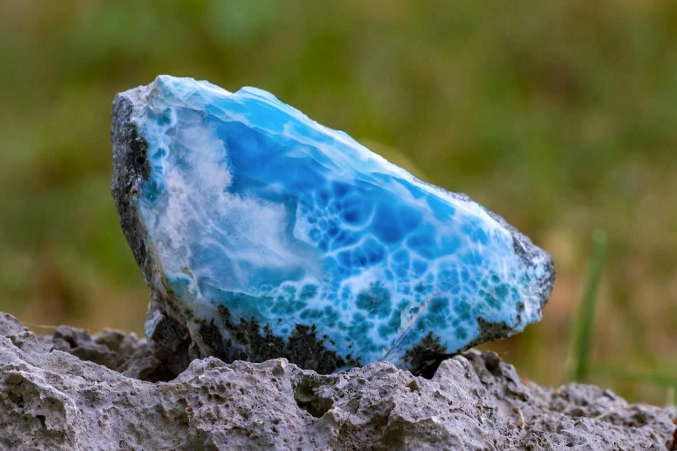
What Exactly Are You Looking At? The Hard Facts
Let's get technical for a minute, but I'll keep it painless. Understanding these basics is your best defense against misinformation and overpaying.
Larimar is a variety of pectolite, which is a calcium sodium hydroxide inosilicate. Try saying that three times fast. For us non-geologists, what matters are its practical gemological properties.
| Property | Details for Larimar | What This Means for You |
|---|---|---|
| Chemical Composition | NaCa2Si3O8(OH) | It's a silicate mineral. The blue is from cobalt. |
| Color | Blue (sky, volcanic, green-blue), often with white swirling. | The color is its main appeal. Uniform deep blue is rarest. |
| Hardness (Mohs Scale) | 4.5 - 5 | This is important! It's relatively soft. Care is needed. |
| Crystal System | Triclinic | It usually forms in fibrous, radial aggregates. |
| Luster | Vitreous to silky | It can be polished to a nice glassy shine. |
| Transparency | Translucent to opaque | You won't find faceted, transparent Larimar. It's always cabochon or carved. |
| Specific Gravity | ~2.7 - 2.9 | It feels about as heavy as you'd expect a stone to feel. |
That hardness number is the big one. At 4.5 to 5 on the Mohs scale, Larimar is softer than quartz (7), which is common in dust. This means it can scratch fairly easily. You can't treat it like a diamond or even an amethyst. It's more in the realm of turquoise or malachite in terms of durability. This directly impacts how you should wear and care for any Larimar jewelry.
The Color Spectrum: From Sky Blue to Volcanic
Not all Larimar is the same blue. The color grading is a bit informal but widely used in the trade. Knowing these terms helps you understand what you're buying and why prices vary wildly.
- Sky Blue (Celeste): The most prized and classic color. A light, serene, almost powdery blue. This is the postcard-perfect Larimar color everyone imagines.
- Volcanic Blue: A deeper, more intense blue, sometimes with a slight greyish undertone. It's richer and often has less white marbling. Some people prefer this depth.
- Green-Blue: As the name suggests, a bluish-green hue. It's less common than the pure blues and has its own unique, oceanic appeal.
- White (or "White Larimar"): This is essentially pectolite with little to no blue coloration. It's much more common and less valuable. Often used as a background in carvings or in lower-cost items.
The pattern matters too. Some pieces have delicate, wispy white patterns (like clouds), some have almost a web-like pattern, and others have bold, contrasting swirls. A deep, even blue with minimal white is generally the top tier. A pale, mostly white piece with faint blue streaks is at the other end of the value spectrum.
Think of it like this: the more intense and uniform the blue, the rarer and more expensive the stone.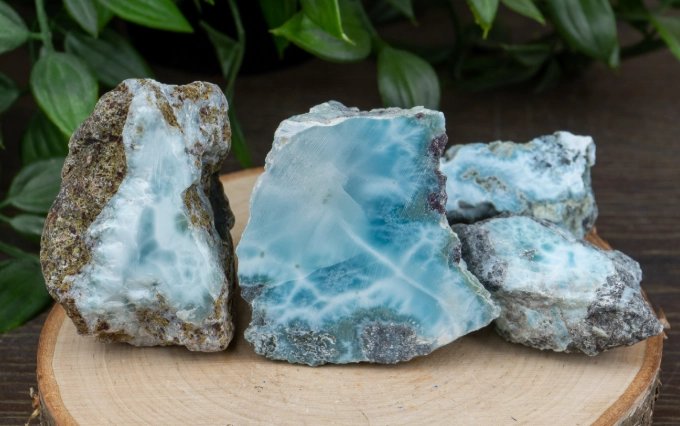
Buying Larimar: How Not to Get Ripped Off
This is the practical heart of the guide. The market is full of genuine Larimar, but also imitations and misleading sales tactics. Let's break down what to look for.
First, the imitations. What are you likely to see?
- Howlite or Magnesite Dyed Blue: This is probably the most common fake. Howlite is naturally white with grey veins. Dyed blue, it mimics Larimar's pattern cheaply. The giveaways? The dye often concentrates in the cracks, making the veins too dark and blue. It also feels different—often chalkier if unsealed.
- Plastic or Resin: Mass-produced tourist souvenirs might be straight-up plastic. These feel light and warm to the touch, not cool and heavy like stone. Look for mold lines or bubbles.
- Other Minerals: Sometimes blue chrysocolla or dyed jasper might be passed off as Larimar, but they have different patterns and hardness.
So, how do you spot the real deal?
- Look at the Pattern: Genuine Larimar's white patterns are integrated, not painted on. They blend into the blue in a soft, natural, often wispy way. Fakes often have a sharp, high-contrast, almost "printed" look.
- Check the Temperature and Weight: Real stone feels cool to the touch and has a certain heft. Plastic feels light and warms up quickly in your hand.
- Ask About Origin: A reputable seller should be able to tell you the stone comes from the Dominican Republic. Vague answers are a red flag.
- Price is a Clue (But Not a Guarantee): A large, deep blue Larimar pendant for $25 is almost certainly fake. Real, high-quality Larimar has value due to its rarity and mining costs.
- Certification: For high-value pieces, consider a gemological report from a recognized lab. The Gemological Institute of America (GIA) gem encyclopedia is a great resource to understand what labs look for, though they don't provide valuation.
I made the mistake early on of buying a "Larimar" ring from an online marketplace. It was howlite. The color was off—a weird, uniform royal blue—and the back was completely unpolished and chalky. Lesson learned: if a deal seems too good to be true with this stone, it almost always is.
What Should You Expect to Pay?
This is the million-dollar question, or more accurately, the twenty-to-several-thousand-dollar question. Price depends on the "Four Cs" adapted for Larimar: Color, Clarity (pattern), Cut, and Carat weight.
A small, low-quality (mostly white, pale blue) cabochon might be $10-$20. A standard, nice quality sky blue cabochon of 10-15 carats for a ring could be $50-$150. A large, exceptional, deep volcanic blue carving or pendant stone can easily run into the hundreds or even thousands of dollars.
My advice? Set a budget first. Then, prioritize color and pattern over sheer size. A small, exquisite piece of true sky blue Larimar is more satisfying and a better investment than a large, mediocre one.
Caring for Your Larimar: It's Not a Tank
Remember that hardness of 4.5-5? This dictates everything about care. Larimar is delicate. Treat it like a precious heirloom, not everyday beater jewelry.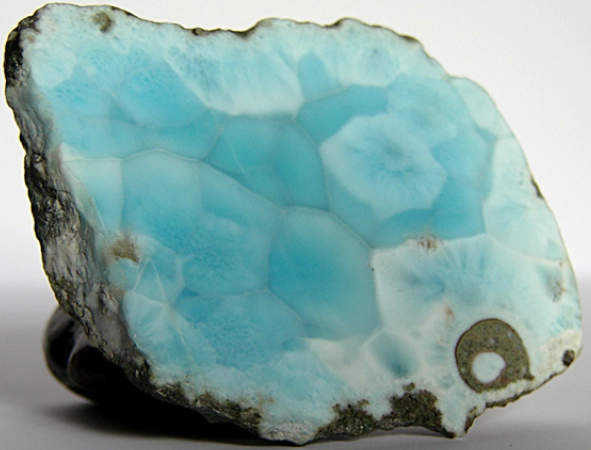
The Golden Rules of Larimar Care:
- Last On, First Off: Put your Larimar jewelry on after applying makeup, perfume, and hairspray. Take it off before doing chores, gardening, or any manual work.
- No Ultrasonic Cleaners, Ever: The vibrations can fracture the stone. Steam cleaners are also a hard no—the heat and pressure can damage it.
- Clean Gently: Use lukewarm water, a tiny drop of mild dish soap, and a very soft brush (like a baby's toothbrush). Pat dry immediately with a soft cloth.
- Store It Alone: Keep it in a soft pouch or a separate compartment in your jewelry box. Other, harder stones (like diamonds, sapphires, quartz) will scratch it if they rub together.
- Avoid Chemicals: Household cleaners, acids (like lemon juice), chlorine, and even prolonged exposure to sweat can dull the surface or cause damage.
Can you wear a Larimar ring every day? I wouldn't recommend it, especially for an active lifestyle. The constant abrasion from desks, counters, and general life will microscratch and dull the polish over time. It's better suited for pendants, earrings, or occasional-wear rings.
The Metaphysical Side: Healing Properties and Modern Belief
Alright, let's address the elephant in the room. Search for Larimar, and you'll be flooded with sites talking about its healing powers—throat chakra, emotional healing, communication, connecting with Atlantean energies, you name it. The mindat.org page for pectolite, the mineral database, won't mention any of this. It's purely a cultural and commercial layer added to the stone.
So, what's the deal? In crystal healing traditions, Larimar is often called the "Stone of the Sea" or the "Dolphin Stone." It's associated with:
- Calming emotions and reducing stress (its color certainly suggests that).
- Enhancing clear, compassionate communication (linked to the throat chakra).
- Promoting a sense of joy and childlike wonder.
I'm a skeptic by nature when it comes to metaphysical claims. I can't tell you if Larimar "opens your heart chakra." But I can tell you this: holding a beautiful piece, admiring its unique color, and knowing its rare origin can absolutely have a calming, focusing effect. That's a real psychological benefit, whether you believe in energy vibrations or not. The stone becomes a tactile reminder of peace and beauty.
My take? If you're drawn to these ideas, that's a valid part of your personal connection to the gemstone. Just be aware that you're buying into a belief system, not a scientifically proven property. A seller who makes extravagant medical claims should be viewed with extreme caution.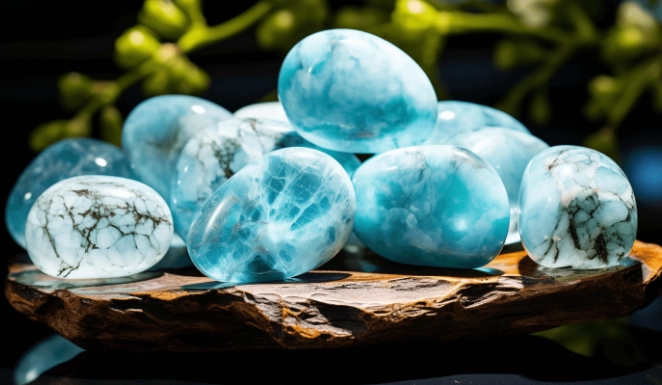
Your Larimar Questions, Answered
Wrapping It Up: Is Larimar Right for You?
Larimar isn't for everyone. If you want a hard, everyday-wear stone you can forget about, look to sapphire or quartz. But if you're captivated by unique beauty, story, and rarity, and you're willing to care for something a little more delicate, then Larimar is a phenomenal choice.
It's a conversation starter. It's a piece of geological and cultural history from a specific Caribbean island. Wearing it feels special because you know it's not something you can find just anywhere.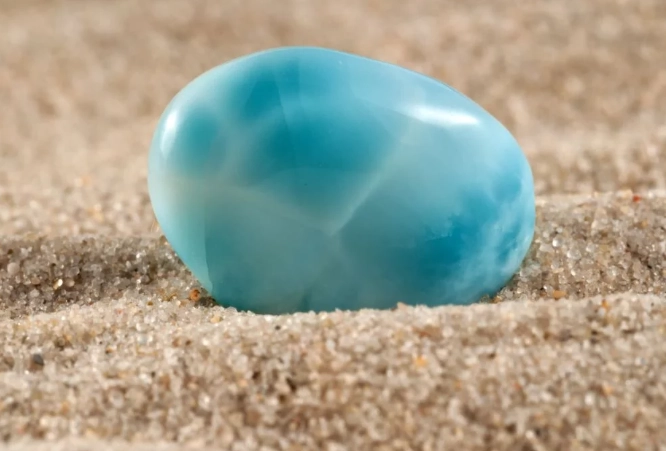
Final Fact Check: Larimar's status as the Dominican Republic's national gemstone is widely reported. While it is undoubtedly a symbol of the country, the official legislative decree naming it as such is something you can search for in Dominican legal databases for absolute verification. Its cultural significance, however, is undeniable.
So, take your time. Learn to recognize the color grades. Ask sellers the hard questions. Start with a small, beautiful piece. And then, just enjoy owning a little piece of that Caribbean sky, solidified into stone.
Related Articles

What is the Mythology of Antares? Legends, Stars & Ancient Lore
Lapis Lazuli Stone Meaning: More Than Just a Blue Gem
Pink Quartz: Meaning, Healing Properties & How to Use
Iolite: The Viking's Compass Stone for Intuition & Clarity