You just bought a beautiful piece of Larimar jewelry or a palm stone. It has those dreamy ocean-blue waves. But a nagging thought creeps in: is this real Larimar, or did I just get a pretty piece of dyed stone? Knowing how to tell if Larimar is real matters more than you think. It's not just about money; fake Larimar lacks the unique energy and connection to the Dominican Republic that makes this stone so special. I've been collecting and working with crystals for over a decade, and I've seen too many well-meaning people fooled by convincing fakes. Let's cut through the confusion. Here are the seven most effective tests you can perform, often right at home.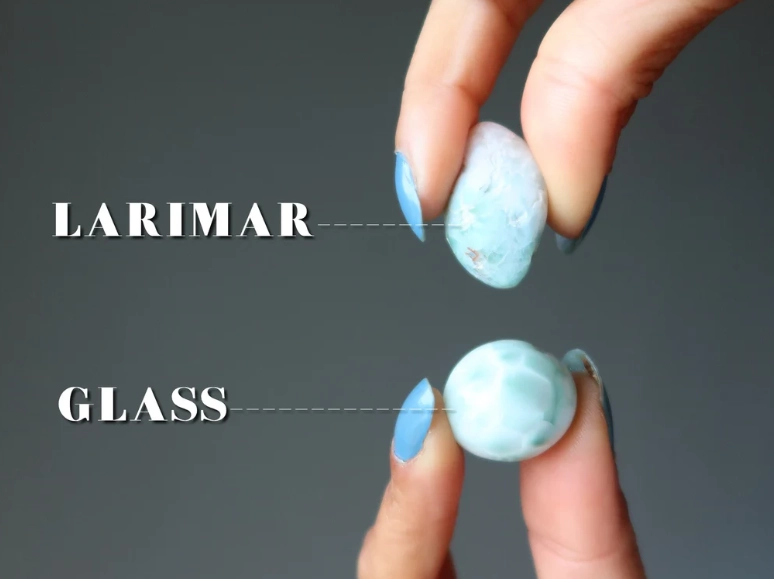
Your Quick Guide to Larimar Authenticity
- What is Larimar and Why is it Faked?
- Test 1: The Visual Check (Color & Pattern)
- Test 2: The Touch and Weight Test
- Test 3: The Hardness Scratch Test
- Test 4: Checking the Luster
- Test 5: The Temperature Reaction Test
- Test 6: The Price and Source Reality Check
- Test 7: When to Seek Professional Verification
- Your Larimar Questions Answered
What is Larimar and Why is it Faked?
First, a quick primer. Larimar is a rare blue variety of the mineral pectolite, found only in one place on Earth: the Bahoruco Mountains of the Dominican Republic. Its discovery story is modern (1970s), and its supply is finite. That combination of beauty, rarity, and a compelling origin story makes it a prime target for imitations.
The most common fakes you'll encounter are:
- Dyed Howlite or Magnesite: This is the big one. Howlite is naturally white with gray veining. Dye it blue, and from a distance, it can look like Larimar's white patterns on a blue field. But the dye job is often sloppy.
- Dyed Jasper or Agate: Sometimes used for tumbled stones or beads.
- Plastic or Resin: For very cheap jewelry, especially from mass-market tourist stalls.
- Glass: Less common, but it happens.
Real Larimar has a specific look and feel that these fakes struggle to replicate perfectly. Your job is to know what to look for.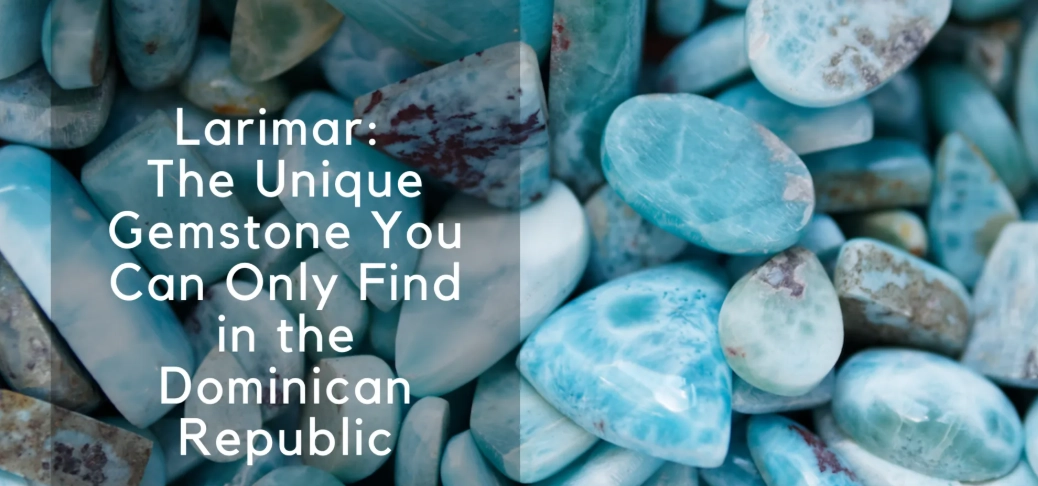
Key Point: No single test is 100% foolproof all the time. Your best strategy is to use a combination of 3 or 4 of these tests. If a piece passes all of them, you can be extremely confident in its authenticity.
Test 1: The Visual Check (Color & Pattern)
This is your first and most important line of defense. Get your piece under good, natural light.
Examine the Color
Real Larimar's blue isn't a uniform, solid royal blue. It's a range of blues, from sky blue and turquoise to a deeper, greenish-blue (like the ocean). The color is often uneven, with lighter and darker patches blending into each other like watercolor. If the blue is intensely uniform, electric, or has a purplish tint, be very suspicious. Dyed stones often have an unnatural, saturated hue that looks "too blue."
Study the Pattern
This is where fakes often fail. Real Larimar's white patterns aren't just random lines. They look like wisps, clouds, smoke, or gentle ocean waves. They blend softly into the blue. In dyed howlite, the white veining is often more stark, web-like, or crackled, and it sits on top of the color rather than being part of it. Look closely at the edges of the white patterns. Are they sharp and defined, or soft and diffused? Soft and diffused is a good sign.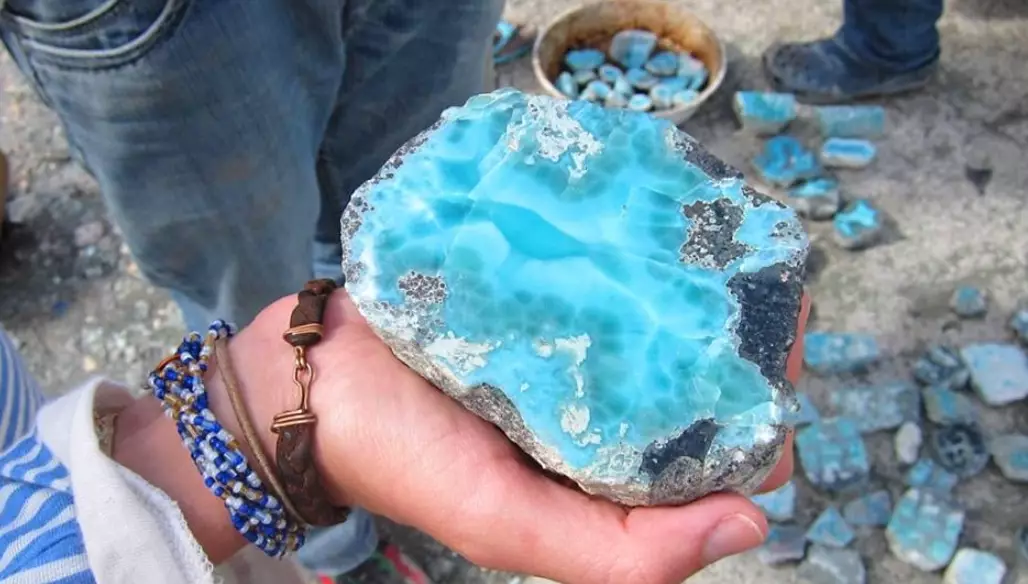
I once saw a necklace where the white patterns in every bead were identical—a perfect, repeating spiderweb. That's a dead giveaway of dyed howlite. Nature doesn't do perfect repeats.
Test 2: The Touch and Weight Test
Close your eyes and feel it. Larimar has a distinct texture. When polished to a high shine, it should feel vitreous (glassy) and very smooth. In its raw or tumbled form, it has a slightly waxy or silky luster. Run your finger over it. Does it feel like plastic? Too smooth and lightweight? That's a red flag.
Now, weigh it in your hand. Larimar has a specific gravity (density) of around 2.7 to 2.9. It should feel substantively heavy for its size, like most semi-precious stones. Plastic and resin feel light and cheap. Dyed howlite can feel close, but often has a slightly chalkier texture if you scratch it subtly in an inconspicuous spot (more on that next).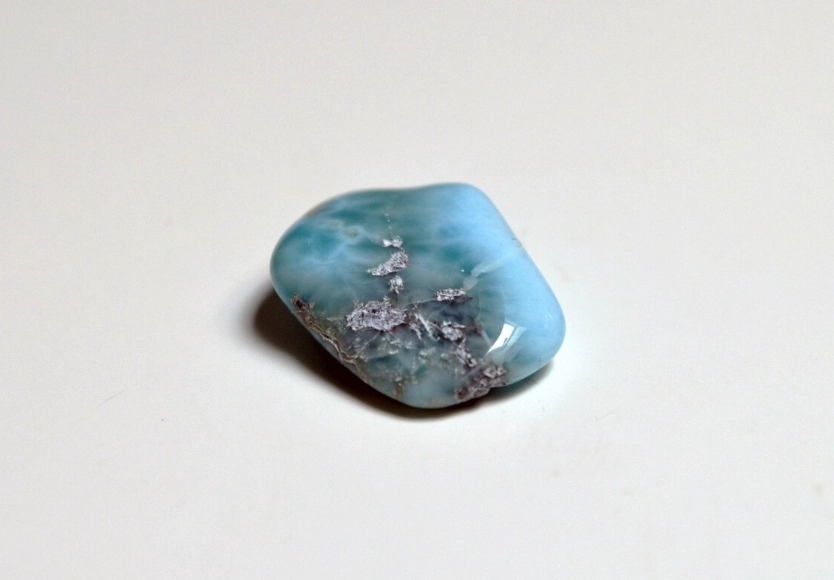
Test 3: The Hardness Scratch Test (The Careful One)
Larimar sits at about 4.5 to 5 on the Mohs hardness scale. This is a crucial differentiator. A steel knife blade or a common nail (hardness around 5.5) should be able to scratch it. Important: Only do this in a hidden area, like the back of a pendant or the bottom of a sphere!
Here's the trick: dyed howlite is softer, around 3.5. It will scratch more easily. If you gently try to scratch your suspect piece with a copper coin (hardness 3) and it leaves a mark, it's likely howlite, not Larimar. Glass and plastic will behave very differently too. Glass (hardness 5.5+) won't scratch with steel, and plastic will gouge easily.
| Material Suspected | Reaction to Steel Knife/Nail (H=5.5) | What it Tells You |
|---|---|---|
| Real Larimar | Will get a light scratch. | Correct hardness for pectolite. |
| Dyed Howlite | Will scratch very easily, may even feel chalky. | Too soft. Major red flag. |
| Glass | No scratch. The metal might leave a silver mark that wipes off. | Too hard. Not Larimar. |
| Plastic/Resin | Will gouge or dent deeply. | Clearly fake. |
Test 4: Checking the Luster
Luster refers to how light reflects off the surface. A well-polished Larimar has a vitreous (glassy) to silky luster. It's bright but not metallic. Hold it under a lamp. Does the shine look deep and internal, or shallow and surface-level? Plastic and resin often have a greasy, overly glossy, or dull shine. Dyed stones can sometimes have a matte finish if poorly processed, which real Larimar rarely does when polished.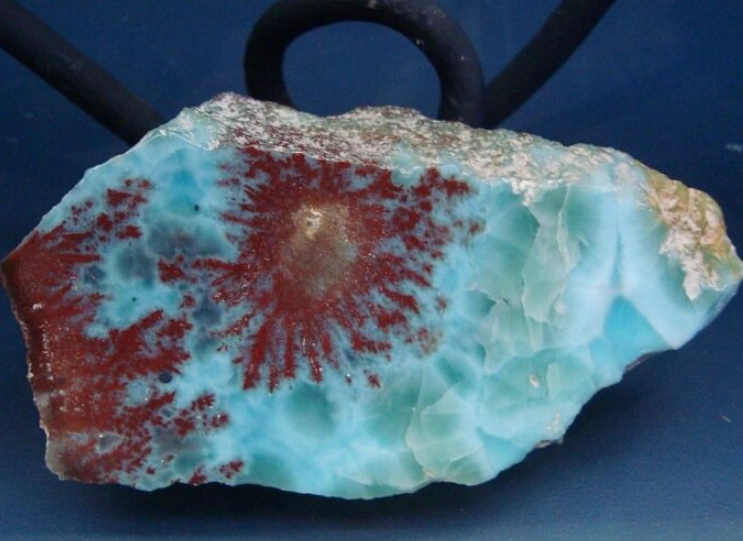
Test 5: The Temperature Reaction Test
This is a simple, non-destructive test. Genuine stone feels cool to the touch initially because it conducts heat away from your skin quickly. Pick up your piece. Let it sit for a minute. Now, press it against your cheek or the inside of your wrist. It should feel distinctly cool. Plastic and resin feel warm or room temperature almost immediately because they are thermal insulators. Glass also feels cool, so use this test in conjunction with others (like hardness).
Test 6: The Price and Source Reality Check
If a deal seems too good to be true, it probably is. Genuine Larimar is not cheap. A small, genuine tumbled stone might start at $10-$20. A good quality, medium-sized polished pendant can easily be $50-$150. Large, high-quality specimens with deep blue color can run into the hundreds or thousands.
Be extra cautious with online marketplaces like eBay or Etsy, and tourist shops in non-Caribbean locations. Always check the seller's reputation. Do they specialize in crystals? Do they provide information about the stone's origin? A reputable seller will often state it's "Dominican Larimar" and won't shy away from questions.
Test 7: When to Seek Professional Verification
For a high-value piece—like a large statement ring or a museum-quality specimen—the only way to be 100% certain is a lab test. A certified gemologist can use tools like refractometers, specific gravity measurements, and spectroscopy to give a definitive answer. Organizations like the Gemological Institute of America (GIA) offer identification services. For most of us buying jewelry, the previous six tests are sufficient. But for peace of mind on a major investment, a professional opinion is worth the fee.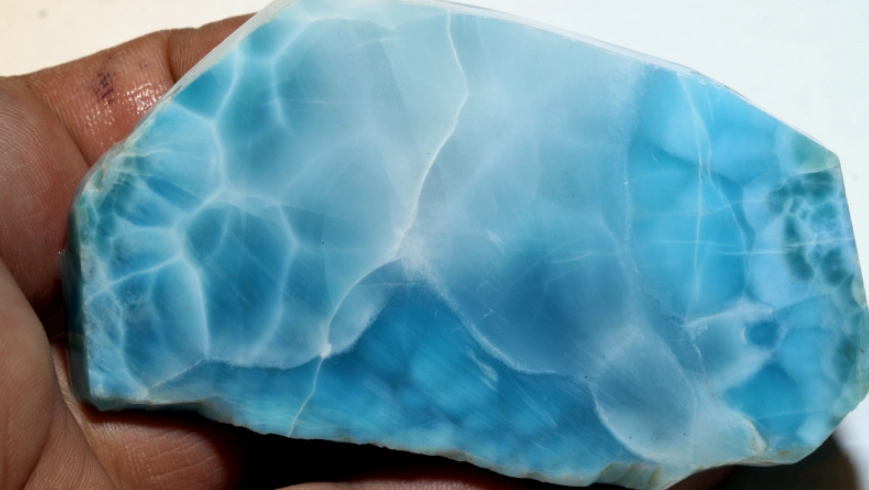
Your Larimar Questions Answered
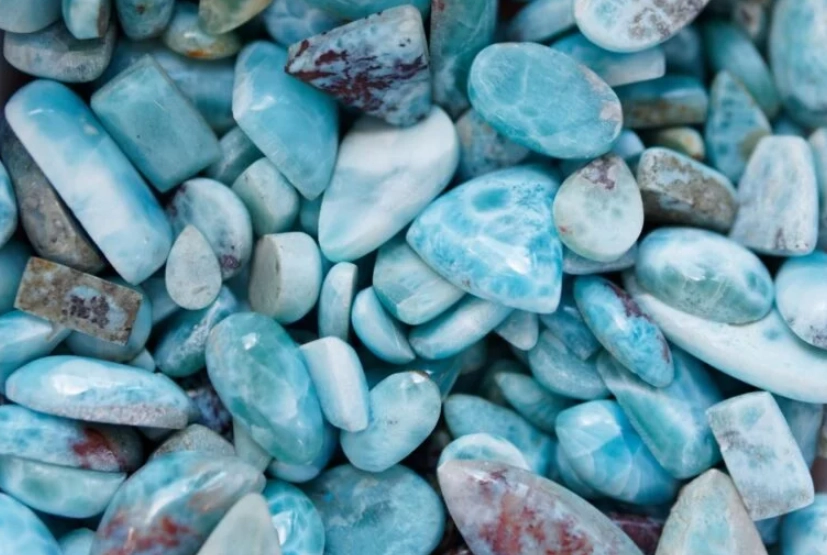 The bottom line? Trust your senses and your logic. Real Larimar has a unique, gentle beauty that's hard to mass-produce. By combining the visual check with a simple feel and weight test, you can weed out most fakes. For the rest, the careful scratch and temperature tests will give you strong clues. Buy from trusted sources, ask questions, and enjoy the peace of mind that comes with knowing you have a genuine piece of the Caribbean sea.
Related Articles
Kunzite Meaning: Healing Properties, Uses & How to Spot Fakes
What Does Jasper Crystal Do Spiritually? A Complete Guide to Meaning & Uses
Dalmatian Jasper: Spiritual Meaning, Healing Properties & How to Use
What Does Citrine Attract? Wealth, Joy & Abundance Explained
Jade Crystal Meaning: Beyond Good Luck in Healing & Jewelry