Your Opal Insights at a Glance
- First Things First: What Even Is an Opal?
- The Historical and Cultural Weight: More Than Just a Pretty Stone
- The Metaphysical and Personal Significance (The “Why People Wear It Now” Part)
- A Practical Guide: How to Wear Opal and What It Signifies in Style
- Caring for Your Opal: The Significance of Maintenance
- Answering Your Burning Questions (FAQs)
- Final Thoughts: Is Opal for You?
Let's be honest. Most of us have seen an opal, that shimmering, color-shifting stone, in a jewelry case and wondered about it. It's beautiful, sure, but it also feels... different. There's a mystique. Maybe you've heard whispers—good luck, bad luck, October's birthstone, incredibly fragile. It can be confusing. So you end up asking, with genuine curiosity, what is the significance of wearing opal, really? Is it just a pretty rock, or is there more to the story?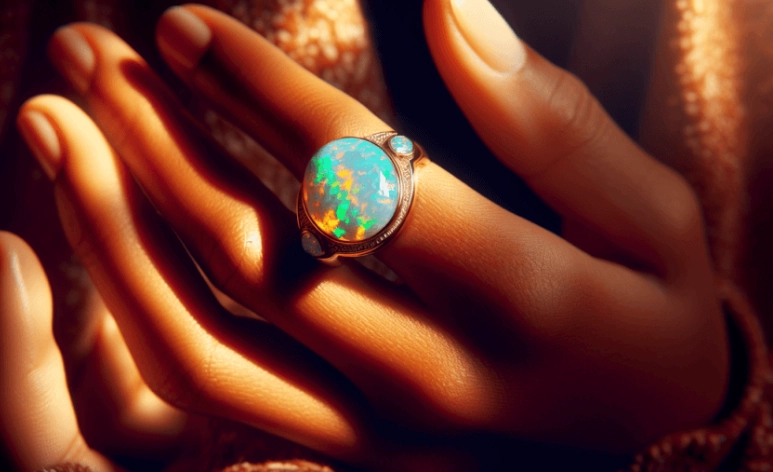
I remember the first time I held a high-quality black opal. It wasn't mine; a friend was letting me see her grandmother's ring. In the dull light of a coffee shop, it looked like a dark pebble. But then she tilted it towards the window, and suddenly a tiny universe of fiery red, electric green, and deep ocean blue erupted across its surface. It was alive. That moment stuck with me. It wasn't just jewelry; it felt like holding a piece of captured lightning or a frozen galaxy. That experience sent me down a rabbit hole, trying to understand why this particular gem has captivated humans for centuries.
The significance of wearing opal is a layered thing. It's not a single answer. It's a mix of geology, history, superstition, fashion, and personal belief. For some, it's purely aesthetic—the most beautiful play-of-color wins. For others, it's a deeply meaningful talisman. This article is my attempt to unpack all those layers for you, to go beyond the simple “it's lucky” or “it's October's stone” and see what's really going on with this unique gem.
First Things First: What Even Is an Opal?
Before we dive into meaning, we need to know what we're talking about. An opal isn't a crystalline gem like a diamond or sapphire. It's a hydrated form of silica, kind of like a hardened gel. Its magic comes from its internal structure—a stunningly arranged grid of tiny silica spheres. When light hits this grid, it bends and breaks, splitting into all the colors of the rainbow. That's the play-of-color. The size and arrangement of the spheres determine which colors you see. It's a natural diffraction grating, a masterpiece of nano-engineering crafted by the earth over millions of years.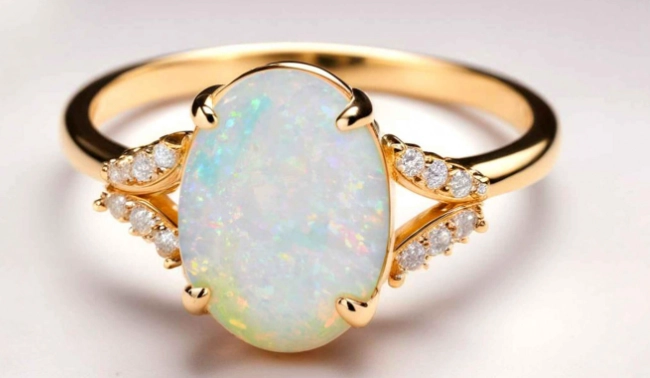
This scientific fact alone adds a layer of significance. You're wearing a piece of natural art and physics. The Gemological Institute of America (GIA), arguably the world's foremost authority on gemstones, classifies opals into precious and common types, with the key difference being that precious opal displays that famous play-of-color. Their extensive opal guide is a treasure trove of technical detail for the curious.
So, right off the bat, wearing opal signifies an appreciation for one of nature's most unique and complex creations.
The Historical and Cultural Weight: More Than Just a Pretty Stone
Ancient civilizations weren't messing around when they assigned meaning to gems. They observed, they felt, they mythologized. And opal had them all enthralled.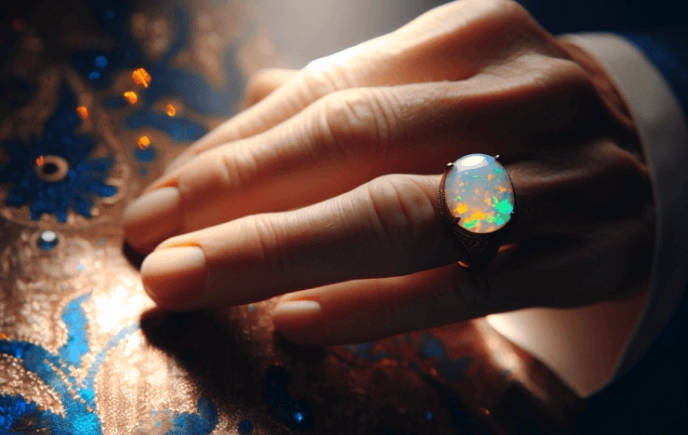
A Gem of Legends and Monarchs
The Romans prized it above almost all other gems. They called it “opalus,” a term likely stemming from the Sanskrit “upala,” meaning “precious stone.” Pliny the Elder, the Roman naturalist, famously wrote that opal possessed the fiery flame of the carbuncle (garnet), the brilliant purple of amethyst, and the sea-green of emerald—all shining together in incredible union. For Romans, it symbolized hope and purity. They believed it could protect its wearer from disease.
Fast forward to the Middle Ages and Renaissance in Europe. Opal was considered the “Queen of Gems” because it showcased all other gemstone colors. It was associated with good luck, vision (both physical and psychic), and was often set in crowns and religious artifacts. Blonde women wore opal necklaces to protect their hair color from fading—a quirky bit of historical belief I find charmingly specific.
But history isn't all rosy. This is where we get to the “bad luck” reputation. In the 19th century, Sir Walter Scott published a novel, *Anne of Geierstein*, where the heroine's opal talisman lost its color and she died shortly after. The novel was a massive bestseller, and the superstition stuck in the public imagination. Combine that with the stone's fragility (it can crack if dried out or subjected to sudden temperature changes), and people started blaming misfortunes on their opals. Personally, I think this says more about Victorian melodrama and a misunderstanding of gem care than any inherent property of the stone. Diamonds can shatter if hit wrong, but we don't call them unlucky.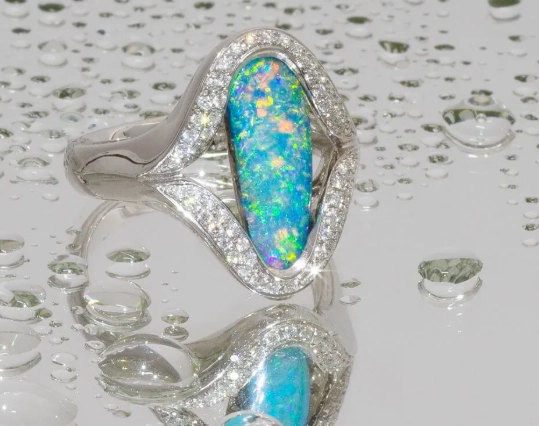
Global Perspectives on Opal's Significance
Looking beyond Europe, the meaning shifts beautifully. In Arabic folklore, opals were believed to have fallen from the heavens in flashes of lightning, carrying the power of prophecy and warding off the evil eye. This ties directly to its flashing colors.
In ancient Japan, opal fragments were revered as the embodied tears of the goddess of joy, mixed with tears of the goddess of sorrow—representing the full spectrum of human emotion. Isn't that a powerful thought? Wearing opal, then, could signify embracing the entirety of your emotional experience.
For Indigenous Australians, the traditional custodians of the world's most famous opal fields (like Coober Pedy and Lightning Ridge), opal holds profound Dreamtime significance. They refer to it as the “rainbow serpent” solidified in stone, a creator spirit that carved the landscapes. The value here isn't just commercial; it's deeply spiritual and cultural, connected to the land itself. The Australian Opal Centre provides respectful insights into this cultural heritage.
So, what is the significance of wearing opal from a historical view? It's a passport to a thousand stories, a fragment of global human belief about magic, protection, emotion, and creation.
The Metaphysical and Personal Significance (The “Why People Wear It Now” Part)
This is where it gets personal and modern. Forget the old novels. Today, people wear opal for a host of reasons that feel relevant. I've talked to jewelers, collectors, and everyday wearers, and the themes are surprisingly consistent.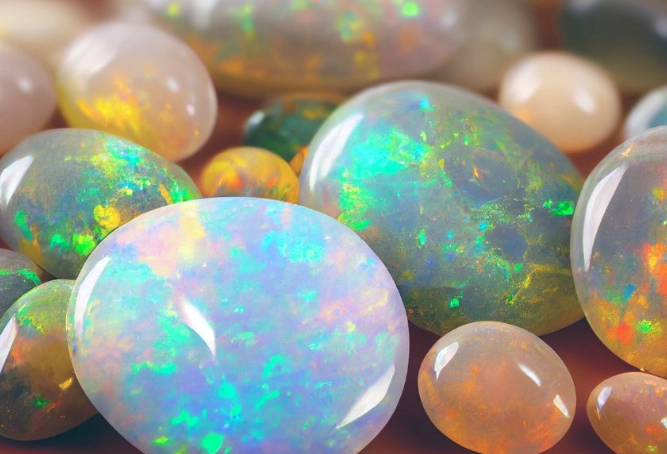
For many, the significance of wearing opal is tied to its purported energetic properties. In crystal healing and modern metaphysical circles, opal is seen as a stone of:
- Amplification: It's said to amplify traits, emotions, and energies. Feel creative? It might boost that. Feeling low? It might amplify that too until you process it. This is why some say it's a stone for the emotionally aware—it doesn't sugarcoat.
- Inspiration and Creativity: That ever-changing play-of-color is a direct metaphor for the imagination. Writers, artists, and musicians often gravitate towards it as a muse stone.
- Emotional Release and Authenticity: Linked to its water content, it's associated with emotional flow. Wearing it can be a commitment to being your true, colorful, multifaceted self, not hiding your “colors.”
- Love and Passion: Fire opals, with their warm orange-red backgrounds, are particularly associated with desire, sexuality, and personal power.
Now, I'm a skeptical person by nature. I don't know if a stone can “do” any of these things in a scientific sense. But here's what I do believe: the power of intention and reminder is real. If you put on an opal ring and say to yourself, “This reminds me to be creative today,” or “This symbolizes my commitment to feeling my emotions,” then the stone becomes a powerful touchstone. Its significance is what *you* assign to it. That, I think, is the most authentic answer.
And let's not forget the birthstone angle. As the modern birthstone for October, the significance of wearing opal is straightforward for many: it's a symbol of identity, a gift that says “this is your month, these are your colors.” It's a classic, enduring reason that needs no other justification.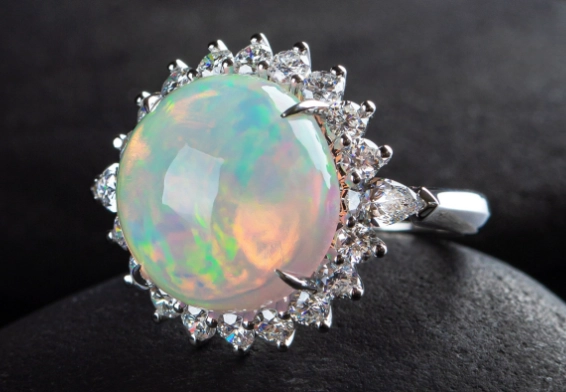
A Practical Guide: How to Wear Opal and What It Signifies in Style
Okay, so you're intrigued. You want to wear opal. How you wear it can actually add another layer of meaning. This isn't just about fashion; it's about intentionality.
Choosing Your Opal: Color and Meaning
Not all opals are the same. The body color—the background against which the play-of-color dances—carries its own symbolism. This is where a simple table helps make sense of it all.
| Opal Type (Body Color) | What the Color Often Symbolizes | Good For Wearing As... |
|---|---|---|
| White or Light Opal | Purity, clarity, innocence, new beginnings. Amplifies other colors beautifully. | An everyday piece, a first opal, something with a soft, ethereal feel. |
| Black or Dark Opal | Power, intensity, mystery, sophistication. The play-of-color pops dramatically. | A statement piece. Signifies confidence and embracing the depths. |
| Fire Opal (Orange/Red) | Passion, energy, courage, vitality, sexuality. Often translucent. | A bold accessory for social situations, creative pursuits, or when you need a boost of personal power. |
| Boulder Opal | Grounding, connection to nature, resilience. The ironstone matrix is left on the back. | A rustic, earthy piece. Signifies strength and being anchored while still shining. |
| Crystal Opal | Transparency, clarity of thought, spiritual connection. Transparent to semi-transparent body. | A piece for meditation or intention-setting. Feels very “clear” and open. |
Where You Wear It: Symbolism of Placement
This is a more subtle aspect of the significance of wearing opal. In some traditions, where you place a gem on the body matters.
- Opal Ring: On the right hand, it can symbolize active creativity and power. On the left, it might be more about internal emotions and receptive energy. A ring is a constant reminder on your most active limb.
- Opal Necklace (Pendant): Worn close to the heart or throat. Near the heart, it's about emotional expression, love, and compassion. At the throat (choker length), it can be about speaking your truth and authentic communication.
- Opal Earrings: Framing the face, they can signify how you present yourself to the world—your “face value.” They're about perception, hearing, and balancing energies on both sides of your head.
- Opal Bracelet: On your wrist, a point of action and pulse, it can signify bringing your creative, colorful energy into everything you *do* with your hands.
You don't have to subscribe to any of this, of course. But thinking about it can make choosing a piece more meaningful. Maybe you want a necklace to feel closer to an emotional intention, or a ring to remind you to create with your hands.
Caring for Your Opal: The Significance of Maintenance
This part is crucial and often overlooked. The significance of wearing opal isn't just in the buying and the looking; it's in the relationship. Opals contain water (typically 3-10%). If they dry out completely, they can craze (develop a network of tiny cracks). This isn't a flaw; it's their nature.
Caring for an opal teaches you to be mindful, gentle, and attentive. It’s not a stone you can abuse. In a way, its fragility is part of its significance—it reminds us that beautiful, unique things often require conscious care. If you're someone who tends to be hard on jewelry, a sturdy boulder opal in a solid setting might be a better fit than a delicate white opal solitaire ring.
For long-term storage, some experts recommend keeping them in a sealed plastic bag with a damp piece of cotton wool or a humidity pod, especially in very dry climates. The U.S. Geological Survey confirms the basic mineralogical structure that makes opal unique and somewhat delicate compared to other gem silicates.
Answering Your Burning Questions (FAQs)
Let's tackle the practical stuff people are secretly (or not so secretly) asking when they search about opal significance.
Is it bad luck to wear an opal if it's not your birthstone?
Absolutely not. This is the most persistent and baseless superstition. It originated from 19th-century fiction, not any ancient tradition. Anyone of any birth month can wear and enjoy opal. The idea that a beautiful natural gemstone would discriminate based on your birthday is, frankly, silly.
Can I wear opal every day?
You *can*, but you need to choose the right piece. A pendant or earrings are safer for daily wear than a ring, which takes more abuse. For a daily-wear ring, opt for a smaller opal in a very protective bezel setting (where a metal rim surrounds the stone) and be religious about taking it off for manual work. A boulder opal is tougher than a solid opal. It requires a lifestyle adjustment.
What does it mean if my opal cracks or loses its color?
It almost certainly means it got too dry or experienced physical shock. It's not an omen. Opal is a delicate gem. Loss of color (becoming dull) can be due to surface grime, which a gentle clean can fix, or from absorbing substances like oil or lotion. Cracking is usually from dehydration or impact. It's a maintenance issue, not a mystical one. This is the number one reason people get nervous about opals—the gemstone anxiety is real. Knowledge is the antidote.
How can I tell if an opal is real?
Real opal's play-of-color is *within* the stone. It appears and disappears from different angles. Imitations (like “opalite” glass) often have a surface glitter or a uniform color flash. Painted-on colors look flat. For valuable pieces, always ask for a report from a reputable lab like GIA. Real opal will also feel relatively cool to the touch and has a certain depth. When in doubt, buy from a trusted, knowledgeable jeweler.
So, what is the *main* significance of wearing opal?
If I had to distill it? The primary significance of wearing opal is a celebration of unique, dynamic beauty and personal authenticity. It’s for the person who doesn't want to blend in, who embraces change and complexity, and who finds magic in the interplay of light and color. It's a commitment to wearing something that requires a bit of your attention in return for its stunning display.
Final Thoughts: Is Opal for You?
Deciding to wear opal is a personal choice. Don't get one because you feel you should. Get one because you're drawn to its ever-changing fire. Get one because you love the idea of a gem with a rich, global story. Get one as a reminder to be your multifaceted self.
Its significance isn't handed down on a stone tablet. It's built from its scientific wonder, its historical journey through cultures, the modern meanings we layer onto it, and, most importantly, the personal intention you bring when you put it on.
Maybe the real significance of wearing opal is simply this: it makes you pause. It makes you look at your hand, your neckline, and see a little captured rainbow. In a world that can be monochrome and routine, that’s a pretty powerful thing to carry with you. It’s a conversation starter, a personal touchstone, and a fragment of the earth’s most whimsical art. What you do with that is entirely up to you.
Just promise me you'll take good care of it.
Related Articles
Moss Agate Stone: Meaning, Benefits & How to Use It

Black Onyx Spiritual Meaning: A Complete Guide to Its Power & Uses
Crazy Lace Agate Meaning: Spiritual Insights & Healing Power
Bloodstone: A Complete Guide to Meaning, Uses, and Buying Tips
Agate Meaning: More Than Just a Pretty Stone