You've probably seen sodalite—that stunning deep blue stone with white veining, sometimes mistaken for lapis lazuli. It's beautiful, sure. But what is sodalite actually good for beyond looking pretty on a shelf? If you're holding a piece and wondering how to make it work for you, or if you're just curious about the hype, you're in the right place. I've worked with crystals for over a decade, and sodalite is one I keep coming back to, not for vague "good vibes," but for specific, tangible benefits when life gets noisy and overwhelming.
Let's cut through the mystical fluff. Sodalite is a practical stone. Its core energy is about bringing order to chaos, specifically the chaos in your mind and your communication. It's the crystal equivalent of a deep breath before a difficult conversation or a moment of clarity in a fog of anxiety.
In This Guide: Your Sodalite Roadmap
What is Sodalite and Where Does It Come From?
Sodalite is a rich blue mineral, part of the feldspathoid group. Its name comes from its sodium content ("soda") and the Greek word "lithos" for stone. The white or gray veining is usually calcite. While deposits exist worldwide, the most famous source is Bancroft, Ontario, Canada, where it was discovered in large quantities in the early 19th century. You can find detailed geological data on authoritative mineral databases like Mindat.org.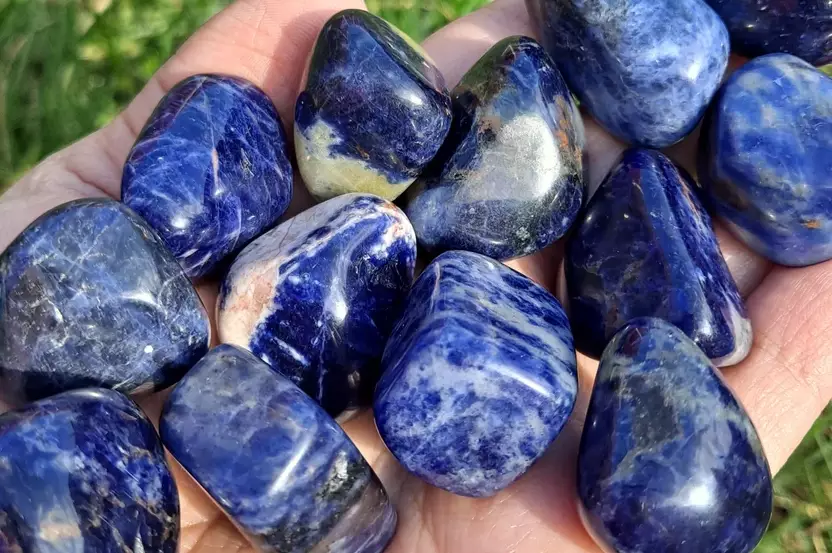
It's not as historically ancient as, say, lapis, but it gained massive popularity in the 20th century for ornamental purposes. That royal blue color is hard to ignore. But its metaphysical reputation grew from there, centered on its calming, logic-enhancing properties.
The Top Healing Benefits of Sodalite (Backed by Tradition)
So, what is sodalite good for, according to centuries of crystal lore and modern practitioner experience? Its benefits cluster around three main areas: the mind, communication, and emotional balance. Here’s a breakdown that goes beyond the generic labels.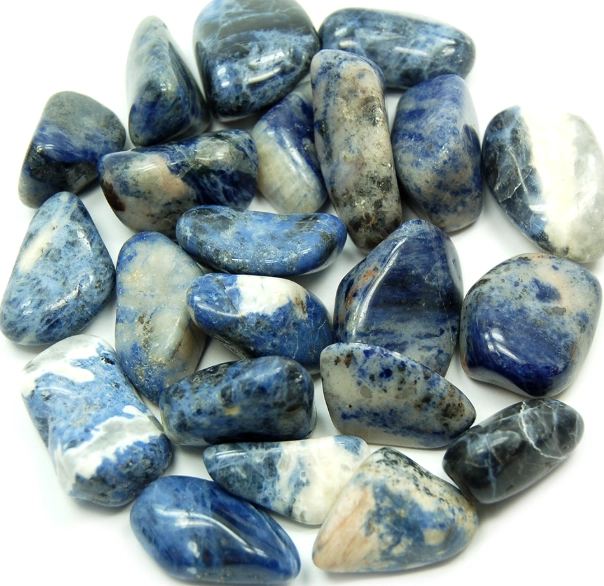
| Area of Benefit | How Sodalite is Believed to Help | Practical Outcome |
|---|---|---|
| Mental Clarity & Logic | Calms racing thoughts, reduces mental "fog," and enhances rational thinking. It's said to balance the left and right brain hemispheres. | Better decision-making, reduced overthinking, improved focus during study or complex tasks. |
| Communication & Truth | Strongly linked to the throat chakra. Encourages honest, clear, and calm expression, especially of difficult emotions. | Easier time speaking up in meetings, having hard conversations with loved ones, or writing with authenticity. |
| Emotional Balance | Dispels fear, panic, and guilt. Promotes a sense of inner peace and self-acceptance by challenging irrational beliefs. | Feeling less reactive in stressful situations, managing anxiety symptoms, and fostering self-compassion. |
| Intuition & Insight | While it boosts logic, it's also believed to open the third eye gently, allowing intuitive insights to surface in a grounded way. | "Aha!" moments that feel logical, not just psychic; better understanding of underlying patterns in your life. |
Here's where most blogs stop. But the real value is in the application. Knowing it's "good for communication" is useless if you don't know how to apply it when your heart is pounding before a confrontation.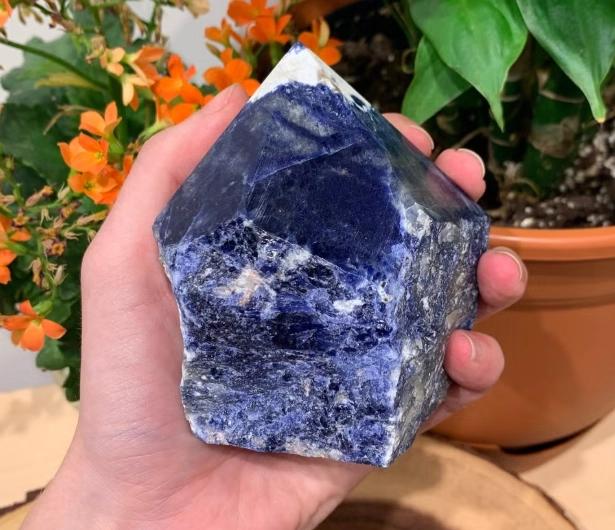
The Throat Chakra Connection: More Than Just "Good for Talking"
Every crystal guide mentions the throat chakra. Let's get specific. The throat chakra isn't just about talking more; it's about authentic expression versus people-pleasing. Sodalite is particularly good for those who swallow their words out of fear of conflict or rejection.
I recall a client, a graphic designer, who kept accepting lowball offers because she couldn't articulate her value. We worked with a sodalite palm stone during our sessions. She'd hold it while role-playing negotiation scenarios. The stone became a physical anchor, a reminder to breathe and access her calm, logical reasons for her rates, not just her fear. She didn't magically become a superstar negotiator, but the stone gave her a focal point to break the panic cycle. That's the practical magic.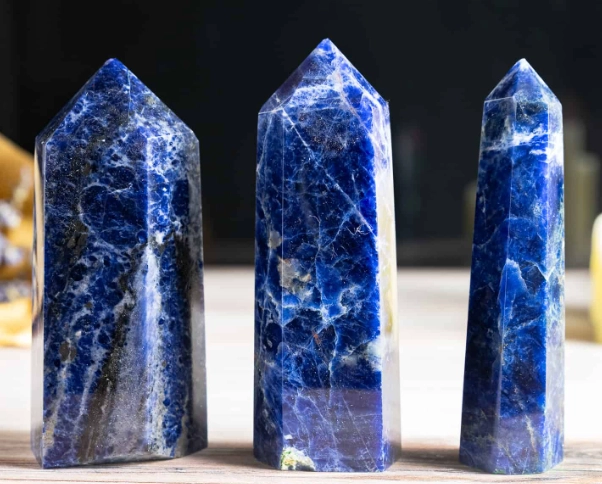
How Can You Use Sodalite in Daily Life?
Forget just placing it on a altar. Integrate it. Here are concrete, actionable ways to use sodalite based on what you might need.
For Anxiety and Overthinking: Keep a tumbled stone in your pocket or bra. When you feel the spiral start—the "what ifs" piling up—take it out. Hold it, feel its cool, smooth surface. Focus on that physical sensation for 60 seconds. This simple act pulls you out of your head and into your body, disrupting the anxiety feedback loop. It's a mindfulness tool with a blue, veiny handle.
For Creative or Intellectual Blocks: Place a sodalite sphere or cluster on your desk. Before you start a writing session, coding, or planning, take a moment to gaze at it. The deep blue is calming, the white veins can feel like neural pathways connecting. It sets a tone of calm focus. Some programmers I know swear by a small piece next to their keyboard when debugging complex code.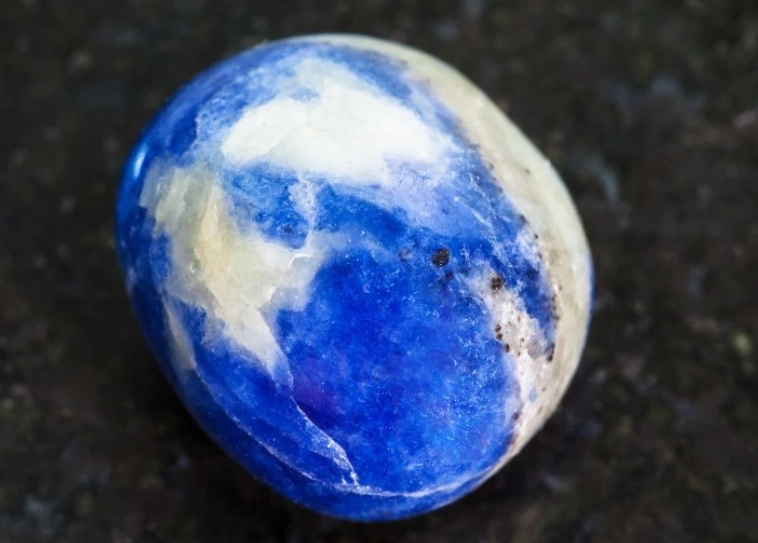
For Sleep Troubled by Mental Chatter: Put a piece under your pillow or on your nightstand. Set an intention like, "My mind is calm, my thoughts are ordered." It's not a sleeping pill, but it can be part of a ritual that signals to your brain that it's time to power down the worry machine.
For Meditation: Hold a piece over your throat or third eye. Don't strain for visions. Instead, use its energy as a theme: meditate on speaking your truth, or on untangling a specific confusing problem. Let the clarity come, don't force it.
Sodalite vs. Lapis Lazuli: Don't Make This Common Mistake
This is a crucial point most beginners miss. They look similar, but their energies and prices are worlds apart.
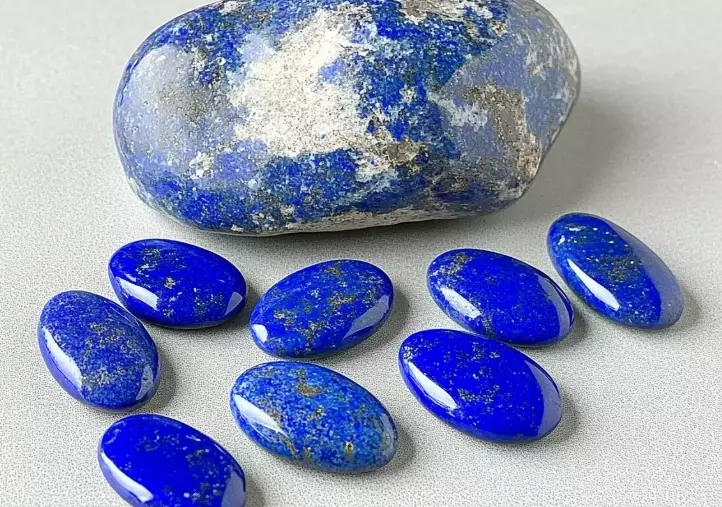
Lapis Lazuli is deep blue with brassy yellow pyrite (fool's gold) flecks. It's historically the stone of royalty, power, and profound spiritual revelation. It's more "fiery" and connected to unlocking deep personal power and cosmic truth. It can be intense.
Sodalite is blue with white calcite veins, no pyrite. It's the cooler, calmer, more logical cousin. It's about personal truth, rational insight, and emotional stability. It's more accessible and gentle for daily use.
Think of it this way: Lapis is for the prophet having a vision. Sodalite is for the therapist calmly helping you understand your feelings. If you're feeling fragile or overwhelmed, sodalite is almost always the better, safer choice. Lapis can sometimes stir things up too much.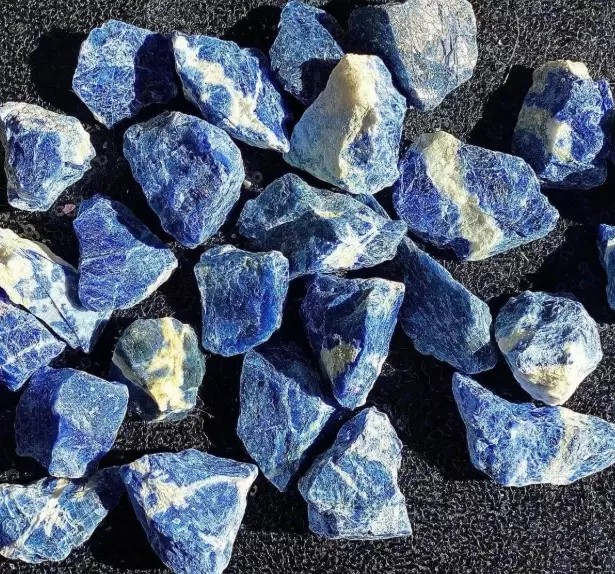
Choosing and Caring for Your Sodalite
You don't need a giant, expensive specimen. A small, genuine piece you connect with is worth more than a perfect museum piece that feels cold to you.
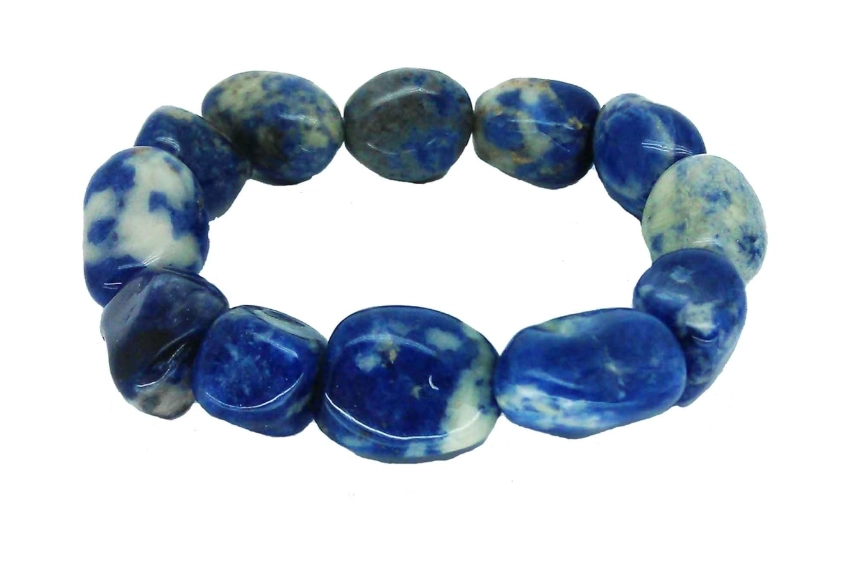
How to Spot Fake Sodalite: It's not commonly heavily faked, but be wary of dyed howlite. Real sodalite has an uneven color distribution and those characteristic white veins. Dyed stones often have a uniform, overly vibrant blue with veins that look painted on. If it's cheap and looks too perfect, be skeptical.
Cleansing and Charging: Sodalite is relatively durable but can fade in direct sunlight over long periods. To cleanse its energy (a reset for your intentions), use safer methods:
- Sound: Ring a bell or use a singing bowl near it.
- Smoke: Pass it through the smoke of sage or palo santo.
- Moonlight: Place it on a windowsill during a full moon (gentler than sun).
- Other Crystals: Bury it in a bowl of dry selenite chips or clear quartz overnight.
Set your intention after cleansing. Hold it, think clearly about what you want its energy to support—"help me stay calm during my presentation tomorrow"—and imagine that purpose flowing into the stone.
Your Sodalite Questions, Answered
Is sodalite safe to use with water, like in elixirs?
I strongly advise against making direct crystal elixirs by placing sodalite in drinking water. Many stones, including sodalite, can contain trace elements of metals or minerals that may leach into water. It's a potential health risk that isn't worth it. For a "water" method, use the indirect approach: place your cleansed sodalite next to a glass of water (not in it) overnight, with the intention of infusing the water. Or, better yet, use its energy during meditation before you hydrate.
What's the best way to use sodalite for social anxiety before an event?
Carry a palm stone or worry stone. About 30 minutes before you have to leave, find a quiet spot. Hold the sodalite in your dominant hand. Close your eyes and take three slow breaths. Visualize the event going smoothly—see yourself listening, smiling, responding calmly. Feel the weight and temperature of the stone. Associate that calm, solid feeling with the upcoming event. Put it in your pocket. During the event, if you feel panic rising, subtly touch the stone in your pocket. That physical touch can trigger the memory of the calm state you practiced, helping to ground you in the moment.
Can sodalite help with physical health issues?
In crystal healing traditions, sodalite is sometimes associated with supporting the immune system, regulating blood pressure, and aiding sleep—all conditions heavily influenced by stress and anxiety. The theory is that by addressing the emotional and mental root (calming the nervous system), physical symptoms may ease. However, this is not medical advice. You should never use sodalite or any crystal as a replacement for professional medical diagnosis, medication, or treatment. Think of it as a complementary support for overall well-being, not a cure.
I've heard sodalite is a "stone of logic." Does that mean it suppresses intuition?
Not at all. This is a subtle but important distinction. Sodalite doesn't crush intuition with cold logic. Instead, it acts as a filter or a translator. It helps ground wild, fleeting intuitive hits into understandable insights you can actually use. It brings clarity to your intuition. If your gut feeling is a chaotic jumble, sodalite helps sort it into a coherent sentence. It's the bridge between the mystical and the practical.
Related Articles

Storage giants compete for HBM.
What Is the Rarest Color of Jade? The Truth About Imperial Green
Sodalite Zodiac Signs: Who Should Wear It & Why
Lapis Lazuli Spiritual Benefits: A Complete Guide to Healing & Power
Moss Agate Benefits: A Complete Guide to Its Healing & Practical Uses