If you've fallen for kunzite's gentle charm, you've probably seen its typical soft lilac and pale pink shades. But ask any serious collector or gemologist about the pinnacle of this stone, and they'll point you to a color that's a world apart. The rarest color of kunzite is an intensely saturated, vivid pinkish-purple, sometimes with a whisper of orangey-pink. It's not just a "deeper" version of common kunzite; it's a different beast entirely, born from a perfect storm of geology and chemistry. Forget the washed-out pastels. The top-tier stone screams with color, holding its own against other prestigious gems. I've handled hundreds of pieces over the years, and seeing a truly vivid specimen still makes me pause. Let's cut through the marketing fluff and dive into what makes this color so special, how to spot it, and why it commands such respect (and high prices).
What You'll Discover
What Exactly is the Rarest Kunzite Color?
Calling it just "deep purple" or "hot pink" misses the nuance. The rarest kunzite color is a specific, highly saturated blend. Think of the most vibrant fuchsia flower, mixed with a rich grape juice purple, and dialed up to a neon-like intensity without looking artificial. The GIA (Gemological Institute of America) would describe it as a strong to vivid purplish-pink or pinkish-purple.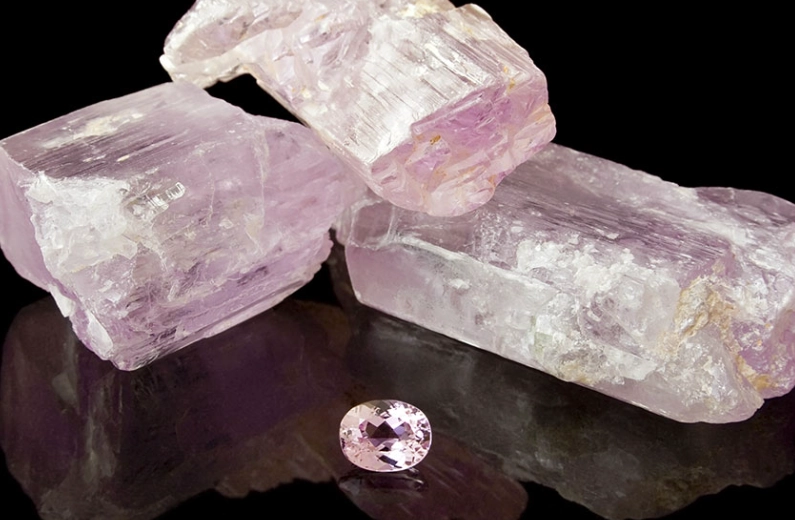
Here’s where newcomers often get tripped up. Many dealers will label a slightly darker lilac stone as "rare" or "vivid." It's not. True rarity lies in the saturation—the purity and strength of the color—not just a darker tone. A pale but evenly colored stone is common. A stone where the color is so potent it seems to glow from within? That's the trophy.
Key Distinction: The presence of a subtle secondary hue matters. Sometimes this elite color shows a touch of orangey-pink (like a sunset), which gemologists link to specific trace element combinations. This isn't a flaw; it's a fingerprint of its unique formation.
The Kunzite Color Spectrum: From Common to Collector-Grade
To understand the rare, you need to see the whole range. Kunzite's color is primarily due to manganese impurities. But concentration, other trace elements, and natural radiation over millions of years create the spectrum.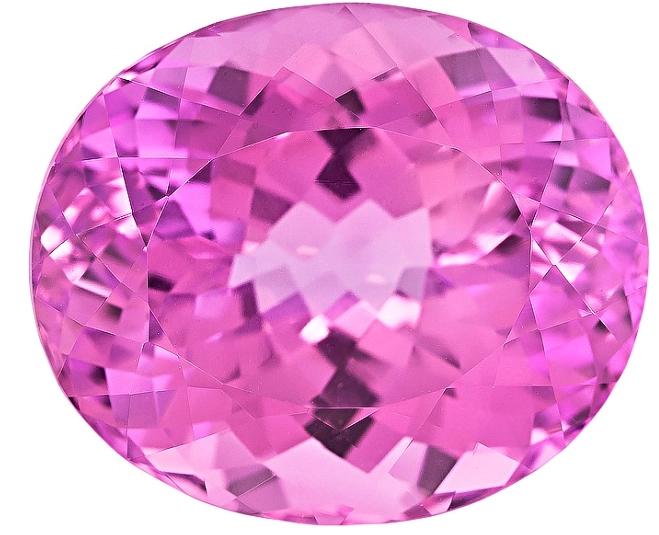
| Color Grade | Description & Typical Look | Availability & Market Note |
|---|---|---|
| Pale / Light | Very light lilac, almost colorless with a hint of pink. Often seen in large, affordable pieces. Color can fade in direct sun. | Most common. The "entry-level" kunzite. Makes up probably 70% of retail stock. |
| Medium / Commercial | Noticeable lavender or soft pink. Pleasant and popular, the color is stable in typical wear. | Widely available. The sweet spot for many jewelry buyers wanting visible color without a huge premium. |
| Fine / Intense | Rich lavender, definite pink. Good saturation. This is where prices start climbing significantly per carat. | Less common. Sought after by informed buyers. Often mislabeled as "vivid" in non-specialist shops. |
| Vivid / Exceptional (The Rarest) | Strong, saturated pinkish-purple. Color appears electric, not dusty. May show orangey-pink modifiers. Holds color in all lights. | Extremely rare. Found in small, sporadic pockets. Commands auction-level prices. A true investment-grade material. |
I remember a client bringing in a "vivid" kunzite ring bought from a general jeweler. Under my gem lamp, it was a nice medium pink. When I showed her a small, 2-carat loose stone of truly vivid material from my safe, her jaw dropped. "That's what they meant?" she said. The difference was night and day.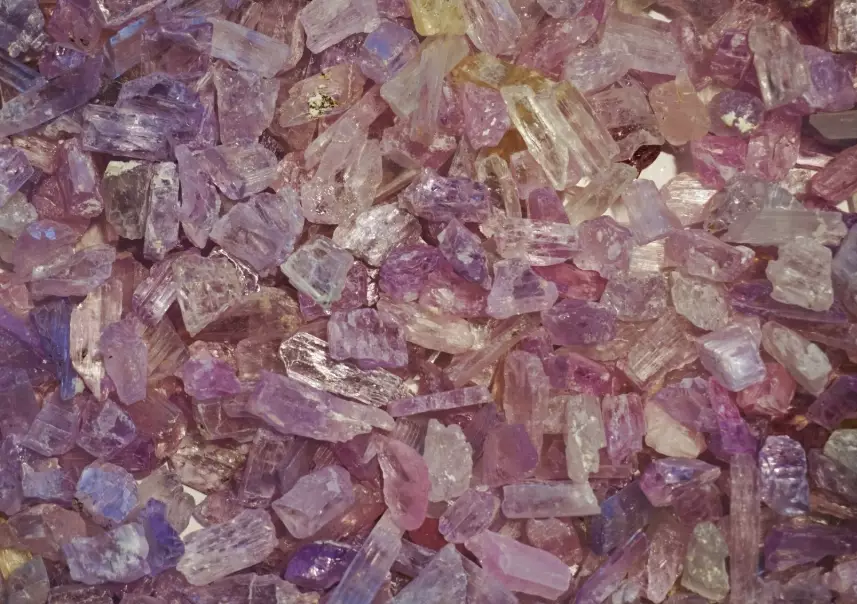
Why is Vivid Pinkish-Purple Kunzite So Rare?
Geology isn't consistent. Creating this color requires a perfect, and unstable, recipe.
The Manganese Sweet Spot: Too little manganese, you get near-colorless spodumene (kunzite's mineral family). Too much, and the crystal structure can become unstable or the color turns murky. The vivid color needs a precise, high concentration of manganese, perfectly integrated into the crystal lattice.
Natural Irradiation's Role: Kunzite gets its color from natural, long-term exposure to radioactive elements in the host rock. For most kunzite, this exposure is mild. For the rarest color, the irradiation must be strong enough to deepen the color but not so strong as to damage the crystal or turn it an undesirable greenish or brownish shade. It's a million-year-long tightrope walk.
The Trace Element Wild Card: The presence of other elements like iron or chromium in trace amounts can shift the pink towards more orange or more purple tones. The coveted vivid pinkish-purple often implies a specific, rare cocktail of these impurities.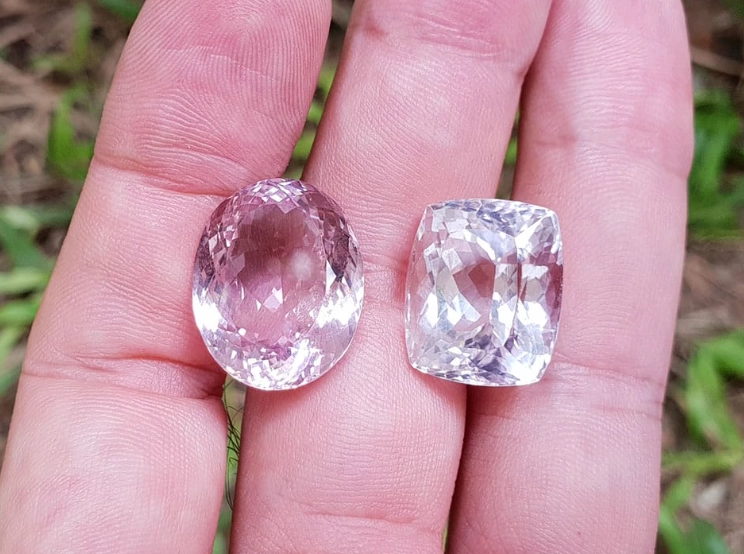
Source Dependency: While kunzite comes from Brazil, Afghanistan, Madagascar, and the USA (California), the truly vivid material is almost exclusively reported from a few specific pegmatite mines in Brazil and Afghanistan. These pockets are exhausted quickly. You can't just go back to the same mine vein and find more next year.
Beyond Color: Other Factors That Determine Kunzite's Value
Color is king, but the court matters. A vivid color in a badly included or poorly cut stone loses its magic and value.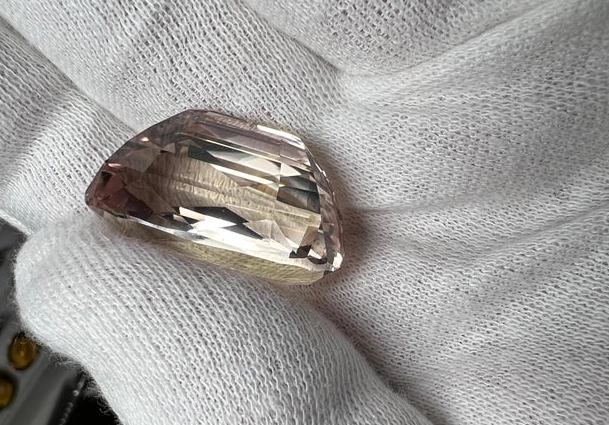
Clarity: Kunzite is a Type II gemstone, meaning some inclusions are expected. The trade accepts eye-clean or slightly included stones. However, for the rarest color, the market demands significantly higher clarity. Heavy veils, fractures, or clouds that mute the color's fire are major detractors. A small, vivid stone that's loupe-clean will be worth more per carat than a larger, included one.
Cut: This is critical and often botched. Kunzite has perfect cleavage, meaning it can split easily along one plane. A cutter must orient the rough to both maximize color and avoid cleavage directions, which sacrifices yield. Many commercial cuts are shallow to save weight, leaving the stone lifeless. A well-cut rare kunzite will have:
- Optimal proportions for brilliance (not too shallow or deep).
- Careful orientation to show the best face-up color (kunzite is strongly pleochroic, showing different colors from different angles).
- Precise facet alignment to make that vivid color sparkle, not just sit there.
Carat Weight: Here's the kicker. Fine color in large sizes is exponentially rarer. A 1-carat vivid stone is rare. A 5-carat one with the same saturation is a museum piece. Prices don't scale linearly; they go parabolic.
How to Identify and Buy Genuine Rare Kunzite
The market is rife with treated, misrepresented, and synthetic look-alikes. Here’s how to navigate it.
1. Beware of Irradiation Treatment: Most kunzite on the market is heat-treated to stabilize its pink/purple color (this is standard and accepted). However, some lower-color stones may be artificially irradiated to mimic rare vivid colors. This color is often unstable and can fade. Ask the seller directly: "Has this stone undergone any irradiation treatment beyond the natural geological process?" Reputable sellers will disclose this. An advanced gem lab report (from GIA, AGL, etc.) is the only definitive proof for high-value purchases.
2. Know the Imposters: Synthetic kunzite isn't really a thing commercially, but other gems are sold as kunzite. Pink tourmaline and morganite can confuse beginners. Kunzite's distinct pleochroism (strong color change when tilted) and its higher clarity character are giveaways to a trained eye. When in doubt, get a report.
3. Lighting is Everything: Always examine the stone under multiple light sources: daylight-equivalent LED, incandescent, and even fluorescent. A truly fine, vivid color will remain attractive and saturated in all of them. A stone that looks great in warm store lighting but goes gray in daylight is a problem.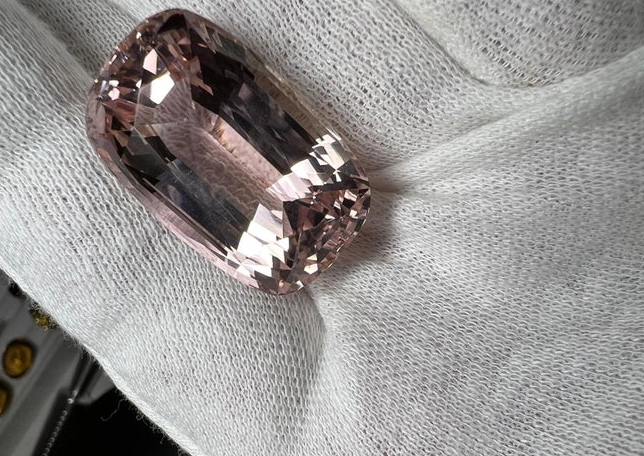
4. Buy the Seller: For investment-grade rare kunzite, you're buying the dealer's reputation and expertise as much as the stone. Seek out specialist colored gemstone dealers who provide proper documentation and have a return policy.
Your Kunzite Color Questions Answered
Related Articles
Indigo Gabbro Stone: The Ultimate Guide to Its Healing & Practical Uses
Green Moss Agate Benefits: More Than Just a Pretty Stone
What Does Jasper Crystal Do Spiritually? A Complete Guide to Meaning & Uses
Onyx Properties Explained: Beyond Beauty to Practical Power
Adamite Mineral Guide: Properties, Localities & Value for Collectors