You've seen pictures of it—a translucent stone with delicate, fern-like green inclusions that look like a miniature forest trapped in quartz. It's captivating. And then you see the price tag on a nice piece of jewelry or a palm stone, and you wonder: just how rare is green moss agate, anyway? Is its price justified by genuine scarcity, or is it just hype? The short answer is that high-quality, natural green moss agate is genuinely uncommon, but its "rarity" is a nuanced story tied to geology, market forces, and a lot of misinformation. It's not as vanishingly rare as a red diamond, but finding a piece with perfect color, clarity, and pattern is far from easy. Let's break down exactly what makes this stone special and hard to find.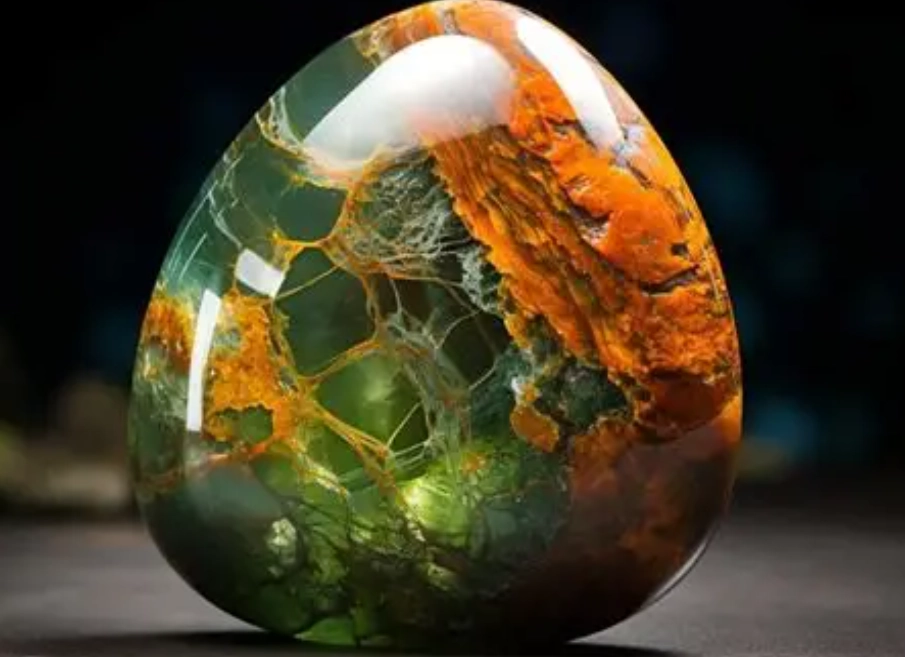
What's Inside This Guide
What Exactly is Green Moss Agate?
First, a quick reality check. "Moss agate" isn't technically an agate. True agates have banding. Moss agate is actually a variety of chalcedony (a microcrystalline quartz) that contains mineral inclusions, usually manganese or iron oxides, that create dendritic (tree-like) or moss-like patterns. The "green" color specifically comes from inclusions of minerals like chlorite or hornblende.
Think of it as a clear quartz canvas with natural, organic-looking paintings inside. No two patterns are identical. This uniqueness is a huge part of its appeal, but it also means grading and comparing pieces is highly subjective. One person's "perfect forest scene" is another's "messy splotch."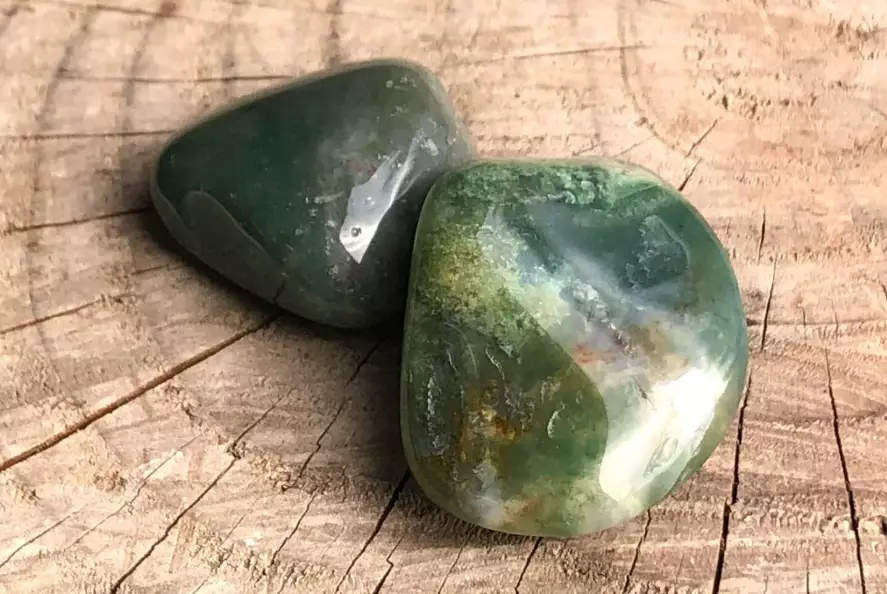
Why is Green Moss Agate Considered Rare?
Its rarity isn't about the raw tonnage pulled from the earth. You can find chalcedony with inclusions in many places. The rarity stems from the specific combination of factors that create a commercially desirable stone. Let's look at the key constraints.
The Geological Lottery: Formation Conditions
For green moss agate to form, you need a very specific geological cocktail. Silica-rich water must seep through rock fissures, and simultaneously, the right green-colored minerals (like chlorite) need to be present in just the right concentration and form to create those delicate dendritic patterns. Too much mineral, and the stone becomes opaque and muddy. Too little, and you just have clear chalcedony. The perfect balance is a geological accident.
Major commercial deposits are limited. While it's found in places like India, the United States (Montana, Wyoming), Brazil, and Australia, the yield of top-tier material from any mine is always a small fraction of the total output. Most of what comes out is cabbing grade at best, or destined for tumbled stones.
A Common Misconception: Many online sources will flatly state "India is the only source of green moss agate." This is outdated and incorrect. While historically significant material came from India (and beautiful pieces still do), commercial mining in Montana, USA, has been a major source for decades. This kind of repeated misinformation is a red flag—it shows a source is copying content without real expertise.
The Quality Spectrum: From Muddy to Museum-Grade
This is where the concept of rarity gets practical. When we talk about rarity in the market, we're almost always talking about high-quality specimens. Here’s a breakdown of what moves a stone from common to collectible:
| Quality Tier | Key Characteristics | Market Availability | Approx. Price Range (for a standard cabochon) |
|---|---|---|---|
| Commercial Grade | Opaque or milky base, fuzzy or blotchy green patterns, may have cracks or pits. Often tumbled. | Very Common | $5 - $20 |
| Cabbing / Good Jewelry Grade | Semi-translucent base, clear dendritic patterns with good contrast. Few visible flaws. | Uncommon | $25 - $100+ |
| Collector / Showpiece Grade | Highly translucent to transparent base, vivid, sharply defined "scene" (e.g., a perfect tree silhouette). Flawless polish. | Rare | $150 - $500+ |
The jump from the first tier to the second is huge in terms of scarcity. The jump to the third tier is astronomical. I've been to dozens of gem shows, and you might see one or two truly exceptional pieces per show, often snapped up immediately by dedicated collectors or high-end jewelry designers.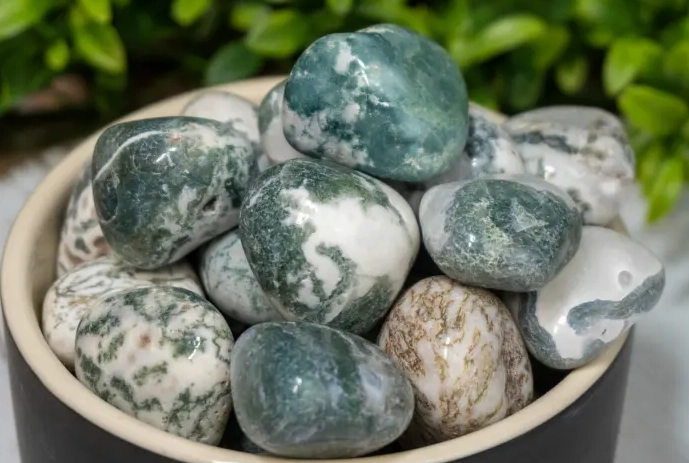
Market Forces and Mislabeling
The market is flooded with what I call "marketing moss." This includes:
Dyed Agates: Plain gray or white moss agate (which is more common) dyed a garish, uniform green. The dye collects in the cracks of the inclusions, making them look artificially dark and saturated. It lacks the subtlety of natural color.
"Moss Agate" from Other Minerals: Sometimes green-colored inclusions in other stones are misleadingly sold as moss agate to capitalize on the name.
This saturation of lower-quality and fake material creates a perception that the stone is common, which ironically protects the value of the genuine, high-quality articles. If you don't know what to look for, you might think the rare stuff isn't special. But it is.
How to Identify and Value Genuine Green Moss Agate
So, you're looking at a piece. How do you assess its rarity and value for yourself?
1. Examine the Color and Pattern: Natural green moss agate has inclusions that vary in shade—from sage green to deep forest green—often within the same stone. The patterns should look fibrous, dendritic, or feathery, not like solid blobs of paint. The edges of the "moss" should be fuzzy or branching, not hard-lined.
2. Check the Base Clarity: Hold it up to light. The clearer and more transparent the background chalcedony, the more valuable the piece. A truly translucent base that allows light to pass through and illuminate the inclusions from behind is a sign of superior quality.
3. Look for Flaws: Check for cracks, pits, or cloudy areas within the base stone. Some minor imperfections are expected, but they significantly impact value. A flawless, polishable piece is much rarer.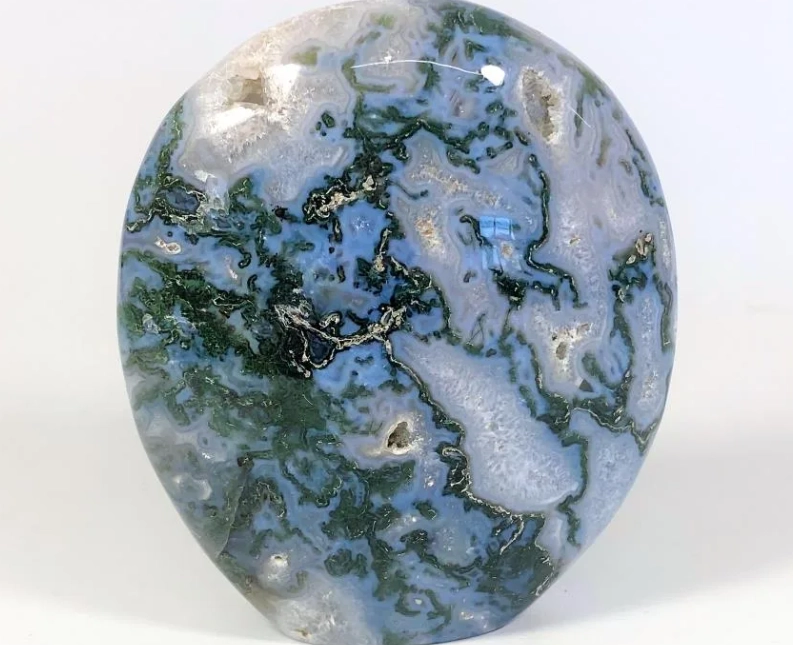
4. Consider the "Scene": This is the subjective, artistic part. Does the pattern resemble a landscape, a single tree, or a pleasing abstract form? Stones that tell a visual story command a premium. A nondescript sprinkling of green is less valuable than a piece that clearly looks like a pine forest on a mountainside.
Smart Buying Tips in a Saturated Market
Based on seeing countless disappointed buyers, here’s my advice.
First, buy from reputable dealers who specialize in natural stones. A good dealer will happily disclose if a stone has been treated (e.g., "stabilized" or "dyed") and will often provide information about its origin. Etsy and eBay are minefields for fakes.
Second, manage your expectations with price. If a large, seemingly perfect pendant is being sold for $25, it's almost certainly dyed or low-quality. Genuine, high-quality green moss agate has a tangible cost due to the labor of cutting and the scarcity of the rough material.
Finally, consider what you want it for. If you just love the green mossy look for energy work or decoration, a nice commercial-grade tumbled stone is perfectly fine and affordable. If you're looking for an investment piece or a centerpiece for fine jewelry, be prepared to hunt and pay for quality. The rarity is real at that level.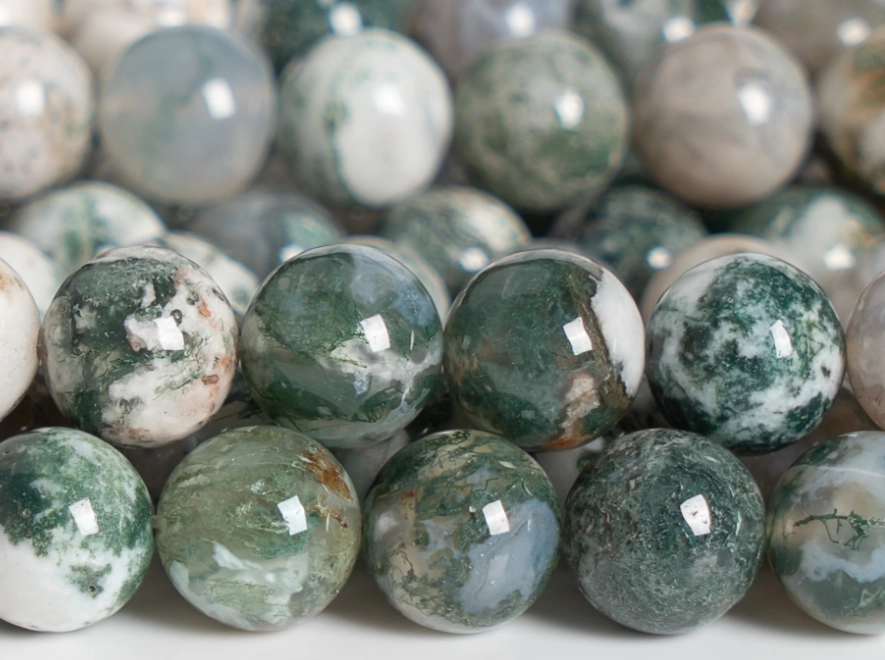
Your Green Moss Agate Rarity Questions Answered
Related Articles
Azurite Crystal: Deep Blue Stone for Intuition & Insight
Obsidian Crystal: Your Complete Guide to Meaning, Uses & Real vs. Fake
Rose Quartz Meaning: The Ultimate Guide to the Love Stone
Green Moss Agate: Benefits, Healing Properties & How to Use It
Natural Blue Jade: The Rarest Color & How to Spot the Real Deal