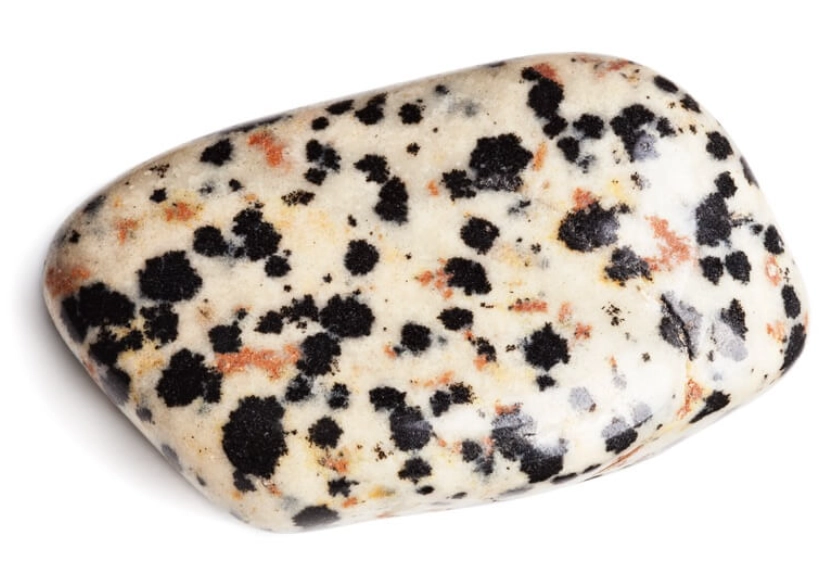
You see it everywhere—tumbled stones in crystal shops, statement necklaces on Etsy, worry beads on TikTok. Dalmatian jasper, with its playful black or brown spots on a creamy white or beige base, seems ubiquitous. So when someone asks "is Dalmatian jasper rare?", the gut reaction might be "no, it's common." But hold on. The full answer is more nuanced and actually matters a lot if you're thinking of buying a piece for your collection or as an investment. After years of sourcing stones and talking to miners and lapidaries, I've learned that availability on the retail shelf doesn't always tell the whole story about what's happening at the source.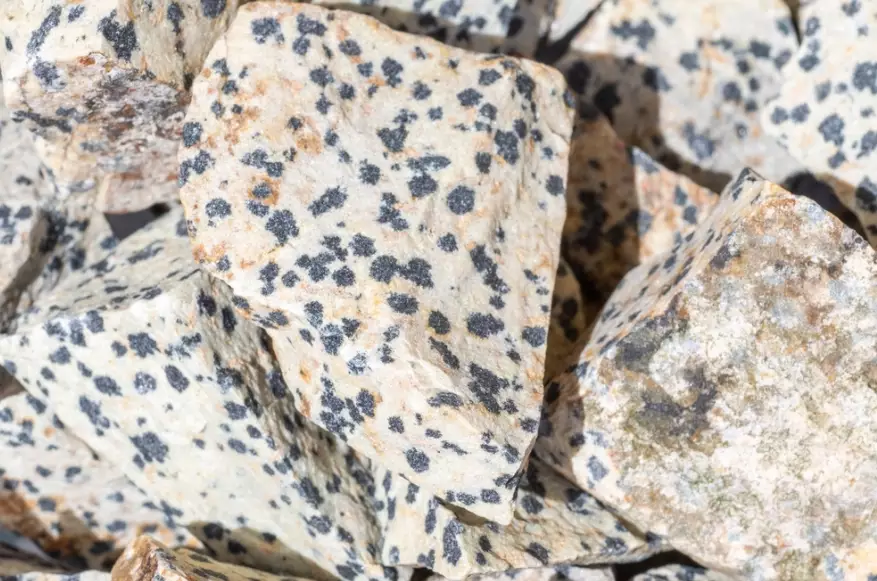
Let's cut straight to the point: Dalmatian jasper is not considered a globally rare or critically endangered gemstone. You won't find it on the same scarcity lists as Paraíba tourmaline or certain types of red beryl. However, calling it "common" oversimplifies things and misses key details that affect quality, price, and long-term availability. The truth lies in understanding the difference between commercial availability and geological rarity.
What You'll Discover in This Guide
Where Dalmatian Jasper Falls on the Rarity Spectrum
Think of gemstone rarity on a scale. On one end, you have stones mined in a single, nearly depleted pocket somewhere in the world. On the other, you have materials like quartz, found on every continent. Dalmatian jasper sits comfortably in the middle—a commercially available semi-precious stone.
Its current supply is stable enough to meet market demand, which is why you can find it. But "stable" doesn't mean infinite. Most commercial-grade material comes from a specific region, and mining operations have their own rhythms, costs, and challenges. A geopolitical shift, a change in mining regulations, or the exhaustion of a particular vein could tighten supply quickly. I've seen it happen with other "readily available" stones like larimar.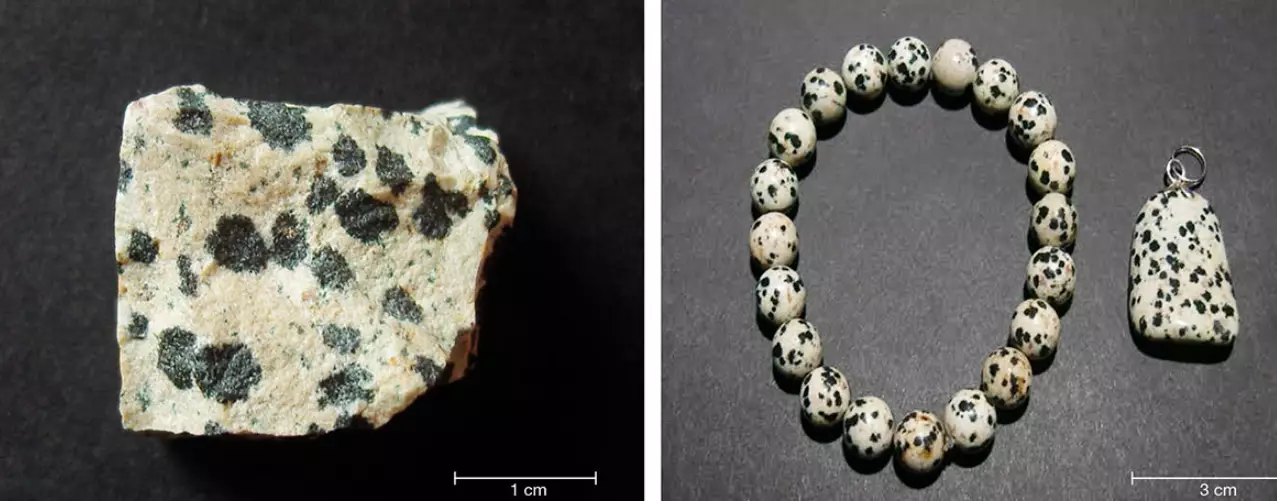
The key takeaway: It's not rare enough to be an investment-grade mineral, but it's not as common as plain river rock. Its status is "available with consistent effort." The rarity question shifts when we talk about high-quality specimens. Those are a different story.
The Primary Source: Chihuahua, Mexico
Nearly all genuine Dalmatian jasper on the market comes from the state of Chihuahua in Mexico. Knowing this single-source origin is crucial to understanding its potential rarity. When a material comes from one main location, its entire supply chain is vulnerable to local factors.
I remember a conversation with a supplier a few years back. He mentioned that the most productive mine for high-contrast material had a particularly difficult season due to heavy rains, slowing extraction to a crawl. For months, the wholesale market saw mostly lower-grade, muddy-colored stones. The good stuff became, temporarily, quite rare. This is the reality of mining.
While there are claims of similar stones from India or Turkey, the classic, high-contrast black-on-white "Dalmatian" pattern is distinctly Mexican. Other sources often produce stones that are more correctly called "spotted jaspers" or "orbicular jaspers"—they might look similar to an untrained eye but lack the specific composition and appearance.
What Makes a Top-Quality Piece (And Truly Rarer)
This is where most online guides get it wrong. They'll tell you it's not rare and leave it at that. But if you're a collector or a jeweler, you know that finding a great piece is the hard part. Here’s what separates common stock from the rarer, premium material:
- Contrast is King: The base should be a clean, opaque off-white, cream, or light tan. The spots should be jet black or very dark brown. Washed-out gray bases or faint spots are the lower-grade, mass-market material.
- Spot Distribution: It shouldn't be a solid black mass. The ideal has a balanced, random scattering of spots—neither too sparse nor too dense. Pieces with a perfect, even "polka dot" pattern are exceptionally rare and often command higher prices.
- Polish and Integrity: Premium stones have a high, glassy polish without pitting or cracks. Lower-end stones are often under-polished or have visible fractures filled with resin.
Finding a large palm stone or sphere with all these qualities? That's the challenge. Small tumbled stones are plentiful. Large, flawless, high-contrast specimens are not.
What Really Drives Its Value & Price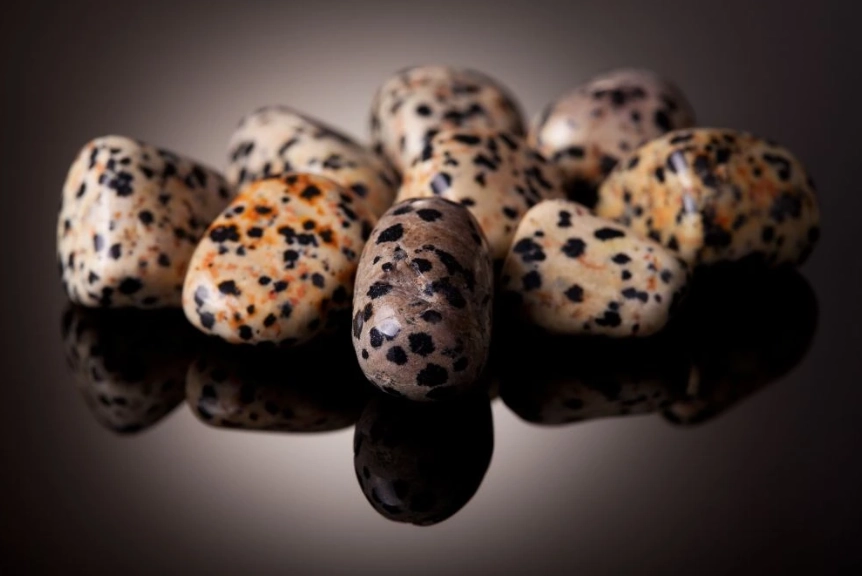
Since absolute geological rarity isn't the main factor, let's talk about what determines the price tag. You'll see Dalmatian jasper sold for $2 as a tumble and $200 as a carved sphere. The difference comes down to three things.
1. The Form and Craftsmanship: A rough chunk is cheap. A skilled carver turning that chunk into a detailed animal figurine, a perfect sphere, or a complex pyramid adds significant labor value. The more complex the shape and the higher the polish, the more it costs.
2. Size and Weight: This is simple logistics. Larger pieces require larger, unflawed blocks of rough material, which are harder to find. The price per gram often increases with the overall size.
3. The Metaphysical Markup (The Elephant in the Room): Let's be real. In the crystal healing world, stones are often priced on perceived energetic properties as much as physical attributes. Dalmatian jasper is marketed as a stone of joy, playfulness, and grounding. This demand, driven by wellness trends, sustains its market price even if the raw material isn't exceedingly scarce. A seller focusing on the "childlike joy" narrative might charge more than a seller who just calls it a spotted rock.
For a rough price reality check (as of current markets):
- Small tumbled stones: $2 - $5
- Standard palm stones: $10 - $25
- High-quality, large spheres (3+ inches): $80 - $300+
- Fine jewelry pieces (silver setting): $50 - $200
Smart Buying Tips: How to Navigate the Market
Armed with the knowledge that quality varies wildly, here’s how to shop like a pro and avoid overpaying for common material.
First, ignore the name game. You might see it called "Dalmatian stone," "spotted jasper," or even (incorrectly) "Dalmatian agate." Focus on the photos. Look for the high contrast I mentioned. If the picture is blurry or the stone looks dull, assume it's lower grade.
Second, ask about origin. A reputable seller should be able to tell you if their stock is from Mexico. If they hesitate or say "it could be from several places," that's a red flag for lower-grade or misidentified material.
My personal rule: I'd rather buy one excellent $30 palm stone than ten mediocre $3 tumbles. The quality difference in energy (if that's your thing) and aesthetic pleasure is immense. The premium piece will hold its value and desirability far better.
Also, be aware of fakes. Yes, fakes. It's not often replicated with plastic, but I have seen dyed howlite or other low-quality jaspers manipulated to look like Dalmatian jasper. The spots on a fake often look painted-on, bleed into the base color, or are perfectly uniform in an unnatural way. Real spots are mineral inclusions (usually iron oxides or amphiboles) and look integrated into the stone.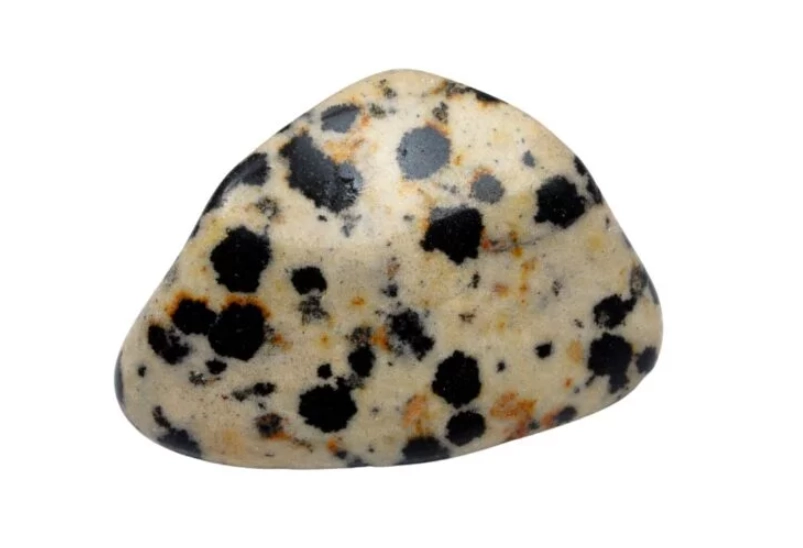
Your Top Questions on Dalmatian Jasper Rarity
 How can I tell if I'm getting a good deal on a high-quality piece?
So, is Dalmatian jasper rare? The bottom-line answer is no, it's not a vanishingly rare mineral. You can find it. But the journey from a mine in Chihuahua to your hand involves layers of quality, craftsmanship, and market forces. The truly satisfying pieces—those with stunning contrast, fine polish, and thoughtful design—occupy a much smaller, more select niche. They are the ones that feel rare in a world of mass-produced crystals. Focus on finding those, and you'll own a piece of Dalmatian jasper that's not just common stock, but a genuine treasure.
Related Articles
Kyanite Uses: From Healing to High-Tech Applications

The three giants of MCU, three choices
How to Use Selenite Crystals: A Practical Guide to Cleansing, Charging, and Decor
Azurite Mineral Guide: Properties, Value & How to Identify Genuine Stones
