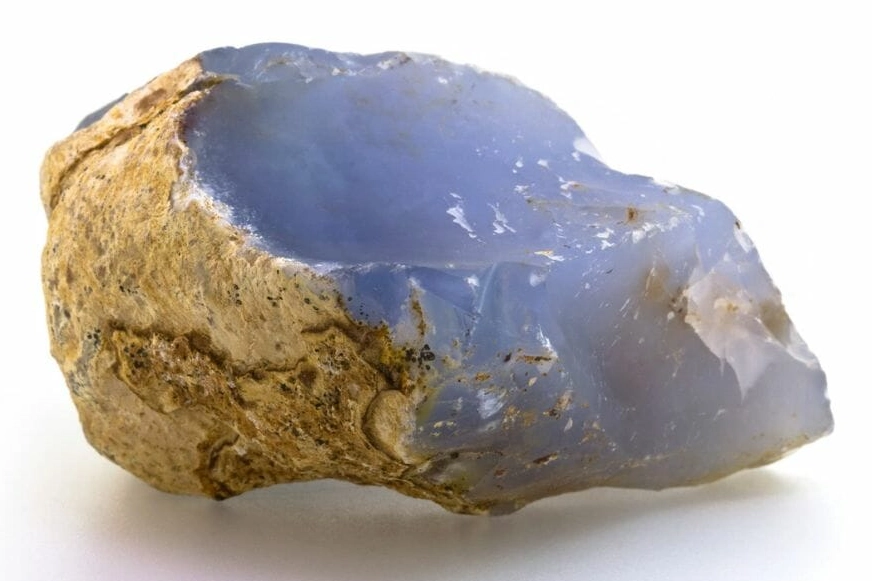
If you're holding a piece of blue chalcedony, you've got more than just a pretty stone. That soft, milky blue color isn't just for show. People ask "what is blue chalcedony good for?" because they sense there's substance behind its serene appearance. And they're right. From calming a racing mind to helping you find the right words in a tough conversation, this quartz variety has carved out a serious niche in the world of crystal healing and spiritual practice. But let's move past the vague descriptions. I've worked with stones for years, and blue chalcedony is one I keep coming back to, not because it's flashy, but because it consistently delivers in specific, practical situations.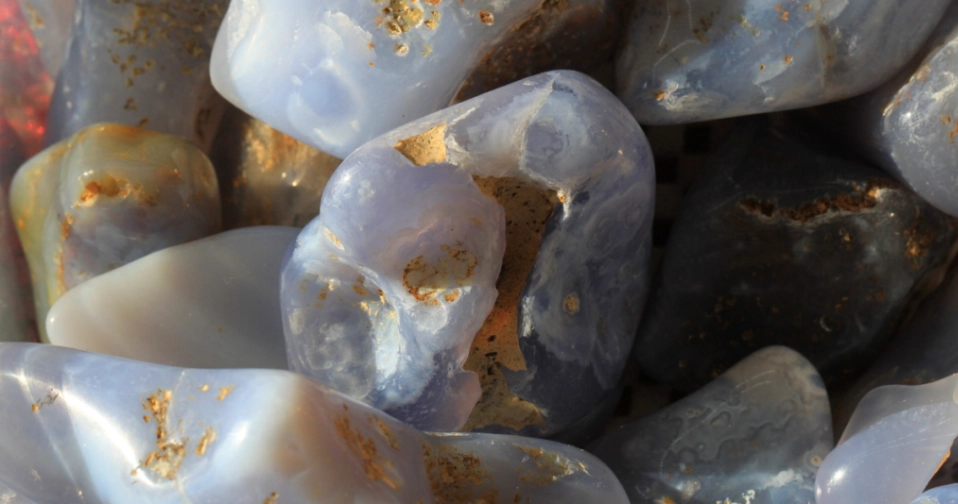
What’s Inside This Guide?
How Blue Chalcedony Promotes Emotional Healing & Calm
This is where blue chalcedony truly shines. Think of it as a gentle, non-judgmental friend for your nervous system.
Most crystal guides will tell you it's "calming." That's true, but it's a specific kind of calm. It doesn't sedate you like some stones might. Instead, it works on the root of emotional turbulence: communication blocks and repressed feelings. When you can't express what's bothering you—maybe because of fear, insecurity, or just not having the vocabulary—that energy turns inward, creating anxiety, irritability, or a general sense of being "wound up."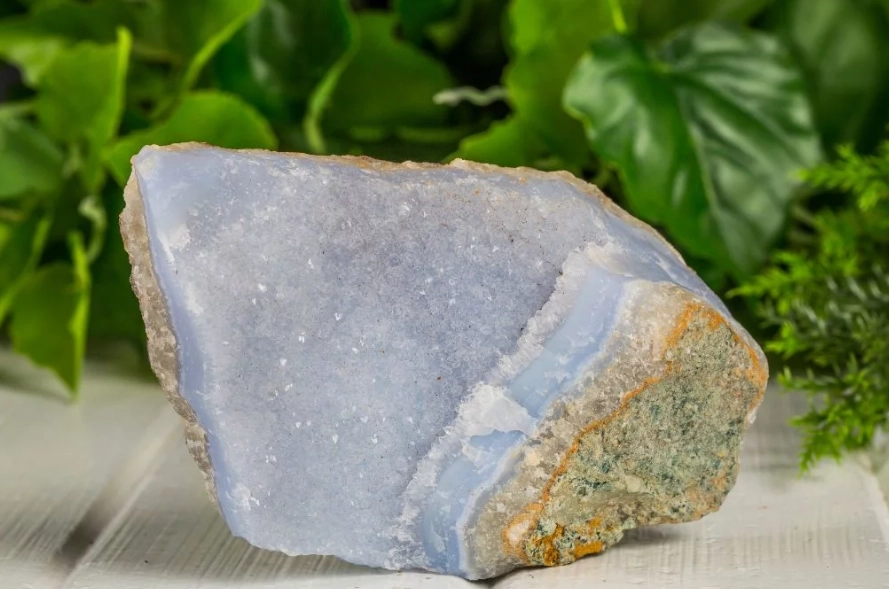
My take: A common mistake beginners make is using only intensely calming stones during panic. Sometimes, you need to address the why of the panic, not just suppress the symptom. Blue chalcedony helps with the why—it gently encourages the expression of what's stuck.
Key Emotional Benefits Broken Down
Soothing Anxiety & Overthinking: Its energy is like a deep, steady breath. It's particularly good for social anxiety or repetitive, circular thoughts. I've known people to keep a tumbled piece in their pocket during presentations or difficult meetings, simply rolling it between their fingers. The physical connection, combined with its energy, can ground scattered thoughts.
Improving Communication: This isn't about becoming a charismatic speaker overnight. It's about fostering kind, truthful, and effective expression. It helps you find clarity in your own feelings first, so you can then articulate them to others without aggression or passive-aggression. If you tend to clam up during conflict or say things you later regret, this stone can be a powerful ally.
Releasing Old Grief & Hurt: Blue chalcedony is associated with the throat chakra, but it has a soft, nurturing quality that connects to the heart. It can help you verbalize and release old emotional pain that you've been carrying silently. It doesn't force the issue; it creates a safe, supportive space for those feelings to surface when you're ready.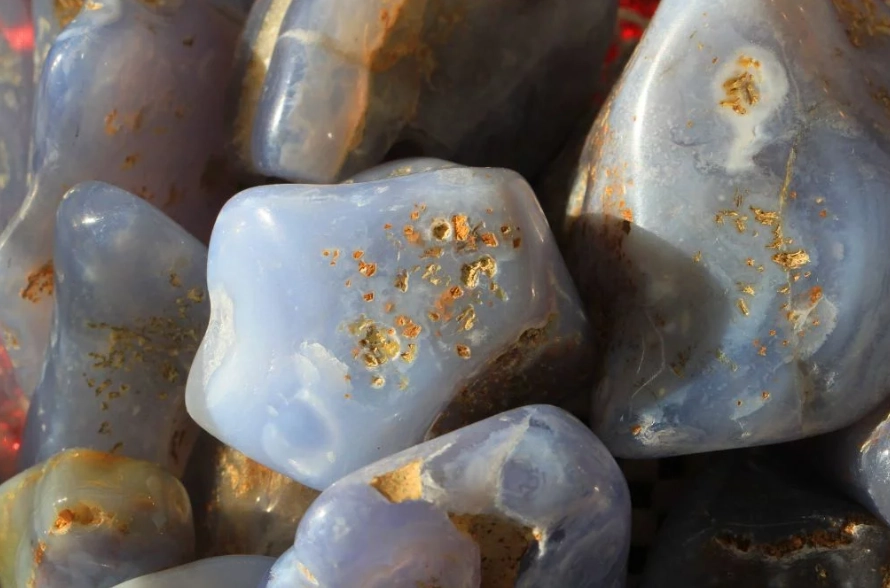
Spiritual & Metaphysical Uses of Blue Chalcedony
Beyond emotional first-aid, blue chalcedony holds a significant place in spiritual practice. Its connection to the Throat Chakra (Vishuddha) is primary, but its influence extends further.
| Spiritual Aspect | How Blue Chalcedony Helps | Practical Application Tip |
|---|---|---|
| Meditation & Mindfulness | Quiets the mental chatter, allowing for deeper stillness and receptivity to guidance. Its energy is not "void-like" but gently expansive. | Hold a palm stone or place a piece on your throat or third eye during meditation. Focus on its cool, smooth sensation. |
| Dream Work & Recall | Believed to promote vivid, meaningful dreams and improve your ability to remember them upon waking. It acts as a bridge to the subconscious. | Place a piece under your pillow or on your nightstand. Keep a dream journal nearby and set the intention to remember before sleep. |
| Psychic & Intuitive Development | By clearing throat chakra blocks, it can enhance your ability to trust and articulate your intuitive hits or "gut feelings." | Wear it as a pendant during divination practices (like tarot) or when you're trying to develop your clairsentience (clear feeling). |
| Attracting Positive Energy | In some traditions, it's seen as a protective stone that absorbs and dissipates negativity, replacing it with peace and goodwill. | Place a cluster or larger piece in the main living area of your home or near the entrance to filter incoming energy. |
I'll add a note here from mineralogy, which I think is important for grounding these metaphysical ideas. Chalcedony, including the blue variety, is a microcrystalline form of quartz (SiO₂). Its structure is compact and organized, which some practitioners link to its stabilizing, integrating energy. You can read more about its geological formation on authoritative sites like Mindat.org.
Practical, Everyday Uses for Blue Chalcedony
Alright, so how do you actually use this thing? Let's get tactical. Its benefits aren't locked away in meditation caves; they're for your daily life.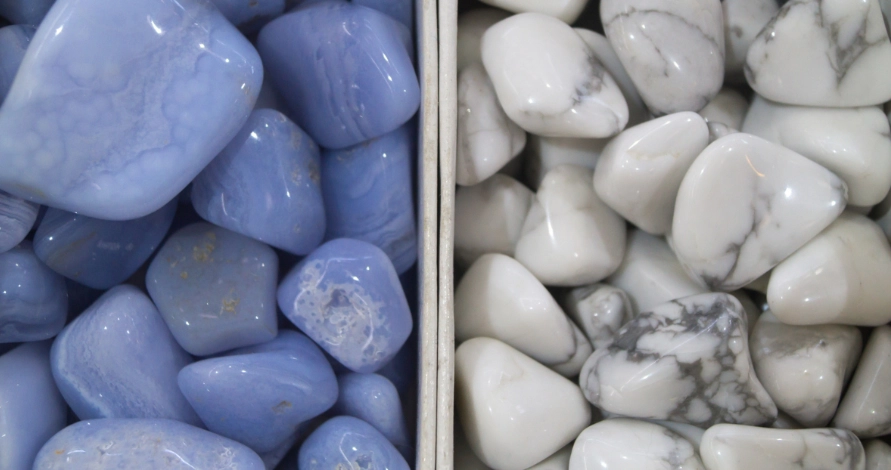
In Your Home & Workspace
For a Peaceful Bedroom: A piece of blue chalcedony on a nightstand is my go-to recommendation for light sleepers or couples. It doesn't just aim for sleep; it fosters an atmosphere of gentle communication and emotional safety in the shared space.
On Your Office Desk: Staring at a screen all day? Feeling frustrated with emails? A small sphere or tower on your desk can act as a visual and energetic reset button. Glance at it during stressful moments. Its color alone has a psychologically calming effect.
As Personal Jewelry
Wearing blue chalcedony is the most direct way to keep its influence with you.
- Pendants & Necklaces: Worn close to the throat chakra, this is ideal for anyone wanting to work on communication, public speaking, or expressing creativity.
- Bracelets & Rings: Great for a constant, subtle connection to its calming energy throughout a busy day. A ring can serve as a tactile reminder to speak your truth when you gesture with your hands.
Not all blue chalcedony jewelry is created equal. Much of what's sold as "blue chalcedony" is actually dyed agate. Real, naturally blue material tends to have a softer, more uneven color. I prefer the natural stuff, even if it's paler—the energy feels more authentic to me.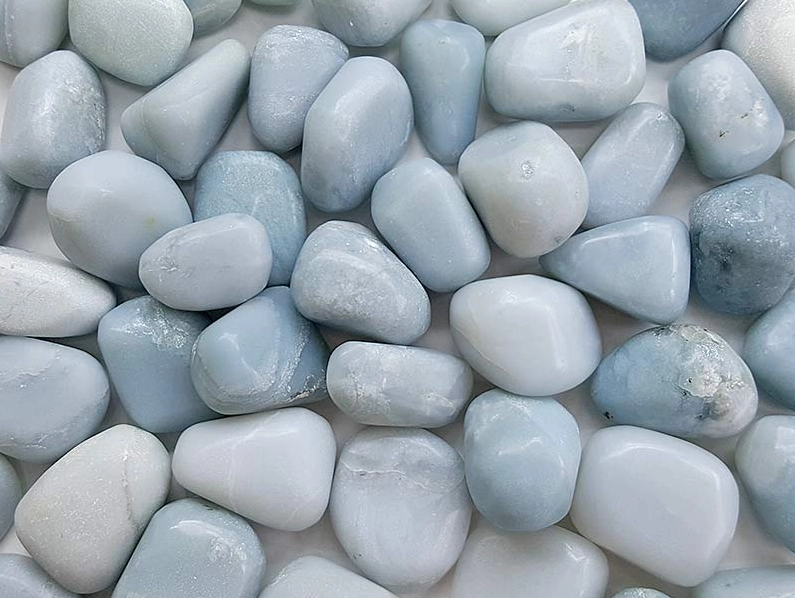
How to Choose and Care for Your Blue Chalcedony
You don't need a Ph.D. in gemology, but a few tips can save you from a dud purchase.
Selecting Your Stone: Let go of the idea of finding a "perfect" piece. Look for a color and shape that you're genuinely drawn to. Hold it. Does it feel cool and pleasant? Does your mind quiet down a little when you look at it? That's a better sign than any perfect stripe or shade. Be wary of stones that are a too vibrant, uniform blue—they're often dyed.
Cleansing & Charging: Like any crystal used for energy work, it can benefit from regular clearing.
- Moonlight: A classic, gentle method. Place it on a windowsill overnight during a full moon.
- Smoke: Passing it through the smoke of sage, palo santo, or cedar is quick and effective.
- Sound: A singing bowl or tuning fork held near the stone uses vibration to shake off stagnant energy.
Avoid: Prolonged sunlight (can fade the color over time) and harsh chemicals or saltwater, which can damage the polish or surface.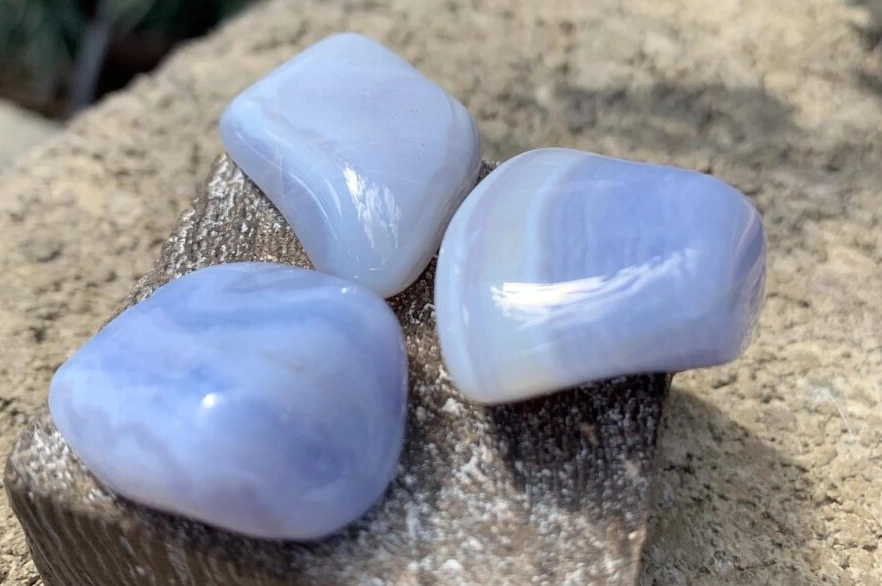
Your Blue Chalcedony Questions Answered
Can blue chalcedony really help with anxiety?
It can be a valuable tool, but it's not a magic pill or a replacement for professional help. Its strength lies in addressing the communicative and expressive components of anxiety. If your anxiety is linked to feeling unheard, having unexpressed thoughts, or social fears, blue chalcedony can provide a supportive, calming energy that makes it easier to process those feelings. Think of it as part of a toolkit, not the entire toolbox.
What's the difference between blue chalcedony and blue lace agate?
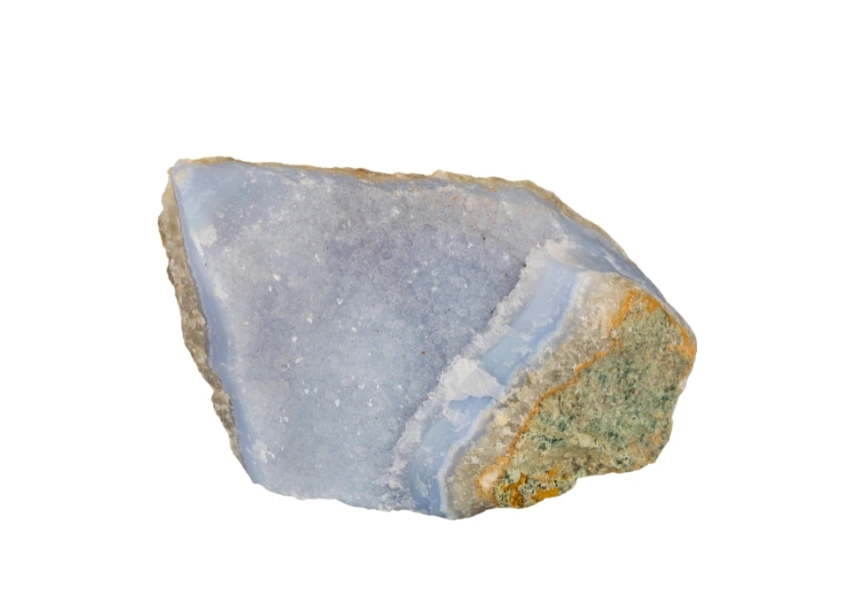
This is a great technical question. Mineralogically, they are both forms of chalcedony. "Blue lace agate" is a banded variety of chalcedony, typically with white and light blue parallel bands. General "blue chalcedony" is often more uniformly blue, sometimes with cloudy or mossy patterns. Energetically, many practitioners find them similar—both calming and throat-chakra related—but some say blue lace agate has a slightly more "ethereal" or delicate energy, while blue chalcedony feels more solid and nurturing. Try both and see which resonates with you.
 How do I know if my blue chalcedony is real or dyed?
Look at the color distribution. Natural blue chalcedony usually has variations—cloudiness, subtle bands, or uneven color saturation. Dyed stone often has an intense, artificial-looking blue that fills every crack and crevice uniformly, sometimes with darker concentrations along fractures. If you see bright, neon-like blue, it's almost certainly dyed. Buying from a reputable dealer who discloses treatments is your best bet.
Is it safe to put blue chalcedony in drinking water to make crystal elixirs?
I do not recommend putting any crystal directly into drinking water. Many minerals, including some forms of chalcedony, can contain trace elements (like aluminum or other metals in the surrounding rock) that may leach into the water. A safer method is the indirect approach: place your cleansed stone in a glass bowl, then place that bowl inside a larger pitcher of water. Let it sit for a few hours. The energy is transferred without physical contact. Always use common sense and consult reliable sources like the Gemological Institute of America (GIA) for safety info on specific gems.
 I bought a blue chalcedony but don't feel anything. Did I get a fake?
Not necessarily. Sensitivity to crystal energy varies hugely. Some people feel it immediately, others take time. Don't force it. Try different ways of interacting with it. Carry it for a week without expectation. Meditate with it. Place it in your environment and just notice if the atmosphere shifts. Sometimes the effects are subtle—a slightly easier conversation, a moment of unexpected calm—and you only notice them in retrospect. The "fake" stone is often the one you bought just because it looked perfect, not because you felt any connection to it.
Related Articles
Ocean Jasper Meaning: Healing Properties & Spiritual Symbolism
Unlocking Sodalite Meaning: Healing, Uses & Key Differences
Ocean Jasper Orbicular: Meaning, Healing Properties, and Practical Uses
Unveiling Onyx Stone Benefits: What Does It Help With?
Can Anyone Wear Red Jasper? Unveiling the Truth About This Grounding Stone